
When sourcing industrial netting, sports netting, safety netting, or agricultural netting, many buyers focus too heavily on the initial purchase price. For B2B procurement teams, distributors, contractors, and project owners, that approach often leads to higher costs over time. The true cost of sourcing netting is shaped by more than the quoted price. It also depends on material quality, manufacturing consistency, supplier reliability, product lifespan, maintenance needs, and the risk of failure or early replacement.

A disciplined sourcing strategy helps buyers evaluate total cost of ownership and identify the best long-term value from a reliable netting manufacturer or supplier.
Abstract
When sourcing industrial and commercial products such as specialized netting, many buyers place too much emphasis on the initial purchase price. That view ignores a broader and more accurate financial reality: total cost of ownership. A proper evaluation shows that the real cost of sourcing is shaped by multiple factors, including material quality, supplier reliability, product lifespan, and the risk of failure or replacement. Long-term costs often rise because of material degradation under environmental stress, inconsistent manufacturing quality, and logistical inefficiencies. A more analytical sourcing approach—one that looks beyond the price tag—helps procurement teams and project owners see that investing in higher-quality, application-specific products from a dependable supplier often delivers greater savings and stronger overall value. This article argues for a more disciplined sourcing strategy that prioritizes durability, performance, and supplier partnership in order to reduce hidden costs and improve return on investment.
Key Takeaways
- Look beyond the initial purchase price to understand the total cost of ownership over the product’s service life.
- Evaluate material specifications and manufacturing quality to avoid premature failure and unnecessary replacement costs.
- Work with reliable netting suppliers that can provide consistent quality, responsive communication, and dependable delivery.
- Understanding the true cost of sourcing leads to stronger long-term financial decisions.
- Custom netting solutions can improve performance, reduce waste, and increase overall value.
- Include maintenance, repair, and potential downtime when comparing sourcing options.
- A dependable supply chain reduces risk and helps avoid unexpected operating costs.
Why B2B Buyers Must Look Beyond the Netting Price Tag
When businesses purchase goods, one number tends to dominate the decision: price. It is immediate, easy to compare, and simple to understand. But building an entire sourcing decision around that single figure is a narrow way to evaluate cost. It ignores what happens after the product is purchased. The real financial impact of a sourcing decision is shaped over time by durability, maintenance requirements, and the consequences of failure. Understanding the true cost of sourcing requires a shift in mindset—from looking at a static purchase price to evaluating the full lifecycle of ownership.
Total Cost of Ownership in Netting Procurement: Direct vs. Indirect Costs
The concept of Total Cost of Ownership (TCO) provides a more complete framework for sourcing decisions. Under this model, the purchase price is only the visible portion of the cost. Beneath it are the indirect costs, which are often more significant over time.
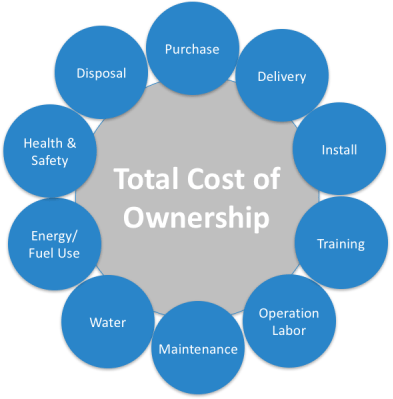
Breaking those costs into categories helps clarify the real economic picture for B2B netting buyers.
| Cost Category | Low Initial Price Supplier | Higher Initial Price, High-Value Supplier |
|---|---|---|
| Direct Cost | Low | Higher |
| Inspection & Testing | High (due to inconsistent quality) | Low (due to reliable QC processes) |
| Maintenance & Repair | Frequent; high cost over time | Infrequent; low cost over time |
| Replacement Frequency | High (e.g., every 2–3 years) | Low (e.g., every 8–10 years) |
| Downtime Costs | Significant (lost production/safety issues) | Minimal (planned maintenance only) |
| Disposal Costs | High (frequent replacement cycles) | Low (infrequent replacement cycles) |
| Reputational Risk | High (risk of public failure) | Low (product performs as expected) |
| Total Cost of Ownership | Very High | Lower |
As this comparison shows, a low quoted price can be misleading. Frequent repairs, downtime, and faster replacement cycles can quickly erase the apparent savings. A construction company that buys a low-cost debris net, for example, may end up paying far more if the net tears easily. The replacement cost is only part of the problem. Project delays, possible safety penalties, and damage to the contractor’s reputation may ultimately become the larger financial burden. In that case, the real cost of the original purchase is not the invoice price, but the combined cost of every consequence that followed.
Price vs. Value: How Procurement Bias Affects Netting Sourcing Decisions
The tendency to focus too heavily on the initial price is closely tied to a common cognitive bias known as anchoring. Buyers often fixate on the first number they see and judge all other quotes against it. When one supplier offers a dramatically lower price, it can make more realistic quotes appear excessive, even when they represent better long-term value. To avoid this mistake, buyers need to reframe the question. The right question is not, What is the cheapest option? It is, Which option delivers the best value over time?
That shift requires a more analytical approach. Instead of simply recalling a quoted number, buyers must evaluate how the product will perform in actual use. In the case of a custom sports netting solution, for example, the relevant questions go well beyond price. Will it withstand years of exposure and repeated use? Will it perform reliably without constant repair? Will it protect people and property as intended? Those are the questions that define value. The true cost of sourcing is therefore not just a financial issue. It is also a strategic and operational one.
Material Selection in Industrial Netting: Why Product Quality Determines Long-Term Value
Every manufactured product is defined first by its material. Material selection determines strength, durability, and service life. In industrial and commercial netting applications—where products are often exposed to intense sunlight, repeated mechanical stress, moisture, and chemicals—material performance is not a secondary detail. It is central to the product’s value. Ignoring technical specifications in favor of price alone is like ignoring the foundation of a building. Failure may not be immediate, but it becomes far more likely.
Evaluating material quality means going beyond a basic price comparison. It requires understanding how different materials behave under real operating conditions. In netting products, common polymers such as High-Density Polyethylene (HDPE), Polyester, and Nylon each have distinct performance characteristics. They are not interchangeable, and choosing the wrong one for the application is one of the most common sources of hidden cost.
Comparing HDPE, Polyester, and Nylon for Commercial Netting Applications
Each of these materials has its own strengths and limitations. The right choice depends on the intended application, environmental conditions, and performance requirements. When the material does not match the use case, long-term cost usually rises.
| Material | UV Resistance | Abrasion Resistance | Water Resistance | Cost | Best Use Cases |
|---|---|---|---|---|---|
| HDPE | Excellent | Good | Excellent (floats) | Low | Agriculture, aquaculture, outdoor barriers |
| Polyester | Very Good | Very Good | Good (low stretch) | Medium | Tennis nets, static load-bearing systems |
| Nylon | Fair (requires UV coating) | Excellent | Poor (absorbs water, sags) | High | Shock absorption (e.g., safety nets) |
High-Density Polyethylene (HDPE)
HDPE is often the most practical choice for long-term outdoor applications because of its strong resistance to ultraviolet exposure and chemicals. For products such as agricultural bird netting, shade netting, or perimeter barriers that remain outdoors for extended periods, HDPE is frequently the most cost-effective option over time. It does not absorb water, so it will not rot, become heavy, or sag significantly in wet conditions. While its abrasion resistance is solid, it is not as strong in that respect as Nylon. Even so, specifying a non-HDPE material for a permanent outdoor application may create higher long-term costs through premature weathering and replacement.
Polyester
Polyester is a strong all-around performer. It offers a balanced combination of strength, UV resistance, and low stretch. Its dimensional stability makes it especially suitable for applications where maintaining shape and tension is important, such as tennis nets or pickleball nets. Polyester performs better than Nylon in wet environments and offers dependable long-term stability. For applications that require both durability and shape retention, Polyester is often a sound strategic choice.
Nylon
Nylon is well known for its high strength and strong shock-absorbing capability. Its elasticity allows it to absorb sudden impact loads effectively, which is why it is widely used in fall protection safety nets and other high-impact applications. In those cases, its ability to stretch under load is a critical safety advantage. However, Nylon also has clear limitations. It absorbs water, which can reduce performance and lead to sagging, and it degrades under prolonged UV exposure unless properly treated. For that reason, using untreated Nylon in a permanent outdoor environment is often a costly specification error.
Manufacturing Quality in Netting Production: More Than Raw Material
Raw material is only part of the equation. The way a product is manufactured—how the polymer is processed into yarn or twine, and how that twine is twisted, knotted, or woven into netting—has a major impact on service life and reliability. Two nets made from the same grade of HDPE can perform very differently if the manufacturing quality is not consistent.
Knot Type and Construction
Netting is generally produced in either knotted or knotless form. Knotted netting is more traditional and is often stronger at the intersections, but the knots themselves can create points of wear. Knotless netting, typically produced through weaving, offers a smoother surface and may be lighter in weight, although junction strength depends heavily on production quality. A qualified netting supplier should be able to explain which construction type is more appropriate for the intended application and why.
Quality Control and Consistency
Manufacturing consistency is just as important as raw material quality. Buyers should evaluate whether the supplier follows recognized systems and standards, such as ISO-based quality management processes. They should also assess whether the supplier conducts routine batch testing for tensile strength, mesh consistency, and UV performance. Weak quality control can result in inconsistent mesh openings, inadequate UV additives, or localized weak points in the final product. One defective batch may be enough to compromise an entire project. That is why sourcing purely on price can become so expensive in the long run: the buyer is often accepting an unknown level of risk in exchange for a lower quote.
Supplier Reliability in B2B Netting Sourcing: Why Partnership Matters
A sourcing decision is not just a transaction. It is the beginning of a working relationship. The product you receive is the result of a broader system that includes communication, project coordination, quality control, and delivery execution. Even a technically strong product becomes a risk if the supplier behind it is inconsistent or unreliable. By contrast, a dependable supplier can become a long-term strategic asset, offering not only products, but also expertise, flexibility, and operational confidence. Assessing this human side of sourcing is therefore essential to understanding the true cost of ownership.

At this stage, the evaluation moves beyond product specifications and into supplier capability. Buyers are no longer only judging material or construction quality. They are also evaluating trust, responsiveness, competence, and the supplier’s commitment to the project outcome. A supplier’s communication failures, production delays, or weak internal controls do not remain the supplier’s problem for long. They quickly become the buyer’s cost.
What Makes a Reliable Netting Manufacturer or Supplier?
So what does a reliable supplier actually look like? In most cases, reliability is not defined by marketing claims. It is revealed through how the supplier communicates, how transparently they operate, and how confidently they can support their product with evidence and expertise.
Communication and Transparency
A strong supplier relationship depends on clear, timely, and honest communication. The evaluation starts with the first inquiry. Are responses prompt, detailed, and informed? Or are they vague, delayed, and generic? A reliable supplier communicates with clarity and does not hide operational realities. If a delay is possible, they raise it early. If a specification has limitations, they explain it directly. That transparency is not just a sign of professionalism. It is a practical form of risk control.

Poor communication has a measurable cost. It can lead to wasted time, rushed decisions, expedited freight, missed installation windows, and disruptions across the broader project schedule. In many procurement situations, these secondary costs outweigh the product price difference that originally drove the sourcing decision.
Technical Expertise and Consultation
A strong supplier should do more than process orders. They should function as a knowledgeable technical partner. That means asking the right questions, understanding the end use, and identifying risks that the buyer may not have considered. A supplier with real application knowledge can prevent specification mistakes before they become field failures.

For example, if a buyer requests a nylon net for a permanently exposed outdoor aquatic environment, a qualified supplier should immediately question that specification and explain the material’s limitations in wet and UV-intensive conditions. Recommending a more suitable material such as HDPE is not upselling. It is evidence of technical competence. This type of consultation adds real value because it helps avoid expensive performance problems later.
Evidence of Quality Control
Reliable suppliers should be able to support their claims with documentation. Quality should not depend on verbal assurance alone. Buyers should ask whether the supplier has a recognized quality management system, whether they maintain batch-level testing records, and whether they can provide documentation such as tensile strength reports, UV resistance test results, or ISO 9001 certification.

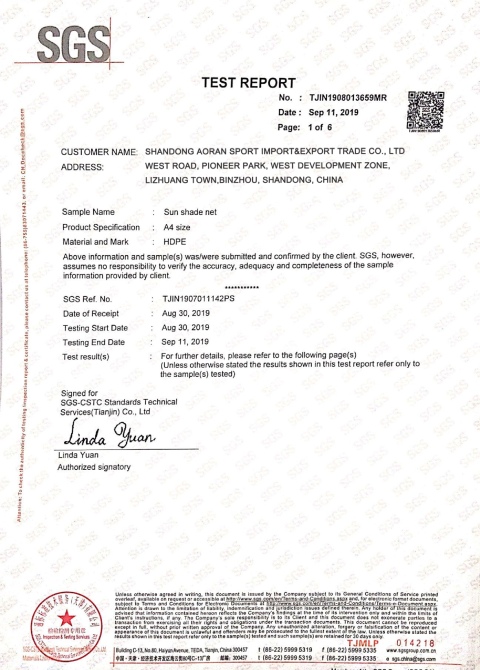


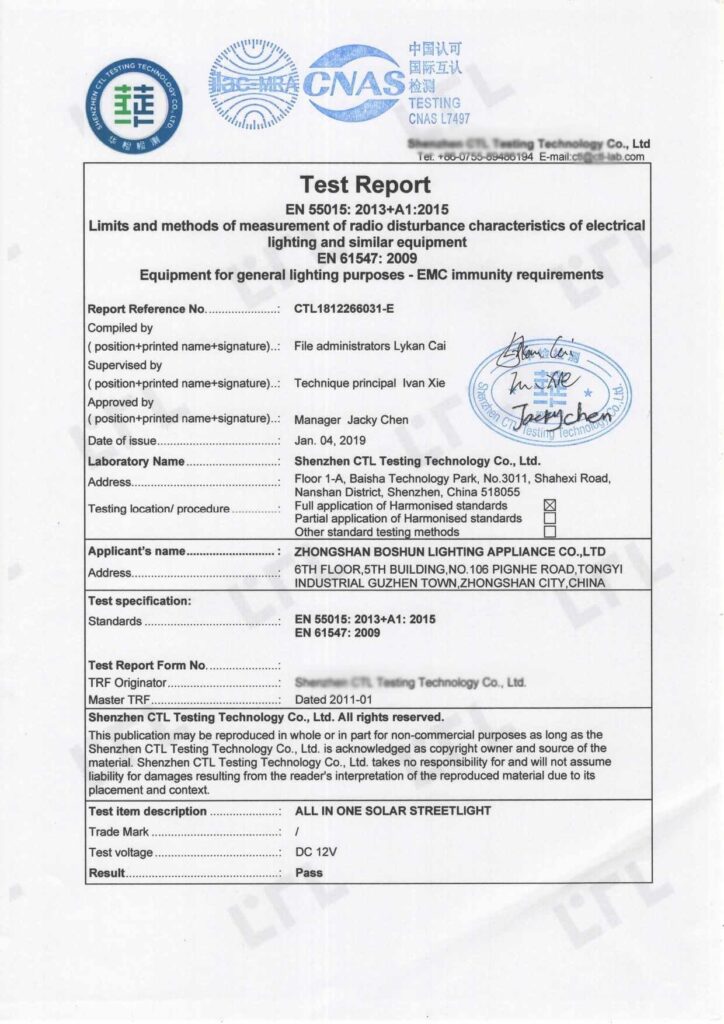

A supplier that can readily provide this information signals confidence in its internal systems. A supplier that avoids these questions or provides only vague answers introduces unnecessary uncertainty. When product quality cannot be verified, the buyer is effectively absorbing that risk. And in industrial applications, that risk can become very expensive.
The Cost of Unreliability: A Case Study in Agricultural Netting Procurement
Consider a hypothetical agricultural operation preparing to install 50 acres of bird netting before harvest season.
Supplier A (Low Price) offers pricing 20% below the market average. Communication is slow, replies are inconsistent, and the supplier promises a six-week lead time.
Supplier B (Value-Focused) offers a higher price, but provides technical data sheets, a clear production schedule, fast responses, ISO 9001 certification, and third-party test documentation.
The farm chooses Supplier A in order to reduce upfront cost. By week seven, only part of the order has arrived. Communication becomes worse, not better. The netting that does arrive shows inconsistencies in mesh size. The balance of the shipment is delayed again, and by the time the installation is completed, birds have already damaged a significant portion of the crop. After only one season, the installed netting also begins to show brittleness.
The initial savings now look insignificant. The farm has lost crop value, absorbed installation labor on a poor-quality product, and now faces premature replacement costs. Supplier B would have required a higher initial investment, but likely would have delivered the product on time, protected the crop, and supplied an asset with a far lower total cost over its service life.
This example illustrates a core principle: supplier reliability is not a soft or abstract consideration. It has direct financial consequences. The true cost of sourcing is inseparable from the competence and integrity of the supplier.
Long-Term ROI in Commercial Netting: Calculating Cost Over Service Life
A product’s value is not determined on the day it is purchased. It is revealed over the course of its service life. Higher-quality products often require a larger initial investment, but they can return that investment through longer lifespan, lower maintenance, and fewer disruptions. That is why the right way to assess value is not through purchase price alone, but through return on investment over time.
This is where long-term thinking becomes measurable. Buyers can compare options using annualized cost, which provides a more realistic basis for evaluating products with different price points and expected lifespans. Instead of asking which option is cheaper today, the better question is: how much does it cost per year for the product to perform its job reliably?
Annualized Cost Comparison: Economy Net vs. High-Performance Net
Consider two hypothetical baseball backstop nets exposed to repeated impact and outdoor weather.
Option 1: The Economy Net
- Initial Cost (including installation): $5,000
- Expected Lifespan: 3 years
- Annual Maintenance Costs (patching, re-tensioning): $300
- Total Cost over 3 years: $5,000 + (3 × $300) = $5,900
- Annualized Cost: $5,900 / 3 = $1,967 per year
Option 2: The High-Performance Net
- Initial Cost (including installation): $9,000
- Expected Lifespan: 10 years
- Annual Maintenance Costs: $100
- Total Cost over 10 years: $9,000 + (10 × $100) = $10,000
- Annualized Cost: $10,000 / 10 = $1,000 per year
This comparison makes the issue clear. Although the economy net appears far cheaper at the time of purchase, it is almost twice as expensive on an annual basis. The lower upfront price is offset by shorter lifespan and higher maintenance needs. In practical terms, choosing the cheaper option means accepting a higher recurring operating cost for the same function.
This is one of the clearest ways to understand the true cost of sourcing: the lowest purchase price often does not produce the lowest long-term cost.
Failure Costs in Safety Netting and Industrial Netting Applications
Annualized cost is useful, but it still does not capture the full financial exposure created by low-quality products. Product failure often triggers secondary costs that are harder to predict, but much more damaging.
Safety and Liability
In many netting applications, the product serves a safety-critical role. A failed construction debris net can cause property damage or serious injury. A fall-arrest safety net that does not meet required strength standards can result in fatal consequences. Once safety is involved, the cost of failure extends far beyond replacement. Legal claims, insurance consequences, regulatory penalties, and reputational damage can all dwarf the initial price savings.
Operational Downtime
When a product fails, operations are often interrupted immediately. A broken cargo net can delay shipment movement. A failed protective barrier at an industrial site can stop production until replacement is installed. Downtime creates lost output, idle labor costs, scheduling disruption, and missed deadlines. In many cases, those losses are far greater than the cost of the failed product itself.
Reputational Damage
When failure occurs in a public or visible environment, the reputational impact can be severe. A spectator safety net failure at a sports venue, for example, can quickly become a public trust issue. Once customers, stakeholders, or end users begin to question a company’s quality standards or safety judgment, the long-term damage can be difficult to reverse. Although reputational loss is harder to quantify, it is often one of the most serious consequences of a poor sourcing decision.
For that reason, investing in proven long-term performance is not simply a durability decision. It is also a form of risk control. A higher-quality product reduces exposure to financial, operational, and reputational loss. That is a major part of the real economics behind sourcing decisions.
Custom Netting Solutions: Why OEM and ODM Can Lower Total Installed Cost
In many industries, buyers default to standard off-the-shelf products because they appear faster and cheaper to purchase. But for many projects, a standard product is only a partial fit. It may be oversized, undersized, structurally inefficient, or made from a material that does not fully suit the operating environment. In those cases, customization is not an unnecessary premium. It is often the more economical choice.
When a supplier offers OEM or ODM capabilities, the buyer gains access to a solution designed around the actual application. That precision can reduce waste, shorten installation time, improve safety, and increase performance over the product’s service life. Customization becomes valuable not because it is special, but because it is efficient.
Reducing Waste and Labor Through Custom Netting Design
Take the example of a uniquely shaped installation area, such as a multi-level construction zone or a custom aviary layout.
The Off-the-Shelf Approach
A buyer purchases several large standard rectangular nets and modifies them on site. That approach often creates three immediate problems:
- Material waste: large cut-off sections may be unusable and discarded.
- Labor inefficiency: workers spend extra time cutting, fitting, and joining sections during installation.
- Reduced integrity: field-cut edges and site-made joins may create structural weak points compared with factory-finished panels.
What looks cheaper on paper may become more expensive after installation labor, wasted material, and performance compromise are taken into account.
The Custom Solution Approach
Instead, the buyer provides the project dimensions to a custom netting manufacturer, which produces panels to the required size with reinforced finished edges.
- Minimal waste: nearly all purchased material is used.
- Faster installation: crews can install directly without extensive on-site modification.
- Better structural consistency: finished panels provide more reliable strength and performance across the system.
Even if the custom net carries a slightly higher unit price, the total installed cost is often lower because waste is reduced and labor efficiency improves significantly. This is another example of how the apparent cheaper option can become more expensive once the full project cost is considered.
OEM vs. ODM Netting Supplier: Which Custom Manufacturing Model Fits Your Project?
Understanding the difference between OEM and ODM helps clarify how custom sourcing works.
OEM (Original Equipment Manufacturer)
In an OEM arrangement, the buyer provides the detailed design and specifications, and the supplier manufactures to those exact requirements. This is the right model when the buyer already has a precise engineered solution and needs dependable production execution.
ODM (Original Design Manufacturer)
In an ODM arrangement, the buyer provides the performance requirements or application goals, and the supplier develops the design and produces the final product. This model is especially valuable when the buyer understands the need, but wants to rely on the supplier’s material and engineering knowledge to create the best solution.
A capable OEM/ODM supplier does more than manufacture. They contribute technical experience, process knowledge, and design support. That collaboration can lead to better performance, lower waste, and lower lifecycle cost than a generic stock product could provide. In that sense, custom sourcing is not just about product variation. It is about building the right solution from the start.
Frequently Asked Questions About Netting Sourcing and Total Cost of Ownership
Is the most expensive option always the best?
Not necessarily. The goal is not to buy the most expensive product, but the one that delivers the strongest long-term value. A high-priced net made from the wrong material for the application—for example, untreated nylon in a permanent outdoor setting—would still be a poor investment. The right decision comes from aligning the product’s material, construction, and quality level with the actual operating environment, performance requirements, and budget. The objective is to identify the option with the lowest total cost of ownership, not the highest initial price.
How can I verify a supplier’s reliability before placing a large order?
Start with a small trial order so you can evaluate both product quality and service performance under real conditions. Ask for customer references or case studies from similar industries or applications. Request documentation that supports the supplier’s quality claims, such as ISO 9001 certification, recent material test reports, or internal quality-control procedures. It is also important to observe how the supplier communicates during the inquiry stage. Prompt, knowledgeable, and transparent communication is usually a strong indicator of long-term reliability.
What are the most common hidden costs in sourcing?
The most common hidden costs include repeated maintenance and repair, early replacement caused by poor material quality, operational downtime resulting from product failure, extra labor required to install ill-fitting standard products, and disposal costs from frequent replacement cycles. Reputational damage caused by public or operational failure can also become a major long-term cost, even though it is harder to quantify.
How does customization affect the true cost of sourcing?
Although a custom product may have a higher upfront unit cost than an off-the-shelf alternative, it often reduces the total installed cost. Customization helps eliminate material waste, shortens installation time, lowers labor cost, and improves fit, performance, and safety. When the product is matched precisely to the application, the long-term economics are often better than they appear at first glance.
What is the difference between OEM and ODM sourcing?
In an OEM (Original Equipment Manufacturer) model, the buyer provides a complete design and detailed specifications, and the supplier manufactures accordingly. In an ODM (Original Design Manufacturer) model, the buyer provides the functional requirements or performance goals, and the supplier develops and manufactures the solution based on its own technical expertise. ODM is typically more collaborative and is especially useful when the buyer needs an experienced supplier to help define the optimal product design.
How important is UV resistance for outdoor netting?
UV resistance is one of the most important performance factors for any netting used outdoors over the long term. Continuous exposure to sunlight breaks down polymer chains in materials such as polypropylene and untreated nylon, making them brittle, weaker, and more likely to fail prematurely. Some materials, such as HDPE, offer inherently stronger UV resistance, while others require additives or protective treatment. For outdoor applications, insufficient UV protection almost always leads to shortened service life and higher replacement costs.
Can a cheap net be good enough for a temporary project?
Sometimes, but it is still a risk-based decision. Even in short-term projects, product failure can cause delays, safety issues, and replacement costs that quickly outweigh the initial savings. If a low-cost debris net fails early in a three-month construction project, the lower purchase price becomes irrelevant. Buyers still need to assess the consequences of failure and determine whether a low-cost option creates more exposure than it saves. In many cases, a dependable mid-range solution is a better form of risk management than choosing the cheapest available product.
Conclusion: Choosing the Right Netting Supplier for Long-Term Value
Understanding the true cost of sourcing requires more than comparing purchase prices. It requires a broader evaluation of value over time. Once buyers look beyond the initial quote and assess material quality, manufacturing consistency, supplier reliability, long-term performance, and the advantages of customization, the economics become much clearer. The cheapest option on paper is often not the most economical choice in practice.
A disciplined sourcing process turns procurement into a strategic function rather than a simple cost-cutting exercise. It recognizes that every purchase decision affects future maintenance, replacement cycles, operational continuity, and project risk. The most effective sourcing decisions are the ones that support long-term performance, reduce uncertainty, and strengthen the overall economics of the business.
In that sense, choosing a supplier that can deliver durable, reliable, and application-specific products is not just a purchasing decision. It is an investment in operational resilience, lower lifecycle cost, and better long-term returns.

Read our most popular articles.
👉 Download our free product categories
👉 5 Reasons Why Durable, Long-Lasting Products are the New Definition of “Cost-Effective”
👉 7 Proven Advantages of Sourcing Directly from a Factory — Your 2025 ROI Guide
👉 The 2026 Chinese Manufacturing vs. Local Suppliers: A Netting Buyer’s Guide
👉 A Practical Custom Netting vs. Off-the-Shelf: A Cost-Benefit Analysis with 7 Factors
👉 How to Start a Private Label Netting Business: A 5-Step Framework for Work
👉 A Practical 5-Point Checklist for Choosing Custom Netting Solutions