
Providing adequate safety measures in athletic environments is both an ethical obligation and a legal necessity. This article examines the regulatory framework governing sports netting in North America, with a focus on the United States and Canada, and explains how standards from ASTM International, ANSI, NFPA, and sport-specific governing bodies shape real-world netting decisions.
It breaks down the technical factors that define netting performance, including material strength, UV resistance, mesh size, fire retardancy, installation quality, and ongoing maintenance. It also reviews how those standards apply across sports such as baseball, golf, hockey, lacrosse, tennis, and soccer, where projectile containment and spectator protection are critical.

By combining technical guidance, compliance considerations, and practical implementation strategies, this article is designed to help facility managers, athletic directors, contractors, and manufacturers select, install, and maintain sports safety netting systems that provide reliable protection for both participants and spectators.
Key Takeaways
- ASTM and ANSI provide the technical and procedural foundation for evaluating sports netting systems.
- Netting performance should be assessed based on five core factors: strength, UV resistance, mesh size, fire retardancy, and installation integrity.
- Mesh size and material selection must match the actual projectile risk of the sport.
- Indoor netting must be reviewed against applicable fire safety requirements, including NFPA 701.
- Proper installation and documented maintenance are as important as the netting material itself.
- Custom sports netting solutions are often necessary to meet the unique safety requirements of a facility.
The Moral Imperative of Safety in Sports
Sports are often associated with performance, competition, and achievement. Yet the environments in which those activities take place carry a responsibility that is easy to overlook. The field, court, rink, training area, or spectator zone is not just a backdrop. It is part of the safety system.

A backstop, divider net, barrier net, or overhead containment panel may seem like a routine facility component, but in practice each of these elements reflects a basic duty of care. These are not just procurement decisions. They are decisions about whether foreseeable risk has been taken seriously.
When that responsibility is neglected, a recreational or competitive environment can quickly become the site of a preventable injury.
Beyond the Game: A Duty of Care
Sports netting exists because vulnerability is predictable. A foul ball, a stray puck, an errant golf shot, or a thrown bat are all foreseeable outcomes in athletic environments. Netting is installed because these risks are known in advance, and its role is to reduce the harm created by those risks.
This is not about removing all risk from sports. That is impossible. It is about controlling the risks that fall outside the reasonable expectations of participation. A spectator in the stands should be able to expect protection from a high-speed foul tip. A player on one field should not be exposed to a golf ball from an adjacent facility. A visitor walking through a sports complex should not be placed at unnecessary risk because a containment system was underspecified, poorly installed, or not maintained.
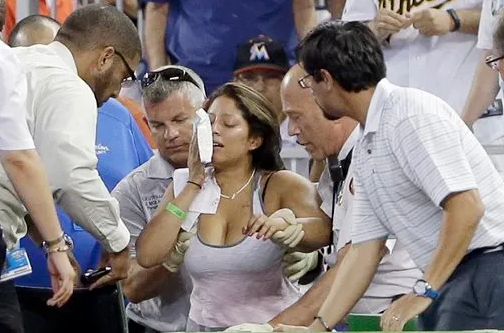
This is the foundation of sports facility safety. The technical standards come later. The duty of care comes first.
The Evolving Landscape of Liability
Alongside the ethical obligation is a clear legal reality. In North America, sports facilities operate in an environment where safety failures can carry serious legal, financial, and reputational consequences. The standard is no longer whether an operator intended harm. The question is whether they acted reasonably in preventing foreseeable harm.
In practice, that means published industry standards matter. A facility operator can no longer rely on informal judgment when detailed guidance is already available on material performance, installation methods, mesh sizing, maintenance expectations, and fire safety requirements. A working knowledge of relevant safety standards for sports netting in North America is therefore not just good practice. It is an essential part of risk management and due diligence.
Why a Practical North American Guide Is Necessary
One of the main challenges for facility managers is that the rules are not located in a single source. Instead, they come from multiple organizations and reference frameworks, including ASTM standards for testing, ANSI-accredited safety systems, NFPA fire code requirements, and sport-specific rules from organizations such as NCAA, USA Baseball, and Hockey Canada.

That makes the compliance landscape difficult to navigate. A practical guide is necessary because it translates fragmented technical language into real decisions, including what material to choose, what mesh size is appropriate, whether flame-retardant certification is required, and how the system should be installed and maintained.
sports netting buying guide and custom sports netting solutions.
Decoding the Standards Landscape in North America
For many buyers and facility operators, one of the first obstacles is simply understanding which organizations do what. ASTM, ANSI, NFPA, and sport governing bodies are often mentioned in the same discussion, but they do not serve the same function. Each plays a different role in the overall sports netting compliance framework.


ASTM International: The Technical Testing Foundation
ASTM International is one of the most important organizations in this space. It does not write laws or building codes. Instead, it develops voluntary consensus standards that define how materials and products are tested and evaluated.
For sports netting, ASTM standards provide the technical basis for claims about tensile strength, UV resistance, durability, and related performance factors. If a manufacturer claims that a netting product has a specific break strength or weathering profile, those claims should ideally be supported by recognized ASTM test methods rather than general marketing language.

This matters because standardized testing gives buyers a basis for comparison. Without it, terms such as heavy-duty or high-strength remain subjective.
ANSI: Accreditation and System Credibility
ANSI plays a different role. It typically does not develop the technical standard itself. Instead, it accredits standards development processes and confirms that those processes meet accepted principles of openness, balance, and consensus.
That may sound procedural, but it is significant. ANSI-accredited standards signal a recognized level of legitimacy and industry acceptance. ANSI is also relevant in related areas such as worker safety and fall protection, which can directly affect the installation of large sports netting systems.

This reinforces an important point: a netting system is not just the mesh. It also includes the process, installation conditions, and supporting safety systems around it.
Sport-Specific Governing Bodies
While ASTM and ANSI establish technical and procedural foundations, organizations such as NCAA, USA Baseball, Hockey Canada, and youth sports governing bodies apply those principles to real facility conditions. Their recommendations may address spectator protection, backstop height, rink netting, field layout, or safe separation distances.
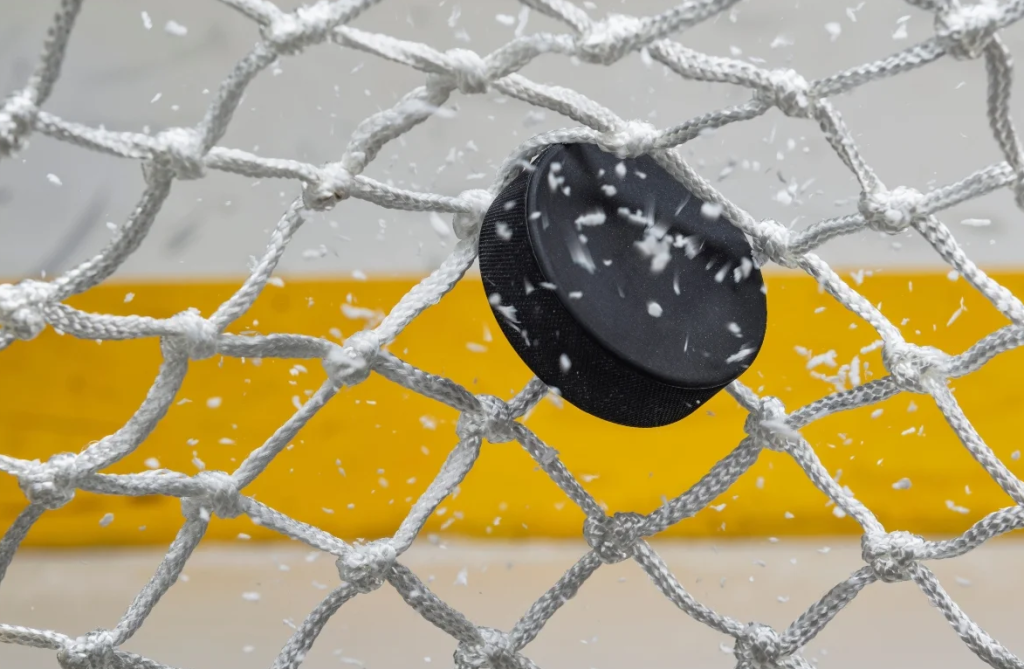
These guidelines reflect the realities of the sport itself. A baseball field, hockey rink, and golf facility each present different projectile risks, and the practical safety solution must reflect those differences.
Comparative Overview of Key Standards Bodies
| Organization | Full Name | Primary Role in Netting Safety | Example Standard or Guideline |
|---|---|---|---|
| ASTM | ASTM International | Develops technical standards for material properties and test methods | ASTM D7138 for tensile strength of twine |
| ANSI | American National Standards Institute | Accredits standards and conformity processes | ANSI/ASSP Z359 for fall protection relevance during installation |
| NFPA | National Fire Protection Association | Establishes fire safety standards for materials used in public spaces | NFPA 701 for flame propagation of textiles and films |
| Sport Governing Bodies | Examples include NCAA, USA Baseball, Hockey Canada | Provide sport-specific facility and safety guidance | Backstop or spectator protection requirements by sport |
What this framework makes clear is that effective compliance is never based on a single standard alone. A proper sports netting system depends on tested material performance, recognized safety procedures, applicable fire code requirements, and sport-specific design guidance.
The Five Pillars of Sports Netting Safety
A safe netting system is never defined by one feature alone. It depends on a group of interrelated factors working together. If one is overlooked, the entire system becomes less reliable.
For practical purposes, sports netting safety can be understood through five core pillars:
- material strength
- UV and weather resistance
- mesh size and configuration
- fire retardancy
- installation and maintenance integrity
These are not optional considerations. They are the technical basis of whether the system can perform its intended function over time.
Pillar 1: Material Strength and Durability
The first requirement of any sports net is simple: it must be strong enough to absorb impact without failing. That sounds obvious, but strength in netting must be understood in measurable terms rather than general descriptions.
Tensile Strength and Break Load
The starting point is usually tensile strength. This refers to the maximum pulling force a material can withstand before it breaks. In netting, this is commonly evaluated by testing the twine itself under controlled tension. The result provides a break strength value that can be compared across products and materials.

For sports barrier netting and backstop netting, this matters because projectile containment depends on repeated impact absorption. A net that fails under load is no longer functioning as a safety system.
Material Type Matters
Three materials dominate most sports netting applications:
- nylon
- polyester
- high-density polyethylene (HDPE)
Nylon is often preferred for high-impact uses such as baseball and softball backstops because it combines high tensile strength with strong elasticity and shock absorption.
Polyester offers good strength with better UV resistance and lower water absorption, making it attractive for outdoor applications where dimensional stability matters.
HDPE is lightweight, moisture-resistant, and cost-effective, but it is generally less suited to repeated high-velocity direct impact than nylon.
Pillar 2: UV Resistance and Weathering Performance
For outdoor sports netting, the greatest long-term threat is often not impact. It is the environment. Among environmental factors, ultraviolet radiation is typically the most destructive.
Why UV Exposure Matters
Synthetic netting materials are made from long polymer chains. UV radiation gradually breaks down those chains, reducing tensile strength and making the material more brittle over time. A net that performs well when first installed can become unsafe within a few seasons if UV resistance is not adequately addressed.
The Role of UV Stabilizers
To slow this process, manufacturers use UV inhibitors or stabilizers. These additives absorb or deflect UV radiation and protect the underlying polymer structure. However, not all UV treatments are equal. Surface-applied coatings can wear off. Stabilizers that are integrated into the material during fiber production usually provide much better long-term performance.
How UV Resistance Is Evaluated
UV performance can be validated using accelerated weathering tests such as ASTM G154 and ASTM G155. These methods simulate long-term outdoor exposure and allow manufacturers to provide measurable data on strength retention, degradation behavior, and expected service life.

For buyers, this matters because a product labeled UV resistant without supporting test data is not a reliable specification basis.
Environmental Exposure Beyond UV
Outdoor netting may also be affected by:
- moisture and humidity
- temperature swings
- salt exposure in coastal environments
- airborne chemicals or pollutants
These factors directly affect material selection. Environmental resistance is not just a durability issue. It directly affects safety performance, maintenance frequency, replacement cost, and liability exposure.
Pillar 3: Mesh Size and Configuration
If material strength determines whether a net can survive impact, mesh size determines whether it can stop the object at all.
The Basic Rule of Containment
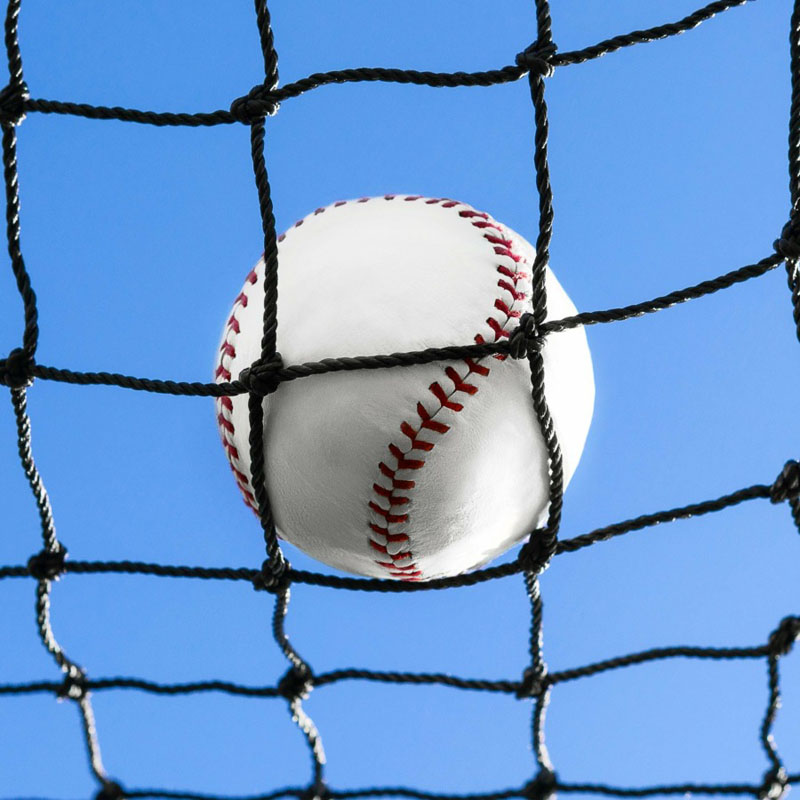
The rule is simple: the mesh opening must always be smaller than the projectile it is intended to contain. If the opening is larger than the object, the net provides no containment function regardless of how strong the twine may be.
Why Mesh Size Still Goes Wrong
Despite how simple the principle is, mesh size errors remain common. They often result from cost-driven decisions, attempts to use one type of netting for multiple sports, or a lack of technical understanding. In these cases, the problem is not reduced performance. It is complete design failure.
Matching Mesh Size to Sport
Each sport presents a different containment challenge. Projectiles differ in size, speed, weight, and impact behavior. Golf involves a small, fast projectile. Baseball combines high velocity with significant kinetic energy. Hockey introduces dense, high-momentum pucks. Soccer and basketball involve much larger balls and different containment needs.
Recommended Mesh Sizes by Application
| Sport | Projectile | Typical Diameter | Recommended Mesh Size | Rationale |
|---|---|---|---|---|
| Golf | Golf Ball | 1.68 in (42.7 mm) | 3/4 – 1 in | Small, high-speed projectile requires tight mesh |
| Hockey | Hockey Puck | 3.0 in (76 mm) | 1-1/2 in | Must stop a puck even when traveling on edge |
| Baseball / Softball | Baseball | 2.9 in (74.7 mm) | 1-3/4 – 1-7/8 in | Balances containment, durability, and visibility |
| Lacrosse | Lacrosse Ball | 2.5 in (63.5 mm) | 1-1/2 in | Hard, compact projectile requires tighter mesh |
| Tennis | Tennis Ball | 2.6 in (66.8 mm) | 1-3/4 in | Common standard for court containment |
| Soccer / Basketball | Soccer Ball | 8.6 in (220 mm) | 4 in | Larger mesh improves visibility and reduces cost |




The Cost of Getting Mesh Size Wrong
If a facility uses 4-inch mesh intended for soccer in an area where lacrosse is played, the lacrosse ball can pass straight through the net. In that case, the net has not merely underperformed. It has failed by design.
Mesh size also affects visibility, wind load, weight, and material cost. The best solution is not automatically the smallest mesh. It is the correct mesh for the application.
Why Customization Is Often Necessary
Multi-sport facilities are especially vulnerable to mesh sizing errors. A single net specification cannot safely cover baseball, golf, lacrosse, tennis, and soccer at the same performance level. This is why custom sports netting is often necessary. It is not a luxury. It is a practical requirement for real safety performance.
baseball backstop netting guide and golf barrier netting.
Pillar 4: Fire Retardancy for Indoor Applications
When sports netting is installed indoors, the risk profile changes. Impact performance still matters, but fire behavior becomes a major concern.
Why Fire Performance Matters Indoors
In enclosed spaces such as gymnasiums, indoor training centers, fieldhouses, and recreation facilities, netting becomes part of the building’s fire load. If the material ignites easily or contributes to flame spread, it can worsen a fire event by increasing heat, smoke, and evacuation difficulty.
NFPA 701 as the Relevant Standard
In North America, the most widely recognized benchmark for flame propagation in textiles is NFPA 701. This standard evaluates whether a material continues burning after flame removal, how quickly it self-extinguishes, and how far the flame damage spreads.

For indoor sports divider netting, batting cage netting, and similar applications, NFPA 701 compliance is often required by building or fire code.
Why Certification Matters
Buyers should never rely on unsupported claims such as fire treated or flame safe. They should request official NFPA 701 test reports or certification documentation that clearly identifies the tested product. Without that documentation, the claim has little value as a compliance basis.
Fire-Retardant vs. Fire-Resistant
Fire-retardant materials are treated or engineered to slow flame spread and self-extinguish. Fire-resistant materials are designed to withstand heat without structural failure and are used for a different purpose. For sports netting, fire-retardant performance is usually the relevant requirement.
Pillar 5: Installation and Maintenance Integrity
Even the best material and the right mesh size cannot guarantee safety if the system is poorly installed or neglected after installation.
A Net Is Only One Part of the System
A complete sports netting system includes:
- the net itself
- support structures such as poles or frames
- cable systems
- anchors and fixings
- connectors and hardware
These components work together to manage load. If one fails, the whole system can fail.
Understanding Load Transfer
When a ball or puck impacts the net, the force moves through the system in sequence: net, cable, anchor, structure. If any component is underspecified, corroded, or poorly installed, it becomes the failure point. This is why installation is not just a field task. It is an engineering requirement.
Common Installation Failures
Typical issues seen in real projects include:
- undersized anchors
- improper cable tension
- uneven load distribution
- incorrect hardware selection
- poor alignment with the original design intent
These problems may not be visible immediately, but they reduce safety performance over time.
Inspection and Preventive Maintenance
Netting systems degrade through UV exposure, repeated impact, corrosion, weather, and mechanical wear. Regular inspection should include checks for tears, fraying, cable condition, anchor stability, hardware wear, and excessive sag.
Best practice includes scheduled inspections, documented maintenance, and immediate repair of visible damage. This reduces unexpected failure, lowers long-term costs, and strengthens a facility’s liability position.
Sport-by-Sport Application of Netting Standards
Theoretical safety principles matter only when they are correctly applied to real sports environments. A golf ball does not behave like a soccer ball. A hockey puck does not present the same risk as a baseball. This is why a one-size-fits-all netting approach is rarely appropriate.
Baseball and Softball Backstops
Backstop netting behind home plate must withstand frequent, high-energy impacts from balls and occasionally bats. Nylon is often the preferred material because of its high tensile strength and shock absorption. Standard mesh sizes typically fall in the 1-3/4 inch range, balancing containment and visibility. Installation must account for both impact load and wind load, especially for large outdoor systems.

Golf Range and Barrier Netting
Golf presents a different challenge. The ball is small, fast, and capable of traveling long distances. This requires a much tighter mesh, usually between 3/4 inch and 1 inch. Because golf barriers can be very tall, UV stability, dimensional control, and structural wind load are major design factors. In many cases, polyester or HDPE may be preferred over nylon for large barrier systems because of weather resistance and lower stretch.

Hockey and Lacrosse Spectator Protection


In hockey and lacrosse, protective netting is typically installed above rink glass or behind goals. The mesh is usually tighter, around 1-1/2 inches, and knotless construction is often preferred because it improves visibility for spectators. Indoor use also means NFPA 701 compliance is a mandatory issue, not an optional one.
Soccer, Tennis, and Pickleball


For sports with larger or slower projectiles, netting often serves a mix of safety, court division, and ball containment functions. Soccer commonly uses 4-inch mesh. Tennis and pickleball typically require smaller mesh, around 1-3/4 inches, because of ball size. In these applications, material choice is often driven by environmental exposure, installation type, and budget.
The Role of Customization in Safety and Compliance
Standard products can work in some situations, but many facilities are not standard. A community sports complex, a college stadium, an indoor training center, and a coastal golf range all have different requirements. Architecture, climate, sport type, user traffic, and adjacent exposure all affect what type of netting system is actually appropriate.
Why One-Size-Fits-All Fails
A standard net height may leave gaps in one facility while being excessive in another. A generic UV treatment may be acceptable in a mild climate but inadequate in Arizona or Florida. A material that performs well on an indoor divider may fail quickly on a coastal perimeter barrier. Standardized products provide a baseline. They do not eliminate the need for project-specific design judgment.
Customization as a Practical Safety Tool
Customization may include:
- material selection based on impact and environmental exposure
- custom mesh size and twine gauge
- special coatings for UV, weather, or abrasion resistance
- custom panel geometry to match building or field layout
- hardware specification based on structural and corrosion conditions
A knowledgeable manufacturer should be able to guide these decisions and help translate general standards into a system designed for the actual site.
Future Horizons in Sports Netting Safety
Sports safety is not static. Materials, testing methods, and facility expectations continue to evolve. Facility managers who want to stay ahead should watch several emerging trends.
Smart Materials and Integrated Sensors
Future netting systems may include embedded sensors capable of logging impact zones, monitoring tension, or detecting hidden damage. This could allow maintenance teams to move from schedule-based inspection to data-based intervention.
Harmonized International Standards
There is increasing interest in aligning North American and international standards more closely. A more harmonized global framework could make sourcing easier, improve consistency, and support broader safety comparability across markets.
Sustainability in Netting Production
Environmental responsibility is also becoming a larger issue. The industry is exploring bio-based polymers, improved recycling systems, and better end-of-life solutions for old netting. In the future, sustainability may become part of the specification conversation alongside strength, durability, and compliance.
Frequently Asked Questions
How often should sports netting be inspected?
A formal documented inspection should be conducted at least annually. Informal visual checks should be performed much more frequently, especially before major events or in high-use areas.
What is the most durable material for outdoor sports netting?
There is no single best material for every case. Nylon is often preferred for high-impact applications. Polyester and HDPE may be better choices where UV resistance and dimensional stability are the primary priorities.
Is fire-retardant netting necessary for outdoor fields?
Usually not for fully outdoor installations, but local fire authorities may have additional requirements in certain settings. For indoor netting, flame-retardant performance meeting NFPA 701 is generally essential.
Can small holes in netting be repaired?
Yes, small holes can often be repaired using compatible repair twine and proper technique. Large tears, repeated damage, or widespread degradation usually justify panel replacement.
What does a twine number or gauge mean?
The twine number generally indicates thickness and strength. A higher number usually means a thicker and stronger twine, though buyers should also request actual diameter and break strength data for accurate comparison.
How long does sports netting last?
Lifespan depends heavily on material, climate, exposure, use intensity, and maintenance. There is no fixed expiration date. Replacement should be based on condition and inspection findings.
What is the difference between knotted and knotless netting?
Knotted netting uses tied intersections. Knotless netting uses a continuous woven or knitted structure. Knotless netting often improves visibility and may reduce wear at intersection points, especially in spectator-facing applications.
Conclusion
Sports netting safety in North America depends on more than buying a strong net. It requires a full understanding of standards, material performance, environmental resistance, mesh selection, fire code requirements, installation quality, and long-term maintenance.
The key takeaway is simple: sports netting should be specified and managed as a complete safety system, not as a commodity product. That system perspective leads to better safety performance, stronger compliance, lower liability risk, and more reliable long-term results.
For facility owners, athletic directors, contractors, and manufacturers, that is the real value of understanding relevant safety standards for sports netting in North America.

Read our most popular articles.
👉 Download our free product categories
👉 A 15-Point Practical Guide: The Complete Checklist for Sports Netting Installation
👉 Beyond Breaking Strength: A Comprehensive Guide to Netting ion, Safety, and Risk Management
👉 5 Reasons Why Durable, Long-Lasting Products are the New Definition of “Cost-Effective”
👉 The True Cost of Cheap Netting: A Total Cost of Ownership Analysis
👉 UV Stabilizers in Sports Netting: A Comprehensive Guide to Longevity