
The proper installation of sports netting is a critical determinant of facility safety, operational functionality, and long-term asset value.
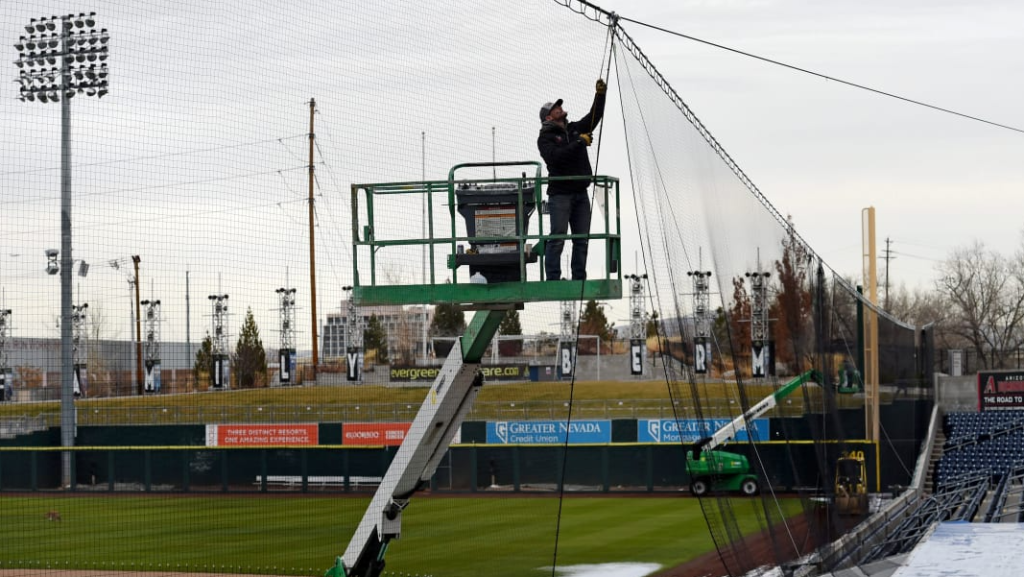
This document presents a comprehensive framework for navigating the complexities of sports netting installation, moving beyond a superficial overview to a detailed analysis of each procedural stage. It examines the entire process, beginning with meticulous site assessment and the definition of sport-specific functional requirements. A significant portion of the analysis is dedicated to material science, offering a comparative study of High-Density Polyethylene (HDPE) and Nylon, evaluating their respective properties concerning environmental exposure, impact absorption, and service life.
The guide further explores netting specifications, the engineering principles behind support structures, and the selection of appropriate hardware. It articulates a systematic methodology for the physical installation, including pole setting, net tensioning, and perimeter security. The discussion extends to post-installation protocols, emphasizing the necessity of rigorous inspection, scheduled maintenance, and institutionalized safety training.
The objective is to provide facility managers, installers, and project planners with a detailed, rational, and ethically grounded guide for ensuring a secure and effective sports netting installation.
Steps:
- Conduct a thorough site assessment—including soil, climate, and existing infrastructure—before any purchasing decisions.
- Match netting material, mesh size, and break strength directly to the specific sport’s impact demands.
- Specify high-quality, corrosion-resistant hardware to ensure long-term safety and structural integrity.
- Establish a consistent maintenance schedule; proactive inspections prevent catastrophic failures.
- Follow a complete checklist for sports netting installation to ensure no critical step is overlooked.
- Proper installation is not just about function; it is a fundamental commitment to player and spectator safety.
- Obtain all necessary local permits before beginning work to avoid legal and financial penalties.
Point 1: Comprehensive Site Assessment and Planning
Installing a sports net is more than a construction task; it is a deliberate intervention into a physical space that redefines its boundaries, function, and safety profile. Before ordering materials or beginning work, a thorough, thoughtful engagement with the proposed site is essential. This initial assessment forms the foundation upon which the project’s success and safety rest. Neglecting this phase is akin to building on sand, risking not only financial loss but also the well-being of future facility users.
Evaluating the Geographical and Environmental Context
Begin by understanding the nature of the land. Soil composition—whether soft loam, dense clay, or rocky and unforgiving—directly dictates the type of foundation required for support poles. A pole set in loose, sandy soil demands a deeper, wider concrete footing than one set in stable, compacted earth. A soil composition analysis, while potentially seeming excessive, can prevent catastrophic pole failure under high wind loads years after installation.
Consider the site’s climatic temperament. Is the area prone to sustained high winds, heavy snowfall, or intense, year-round UV exposure? Each factor exerts a powerful influence on the system. Wind load calculations are non-negotiable for tall barrier netting, such as on a driving range.
Netting acts as a sail under gusty conditions, placing immense stress on poles and footings. In heavy snow regions, potential accumulation on top of the netting must be factored into structural load calculations. Intense ultraviolet (UV) radiation, common in areas like the American Southwest, relentlessly degrades netting materials, making the selection of UV-stabilized materials a primary consideration.
Mapping Utilities and Existing Infrastructure
The ground is rarely a blank slate; it often contains a complex network of unseen infrastructure. Before any excavation for pole footings, a thorough utility mapping process is mandatory.

Contact local utility location services (such as the 811 “Call Before You Dig” service in the United States) to mark the precise locations of underground water pipes, gas lines, electrical conduits, and communication cables. Striking any of these lines can lead to service outages, life-threatening explosions, or electrocutions.
Beyond underground utilities, account for visible infrastructure. Are there overhead power lines that could interfere with tall poles? What is the proximity to buildings, roads, or public pathways? The installation must contain the sports activity while coexisting safely with its surroundings. For instance, a backstop netting system must be positioned so its poles or guy wires do not create a trip hazard on an adjacent sidewalk. The planning phase requires a holistic view, seeing the netting not as an isolated object but as an integrated component of a larger ecosystem of human activity and infrastructure.
Precise Measurement and Layout Visualization
With a clear understanding of the site’s environmental and infrastructural context, begin precise measurement. This involves creating a detailed, to-scale map denoting the exact intended locations for each support pole, the desired netting height, and the path of any guy wires or support cables.
Consider a baseball backstop: measure the distance from home plate to the proposed net line, ensuring it meets league regulations while affording spectators an unobstructed view. Calculate the necessary height to contain errant pop-ups based on the age and skill level of the players. Use visual aids during this stage. Physically lay out the footprint of the installation on the site using stakes and string. This simple act of visualization can reveal unforeseen challenges—a subtle slope missed on paper, or an awkward interaction with a nearby tree—that can be addressed before they become costly construction problems. This meticulous planning is the first and most significant step in a complete checklist for sports netting installation.

Point 2: Defining the Purpose and Sport-Specific Requirements
Once the site is understood, the facility planner must define the netting’s purpose. A golf impact panel and a soccer stadium barrier share the name “netting,” but their functional demands differ as significantly as a paintbrush from a chisel. Defining the specific application with exacting clarity is a foundational exercise in logic and foresight.
Identifying the Primary Sport and Impact Forces
The central question: what projectile must the netting stop, and at what velocity? The kinetic energy of a projectile is a function of its mass and speed, and the netting system must be engineered to absorb this energy safely and repeatedly. A golf ball, though small, travels at exceptionally high speeds and possesses a concentrated, piercing force. Netting for a golf driving range or close-range golf practice nets requires a very small mesh size to prevent ball passage, combined with high tensile strength to withstand impact without tearing.
Contrast this with a soccer ball. It is larger and generally travels at a lower velocity. Netting behind a soccer goal can have a larger mesh size, offering benefits of lighter weight, lower cost, and better spectator visibility. However, it must be durable enough to handle repeated, blunt impacts from powerful shots.

A baseball or softball backstop presents another unique challenge. It must stop a small, hard ball traveling at high speed, similar to a golf net. Yet, it must also endure abrasive rubbing from players and equipment, covering a much larger area than a typical golf cage. The selection process becomes a balancing act among impact resistance, abrasion resistance, and cost over a large surface area. A thoughtful planner will consider not just the primary sport, but all potential activities. If a baseball field will also host lacrosse, the netting must be robust enough to handle the harder, smaller lacrosse ball.
Determining Required Dimensions and Coverage Area
Purpose dictates dimensions—not just “how big,” but “how high” and “in what shape.” For a baseball backstop, height is determined by the trajectory of a foul tip, aiming to protect spectators seated directly behind home plate. The “wings” extending down the baselines are designed to contain errant throws. The geometry of the protection is as important as the material.
For a driving range, side and end barrier nets focus on height. Calculations involve ballistics: estimating the maximum height and deviation of a poorly hit golf shot from the furthest tee box. This often results in nets 50, 75, or even over 100 feet tall, requiring significant engineering effort for support poles.

In sports like pickleball or tennis, nets serve a different purpose—primarily ball containment and court separation rather than high-impact safety. Height is lower, and material strength requirements are less extreme. The focus shifts to durability against constant, low-level exposure to the elements and occasional contact. The definition of purpose must be granular, accounting for every function the netting is expected to perform, from high-impact safety barrier to simple ball-retention screen.
Considering Spectator Safety and Visibility
In many applications, netting stands between athletic activity and spectators. In these cases, the planner bears a profound ethical responsibility for the safety of those onlookers. The netting is a literal shield, and its failure can have dire consequences. Material selection and installation must prioritize safety above all else, ensuring the mesh is small enough to stop the smallest relevant projectile and that the entire system withstands worst-case scenario impacts.

However, safety must be balanced with spectator experience. A backstop that feels like a fortress wall, obscuring the view of the game, detracts from event enjoyment. This is where material choice becomes nuanced. Modern netting materials offer exceptional strength in very thin twines. Black-dyed or treated netting often provides the best “invisibility,” as it absorbs light and allows the spectator’s eye to focus on the field beyond. The ideal solution provides uncompromising safety while feeling nearly invisible—a hallmark of a well-conceived sports netting project.
Point 3: Choosing the Right Netting Material (HDPE vs. Nylon)
The net itself is the heart of the system, and material choice impacts durability, performance, maintenance requirements, and long-term cost. The two dominant materials in modern sports netting are High-Density Polyethylene (HDPE) and Nylon.
While they may appear similar, they possess fundamentally different chemical and physical properties. Understanding these differences empowers planners to make rational, evidence-based decisions rather than choices based on habit or incomplete information.
The Case for High-Density Polyethylene (HDPE)
HDPE is a polymer with tightly packed chains, creating a material that is inherently strong and chemical-resistant. Its most significant advantage is its hydrophobic nature: it does not absorb water. When it rains, water coats the surface and then drips off or evaporates. Because HDPE does not become waterlogged, it does not gain weight, sag, or require a more robust support structure to handle added weight in wet conditions. More importantly, its moisture resistance makes it virtually immune to rot, mildew, and fungus, making it an outstanding choice for permanent outdoor installations, particularly in damp or humid climates.
Additionally, most high-quality HDPE netting is manufactured with UV inhibitors extruded directly into the filaments. This is not a mere surface coating that can wear away. The UV protection is integral to the material, allowing it to withstand years of direct sun exposure with minimal strength loss. This inherent resistance to water and sun makes HDPE the workhorse of the netting industry, prized for its longevity and low maintenance requirements.
The Argument for Nylon
Nylon, a family of synthetic polymers known as polyamides, offers exceptional tensile strength and elasticity. Pound for pound, nylon is stronger than HDPE. This superior strength allows for very thin yet incredibly strong twines, making it favored for applications where spectator visibility is paramount, such as professional baseball backstops. The thinner twine creates a less obstructed view.
Nylon also possesses greater capacity for elongation and energy absorption, sometimes described as a “softer” feel. When a projectile strikes a nylon net, the material can stretch slightly, absorbing impact energy over a fraction of a second. This can be advantageous in high-impact applications, potentially increasing net lifespan by dissipating force more effectively than a more rigid material.
However, nylon’s strengths are accompanied by a significant vulnerability: it is hydrophilic—it absorbs water. A wet nylon net can absorb up to 10% of its weight in water, causing sagging and placing additional strain on supports. This water absorption also makes it more susceptible to shrinkage and expansion with changing humidity levels and can create an environment conducive to mildew if not properly treated. To combat these issues, nylon netting for outdoor use must be coated or treated with protective agents, such as tar or urethane coatings. These treatments add protection against moisture and UV radiation, but they can wear over time and add to material cost and thickness.
Making an Informed Decision: A Comparative Analysis
There is no single “best” material; the optimal choice depends on the project’s specific context. A facility manager must weigh competing virtues against project demands. For a permanent outdoor driving range barrier in a rainy climate, the waterproof and UV-stable nature of HDPE makes it the clear logical choice. For an indoor batting cage where UV and moisture are not concerns, the superior strength-to-diameter ratio of nylon might be preferred for better visibility and feel.
Organize these considerations into a structured comparison:
| Feature | High-Density Polyethylene (HDPE) | Nylon |
|---|---|---|
| Water Resistance | Excellent (hydrophobic, does not absorb water) | Poor (hydrophilic, absorbs water, requires treatment) |
| UV Resistance | Excellent (UV inhibitors integrated into material) | Fair to Good (requires protective coatings that can degrade) |
| Tensile Strength | Very Good | Excellent (stronger per unit of weight) |
| Abrasion Resistance | Good | Excellent |
| Energy Absorption | Good (more rigid) | Excellent (more elastic, “softer” catch) |
| Cost | Generally lower | Generally higher, especially with treatments |
| Longevity (Outdoor) | Excellent (resistant to rot, mildew) | Good (dependent on coating quality and lifespan) |
| Best For | Permanent outdoor barriers, wet/humid climates | Indoor use, professional venues where visibility is paramount |
Ultimately, the decision is a calculation of trade-offs. Does the project budget and environment favor the long-term, low-maintenance durability of HDPE? Or do specific performance requirements—such as maximum visibility at a professional stadium—justify the higher cost and maintenance considerations of treated nylon? A consultation with a professional custom netting manufacturer can provide tailored advice based on decades of material science expertise, ensuring alignment with project goals.
Point 4: Understanding Netting Specifications (Mesh Size, Twine Size, Construction)
After selecting the fundamental material, the next layer of specificity involves the net’s construction. Three primary specifications define net performance: mesh size, twine size, and construction method (knotted or knotless). Each must be carefully calibrated to the sport and application defined earlier. Choosing incorrectly risks either immediate failure (a ball passing through the mesh) or premature wear (a twine too thin for the impact).
The Critical Role of Mesh Size
Mesh size, or mesh opening, refers to the dimension of the hole in the net, typically measured “on the square” from the center of one knot to the center of the next. Mesh selection is governed by a simple, uncompromising rule: the opening must be smaller than the smallest projectile the net is intended to stop.
For golf, where the ball diameter is approximately 1.68 inches, standard mesh size is typically ¾ inch to 1 inch. This small opening ensures even a mishit, spinning ball cannot squeeze through. For baseball or softball (ball diameter ~2.9 inches), 1¾-inch mesh is the industry standard—small enough to reliably stop the ball while being large enough to reduce wind load and material usage compared to a golf-rated mesh.
| Sport Type | Recommended Mesh Size | Recommended Material | Twine Diameter / Grade | Impact Level | Typical Height | Typical Applications |
|---|---|---|---|---|---|---|
| Soccer | 2″–4″ (50–100 mm) | HDPE / PP / Nylon | 2–4 mm | Medium | 6–12 m | Perimeter fencing, stadium protection |
| Basketball | 3″–4″ (75–100 mm) | HDPE / PP | 2–3 mm | Low–Medium | 4–8 m | Court dividers, indoor/outdoor enclosures |
| Volleyball | 2″–3″ (50–75 mm) | HDPE / Polyester | 2–3 mm | Low–Medium | 4–8 m | Multi-sport facilities, gyms |
| Tennis | 1″–1.5″ (25–40 mm) | Polyester / Nylon | 2–3 mm | Medium | 4–6 m | Court fencing, ball containment |
| Baseball | ~1.75″ (≈44 mm) | Nylon (preferred) | #21 / #36 / #60 | High | 6–12 m+ | Backstop netting, batting cages |
| Golf | 0.75″–1″ (20–25 mm) | HDPE / Nylon | #36+ / high-strength PE | Very High | 10–30 m | Driving range perimeter netting |
| Multi-Sport | ~1.5″ (≈40 mm) | HDPE / Nylon | 2–3 mm | Medium | 4–8 m | Schools, general-purpose facilities |
For larger balls, mesh can be proportionally larger. Soccer, basketball, or volleyball containment netting often uses 4-inch mesh. This larger opening dramatically improves spectator visibility, reduces overall net weight, lowers wind resistance on outdoor installations, and is more cost-effective. However, using 4-inch mesh for a baseball field would be an act of gross negligence. Mesh size is the first and most basic test of a net’s suitability for its purpose.
Twine Size and Break Strength
If mesh size is about containment, twine size is about durability and strength. Twine size, often denoted by a number gauge or diameter in millimeters, determines the net’s breaking strength—the force required to snap a single strand. This contributes to overall net strength and impact resistance.
A thicker twine is generally stronger. For high-impact applications like a baseball backstop that will endure thousands of impacts, a heavier gauge twine (e.g., #36 or #42, corresponding to twine diameter of about 2.5mm to 3.0mm) is a wise investment, offering superior abrasion resistance and higher break strength for longer service life.
For lower-impact uses, such as a tennis court divider net, a much thinner twine (e.g., #18 or #21) is adequate. Using excessively thick twine where not needed adds unnecessary cost, weight, and visual obstruction.
The relationship between twine size and material also matters. Because nylon is inherently stronger than HDPE, a nylon net can sometimes achieve the same break strength with a slightly thinner twine. This is why high-end, visibility-focused backstops often use nylon—they achieve required strength with minimal visual footprint. When evaluating a net, always ask for specific break strength data, not just the twine gauge number, as this provides a more direct measure of performance.
Knotted vs. Knotless Construction
The final construction detail is how twines join to form the mesh. There are two primary methods: knotted and knotless.
Knotted netting is the traditional style. At every intersection of horizontal and vertical twines, a knot is tied. This method produces a very strong, durable net. Knots provide excellent resistance to abrasion and dimensional stability. The primary drawback is that knots themselves can be abrasive—to players who might contact the net and to the twine over time. Knots also add weight and slightly increase visual obstruction.
Knotless netting is a more modern construction where twines are woven or braided together at intersections without forming a traditional knot, often through a specialized weaving process. The resulting net has a smoother, flatter profile. Primary advantages are lighter weight, lower abrasion profile, and often greater consistency in mesh size. Because twines lie flat, knotless nets can sometimes offer slightly better visibility. They are also less likely to cause scrapes if a player makes contact. While early versions were sometimes considered less durable at intersections, modern manufacturing has largely addressed this concern, producing knotless products with strength rivaling knotted counterparts.
The choice often comes down to specific application and preference. For heavy-duty backstops, the proven durability of high-quality knotted netting is a reliable choice. For indoor multi-sport facilities where players may frequently brush against netting, the smoother surface of knotless netting can offer significant safety and comfort advantages.
Point 5: Selecting the Correct Support Structure and Poles
A sports net is only as strong as the structure that holds it. Poles, cables, and anchors form the skeleton, and their selection and engineering are as vital as the netting material itself. A failure in the support structure is almost always more catastrophic and dangerous than a tear in the net. This stage moves from material science into structural engineering, demanding rigorous load calculation, material choice, and long-term stability planning.
Material Choices for Poles: Wood, Steel, and Aluminum
Vertical support poles are primary structural elements. The three most common materials are wood, steel, and aluminum, each with distinct profiles of cost, strength, and longevity.
Wood poles, typically pressure-treated timber similar to utility poles, are often the most economical upfront. They can blend well in rustic settings. However, wood is susceptible to rot, decay, and insect damage over time, even when treated. Lifespan is generally shorter than metal poles, requiring more frequent inspection for degradation, especially at the ground line. For very tall nets (over 40–50 feet), the weight and tapering nature of wood poles can make them impractical.
Steel poles are the industry standard for most heavy-duty and large-scale netting installations, such as driving range barriers and stadium backstops. Steel offers exceptional strength, allowing for very tall poles that withstand significant wind loads. Steel poles are typically galvanized (coated with zinc) or powder-coated for corrosion protection. Galvanization is a robust, long-lasting protective method. While steel is more expensive than wood, its superior strength and longevity represent a better long-term investment for permanent facilities. The primary consideration is ensuring the protective coating remains sound, as any breach can lead to rust that compromises structural integrity.

Aluminum poles offer an excellent balance of strength and light weight, with the added benefit of natural corrosion resistance—they do not rust. This makes them a superb choice for marine environments or areas with high humidity. Their lighter weight can simplify installation, sometimes reducing the need for heavy machinery. The main drawback is cost, typically higher than galvanized steel. For smaller, specialized installations or in corrosive environments, the extra upfront cost of aluminum can be justified by its extended, maintenance-free lifespan.
Calculating Pole Height, Diameter, and Wall Thickness
Choosing material is not enough; poles must be engineered for specific loads. This is a function of height, diameter, and wall thickness.
Pole Height: Required height is determined by application, as discussed in Point 2. Structurally, forces acting on a pole (particularly from wind) increase exponentially with height. A 100-foot pole must withstand vastly greater forces than a 50-foot pole.

Diameter and Wall Thickness: These factors determine resistance to bending and breaking. Larger diameter and thicker wall create a stronger pole. An engineer performs wind load calculations based on local meteorological data, net height, and netting type (small mesh creates more wind resistance than large mesh). These calculations determine minimum required diameter and wall thickness to safely withstand worst-case winds for that location. Attempting to save money by selecting poles that are too thin or have insufficient wall gauge is a dangerous gamble that compromises the entire system’s safety.
The Role of Guy Wires and Support Cables
For very tall netting systems or areas with extreme wind loads, poles alone may not suffice. Guy wires provide additional lateral support. A guy wire is a high-tensile cable running from a point high on the pole to a secure anchor point in the ground, some distance from the pole’s base.
This creates a triangular support structure incredibly effective at resisting forces that would otherwise bend or break the pole. Guy wire placement and anchor design are critical engineering tasks. Anchors must be substantial enough to resist immense pulling forces. Guy wires require additional space around the netting system, which must be factored into the initial site plan. While they add complexity, guy wires are indispensable for ensuring stability of tall, large-span netting structures.
Point 6: Sourcing Appropriate Hardware and Fasteners
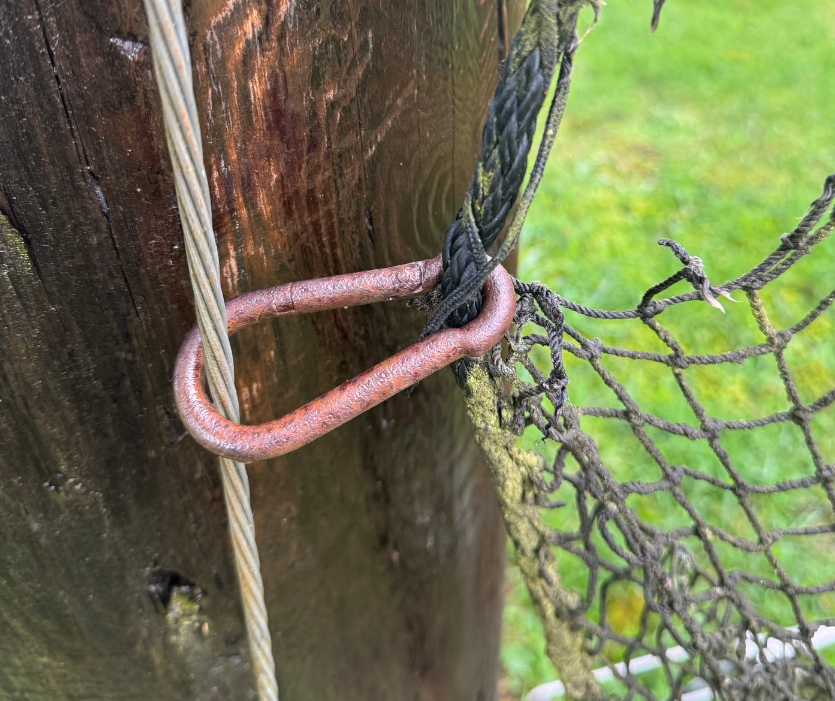
The integrity of a sports netting installation often depends on its smallest components. Hardware—clips, cables, turnbuckles, clamps—are the ligaments and tendons connecting netting to structure. Using underrated, undersized, or inappropriate hardware is a common point of failure. Each piece must be chosen with the same analytical rigor as netting and poles, focusing on material composition, load rating, and suitability for each connection.
The Non-Negotiable Need for Corrosion Resistance
Given that most sports netting is installed outdoors, the single most important hardware characteristic is corrosion resistance. Over time, moisture and oxygen attack unprotected metal, leading to rust. Rusted hardware not only looks unsightly but, more dangerously, loses strength. A rusted clip or shackle can snap under a load it could easily handle when new.
For outdoor applications, galvanized steel or stainless steel hardware is the only acceptable choice.
Galvanized steel hardware is coated with a protective layer of zinc. Galvanization provides a robust corrosion barrier and is cost-effective for most applications. Choose hardware that is hot-dip galvanized, as this creates a thicker, more durable coating than other methods like electro-galvanization.
Stainless steel offers the highest level of corrosion protection. The chromium in the steel alloy forms a passive, self-healing layer of chromium oxide on the surface, preventing rust. While more expensive than galvanized steel, stainless steel is superior for environments with high salinity (coastal areas) or chemical exposure. For facilities making a long-term investment, the additional upfront cost of stainless steel can pay dividends in longevity and reduced replacement needs.
| Component | Recommended Material | Key Consideration |
|---|---|---|
| Perimeter Cable | Galvanized or Stainless Steel Aircraft Cable | Working load limit must exceed calculated tension and wind load. |
| Turnbuckles | Forged Galvanized or Stainless Steel | Use jaw-and-jaw or eye-and-eye types for secure connections. Forged is stronger than cast. |
| Cable Clamps/Clips | Forged Galvanized or Stainless Steel | Use correct number of clamps for cable diameter; tighten to specified torque. |
| Snap Hooks (Carabiners) | Forged Galvanized or Stainless Steel | Load rating must be sufficient for attaching net to cable. |
| Shackles | Forged Galvanized or Stainless Steel | Use in high-load connection points, such as where guy wires meet anchors. |
| Ground Stakes/Anchors | Heavy-Duty Galvanized Steel or Earth Anchors | Must be appropriate for soil type and capable of resisting upward pull on net. |
Matching Hardware to Function and Load
Different connections require different hardware types.
Perimeter Cable: The net is typically suspended from a high-tensile steel cable running along the top between poles—the main load-bearing line. Its diameter must be chosen based on span length and net weight.

Turnbuckles: These devices are indispensable for properly tensioning cable. A turnbuckle is a metal sleeve with threaded ends that, when turned, either pulls two connection points closer or pushes them apart. They allow fine-tuning tension on main support cables, ensuring net hangs correctly without sagging.
Snap Hooks and Clips: These attach the net’s border rope to the perimeter cable. Spacing is important; placing them too far apart can create scallops and place undue stress on individual points. Spacing of 12 to 18 inches is common. Clips must have load rating sufficient to support the weight of the net section they hold.
Cable Clamps: When creating a loop at the end of a steel cable (e.g., to go around a pole or attach to a turnbuckle), cable clamps (or clips) are used. Use the correct size clamp for the cable and the manufacturer-recommended number of clamps (often three or more) to ensure the connection does not slip under load. The old adage “never saddle a dead horse” applies here, referring to correct clamp orientation.
Sourcing hardware is not a time for bargain hunting. Each component is a link in a chain of safety. Procuring load-rated, corrosion-resistant hardware from a reputable supplier of rigging and netting equipment is a fundamental requirement of a professional and responsible installation.
Point 7: Verifying Local Regulations and Obtaining Permits
Installing a significant sports netting structure is not a private affair. It constitutes construction subject to local municipal jurisdiction. Proceeding without understanding and adhering to building codes and zoning ordinances invites legal and financial peril. A stop-work order halfway through a project can be disastrous for timelines and budgets. Even worse, completing a project without a permit could lead to fines and a mandate to tear the structure down. This step is about due diligence and ensuring the project is legally sound before turning the first shovel of dirt.
Navigating Building Codes and Zoning Ordinances
Every municipality has its own rules governing construction, encapsulated in building codes and zoning ordinances.

Building codes specify minimum standards for construction to protect public health, safety, and welfare. For a netting installation, the code will likely have specific requirements regarding:
- Structural Integrity: The code may dictate required wind load capacity for structures of a certain height, effectively mandating pole and footing strength.
- Foundation Depth: Rules about minimum depth and diameter of concrete footings, often based on local frost line to prevent heaving.
- Material Standards: Some codes may specify acceptable materials or standards (e.g., ASTM) for poles and hardware.
Zoning ordinances govern land use, dictating what can be built where. For a netting project, zoning rules might regulate:
- Height Restrictions: Many zones have maximum height for structures. A 100-foot driving range net will almost certainly require a variance or special permit, as it will likely exceed standard height limits.
- Setbacks: Rules requiring structures to be built a certain distance from property lines, roads, or other buildings. Pole locations must comply with setback requirements.
- Aesthetics: In some communities, particularly those with historical districts or strict design guidelines, there may be rules about structure appearance, influencing allowed pole color or style.
The Permitting Process: A Step-by-Step Approach
Obtaining a permit typically involves submitting a detailed project plan to the local building or planning department for review. This is not a step to be taken lightly; the submission package must be professional and comprehensive.

- Initial Inquiry: Contact your local municipal building department. Explain the scope of your project—a baseball backstop, a golf barrier net—and ask what type of permit is required. Obtain the necessary application forms and a checklist of required documents.
- Preparing the Submission Package: Detailed planning from previous steps pays off. Your submission will likely need to include:
- Site Plan: A to-scale drawing of the property showing the proposed netting structure location, property lines, existing buildings, and setbacks.
- Structural Drawings: For any significant structure, especially tall poles, the municipality will almost certainly require drawings stamped by a licensed professional engineer. These drawings certify that the pole, footing, and guy wire design meets local building code structural requirements.
- Material Specifications: A list of materials to be used, including netting type and grade, pole specifications (material, diameter, wall thickness), and hardware details.
- Plan Review: Submitted plans will be reviewed by municipal staff, including a plan checker and possibly a city engineer. They will check compliance with all applicable codes and ordinances. They may come back with questions or require revisions.
- Permit Issuance: Once plans are approved, the permit is issued—the official legal authorization to begin construction. The permit must be kept on-site and visible during installation.
This process can take weeks or months, so it must be factored into the project timeline from the beginning. While it may seem bureaucratic, the permitting process is a valuable safeguard. Review by a professional engineer and building inspector provides independent, expert verification that your design is safe and sound.
Point 8: Preparing the Installation Site
With a fully approved plan and all materials on order, focus shifts to the physical site. Proper site preparation is a crucial transitional step between planning and construction. It involves transforming the designated area into a clean, safe, and accurately marked work zone. Skipping or rushing this stage can lead to installation errors, safety hazards for the crew, and property damage.

Clearing, Grading, and Ensuring Access
The first priority is ensuring the installation area is clear and accessible. This may involve several tasks:
- Clearing Vegetation: Any trees, shrubs, or heavy brush in the immediate vicinity of pole locations and along the netting line must be removed. Roots can interfere with excavation for footings, and overhanging branches can snag and damage the net during installation and its service life.
- Removing Obstructions: All debris, large rocks, old equipment, or other obstructions must be cleared. A clean site is a safe site.
- Grading the Area: While netting can often follow natural land contours, areas immediately around pole bases should be relatively level to facilitate safe work. In some cases, minor grading along the net line may be required to ensure the net bottom can be properly secured to the ground.
- Establishing Access Routes: Consider how heavy equipment—such as a drill rig for footings or a crane to lift poles—will access the site. A clear, stable access path must be established. This might involve laying temporary matting to protect lawns or sensitive ground.
The Critical Task of Final Layout and Marking
This is where the paper plan is transferred to the earth with exacting precision. Using the detailed site plan, a surveyor’s transit or modern GPS equipment, and long measuring tapes, the crew must mark the precise center point for each pole footing.
These points are not approximations; they must be accurate within a very small tolerance. An error of even a few inches in a pole’s location can be magnified over the pole height and cause problems with net tension and alignment. Once center points are located, mark them with a sturdy stake.
Next, mark the entire netting system perimeter, typically with spray paint or a string line pulled taut between stakes. This provides a clear visual guide for the entire construction crew, allowing everyone to see the exact footprint and verify that the layout works in the real world as it did on paper. This is a final opportunity to spot potential interferences or issues before excavation begins.
Implementing Safety Zones and Staging Areas
An active construction site is inherently dangerous. Before work begins, establish clear safety protocols.
- Establishing a Perimeter: Cordon off the entire work area with safety fencing or caution tape. This prevents unauthorized personnel, spectators, or the general public from entering the construction zone where they could be injured by equipment or excavation work.
- Designating Staging Areas: Designate specific areas for organized storage of materials. Netting, which is valuable and can be damaged, should be kept in a clean, dry, protected spot away from heavy traffic. Poles, hardware, and bags of concrete should be stored logically for easy access without creating trip hazards.
- Tool and Equipment Zone: Set aside a specific area for tools and fueling equipment to maintain organization and safety.
Thorough site preparation sets the tone for the entire installation phase, demonstrating a commitment to precision, safety, and professionalism that will carry through the rest of the project. A well-prepared site is the foundation for an efficient and error-free installation.
Point 9: The Pole and Support Structure Installation Process
This stage is where the netting system begins to take its vertical form. Pole installation is heavy, demanding work requiring precision, the right equipment, and unwavering focus on safety. A pole not set correctly—not plumb, not deep enough, or with an inadequate footing—is a latent failure waiting to happen. This process is the structural heart of the installation and must be executed flawlessly.
Excavation for Footings: Depth and Diameter
The process begins with excavating holes for pole footings. Hole dimensions are not arbitrary; they are dictated by engineering plans developed and approved in preceding steps. The two key dimensions are depth and diameter.
- Depth: Footing depth is determined by several factors. It must be deep enough to anchor the pole against leverage applied by wind and net tension. In cold climates, footing must extend below the local frost line—the depth to which ground freezes in winter. If a footing is placed above this line, moisture in the soil can freeze underneath it, “heaving” the pole upward and compromising stability.
- Diameter: Hole diameter determines the volume of concrete surrounding the pole, creating the mass that resists overturning forces. A wider footing provides a more stable base.
Excavation can be done with hand tools for very small poles, but for most sports netting installations, mechanical equipment is required. An auger attached to a skid steer or a dedicated drill rig is commonly used to create clean, uniform holes of specified diameter and depth.

Setting and Bracing the Poles
Once the hole is excavated, the pole can be set. This critical moment requires careful coordination.

- Lifting the Pole: For all but the smallest poles, a crane or boom truck is necessary to lift the pole safely and lower it into the excavated hole. The pole must be rigged correctly with appropriate straps to prevent slipping.
- Placing the Pole: A layer of gravel or crushed stone is often placed at the bottom of the hole to allow for drainage and provide a stable base for the pole end. The pole is then carefully lowered into the center of the hole.
- Plumbing and Bracing: As soon as the pole is in the hole, it must be made perfectly plumb (perfectly vertical). This is checked using a long level on at least two perpendicular sides. Once plumb, secure the pole with temporary wooden or metal braces that will hold it in the correct position while concrete is poured and cures. This step requires patience and precision; a pole even slightly out of plumb will be visually jarring and could affect net tension.
Pouring and Curing the Concrete Footings
With the pole securely braced in its final plumb position, concrete can be poured.

- Mixing and Pouring: Concrete should be mixed according to manufacturer‘s specifications to achieve its designed strength (measured in PSI). Pour concrete into the hole, filling the space around the pole. Take care to avoid creating air pockets. A long rod can be used to agitate wet concrete and consolidate it around the pole base. The top of the footing is often sloped away from the pole to encourage water drainage.
- Curing Time: This is where patience cannot be compromised. Concrete does not “dry”; it cures through a chemical reaction called hydration. This process takes time to achieve full strength. While concrete may feel hard to the touch within a day, it can take anywhere from 7 to 28 days to reach its specified design strength, depending on mix and environmental conditions. No load should be placed on the poles—meaning no cables attached or tensioned—until concrete has fully cured according to engineer or concrete manufacturer specifications. Proceeding too early can fracture the footing and destroy the foundation of the entire system.
The installation of guy wire anchors follows a similar process, involving excavation and pouring a substantial concrete “deadman” anchor to which the guy wire will eventually be attached.
Point 10: Techniques for Hanging and Tensioning the Net
After poles are set and concrete fully cured, the installation transforms. Focus shifts from the brute force of concrete and steel to the nuanced art of hanging and tensioning the net fabric. Proper technique is essential to ensure the net hangs evenly, absorbs impacts correctly, and achieves the longest possible service life. A poorly hung net not only looks unprofessional with sags and puckers but also wears out prematurely due to uneven stress distribution.
Installing the Main Support Cables
The first step in hanging the net is to install the primary support cables—the high-tensile steel cables that will run between the tops of the poles, and in some designs, along the bottom as well.

- Attaching the Cable: One end of the cable is securely attached to the first terminal pole. This is typically done by looping the cable through an eye bolt or around the pole and securing the loop with the correct number of cable clamps, tightened to proper torque.
- Running the Cable: The cable is then unspooled and run to the next pole in the line. For high nets, this often requires a lift to get the cable to the top of poles.
- Introducing the Turnbuckle: At the other terminal pole, attach the cable to a turnbuckle. The turnbuckle is key to achieving correct tension. It should be installed in its “open” or loosened state to provide maximum room for tightening. The cable is attached to one end of the turnbuckle, and the other end is attached to the anchor point on the pole.
The Art of Proper Net Tensioning
Tensioning is a balancing act. The goal is not to make the net as tight as a drumhead. A net with too much tension has no “give” and can be damaged by high-velocity impacts; impact force has nowhere to go, placing immense stress on individual twines. Conversely, a net too loose will sag unattractively and can behave unpredictably when struck, potentially allowing balls to “roll” up and over the top.
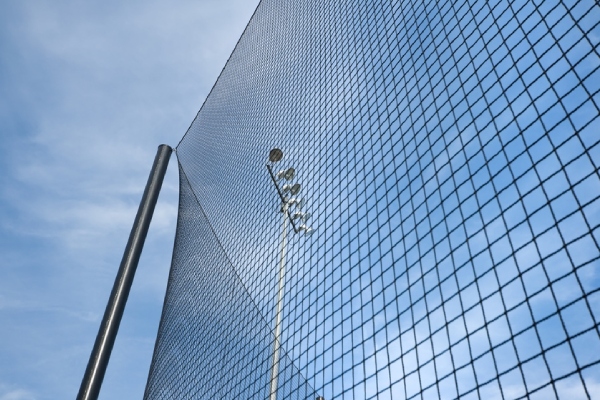
The ideal tension is moderate tautness that allows the net to absorb energy by deflecting slightly upon impact—like a boxer “rolling with a punch.”
- Initial Hanging: Netting panels are attached to the top support cable using heavy-duty snap hooks or carabiners clipped through the net’s border rope. Panels are laid out and attached loosely at first.
- Applying Tension Gradually: Turnbuckles on main support cables are then slowly tightened. This should be done in a balanced way if there are multiple tension points. As the top cable becomes taut, it will lift the net.
- Checking for Sag: The goal is to eliminate excessive sag in the top line of the net. A properly tensioned cable will have a slight, gentle catenary curve between poles but should not have deep, noticeable dips.
- Vertical Tension: In some systems, particularly those with a bottom cable, vertical tension is also applied. This can be done by lacing a rope through the bottom of the net and securing it to the bottom cable or to ground stakes. This keeps the bottom of the net in place and prevents billowing in the wind.
The process is iterative. You might tighten the top cable, adjust side attachments, then re-check top tension. It requires an experienced eye to know when tension is just right—firm, but not rigid.
Point 11: Securing the Netting Perimeter
A net hung only from a top cable is incomplete and potentially unsafe. The entire perimeter of each netting panel—top, bottom, and sides—must be securely and uniformly attached to the support structure. This ensures no gaps through which a projectile could escape, distributes loads evenly across the entire panel, and prevents the net from billowing or whipping in the wind, which can cause premature wear.

Attaching the Sides of the Netting Panels
The vertical edges of netting panels must be secured to support poles. Several effective methods exist.
- Direct Lacing: A common and effective method uses high-strength, UV-resistant rope to lace the net’s border rope directly to the pole. The rope is woven through the net’s border and around the pole in a continuous spiral, like lacing a shoe. This creates a continuous, secure connection and pulls the net taut against the pole, leaving no gaps.
- Using Attachment Points: Alternatively, if poles are fitted with eye bolts or other attachment points, the net can be connected using snap hooks or zip ties. If using this method, attachment points must be spaced closely enough (typically 12–18 inches) to prevent the net from gaping between them.
When multiple panels are joined together in the middle of a span (away from a pole), they must be seamed together. This is done by weaving a rope through the border ropes of both panels, effectively stitching them into a single, continuous sheet of netting.
Securing the Bottom of the Net
How the bottom of the net is secured depends largely on the application and ground surface.
- For Nets Reaching the Ground: If the net is intended to extend all the way to the ground, it must be secured to prevent balls from rolling under and to stop wind from lifting it.
- Bottom Cable: The most robust method is to run a tensioned cable along the bottom, just above the ground, and attach the net with snap hooks or lacing rope.
- Ground Stakes: For a more economical solution, the bottom of the net can be staked directly to the ground using heavy-duty stakes woven through the bottom border rope. This is common for temporary or semi-permanent installations.
- Chain-in-Bottom: Some nets are fabricated with a galvanized chain woven into the bottom border rope. The chain’s weight holds the net down, ensuring it conforms to ground contours. This is an excellent option for creating a good seal on uneven terrain.
- For Suspended Nets: In some designs, like a stadium backstop behind which there is a walkway, the net does not extend to the ground. In these cases, the bottom edge must be finished just like the top, with a strong border rope attached to a tensioned support cable, ensuring the bottom edge remains taut and does not become a weak point.
Properly securing the entire perimeter is a meticulous but vital task. It transforms individual netting panels into a fully integrated barrier system, ready to perform its function safely and effectively.
Point 12: Integrating Gates, Doors, and Access Points
A netting enclosure is rarely a completely sealed space; it almost always requires access points for people and equipment. Integrating gates or doors is not an afterthought; it must be planned from the beginning. A poorly designed access point can compromise the structural integrity and safety of the entire system. A well-designed one integrates seamlessly, providing necessary access without creating a weak link in the barrier.

Designing Functional Gates for People and Equipment
Gate design must be driven by its intended function.
- Personnel Gates: A simple gate for people can be a straightforward construction. It typically consists of a rigid metal frame (often made from the same material as poles, such as galvanized steel) hinged on one of the main support poles. Netting material is stretched tightly across this frame. Dimensions should be sufficient for easy passage, typically around 3–4 feet wide and 7 feet high.
- Equipment Gates: If larger equipment, such as a lawnmower or utility vehicle, needs to enter the enclosure, a much larger gate is required. This is often a double-gate design, with two framed panels meeting in the middle. These gates need more robust construction, with stronger frames and heavy-duty hinges to support additional weight and size.
In both cases, the frame is key. Netting material has no inherent rigidity; the frame provides structure and allows the gate to swing open and closed without sagging or deforming.
Ensuring Safety with Latches and Hardware
Gate hardware is just as important as the frame.
- Hinges: Hinges must be strong enough to support the weight of the gate frame and netting. For heavy equipment gates, heavy-duty, weld-on hinges are often the best choice. They should be made from galvanized or stainless steel to prevent seizing with rust.
- Latches: The latching mechanism must be secure and reliable. It needs to hold the gate firmly closed to ensure no gap between gate and post through which a ball could pass. For public facilities, the latch should be easy to operate but robust enough to withstand frequent use. In some cases, a lockable latch is necessary to control access.
- Overlap and Seals: A well-designed gate will have an overlap with the main net or post when closed. For example, the gate frame might have a flange overlapping the support pole, or netting on the gate might be made slightly wider than the frame to overlap adjacent netting. This eliminates potential gaps and ensures a continuous, safe barrier when the gate is closed.
Integrating a gate requires careful planning of pole layout. A pole must be positioned precisely where the gate will be hinged. The forces of a swinging gate also need to be considered in the design of that specific pole’s footing.
Point 13: Conducting a Thorough Post-Installation Inspection
The moment the last clip is fastened and the last gate is hung is not the end of the project; it is the beginning of a new phase: verification. A comprehensive post-installation inspection is an indispensable quality assurance step. It is a systematic review of every component to confirm work has been performed to specified standards and, most importantly, that the system is safe for use. This inspection should be conducted by a knowledgeable individual, ideally the project manager or facility owner, and meticulously documented.

The Component-by-Component Checklist
The inspection should be methodical, moving from the ground up and examining every element.
- Foundations and Poles:
- Visually inspect concrete footing of each pole. Is concrete free of major cracks? Is the top surface properly finished to shed water?
- Check each pole to ensure it is plumb. Use a long level to verify verticality.
- Examine pole surfaces for any deep scratches, dents, or breaches in protective coating (galvanizing or paint) that occurred during installation. Any damage should be repaired immediately to prevent corrosion.
- Hardware and Connections:
- Inspect every piece of hardware. Are all snap hooks properly closed?
- Check all cable clamps. Are they the correct size for the cable? Are they installed in correct orientation? Have they been tightened to specified torque? Verify with a torque wrench.
- Examine turnbuckles. Are they properly tensioned? Have lock nuts been tightened to prevent loosening over time?
- Netting Panels and Seams:
- Visually scan the entire netting surface. Are there any rips, tears, or manufacturing defects?
- Check tension across all panels. Is it uniform? Are there significant sags or tight spots?
- Inspect all seams, both where panels are joined to poles and where panels are joined to each other. Is lacing rope tight and secure? Are there any gaps?
- Gates and Access Points:
- Open and close every gate several times. Does it swing freely without binding?
- When closed, does the latch engage securely?
- Inspect the perimeter of the closed gate. Are there any gaps between gate and post or ground through which a ball could pass?
Documentation and Creating a Baseline for Future Inspections
Inspection findings should not be a mental checklist; they should be formally documented in a report. This report should include:
- The date of inspection.
- The name of the inspector.
- A checklist of all inspected items, each marked as satisfactory or noting deficiencies.
- Photographs of any issues or deficiencies found.
- A list of corrective actions required to address any problems.
This document serves several purposes. It is proof of due diligence, showing the facility owner took responsible steps to verify safety of the new installation. It provides a clear punch list for the installation contractor to complete before final payment. Perhaps most importantly, it creates a baseline record of the system in its brand-new condition. This baseline report, complete with photos, becomes an invaluable reference point for all future maintenance inspections, allowing staff to accurately assess wear and tear over time.
Point 14: Developing a Maintenance and Repair Schedule
A sports netting installation is not a “set it and forget it” asset. It is a dynamic system constantly under stress from impacts, weather, and UV radiation. Like any safety equipment, it requires regular, scheduled maintenance to ensure continued integrity and maximize service life. Developing a formal maintenance and repair schedule is not a bureaucratic exercise; it is a fundamental aspect of responsible facility management and risk mitigation. A proactive maintenance program identifies and addresses small problems before they escalate into large, costly, and dangerous failures.
Establishing a Routine Inspection Calendar
Consistency is key to effective maintenance. A formal inspection calendar should be created, with different frequencies for different types of checks.
- Informal Daily/Weekly Visual Checks: Staff at the facility daily should be trained to perform quick visual scans of the netting. This involves looking for obvious damage—a new tear from impact, a downed tree limb resting on the net, or a gate not latching properly. These quick checks can catch acute damage right after it occurs.
- Formal Monthly Inspections: Once a month, a designated staff member should conduct a more detailed walk-around inspection, looking more closely at netting for signs of wear, checking tension of main cables, and operating all gates.
- Comprehensive Annual Inspections: Once a year, conduct a thorough, top-to-bottom inspection similar to the initial post-installation inspection. This deep dive should involve:
- Close examination of netting fabric for signs of UV degradation (brittleness, discoloration) or abrasion.
- Checking all hardware for signs of corrosion or wear.
- Inspecting pole bases for any movement or cracking in concrete.
- Checking tension of all cables and guy wires with a tension gauge, if possible.
This annual inspection is a good time to bring in a professional from a netting company if facility staff lacks required expertise, especially for very high or complex systems.

Proactive Repair and Record Keeping
The purpose of inspection is to trigger action. A logbook—physical or digital—should be kept for the netting system. Every inspection, whether informal or annual, should be logged with date, inspector’s name, and findings.
When a problem is found, a repair plan should be initiated immediately.
- Minor Net Repairs: Small holes or tears can often be repaired in-house. A repair kit containing twine matching the net material and a netting needle should be kept on hand. A small hole repaired quickly is prevented from becoming a large, unrepairable tear.
- Hardware Replacement: Any hardware showing significant rust or wear should be replaced immediately. Waiting for a rusted clip to fail is an unacceptable risk.
- Structural Issues: Any problems with poles, footings, or main support cables should be considered urgent. A structural engineering consultant or the original installer should be contacted to assess and recommend corrective action.
This maintenance log becomes an essential legal and historical document for the facility. It demonstrates a consistent record of care and due diligence, invaluable in the unfortunate event of an accident. It also provides a history of system performance to inform decisions about when full replacement might be necessary.
Point 15: Training Staff on Safety and Inspection Protocols
The final point on our complete checklist for sports netting installation perpetuates the value of all preceding steps. The most robustly built system and most detailed maintenance schedule are of little value if on-site staff lack the knowledge to uphold them. Training is the mechanism by which a facility’s commitment to safety is transferred from paper plans and logbooks into daily operational culture. A well-trained staff becomes the eyes and ears of the facility, serving as the first line of defense against slow degradation and sudden damage.

Educating Staff on What to Look For
Every staff member working near the netting, from groundskeepers to coaches, should receive basic awareness training. They don’t need to be netting engineers, but they should learn fundamentals of what a safe net looks like and how to spot common danger signs. This training should cover:
- Identifying Obvious Damage: Show examples of rips or tears. Explain the danger of a ball passing through a hole.
- Spotting Wear and Tear: Teach them to look for frayed ropes, discoloration in netting (a sign of UV damage), or sagging sections.
- Recognizing Hardware Issues: They should report any hardware that looks heavily rusted, bent, or disconnected.
- Understanding Wind and Weather Effects: Explain that after a major storm, a special inspection is always warranted to check for damage from wind or fallen debris.
This basic training turns the entire staff into a team of safety spotters, vastly increasing the chances that problems are identified early.
Empowering a Designated Inspector
While all staff should have basic awareness, one or two individuals should be designated as primary inspectors and receive more in-depth training.
This person will be responsible for conducting scheduled monthly and annual inspections and maintaining the maintenance log. Their training should be more comprehensive:

- In-Depth Material Knowledge: They should understand the difference between HDPE or nylon netting used at their facility and know specific signs of degradation for that material.
- Proper Inspection Technique: They should be trained on how to conduct a systematic inspection, working from the ground up and knowing what to look for at each connection point.
- Using Repair Tools: This individual should be trained on how to properly use the netting repair kit to patch small holes effectively.
- Documentation and Reporting: They must be proficient in filling out the inspection log clearly and accurately and know who to report to when a problem is found beyond their ability to repair.
Investing a few hours in training empowers staff to take ownership of facility safety. It fosters a culture where safety is not just a management concern but a shared responsibility. This ongoing human oversight is the living element that ensures the long-term success and safety of your sports netting installation.
Frequently Asked Questions (FAQ)
1. How long should a professional sports netting installation last?
Lifespan depends heavily on material, climate, and usage. A high-quality, UV-stabilized HDPE net used outdoors can last 10–15 years or more. A treated nylon net might last 5–10 years, depending on coating integrity. The support structure (steel poles, hardware) should last much longer, potentially 20–30 years, with proper maintenance.
2. Can I install sports netting myself to save money?
For small, residential applications like a backyard golf cage, a DIY approach is possible with a kit. However, for any large-scale barrier netting, backstop, or commercial application, professional installation is strongly recommended. The process involves structural engineering, heavy equipment, and specific safety knowledge beyond most DIY projects. The risks of improper installation are too high.
3. What is the most common point of failure for sports netting systems?
Aside from acute damage from impact, the most common failures stem from long-term degradation: UV damage causing net twines to become brittle and break, corrosion of non-galvanized or poorly coated hardware leading to connection failures, and improper initial tensioning causing uneven stress and premature wear on certain net sections.
4. How much sag is acceptable in a newly installed net?
A brand-new installation should have minimal sag. The top line should have a slight, graceful curve (catenary) between poles but should not have deep, obvious dips. The goal is tautness, not rigidity. A small amount of “give” (1–2% of the span) is desirable to help absorb impacts. Excessive sag indicates improper tensioning of support cables.
5. Is black netting really better for visibility than other colors?
Yes. Black netting is the industry standard for applications where spectator visibility is a priority, such as baseball backstops. Black absorbs most visible light rather than reflecting it. This causes the spectator’s eye to naturally focus through the net onto the brighter field of play, making the net seem to “disappear.” White or other light-colored nets reflect light, making the net itself the focal point and obscuring the view.
6. What maintenance is required for a sports netting system?
A robust maintenance plan includes frequent visual checks for damage, monthly inspections of hardware and net tension, and a comprehensive annual inspection of every component. Maintenance also involves proactively repairing small tears before they grow and replacing any hardware showing significant corrosion.
7. How do I clean my sports netting?
For most dirt and debris, a simple rinse with a hose is sufficient. For stubborn dirt, a soft-bristled brush and mild detergent can be used. Avoid harsh chemicals, solvents, or high-pressure power washers, as these can damage netting material or its protective coatings.
Final
The installation of sports netting, when approached with the seriousness and diligence it deserves, is a complex but manageable undertaking. It is a process that weaves together principles from material science, structural engineering, risk management, and meticulous project planning. This guide has sought to illuminate the path, demonstrating that a successful outcome is not a matter of chance but the result of a rational, sequential, and comprehensive approach. From the foundational act of assessing the site to the ongoing responsibility of maintenance and training, each step is an indispensable link in a chain leading to a safe, functional, and durable facility.

Read our most popular articles.
👉 Download our free product categories
👉 Project Spotlight: Securing a Major League Baseball Stadium in 3 Proven Steps
👉 HDPE vs Nylon Sports Netting: The Ultimate Guide
👉 How can I import quality-certified custom Sports Netting from China
👉 The True Cost of Cheap Netting: A Total Cost of Ownership Analysis
👉 5 Proven Ways How Player Safety Standards are Driving Netting Innovation
👉 A Guide to Relevant Safety Standards for Sports Netting in North America