
I remember the first time I tried to import sports netting from China, and I felt lost because every factory promised “quality,” but none showed proof. Many buyers face this same fear of being stuck with unsafe or uncertified netting.
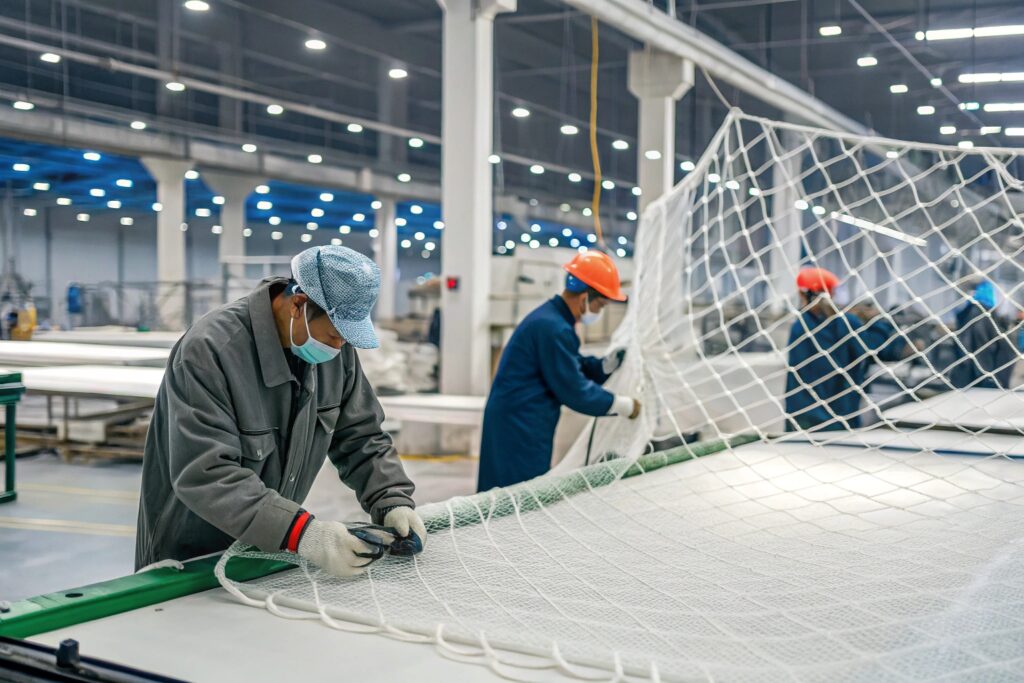
You can import quality-certified custom sports netting from China by checking key certifications, verifying supplier compliance, requesting samples, and using third-party inspections to ensure the netting meets safety, durability, and international standards.

I kept looking for answers because choosing a supplier without a clear process brought too many risks. Then I started building a simple system that helped me filter reliable factories fast and avoid costly mistakes.
What certifications should I look for when importing sports netting from China?
I once approved an order too fast because the factory claimed to have “all certificates.” Later I learned none were valid, and the project stalled. I never forgot that lesson.
You should look for ISO 9001, CE, SGS test reports, and material-specific certifications because these show the factory follows strict processes and the netting meets safety rules in your country.
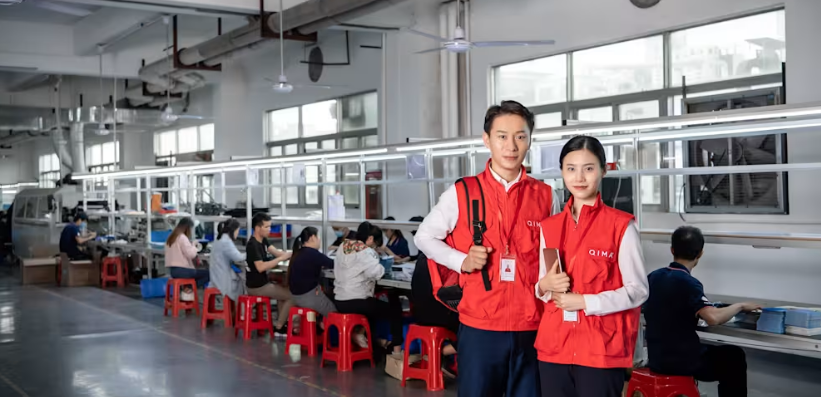
When I checked certifications the right way, I found that each one told me something different. ISO 9001 showed the factory had stable processes. CE helped with EU compliance. SGS testing proved mesh strength and UV resistance. I later created a simple table to help me compare suppliers.
Key certifications and what they mean
| Certification | What It Proves | Why It Matters |
| ISO 9001 | Factory maintains consistent production quality | Lowers risk of batch defects |
| CE | Product meets EU safety standards | Needed for EU imports |
| SGS Test Report | Independent physical testing | Confirms strength, UV, abrasion |
| RoHS | Safe raw materials | Needed for some regions |
These checks helped me confirm that only a handful of suppliers were qualified. Many factories claimed certifications but could not provide real documents. I learned to cross-check every certificate with the issuing body before I trusted the supplier.
How do I verify if my supplier meets international quality standards?
I once visited a factory that looked impressive online. When I arrived, the real workshop was small and messy. That moment changed how I verify suppliers.
You can verify a supplier by checking certifications, reviewing testing reports, requesting videos of their workshop, and using third-party audits to confirm their claims.

After that experience, I built a clear process that helped me avoid fake profiles.
Ways to verify supplier standards
- Audit reports — Ask for BSCI or factory inspection reports.
- Production videos — Real factories show extrusion, knotting, stretching, and heat-setting lines.
- Sample testing — Check knot strength, mesh accuracy, and material softness.
- Third-party QC — Use SGS, BV, or TUV for pre-shipment checks.
Verification checklist
| Step | What to Check | Why |
| Factory Identity | Business license, export license | Confirms legitimacy |
| Production Ability | Machines, staff, output capacity | Ensures consistent supply |
| Compliance | Certificates and reports | Reduces legal risk |
| Communication | Fast replies and technical answers | Predicts cooperation quality |
I found that real suppliers always respond calmly when I request audits or QC checks. Fake ones avoid details or try to change the topic.
What are the key safety tests my sports netting must pass?
My first Canadian client once asked for a pull-load test, and I hesitated because I did not know the standard at that time. I realized how much I needed to learn about safety testing.
Your netting must pass tensile strength tests, mesh stability tests, knot-break tests, and UV resistance tests to ensure it performs safely in sports environments.
When I started looking into this, I found that each test checked a different weakness. Pull tests show raw material strength. Knot tests show mesh durability. UV tests show long-term reliability outdoors.
Common safety tests
| Test Type | What It Measures | Importance |
| Resistencia a la tracción | Fiber durability | Prevents breakage |
| Knot-Break Test | Knot friction strength | Ensures mesh stability |
| UV Aging Test | Sunlight resistance | Outdoor lifetime |
| Abrasion Test | Wear resistance | Helps in high-impact sports |
| Mesh Accuracy Test | Uniformity of mesh size | Ensures safety and ball control |
These tests helped me choose better materials and avoid suppliers who used recycled PE or weak nylon without declaring it.
How can I ensure the netting is UV and weather-resistant?
The first time I saw a golf range net fade and crack after one season, I knew the supplier had not added UV stabilizers. That failure cost me a relationship with a customer.
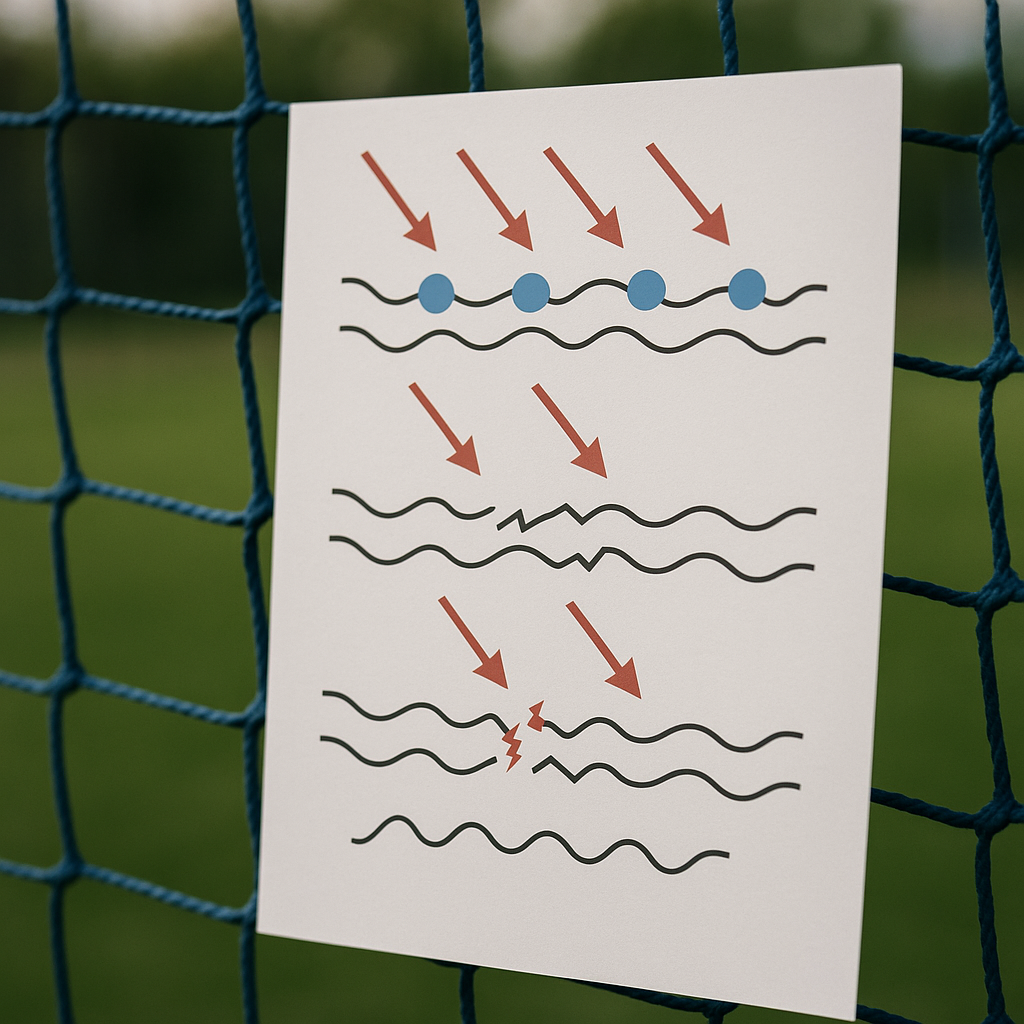
You can ensure UV resistance by requesting UV-treated materials, asking for SGS UV-aging test reports, and confirming the supplier uses high-quality HDPE with anti-UV additives.
Later, I learned that UV failure usually comes from poor material or weak heat-setting. Weather resistance comes from correct stabilization and high-quality pigments.
UV and weather resistance factors
| Component | What to Look For | Why |
| Raw Material | Virgin HDPE or Nylon 66 | Better outdoor life |
| Additives | Anti-UV masterbatch | Slows aging |
| Heat-Setting | Uniform thermal tension | Prevents deformation |
| Pigment | Fade-resistant colorant | Long-term appearance |
I began asking every supplier to show real UV test results and production videos of their extrusion lines. Real UV-treated netting survives 5–8 years outdoors.
What materials are best for high-performance sports netting?
When I tested different materials with my clients, I saw how big the performance gap was. Nylon felt softer and stronger but absorbed water. HDPE lasted longer outdoors but felt stiffer.
The best materials for sports netting are HDPE for outdoor durability and nylon for high-impact sports because each material performs differently in strength, flexibility, and weather resistance.
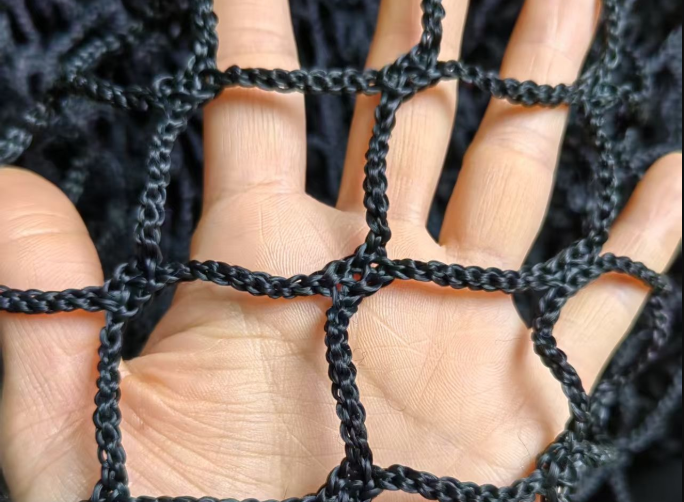
Over time, I learned to match materials to real environments instead of using one material for everything.
Material comparison
| Material | Fuerza | Weather Resistance | Best Use |
| HDPE | Alta | Excelente | Golf, baseball, outdoor sports |
| Nylon | Very high | Moderado | Indoor sports, tennis, impact zones |
| PP | Medio | Average | Budget projects |
| Poliéster | Alta | Bien | Specialty nets |
Using the right material improved customer satisfaction and reduced returns. I now explain the difference clearly so clients can make better decisions.
How do I get custom logo printing on my sports netting?
I used to think logo printing was simple until I found out that not all factories could print on net borders or PVC tapes cleanly. It took many trials to get the printing crisp and long-lasting.
You can get custom logo printing by choosing a supplier that offers OEM services, uses durable ink, and applies printing on reinforced edge tapes or banners attached to the net.
I learned that direct printing on netting is not stable. Good factories use border tapes or vinyl panels.
Logo printing methods
| Method | How It Works | When to Use |
| Screen Printing | Manual or semi-auto | Simple logos |
| Heat Transfer | Printed film + heat press | Multi-color logos |
| Digital Printing | High-detail printing | Branding panels |
Custom logos help many sports centers show their brand identity, and my customers often request multi-color logos on PVC edge banners.
What’s the typical lead time for custom netting orders from China?
I used to underestimate lead times and faced delays that pushed my clients’ opening dates. Later, I learned to plan around real factory schedules.
Most custom sports netting orders take 15–30 days to produce, depending on material, size, color, and customization details.
Lead time depends on weaving, heat-setting, stitching, and finishing. Large orders require more time for cutting and packaging.
Lead time breakdown
| Stage | Time | Notes |
| Material Extrusion | 2–5 days | Depends on color |
| Knotting/Weaving | 3–10 days | Based on mesh size |
| Heat-Setting | 1–2 days | Stabilizes net |
| Stitching | 2–5 days | Custom edges |
| QC & Packing | 1–3 days | Export packing |
Once I tracked these stages, I could manage customer expectations better.
How do I calculate the right netting dimensions for my sports facility?
Many clients send me rough dimensions. I learned early that wrong measurements create dangerous gaps or unexpected tension during installation.
You can calculate the correct netting size by measuring width, height, and span length, then adding extra allowance for stretching, tensioning, and edge finishing.
I often guide clients to measure from fixed points, not from the ground or irregular posts.
Measurement guide
| Step | What to Measure | Allowance |
| Anchura | Post-to-post | Add 3–5% |
| Height | Ground to beam | Add 5–10% |
| Profundidad | Angle or slope | Add based on design |
| Edges | Reinforced borders | Usually 5–8 cm |
Correct dimensions reduce installation time and help avoid re-orders.
What accessories should I order with my sports netting for a complete solution?
I once supplied netting without hardware because the client thought their team had everything. They ended up delaying the project by two weeks.
You should order ropes, hooks, carabiners, tension cables, steel rings, and edge tapes because these accessories complete your installation and keep the net safe and stable.

I learned to create full accessory kits for clients because it saved time and reduced confusion.
Accessory list
| Accessory | Use | Why Needed |
| Rope | Hanging the net | Basic installation |
| Cable | Long spans | Extra tension |
| Carabiners | Quick mounting | Easy adjustments |
| Edge Tape | Strong borders | Clean finish |
| Turnbuckles | Tension control | Seguridad |
Clients who order full sets finish installations faster and avoid missing parts.
What after-sales support can I expect from a Chinese netting supplier?
I believe after-sales support shows the true attitude of a supplier. When I started, I made the mistake of returning calls too slowly after a shipment. I fixed that by building a response system.
You can expect installation guidance, material recommendations, warranty terms, and replacement support if the supplier provides full technical assistance.
Real support includes drawings, tension suggestions, and help with logistics claims.
Types of after-sales support
| Support Type | What It Includes |
| Technical | Drawings, tension plans, installation advice |
| Warranty | Material replacement within a set period |
| Logistics | Tracking and customs help |
| Documentation | CO, PL, CI, packing lists |
Strong support builds long partnerships, especially for buyers who manage many sports projects each year.
Importing sports netting from China becomes much easier when I follow a clear process built on certification checks, material understanding, testing, and supplier verification. I now use this same system to help my clients avoid delays and quality surprises. If you want stable quality, custom options, and full support from design to delivery, I believe Wenetting can give you a reliable solution backed by real manufacturing strength.

Lea nuestros artículos más populares.
👉 Descargue gratuitamente nuestras categorías de productos
👉 The Ultimate Guide to Installing Anti-Insect Nets in Greenhouses
👉 The Ultimate Guide to Choosing the Right Cargo Netting for Your Fleet
👉 HDPE vs Nylon Sports Netting: The Ultimate Guide
👉 A 5-Step Expert Guide: “Made to Order”: A Look at Our Custom Netting Process
👉 Cómo Empezar un Negocio de Redes de Marca Propia: Un marco de trabajo en 5 pasos
👉 La fabricación china frente a los proveedores locales: Guía del comprador de redes