
The cultivation of fruit within an orchard setting represents a significant investment of capital, labor, and time, yet it remains perpetually vulnerable to a host of external pressures. Avian, insect, and mammalian pests, along with unpredictable and damaging weather events like hail, pose substantial threats to crop yield and quality, leading to severe economic losses. This document examines the implementation of a physical exclusion strategy, specifically an integrated netting system, as a proactive and sustainable method for orchard protection.

It presents a comprehensive framework for growers, moving from initial site and risk assessment to the nuanced selection of appropriate netting materials, mesh sizes, and structural designs. The discourse synthesizes principles from agricultural science, materials engineering, and economic analysis to provide a robust guide for designing, installing, and maintaining these systems.
The objective is to articulate a holistic methodology for pest-proofing an orchard, demonstrating that a well-conceived integrated netting approach is not merely a defensive measure but a strategic investment in agricultural resilience and long-term profitability.
الوجبات الرئيسية
- Begin with a thorough assessment of specific pest pressures and environmental risks in your orchard.
- Select netting material, mesh size, and color based on target pests and desired microclimate effects.
- Choose between drape and full-canopy systems by balancing cost, durability, and operational needs.
- A successful pest-proofing your orchard: an integrated netting approach requires meticulous planning and installation.
- Implement a regular maintenance schedule to maximize the lifespan and effectiveness of your netting.
- Consider the long-term return on investment, factoring in reduced crop loss and pesticide use.
Step 1: Foundational Assessment – Understanding Your Orchard’s Vulnerabilities
Embarking on the path to secure an orchard is an exercise in foresight. Before a single pole is erected or a net unfurled, a deep, reflective analysis of the specific challenges facing your crop is paramount. This initial stage is not about netting itself; it is about cultivating a profound understanding of the ecosystem your orchard inhabits.

It involves playing the role of detective, ecologist, and economist simultaneously. What are the forces, both living and elemental, that conspire against your harvest? Answering this question with precision forms the bedrock upon which a successful protection strategy is built.
A generic solution is often no solution at all. The goal is to develop a tailored defense, a system so attuned to your specific context that it functions as a natural extension of your agricultural practice.
Identifying Key Pests: From Avian Raiders to Insect Intruders
The first subject of our inquiry is the cast of characters that views your fruit as its personal larder. The term ‘pest’ is a broad one, and effective defense demands specificity. Are you contending with large, flocking birds like starlings or crows, which can strip a cherry tree in an afternoon? Or is the threat more subtle, posed by smaller finches that peck and damage individual apples, rendering them unmarketable? Perhaps the primary antagonist is not avian at all. Consider the codling moth, whose larvae burrow into the heart of pome fruits, or the spotted wing drosophila, a devastating pest of soft fruits. Each species presents a unique challenge.

To create a comprehensive pest profile, one must engage in systematic observation. What time of day are birds most active? Which species are present? For insects, deploying pheromone traps can provide invaluable data on population density and life cycle timing. Consulting with local agricultural extension services can supplement your own observations with decades of regional data (Atucha et al., 2021). Keep a detailed log. Note the type of damage, its severity, and the time of season it occurs. This detailed dossier on your adversaries is not an academic exercise; it directly informs the most critical specification of your netting system: the mesh size. A net designed to stop a starling is useless against a fruit fly. Acknowledging this simple truth is the first step toward a truly effective pest-proofing your orchard: an integrated netting approach.

Analyzing Environmental Threats: Hail, Wind, and Sun
Beyond the biological pressures, an orchard exists at the mercy of the elements. A hailstorm, lasting only minutes, can inflict catastrophic damage, bruising and splitting fruit, tearing leaves, and even damaging the woody structure of the trees. The financial and emotional impact of such an event can be profound. Therefore, a vulnerability assessment must include a climatological risk analysis. What is the historical frequency of hail in your region? What is the typical size of the hailstones? Insurance data and meteorological records are powerful tools in this investigation.
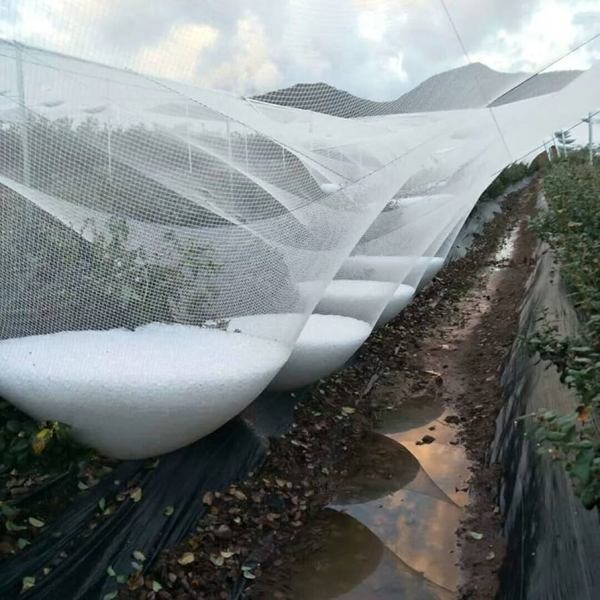
شبكة حماية البستان الآمنة ضد التمزق من العواصف، شبكة الحماية من البَرَد HDPE
The 4×7mm reinforced mesh structure, crafted from high-tenacity 0.35mm HDPE monofilament, delivers exceptional tear resistance and consistent impact dispersion against hail strikes, ensuring long-term protection for orchards exposed to seasonal storms.
Wind is another relentless force. Persistent high winds can cause fruit drop, inhibit pollinator activity, and create physical stress on the trees. In the context of a netting structure, wind represents the primary engineering challenge. A large, flat expanse of netting acts like a sail, and the forces it can exert on the support structure are immense. Your assessment must, therefore, include an analysis of prevailing wind directions and typical maximum gust speeds. This information will be foundational when designing the anchoring and cable systems.
Finally, consider the sun. While essential for photosynthesis, excessive solar radiation and heat can lead to sunburn on sensitive fruit varieties, reducing their quality and market value. Specialized shade nets can mitigate this risk, but they also reduce the amount of photosynthetically active radiation (PAR) reaching the leaves. Your assessment must weigh the risk of sunburn against the potential for reduced growth or sugar development. This is a delicate balancing act, one that depends on your specific crop, climate, and cultivation goals.
Conducting a Cost-Benefit Analysis: The Economics of Netting
A netting system is a significant capital investment. A responsible grower must approach this decision with a clear-eyed financial calculus. The process begins with quantifying your losses. Using your records from previous seasons, what is the average percentage of your crop lost to pests and weather each year? Assign a monetary value to this loss based on market prices. This figure represents your annual cost of inaction.

Next, you must estimate the cost of the netting system. This includes not just the nets themselves but also the poles, wires, anchors, and labor for installation. It is wise to obtain quotes for various system types to understand the range of potential investment. A full-canopy, permanent structure will have a higher upfront cost than a simple seasonal drape-over system.
The core of the analysis involves calculating the return on investment (ROI). Let us imagine a simplified scenario. Suppose your average annual loss to birds is $15,000. A netting system that costs $100,000 to install and has an expected lifespan of 15 years could be evaluated. The annualized cost of the system is roughly $6,667 per year (ignoring maintenance and financing costs for simplicity). If the netting eliminates the $15,000 loss, the net annual gain is over $8,000. The payback period would be under seven years. Furthermore, this calculation does not account for secondary benefits, such as reduced need for chemical sprays, which lowers input costs and can open doors to premium organic markets (Matese et al., 2020). This economic modeling, while predictive, transforms the decision from a gut feeling into a strategic business choice. It allows you to justify the investment not as a mere expense, but as a wealth-preserving asset.

Step 2: Selecting the Right Armor – A Deep Dive into Netting Materials and Types
With a clear understanding of the threats, we can now turn our attention to the shield itself: the netting. The selection process is a journey into material science, geometry, and even color theory. It is a decision that will influence not only the effectiveness of your pest exclusion but also the very microclimate in which your trees will grow.
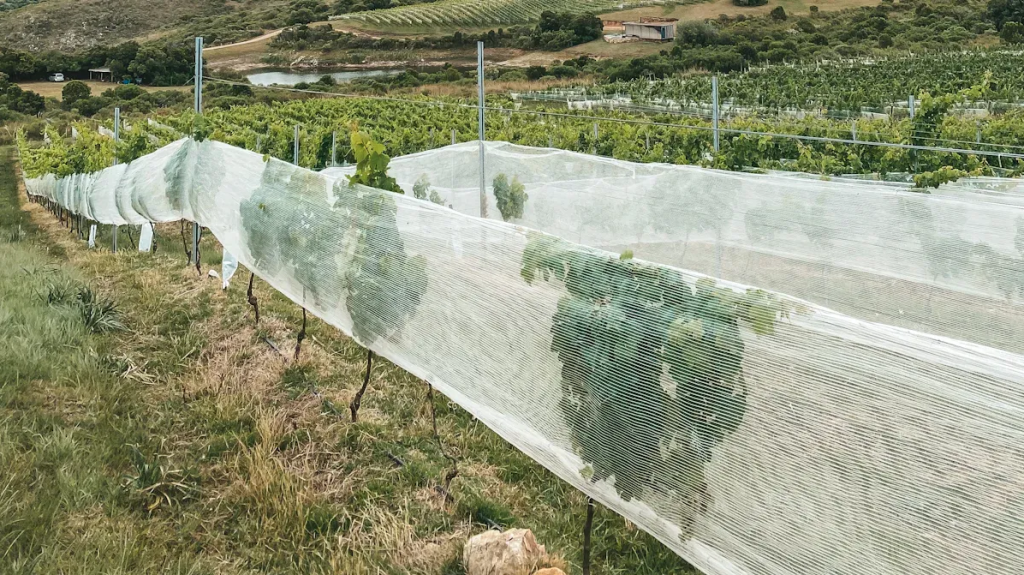
The ideal netting is more than a simple barrier; it is a semi-permeable membrane that selectively filters the outside world, letting in the good (sunlight, rain, pollinators) and keeping out the bad (pests, hail). Making the right choice requires a granular understanding of the options available.

Material Science for Growers: HDPE, Nylon, and Polypropylene
The raw material from which a net is woven determines its strength, durability, and lifespan. The dominant material in modern agricultural netting is High-Density Polyethylene (HDPE). To appreciate why, let’s think about its molecular structure. HDPE consists of long polymer chains with minimal branching. This allows the molecules to pack closely together, creating a dense, strong, and rigid material. For the grower, this translates to high tensile strength, meaning it can withstand significant pulling forces from wind or snow without breaking.
Crucially, HDPE is highly resistant to ultraviolet (UV) radiation when treated with appropriate stabilizers. Unprotected plastic will quickly become brittle and fail when exposed to years of sunlight. Quality HDPE netting incorporates UV inhibitors that absorb or reflect this harmful radiation, dramatically extending the material’s service life, often to 10-15 years or more. It also exhibits excellent chemical resistance, meaning it will not degrade when exposed to common agricultural sprays. Lastly, HDPE does not absorb water, so it won’t become heavy and sag after rain, a pivotal characteristic for maintaining structural integrity.
Other materials exist, such as nylon and polypropylene. Nylon boasts exceptional strength and abrasion resistance but is generally more expensive and can absorb some water. Polypropylene is lightweight and cost-effective but typically has lower strength and UV resistance than HDPE, making it more suitable for lighter-duty, seasonal applications. For a long-term, structural pest-proofing your orchard: an integrated netting approach, HDPE remains the industry standard for a reason: it offers the best balance of strength, longevity, and cost.
Mesh Size Matters: A Comparative Analysis
The size of the openings in the net, or the mesh size, is arguably the most important specification to get right. It is a direct countermeasure to the pest profile you developed in Step 1. A mesh that is too large will fail to exclude the target pest. A mesh that is unnecessarily small can have negative consequences, such as impeding airflow, increasing temperatures, and blocking smaller beneficial insects or even pollinators. The choice is a compromise, a calculated decision based on the primary threat.
The table below provides a comparative analysis of common mesh sizes and their typical applications. This is not an exhaustive list, but a guide to help you think through the selection process.
| Mesh Size (mm x mm) | Primary Target Pests | Secondary Effects & Considerations |
|---|---|---|
| 25 x 25 | Large Birds (Crows, Pigeons, Starlings) | Maximum light and air penetration. Offers no protection from small birds or insects. Primarily for avian control. |
| 16 x 16 | Medium to Small Birds (Sparrows, Finches) | Standard “bird netting.” Good balance of airflow and exclusion. May offer minor hail protection. |
| 8 x 8 | Very Small Birds, Large Insects (Moths, Wasps), Hail | Reduces light and airflow more significantly. Can increase humidity. Effective hail barrier. |
| 3 x 3 | Small Insects (Spotted Wing Drosophila, Aphids) | Significantly alters the microclimate. Requires structural support to manage wind load. May interfere with pollination. |
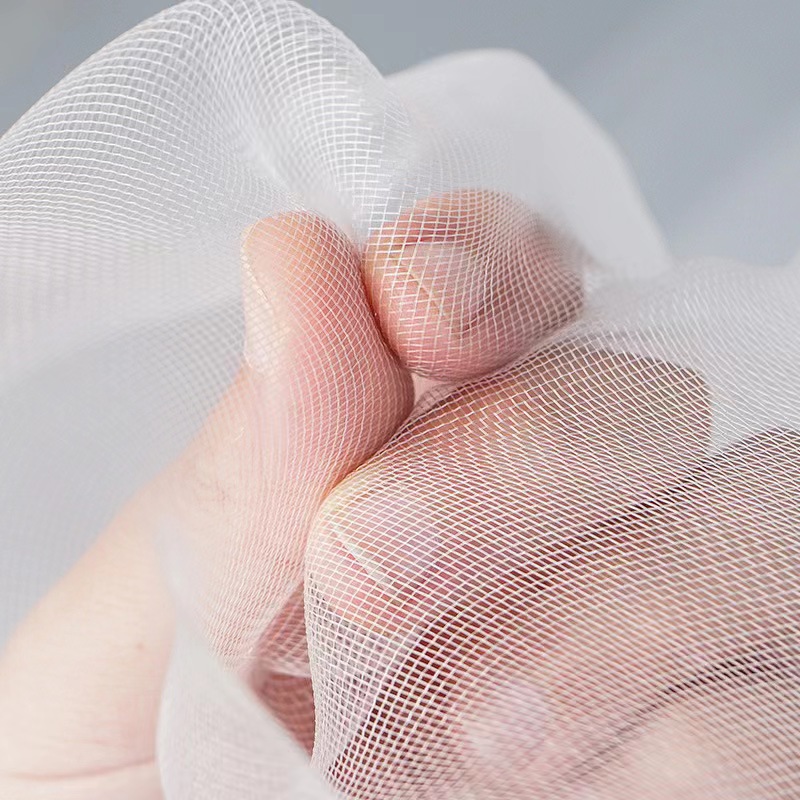
| 2.4 x 4.8 (Rectangular) | Codling Moth, Thrips | Specialized insect netting. The rectangular shape is designed to block specific pests while allowing for better airflow than a square mesh of similar efficacy. |
Thinking through this table, you can see the trade-offs. If your only problem is large birds, a 25mm mesh is ideal. If, however, you have issues with both small birds and the risk of hail, the 8mm mesh becomes a more logical, multi-purpose choice, even with the slight reduction in airflow. For high-value crops susceptible to insect damage, a fine mesh may be the only viable option, but it requires a more robust structure and careful management of the internal orchard environment.
To Drape or to Frame?: Choosing a System Structure
Once you have selected the netting material and mesh size, you must decide how it will be deployed over your orchard. There are two principal philosophies: drape netting and full-canopy (or framed) systems.

| الميزة | Drape Netting System | Full-Canopy (Framed) System |
|---|---|---|
| Concept | Nets are laid directly over the tree canopy before fruit ripens. | A permanent structure of poles and cables is built over the orchard, and nets are suspended above the trees. |
| Upfront Cost | Low to moderate. Requires no major structural components. | High. Significant investment in poles, cables, anchors, and engineering. |
| Labor | High annual labor for deployment and retrieval. | Low annual labor. Nets can often be retracted and extended mechanically or with minimal effort. |
| المتانة | Lower. Nets are in contact with branches, leading to abrasion and tearing. | High. Nets are protected from contact with trees. The structure is engineered for wind and crop loads. |
| الوصول إلى المحاصيل | Difficult. Access for late-season thinning or inspection requires lifting the net. | Easy. Normal orchard machinery can operate freely underneath the suspended net. |
| الفعالية | Good, but pests can sometimes damage fruit through the net where it touches. | Excellent. Complete physical separation between the crop and the external environment. |
| الأفضل لـ | Smaller orchards, budget-conscious operations, or where flexibility is key. | Commercial-scale orchards, high-value crops, regions with high pest/weather pressure. |
Drape netting is an accessible entry point. It’s like putting a blanket over your trees. It’s effective, especially for bird control, but it can be cumbersome. Each year, the nets must be carefully rolled out and then collected again after harvest. The direct contact with the trees can cause chafing and wear, shortening the lifespan of the net.

A full-canopy system is a more profound commitment. It is akin to building a cathedral over your orchard. Tall poles are set in concrete, connected by a grid of high-tensile steel cables. The nets are suspended from this grid, creating a protected space several feet above the tallest trees. While the initial investment is substantial, the long-term benefits are compelling. Orchard operations—spraying, mowing, harvesting—can proceed unhindered. The nets last longer because they are not abraded by branches. For a grower looking to secure their livelihood for decades to come, the framed system represents the pinnacle of a pest-proofing your orchard: an integrated netting approach.
Color Theory in the Orchard: How Netting Color Affects Plant Growth and Pest Behavior
The final consideration in our selection process is the color of the net itself. This may seem like a purely aesthetic choice, but it has significant biological consequences. The color of the net selectively filters the spectrum of light that reaches the trees, which can influence everything from fruit size to pest behavior (Legarrea et al., 2010).

White or transparent netting is the most common choice as it aims for neutrality. It allows the maximum amount of full-spectrum light to pass through, having the least impact on the natural growing environment. It is the default choice when the primary goal is simple physical exclusion.
Black netting, by contrast, absorbs more light and typically provides a higher degree of shading. This can be beneficial in intensely sunny climates where it helps prevent sunburn on fruit and reduces heat stress on the trees. The trade-off is a reduction in total light energy, which might slightly delay ripening or reduce sugar content in some cases.

Colored nets (e.g., red, blue, or pearl) represent a more advanced, “photoselective” approach. These nets are designed to alter the ratio of different wavelengths of light, such as the ratio of red to far-red light or the amount of blue light. Research has shown that these subtle shifts can have surprising effects.
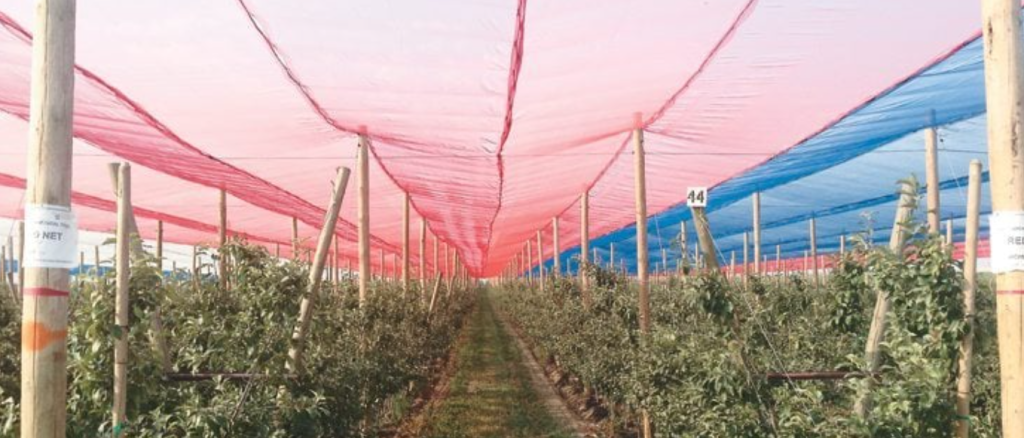
For example, some studies suggest that pearl or red nets can increase fruit size and yield in certain apple varieties by diffusing light more effectively throughout the canopy. Blue nets have been observed to calm bees, potentially improving pollination under the net. Some colored nets may even have a deterrent effect on certain insects, which perceive colors differently than we do. The science of photoselective netting is still evolving, but it highlights how a netting system can be more than a barrier—it can be an active tool for crop management.
Step 3: The Blueprint for Success – Designing Your Integrated Netting System
Having selected the ideal armor for your orchard, the next phase is architectural. This is where we translate our understanding of threats and materials into a tangible, three-dimensional structure. Designing a netting system, particularly a full-canopy one, is an engineering project that demands precision and foresight. A well-designed system will stand for decades, integrating seamlessly with your daily operations. A poorly designed one can become a source of constant frustration, vulnerable to failure and an impediment to efficient farming. The goal is to create a blueprint that is robust, functional, and tailored to the unique topography and workflow of your specific orchard.
Full Canopy vs. Row-by-Row: Design Philosophies
The first major design decision for a framed system is the overall layout. Will you create one large, continuous “big top” that covers the entire orchard block? Or will you build individual structures over each row of trees?
The full-canopy, or “quonset hut,” design is the most common for large-scale commercial orchards. It involves creating a complete roof of netting over the entire area, supported by a grid of poles and exterior anchoring. Its primary advantage is unparalleled access. Tractors, sprayers, and harvesting platforms can move freely in any direction underneath the net, just as they would in an uncovered orchard. This operational freedom is a massive benefit. The design also creates a more uniform internal microclimate. However, it requires very strong perimeter anchoring to handle the cumulative wind load on such a large surface area. Any failure in a major cable can compromise a large section of the structure.

A row-by-row design, sometimes called a tunnel system, involves building smaller, independent structures over each individual row or a pair of rows. This design can be more adaptable to uneven terrain or irregularly shaped blocks. Because each unit is smaller, the engineering loads on any single component are lower, and a failure is contained to a single row. This modularity can be appealing. The significant drawback is access. Movement between rows is restricted by the netting walls, forcing all machinery to operate strictly along the row axis. This can complicate tasks like mowing or moving bins during harvest. The choice between these two philosophies is a fundamental one, balancing operational efficiency against structural modularity.
Engineering for Longevity: Poles, Cables, and Anchoring Systems
The skeleton of a full-canopy system is its network of poles, cables, and anchors. The longevity of the entire system depends on the quality and specification of these components. This is not the place to cut corners.

Poles are typically made of treated wood, galvanized steel, or pre-stressed concrete. Wooden poles are often the most cost-effective but have a finite lifespan, even when treated. Steel offers greater strength and longevity but must be properly galvanized to prevent rust. Pre-stressed concrete poles are the premium option, offering exceptional strength and near-indefinite lifespan, impervious to rot or rust, but they come with the highest upfront cost and weight. The height of the poles is determined by your machinery and tree height, ensuring ample clearance for all operations. Pole spacing is a critical engineering calculation, typically ranging from 10 to 15 meters, depending on the expected crop and snow/wind loads.

The cables are the tendons of the system. High-tensile galvanized steel wire is the standard. A grid of cables is run across the tops of the poles, and the netting is attached to this grid. A perimeter cable runs around the entire edge of the structure, bearing the primary tension. The diameter and grade of the cable must be calculated by an engineer to handle the maximum potential loads for your specific location.
Anchoring is perhaps the single most critical element. The anchors are what hold the entire structure to the ground against the immense force of the wind. Screw-in earth anchors are common, drilled deep into the soil. The size and depth of the anchor depend entirely on the soil type. A sandy loam requires a much larger and deeper anchor than dense clay. In some cases, concrete deadman blocks must be buried to provide sufficient holding power. Every perimeter pole must be securely anchored back. A failure of the anchoring system will lead to a catastrophic failure of the entire structure. Professional design, often involving a structural engineer, is highly recommended for this aspect of a pest-proofing your orchard: an integrated netting approach.
Integrating with Orchard Operations: Pruning, Spraying, and Harvesting Access
A netting system must not be an obstacle to farming; it must be a tool that facilitates it. The design phase is the time to think through every task you perform in the orchard and ensure the structure accommodates it.

Consider pruning. Will you have enough clearance above the trees to work comfortably? For full-canopy systems, this is rarely an issue. For drape nets, the need to remove the net for winter pruning is a major operational consideration.
Think about spraying. Your sprayer needs to fit comfortably under the structure. But the net also affects spray dynamics. The physical barrier can reduce spray drift, which is an environmental benefit. However, it can also alter the air patterns within the canopy, potentially affecting spray coverage. Some growers find they need to adjust nozzle types or spray volumes to achieve the same coverage they had in an open field.

Harvesting is the culmination of the season, and the netting system must not hinder it. For hand-harvested crops, ensure that ladders can be used safely and that workers can move freely. For machine-harvested crops, the clearance of the structure is non-negotiable. The design must account for the full height and width of your largest piece of equipment. If you plan to upgrade your equipment in the future, it is wise to build in extra clearance now. Designing for access is a core principle of a functional and user-friendly system. A great source for exploring different options tailored to your needs can be found in a provider of شبك الطيور الزراعية and other custom solutions.
Seeking Professional Guidance
While the principles discussed here provide a strong foundation, the complexity and risk associated with a large-scale netting project warrant professional consultation. An experienced netting supplier or agricultural engineer brings a wealth of knowledge that is difficult to acquire independently. They can perform the necessary structural calculations to ensure your design is safe and compliant with local building codes. They have experience with different soil types and weather conditions and can recommend the most appropriate anchoring systems.
Furthermore, they can provide a detailed, itemized quote that helps you budget accurately. They can often connect you with experienced installation crews. While it may be tempting to pursue a fully DIY approach to save money, the potential cost of a structural failure—in terms of crop loss, damage to equipment, and the need for a complete rebuild—far outweighs the cost of professional design services. Engaging an expert is a form of insurance, ensuring that your significant investment in a pest-proofing your orchard: an integrated netting approach is built to last.
Step 4: Meticulous Installation – From Groundwork to Final Tensioning
The transition from a detailed blueprint to a physical reality is a critical phase. The most brilliant design can be undermined by a flawed installation. This stage requires precision, patience, and a methodical approach. It is a construction project, and success hinges on getting each step right, from the initial marking of the ground to the final tightening of the wires. A properly installed system will stand taut and strong, ready to face the elements. A rushed or sloppy installation can lead to sagging nets, premature wear, and even structural failure.

Preparing the Site: Ground-Level Prerequisites
Before any construction begins, the site itself must be prepared. This starts with a precise survey. Using the design plan, mark the exact location for every pole and every anchor point. Accuracy here is paramount; even small errors can compound across the structure, leading to misaligned cables and ill-fitting nets.
Once marked, the ground at each pole location should be cleared and leveled. If you are using concrete footings, the holes must be excavated to the specified depth and diameter. For screw-in anchors, the area must be clear of any surface obstacles like rocks or roots that could impede their installation.
This is also the time to consider any necessary ground contouring. If the netting system will direct rainwater to specific areas, you may need to create small swales or drainage channels to manage the water flow and prevent erosion. If there are any dead trees or major obstacles within the orchard block that need to be removed, now is the time to do it, before a structure is built over them. A clean and accurately marked site is the canvas for a successful installation.
The Installation Sequence: A Step-by-Step Walkthrough
The installation process follows a logical sequence, building the structure from the ground up.
- Anchor and Pole Installation: The first structural elements to go in are the anchors and the poles. Anchors must be installed to the correct depth and angle specified in the engineering plan. This often requires specialized hydraulic equipment. Next, the poles are set. Whether they are driven into the ground or set in concrete, they must be perfectly plumb (vertically straight) and at the correct height. A laser level is an invaluable tool for ensuring all pole tops align perfectly on the same plane.
- Cable and Wire Installation: With the poles in place, the skeleton of cables can be assembled. The heavy-duty perimeter cable is installed first and tensioned slightly. Then, the grid of internal cables is laid out and connected to the perimeter cable. All connections should be made with high-quality hardware, such as wire rope grips and thimbles, to prevent chafing and ensure a secure hold. At this stage, the cables are not yet fully tensioned.
- Net Deployment: This is often the most delicate part of the operation. The large rolls of netting are heavy and unwieldy. They are typically lifted into position using machinery like a forklift or a crane with a specialized spreader bar. The net is carefully unrolled over the top of the cable grid. It is crucial to avoid snagging the net on poles, cables, or tree branches during this process. A calm, windless day is essential for this step.
- Net Attachment: Once the net is in position, it must be attached to the cable grid. This is typically done with specialized plastic clips or hooks that are designed to hold the net securely without tearing it. Workers in elevated platforms move across the grid, attaching the net to the wires at regular intervals, usually every 12 to 18 inches. The attachment along the perimeter cable is especially important.
Tensioning and Securing: Achieving the Perfect Fit
With the nets attached, the system is ready for its final and most critical step: tensioning. The goal is to create a taut, drum-like surface that will shed rain and hail and resist flapping in the wind. A loose, sagging net is inefficient and prone to damage.
Tensioning is done systematically using turnbuckles or wire strainers integrated into the cable system. The perimeter cable is tightened first, pulling the entire structure outward against the anchors. Then, the internal cables are tensioned to remove any remaining slack. The process requires a careful, balanced approach, tightening incrementally around the structure to ensure even tension. The final tension should be significant but not excessive. Over-tensioning can put undue stress on the poles and anchors. An experienced installer will know the “feel” of a properly tensioned system, but a tension gauge can also be used for a more scientific approach.

After tensioning, a final check of the entire structure is performed. All connections are re-checked. The net is inspected for any rips or tears that may have occurred during installation. The bases of the poles are checked for any movement. This final quality control check ensures the system is ready to perform its duty.
Common Pitfalls and How to Avoid Them
Even with a good plan, things can go wrong during installation. Awareness of common pitfalls can help you avoid costly mistakes.
- Inadequate Anchoring: This is the most dangerous pitfall. Using anchors that are too small for the soil type or not installing them to the proper depth will lead to failure under high wind load. Always follow the engineering specifications rigorously.
- Improper Tensioning: Under-tensioning leads to sagging and flapping, which wears out the net. Over-tensioning can cause poles to lean or anchors to pull out. Tension the system incrementally and check for signs of stress.
- Net Damage During Installation: Dragging nets on the ground or snagging them on sharp objects can cause tears before the system is even complete. Handle the netting material with care, using appropriate equipment to lift and unroll it.
- Ignoring the Weather: Attempting to unroll and install large nets on a windy day is a recipe for disaster. The net becomes an uncontrollable sail, creating a dangerous situation for workers and risking damage to the material. Be patient and wait for calm conditions.
By approaching the installation with the same diligence and precision as the design phase, you ensure that your pest-proofing your orchard: an integrated netting approach will be a robust and reliable asset for many years.
Step 5: Long-Term Stewardship – Maintenance, Repair, and Storage
The installation of your orchard netting system is not the end of the project; it is the beginning of a long-term relationship. Like any valuable piece of farm equipment, a netting structure requires regular maintenance and care to perform optimally and reach its maximum potential lifespan. A proactive stewardship approach, involving routine inspections, timely repairs, and proper off-season management, will protect your investment and ensure it continues to protect your crop year after year. Neglect, on the other hand, can lead to a slow degradation of the system, diminishing its effectiveness and resulting in costly large-scale repairs down the line.

The Annual Inspection Checklist
At least once a year, preferably before the growing season begins and the nets are deployed (if they are retractable), a thorough inspection of the entire system should be conducted. Treat this as a systematic audit of the structure’s health.

- Anchors and Poles: Check every anchor point. Is there any sign of the anchor pulling out of the ground? Is the soil around it eroded? Inspect the base of every pole. Are they still perfectly vertical? Look for any signs of rot in wooden poles or rust in steel ones.
- Cables and Hardware: Examine all the cables for signs of fraying or corrosion. Pay close attention to the connection points. Are all the wire grips tight? Are the thimbles in place to prevent chafing? Check the tensioners and turnbuckles to ensure they are secure and functioning correctly.
- Netting Material: This is the most time-consuming part of the inspection. Walk beneath the nets and look for any rips, tears, or holes. Small holes caused by birds or chafing can quickly become large tears if not addressed. Pay special attention to the areas where the net attaches to the cables and along any seam lines. Also, look for signs of UV degradation, such as the material becoming brittle or discolored, which may indicate it is nearing the end of its life.
- التوتر: Assess the overall tension of the system. Has it loosened over the winter due to temperature changes or soil movement? A properly tensioned system should be taut with minimal sag. Minor adjustments can be made using the turnbuckles.
Keeping a logbook of these annual inspections, noting any issues found and repairs made, creates a valuable history of the system’s performance.
Repair Techniques for Common Damages
Discovering damage during an inspection is not a cause for alarm, provided it is addressed promptly. Small repairs are relatively easy and inexpensive.
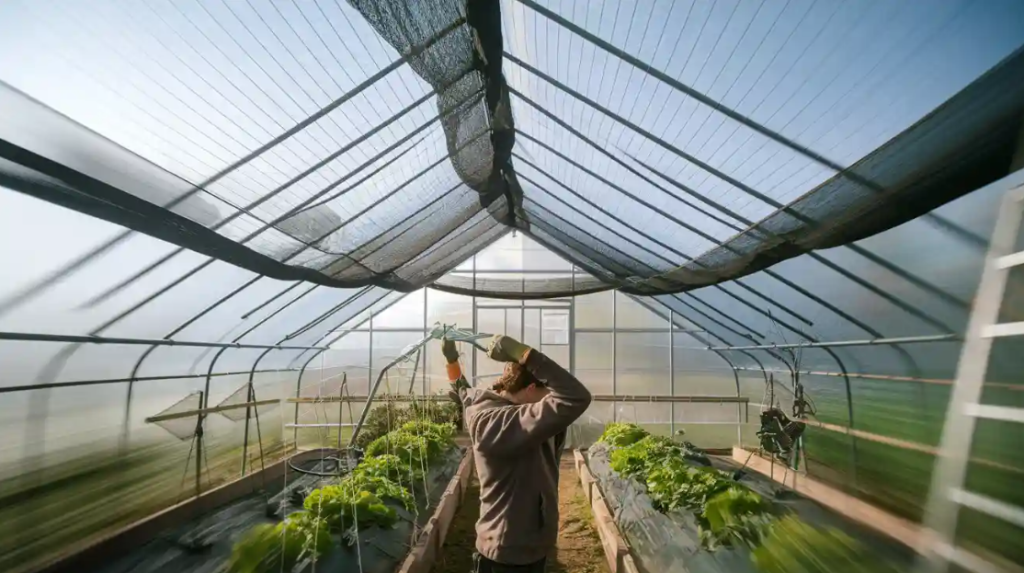
For small holes or tears in the netting, the simplest solution is to patch them. You can use a piece of matching netting material, overlapping the damaged area by several inches. The patch can be sewn on using UV-stabilized twine and a large needle. Specialized netting repair tape is also available, which can be a quicker solution for very small holes. The key is to make the repair before the hole has a chance to expand.
If a cable connection has loosened, it should be re-tightened. If a cable itself is frayed, that section may need to be replaced. This is a more involved repair and may require de-tensioning part of the structure.
Damage to a pole, such as rot at the base, is a more serious issue. Depending on the severity, the pole may need to be reinforced or replaced entirely. This is a job that often requires professional assistance to ensure the structural integrity of the system is maintained.
Off-Season Storage: Protecting Your Investment
For systems where the nets are removed for the winter (drape systems or some retractable framed systems), proper storage is crucial to their longevity. Nets should never be left in a pile on the ground. This invites rodents to nest in them, who can chew holes and cause significant damage. It also creates a moist environment that can promote the growth of algae or mildew.

The proper procedure is to ensure the nets are clean and completely dry before storage. Then, they should be carefully folded or rolled and stored in a dry, secure building, preferably off the ground on pallets or shelves. Storing them in large, rodent-proof bags or containers is an even better practice. Protecting the nets from sunlight, moisture, and pests during the off-season can add years to their service life. For permanent, full-canopy systems, the nets remain in place. In areas with heavy snowfall, the design must account for the snow load. Some systems are designed to have the nets retracted and bundled along the main cables during winter to prevent snow accumulation.
The Lifespan of Orchard Netting: When to Replace
Even with the best care, no netting system lasts forever. The primary limiting factor is the gradual degradation of the HDPE material by UV radiation. The UV stabilizers in the plastic are consumed over time. After 10, 15, or even 20 years, depending on the quality of the net and the intensity of the local sunlight, the material will begin to lose its strength and become brittle.
You will start to notice that the netting tears more easily. The material may feel stiff to the touch. When you see widespread brittleness and frequent, spontaneous tearing, the net has reached the end of its useful life. At this point, patching is no longer a viable strategy, and the net itself must be replaced. Fortunately, if the supporting structure of poles and cables has been well-maintained, it should be in excellent condition and ready to receive a new “skin.” The replacement of the netting is a significant but expected expense in the long-term financial planning for a pest-proofing your orchard: an integrated netting approach. This cyclical nature of renewal is a fundamental part of stewarding a long-term agricultural asset.
الأسئلة المتداولة (FAQ)
1. Will netting negatively affect the pollination of my fruit trees? This is a valid and important concern. The impact on pollination depends heavily on the mesh size and the type of pollinator. For crops pollinated by large insects like honeybees and bumblebees, a standard bird netting (e.g., 16mm mesh) generally allows for sufficient pollinator access. However, for very fine insect netting (e.g., 3mm mesh), pollination can be significantly hindered. In these cases, growers must introduce pollinators, such as hives of bees or bumblebees, underneath the nets during the flowering period.
2. What is the typical return on investment for an orchard netting system? The return on investment (ROI) varies widely based on the crop’s value, the severity of pest and weather pressure, and the type of system installed. For high-value crops like cherries or apples in regions with high bird pressure or frequent hailstorms, the ROI can be very rapid, often within 3-7 years. By preventing a single catastrophic hail event or consistently saving 15-20% of the crop from birds, the system quickly pays for itself. For lower-value crops or in areas with less pressure, the payback period will be longer. A detailed cost-benefit analysis before installation is key.
3. Can I install a full-canopy netting system myself? While a small, simple drape-netting system can be a DIY project, a full-canopy structural system is a complex construction project that typically requires professional expertise. The engineering calculations for wind and crop loads, the selection of appropriate anchors for your soil type, and the use of specialized equipment for tensioning cables are critical for safety and longevity. Attempting a large-scale DIY installation without the proper knowledge can lead to structural failure, which is both dangerous and expensive.
4. How does netting affect the microclimate within the orchard? Netting does create a distinct microclimate. It reduces wind speed, which can decrease tree stress and water loss. It can slightly increase humidity and moderate temperature extremes. The color of the net also plays a role; black nets provide more shade and can reduce canopy temperatures, while white or pearl nets can diffuse light, potentially improving light distribution within the tree. These effects are generally beneficial but need to be managed, for example, by monitoring for fungal diseases that might thrive in higher humidity.
5. How long does high-quality orchard netting last? The lifespan of the netting material is primarily determined by its quality, specifically the type and amount of UV stabilizer mixed into the High-Density Polyethylene (HDPE). A high-quality, professionally installed net in a permanent structure, not subject to abrasion from branches, can be expected to last between 10 and 15 years, with some premium products lasting even longer. Drape nets that are deployed and retrieved annually and are in contact with trees will typically have a shorter lifespan, perhaps 5-8 years.
The decision to implement a pest-proofing your orchard: an integrated netting approach is a significant one, representing a departure from reactive, often chemical-based pest control toward a proactive, physical, and sustainable form of crop protection. It is an act of taking control, of creating a managed environment where your crops can reach their full potential, shielded from the most destructive and unpredictable pressures of the outside world. This process, as we have explored, is a journey of deep inquiry—understanding the specific vulnerabilities of your land, delving into the science of materials, engaging in careful engineering design, executing a precise installation, and committing to long-term stewardship.
It is not merely about erecting a barrier. It is about investing in resilience. A well-designed netting system is an asset that delivers value year after year, not only by preventing devastating losses from a sudden hailstorm or a flock of birds, but also by providing consistent protection that leads to higher pack-out rates, better fruit quality, and greater peace of mind. It allows the grower to focus on the art and science of horticulture, secure in the knowledge that the fruits of their labor are protected. In an agricultural landscape of increasing uncertainty, an integrated netting system stands as a powerful testament to the value of foresight, planning, and strategic investment.

اقرأ مقالاتنا الأكثر شعبية.
👉 قم بتنزيل فئات منتجاتنا المجانية
👉 الدليل الشامل لتركيب شبكات مكافحة الحشرات في الصوبات الزراعية
👉 Anti-Insect Nets vs. Chemical Pesticides — A 3-Point Health and Yield Comparison
👉 The Ultimate Guide To Choosing Garden Netting: Pest, Material, and Crop Considerations
👉 كيف تبدأ مشروعًا تجاريًا خاصًا للشبكات: إطار عمل من 5 خطوات للعمل