

The selection of appropriate materials for garden netting is a critical factor in agricultural and horticultural success, as it directly affects both crop protection and product longevity.
This analysis provides a comprehensive comparison of two widely used polymers for this application: High-Density Polyethylene (HDPE) and Nylon (polyamide).
The findings indicate that although Nylon demonstrates superior tensile strength and abrasion resistance, HDPE offers outstanding resistance to UV exposure and moisture. When combined with its cost-effectiveness, HDPE emerges as the more practical and widely suitable material for most standard garden netting applications in 2026.
القراءة السريعة
- HDPE netting provides superior UV and moisture resistance, making it ideal for long-term outdoor exposure.
- Nylon netting offers exceptional tensile strength, best suited for high-stress, load-bearing applications.
- Consider your climate’s sun intensity and rainfall when choosing between water-resistant HDPE and absorbent Nylon.
- The HDPE vs. Nylon: A Material Showdown for Garden Netting often balances a lower initial cost against long-term durability.
- HDPE is more easily recycled than Nylon, presenting a more favorable environmental profile for sustainable gardening.
- Evaluate your specific needs, from lightweight bird protection to heavy-duty crop support, to select the right material.
- Nylon’s strength significantly decreases when wet, a major consideration for netting that will be exposed to rain.
Understanding the Contenders: A Primer on HDPE and Nylon
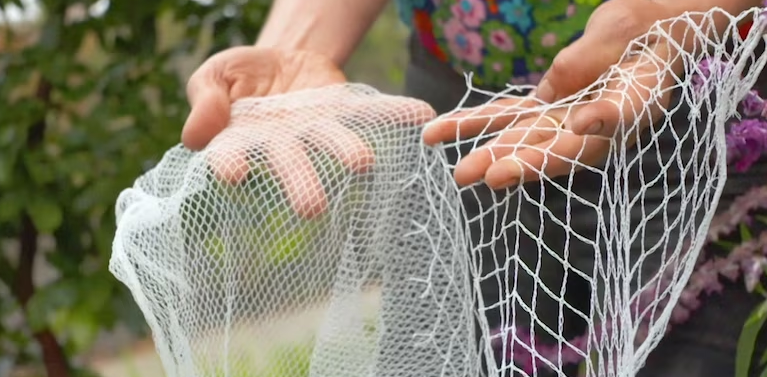
Before we can meaningfully compare these two materials in the context of protecting a garden, we must first develop a more intimate understanding of what they are. To think of them as merely “plastic” is to miss the profound differences in their creation, structure, and inherent character. Like two people shaped by different origins and experiences, HDPE and Nylon bring vastly different capabilities to the same task. Let us take a moment to properly introduce them, moving beyond simple labels to appreciate their molecular identities.
What is High-Density Polyethylene (HDPE)?

High-Density Polyethylene, commonly known as HDPE, is a member of the vast polyethylene family of plastics. It is a thermoplastic, meaning it can be melted and reformed, which is a trait that has significant implications for its manufacturing and recyclability. Its story begins with ethylene, a simple gaseous hydrocarbon molecule derived primarily from petroleum or natural gas. Through a process called polymerization, countless individual ethylene molecules (monomers) are chemically linked together into very long chains.
What distinguishes HDPE is the way these chains are formed. The process results in polymer chains with very little branching. Imagine a box filled with perfectly straight, uncooked spaghetti strands. They can pack together very tightly and neatly. This dense, orderly, crystalline structure is the source of HDPE’s “high-density” name and its signature properties: stiffness, strength, and a remarkable resistance to chemicals. You encounter HDPE daily, perhaps without realizing it; it is the material of sturdy milk jugs, chemical drums, and underground piping. It is, in essence, the reliable, unpretentious workhorse of the polymer world (McClements, 2022). Its reputation is built not on flashy performance, but on steadfast endurance.
What is Nylon (Polyamide)?
Nylon belongs to a more specialized class of materials known as engineering plastics. This designation implies that it was designed from the outset for superior mechanical and thermal performance compared to more common commodity plastics (McClements, 2023). Nylon is the family name for a group of synthetic polymers called polyamides. The name itself hints at its chemical structure, which is defined by repeating units linked by amide bonds.
Unlike the simple addition polymerization of HDPE, nylons are typically formed through a condensation polymerization process, where two different molecules react to form the polymer chain, releasing a small molecule, often water, in the process. This creates a polymer with a different kind of backbone, one that gives Nylon its legendary toughness, high tensile strength, and excellent resistance to abrasion. Its first major commercial application was as a replacement for silk in women’s stockings, a testament to its combination of fine texture and surprising strength. Today, it is found in everything from high-performance ropes and automotive engine components to durable fabrics and toothbrush bristles. Nylon is the specialist, the high-strength athlete of the polymer world, prized for its ability to withstand immense stress and wear.
| الميزة | بولي إيثيلين عالي الكثافة (HDPE) | نايلون (بولي أميد) |
|---|---|---|
| Material Family | Thermoplastic (Polyolefin) | Thermoplastic (Engineering Polyamide) |
| Primary Strength | Chemical Resistance, UV Stability, Stiffness | Tensile Strength, Abrasion Resistance, Toughness |
| امتصاص الماء | Extremely Low (<0.1%) | High (can be up to 9% by weight) |
| مقاومة الأشعة فوق البنفسجية | Excellent (especially with carbon black additive) | Poor to Fair (degrades quickly without special additives) |
| Density | Lower (~0.95 g/cm³); Floats on water | Higher (~1.14 g/cm³); Sinks in water |
| Feel and Flexibility | Stiffer, more “plastic-like” feel | More flexible, supple, “fabric-like” feel |
| General Cost | أقل | أعلى |
Factor 1: Durability and Strength—A Tale of Two Polymers
When we speak of “durability” for garden netting, we are not speaking of a single, simple quality. We are, in fact, invoking a complex interplay of different kinds of strength and resilience. A material might excel in one area while failing in another. The central tension in the HDPE vs. Nylon: A Material Showdown for Garden Netting lies in understanding these different facets of strength and aligning them with the specific demands of a garden environment. One material is designed to resist being pulled apart; the other is designed to resist falling apart.
Tensile Strength and Toughness: Nylon’s Domain

Tensile strength is a measure of a material’s ability to withstand being pulled apart. Imagine holding a single strand of netting and trying to stretch it until it snaps. The force required to break it is a function of its tensile strength. In this specific contest, Nylon is the undisputed champion. Its unique polyamide structure allows it to absorb and distribute stress exceptionally well. Think of a quality climbing rope, which is often made of Nylon; it is designed to catch a falling weight, stretching slightly to absorb the shock without breaking.

This high tensile strength and associated toughness (the ability to absorb energy and deform without fracturing) can be advantageous in certain niche garden applications. If you are creating a support system for extremely heavy vining plants, like large gourds or pumpkins, or if the netting is expected to endure sudden, high-impact loads, Nylon’s properties are theoretically appealing. It can handle a sharp tug or a sudden weight far better than a similarly sized strand of HDPE. However, as we will see, this strength comes with significant environmental vulnerabilities that often negate its benefits in an outdoor setting.
Abrasion and Wear Resistance: Where Nylon Shines
Abrasion resistance is the capacity of a surface to resist being worn away by rubbing or friction. Picture garden netting installed against a rough brick wall, draped over a coarse wooden fence post, or constantly brushing against thorny branches in the wind. This is where abrasion becomes a primary mode of failure.

Here again, Nylon demonstrates its prowess as an engineering plastic. The material is known for its low coefficient of friction and inherent toughness, creating a surface that is exceptionally resistant to wear. Its fibers can withstand repeated rubbing and scraping that would cause other materials to fray and weaken over time. For a netting application that involves constant contact with abrasive surfaces, Nylon’s ability to endure this friction is a significant point in its favor. It maintains its integrity where a softer material might be gradually sawed through by the relentless, minor movements caused by wind and plant growth.
Rigidity and Structural Integrity: HDPE’s Advantage
While Nylon excels in handling pulling forces, HDPE’s strength lies in a different quality: its rigidity and dimensional stability. Because of its densely packed, crystalline molecular structure, HDPE is a stiffer material. It resists stretching and sagging under its own weight.

*High-quality HDPE material can be used to manufacture pallets.
Consider the task of creating a large, taut barrier, such as a walk-in fruit cage or a long deer fence. The goal is to have a flat, stable wall of netting. An HDPE net, once properly tensioned, will hold its shape remarkably well. It does not have the same elasticity as Nylon, which in this context is a benefit. A Nylon net, by contrast, behaves more like fabric. Its flexibility and inherent stretch, combined with its higher density, make it much more prone to sagging, especially over large spans. For any application where maintaining a consistent shape and tautness is the primary goal, HDPE’s structural integrity provides a clear and decisive advantage. It creates a reliable and predictable barrier, whereas Nylon can become a drooping, less effective obstacle over time.
Factor 2: Environmental Resilience—The Battle Against Sun and Water
A garden is a relentlessly hostile environment for any synthetic material. It is a battleground where the primary adversaries are invisible yet potent: the ultraviolet radiation from the sun and the pervasive presence of water. A material’s ability to withstand these two forces is arguably the most important factor in determining its useful lifespan as garden netting. Here, the differences between HDPE and Nylon are not merely incremental; they are profound and often determine which material succeeds and which one fails.
The Sun’s Assault: UV Radiation and Material Degradation
The sunlight that nourishes our plants is a destructive force for many polymers. The ultraviolet (UV) portion of the solar spectrum carries high-energy photons that can break the chemical bonds holding polymer chains together. This process, known as photodegradation, leads to a cascade of material failures: colors fade, the surface becomes chalky, and, most critically, the material becomes brittle and loses its strength. A net that was strong and flexible when new can, after a season in the sun, shatter with a gentle touch.

This is the single greatest point of divergence in the HDPE vs. Nylon: A Material Showdown for Garden Netting. HDPE, in its natural state, has a respectable level of UV resistance. However, when fortified with a UV stabilizer—most commonly a small percentage of carbon black—its performance becomes exceptional. The carbon black acts as a screen, absorbing or blocking the UV radiation before it can damage the polymer chains. This is why high-quality, black HDPE netting can last for many years, even in intense sunlight, without significant loss of strength.
Nylon, on the other hand, is inherently vulnerable to UV radiation. The amide links in its polymer chain are particularly susceptible to attack by UV photons. Unprotected Nylon netting exposed to direct sunlight will begin to degrade rapidly, losing a substantial portion of its tensile strength in a matter of months, not years. While UV-stabilizing additives can be incorporated into Nylon, they are often less effective and more costly than those used for HDPE. The protection they offer can also diminish over time. For any application that involves prolonged sun exposure—which is to say, nearly all garden netting applications—HDPE’s superior UV stability makes it the far more rational and durable choice.
The Challenge of Moisture: Water Absorption and Its Consequences
The second great environmental challenge is water, whether from rain, dew, or irrigation. A material’s interaction with water can dramatically alter its physical properties.
HDPE is hydrophobic, a term that literally means “water-fearing.” Its non-polar chemical nature means it does not attract water molecules. As a result, HDPE absorbs a negligible amount of water, typically less than 0.1% of its weight. This is a tremendous advantage. Its physical properties—its strength, stiffness, and weight—remain virtually unchanged whether it is bone dry or soaking wet. It will not swell, sag under increased water weight, or become a welcoming host for mold and mildew.

Nylon is the polar opposite. It is hydrophilic, or “water-loving.” The amide groups in its polymer structure contain polar nitrogen and oxygen atoms that readily form hydrogen bonds with water molecules, drawing moisture into the material itself. A Nylon net can absorb a significant amount of water, sometimes up to 9% of its own weight. This has several disastrous consequences for garden netting. First, the absorbed water acts as a plasticizer, making the material more pliable and reducing its stiffness, which leads to pronounced sagging. Second, and more critically, it significantly reduces its tensile strength; a wet Nylon net can be 20-30% weaker than a dry one (Kosuri & Daggumati, 2021). Finally, the added weight of the absorbed water further exacerbates the sagging, putting more strain on the net and its support structure. This tendency to become weak and heavy when wet makes Nylon a fundamentally problematic choice for all-weather outdoor use.
| Environmental Factor | بولي إيثيلين عالي الكثافة (HDPE) | نايلون (بولي أميد) |
|---|---|---|
| التدهور بالأشعة فوق البنفسجية | Excellent Resistance: Highly stable, especially when treated with carbon black. Maintains strength for many years. | Poor Resistance: Inherently susceptible to UV damage. Becomes brittle and weak without significant, costly additives. |
| امتصاص الماء | Negligible: Hydrophobic. Absorbs <0.1% water. Properties are stable in wet or dry conditions. | High: Hydrophilic. Can absorb up to 9% water by weight, altering its properties. |
| Strength When Wet | Unchanged: Retains 100% of its dry strength. | Significantly Reduced: Can lose 20-30% of its tensile strength when saturated. |
| مقاومة المواد الكيميائية | Excellent: Resists a wide range of acids, bases, and common garden chemicals. | Good: Generally resistant, but can be damaged by strong acids or oxidizing agents. |
| Mildew/Rot Risk | Very Low: Does not support biological growth. | Moderate to High: Absorbed moisture can promote the growth of mold and mildew. |
| Effective Lifespan | Long: Often 5-10+ years depending on conditions and grade. | Short: Can be less than 1-2 years in sunny, wet climates if not specially treated. |
Factor 3: Physical Characteristics and Handling—The User Experience
Beyond the scientific metrics of strength and environmental resistance lies the practical reality of working with the material. How does the netting feel in your hands? How difficult is it to deploy over a row of delicate berry bushes or hoist to the top of a fruit tree? These aspects of the user experience are shaped by the fundamental physical properties of the polymers, such as density and flexibility. The choice between HDPE and Nylon is not just a choice of chemistry; it is a choice that directly impacts the labor and frustration involved in protecting your garden.

Weight and Ease of Installation
One of the most immediate differences you would notice when handling rolls of these two materials is their weight. HDPE has a lower density than Nylon, typically around 0.95 grams per cubic centimeter (g/cm³). This is less than the density of water (1.0 g/cm³), which is why HDPE floats. Nylon is denser, at around 1.14 g/cm³, and therefore sinks.
While this might seem like a trivial difference, it has significant practical consequences. A roll of HDPE netting of a given size and thickness will be noticeably lighter than an equivalent roll of Nylon netting. This reduced weight makes HDPE easier to transport around the garden, lift into position, and drape over structures. When you are trying to cover a large area, such as an entire patch of blueberries or a long commercial row of crops, this weight difference translates directly into saved time and reduced physical strain. The lighter weight also means that the support structure for the netting does not need to be as robust, potentially saving costs on posts and wiring. The heavier Nylon, especially when saturated with rainwater, places a much greater load on its supports.
Flexibility and Material “Memory”

Flexibility describes how easily a material bends, while “memory” refers to its tendency to retain the shape it was held in, such as being rolled or folded. Here, the two materials present a trade-off.
HDPE is the stiffer of the two. This rigidity, as discussed earlier, is excellent for creating taut, stable barriers. However, it also means the material can have a pronounced memory. When you unroll a new HDPE net, it may have creases and a tendency to curl from being on the roll. It can take some time and tension, or a bit of warming in the sun, for it to relax and lay perfectly flat.
Nylon, in contrast, is much more supple and flexible. It drapes more like a heavy fabric than a plastic sheet. This can be an advantage when trying to conform the netting to a highly irregular shape, as it will follow contours more readily without kinking. It has less memory than HDPE, meaning it tends to fall into a more natural, relaxed state right out of the package. However, this very suppleness is linked to its tendency to sag, creating a classic trade-off: Nylon is easier to drape, but HDPE is better at staying put once installed.
The Feel and Texture: Safety for Plants and People
The final aspect of handling concerns the texture of the netting and its interaction with delicate plants. The surface of a net can, over time, cause abrasion damage to soft-skinned fruits or tender leaves, especially in windy conditions.
Nylon netting generally has a smoother, silkier, more “fabric-like” feel. This is a legacy of its origins as a fiber for textiles. For applications where the netting will be in direct, constant contact with very delicate produce, like certain varieties of peaches or plums, some might argue that Nylon’s smoother surface offers a slight advantage in preventing blemishes.

HDPE netting, while also smooth, can feel more “plastic-y” and rigid to the touch. The knots or joints in extruded HDPE netting can be harder and more pronounced than in a woven Nylon net. For the vast majority of plants, including berries, leafy greens, and tomatoes, this difference is inconsequential. The protection from birds and pests far outweighs any minor risk of surface abrasion. However, in the most sensitive of cases, the tactile difference between the two materials is a subtle but valid point of consideration in the broader HDPE vs. Nylon: A Material Showdown for Garden Netting.
Factor 4: Economic Considerations—Cost vs. Long-Term Value
A responsible decision in any practical matter, including gardening, requires a consideration of economics. This does not simply mean choosing the cheapest option. It involves a more sophisticated analysis of value, weighing the initial financial outlay against the expected performance and lifespan of the purchase. In the comparison between HDPE and Nylon for garden netting, the economic story is one of initial price versus long-term cost of ownership, a calculation that is heavily influenced by the environmental factors we have already discussed.
Initial Purchase Price: A Clear Distinction
When comparing prices for bulk netting of a similar size and mesh opening, one fact becomes immediately clear: HDPE is almost always the more affordable material. The reasons for this are rooted in the global petrochemical industry. The raw materials and polymerization process for creating HDPE are generally less complex and conducted on a much larger scale than those for producing engineering plastics like Nylon (Haiteng Nylon, n.d.). This economy of scale translates directly to a lower cost per pound or per square meter for the final product.
For a home gardener on a tight budget or a commercial grower looking to cover many acres, this lower initial purchase price for HDPE can be very attractive. It allows for the protection of a larger area for the same initial investment. A Nylon net, with its more complex chemistry and manufacturing, commands a premium price, positioning it as a more expensive, specialized option from the very beginning.
Calculating the Total Cost of Ownership (TCO)
The initial price tag, however, tells only the first part of the economic story. A more complete picture emerges when we consider the Total Cost of Ownership (TCO). TCO is a financial estimate intended to help buyers determine the direct and indirect costs of a product. It includes the purchase price, but also factors in costs related to lifespan, maintenance, and replacement.
Here, the narrative shifts dramatically in favor of HDPE for most garden applications. Let us construct a hypothetical scenario. Suppose a gardener in a moderately sunny climate buys a Nylon net and an HDPE net to cover two identical garden beds.
- Year 1: The Nylon net costs more upfront. Both nets perform their function well.
- Year 2: The Nylon net, weakened by a year of UV exposure and repeated wetting/drying cycles, develops a tear during a windstorm, allowing birds to damage the crop. It has become noticeably more brittle. The HDPE net remains strong and flexible.
- Year 3: The Nylon net is now so degraded that it must be replaced. The gardener must purchase a new net and spend time installing it. The HDPE net is still in excellent condition.
In this scenario, even though the HDPE net may have had a lower initial price, its true value lies in its longevity. The need to replace the Nylon net after only two seasons means its TCO is significantly higher than that of the HDPE net, which may last for five, seven, or even ten years. The calculation of TCO in the HDPE vs. Nylon: A Material Showdown for Garden Netting must account for the cost of replacement materials and, just as importantly, the value of the labor required for re-installation.
The Cost of Failure
The final economic consideration is the most critical: the cost of failure. What is the economic consequence if the netting fails to do its job? For a home gardener, it might be the emotional cost of losing a beloved crop of tomatoes to squirrels. For a commercial fruit grower, it can be financially devastating.
The failure of a net mid-season can mean the loss of an entire harvest. Given Nylon’s known vulnerabilities to sunlight and moisture, choosing it for a primary crop protection role is an exercise in risk management. A single season with higher-than-average sun exposure or rainfall could accelerate its degradation and lead to catastrophic failure.
HDPE, with its proven resistance to these environmental factors, represents a much lower-risk investment. Its failure modes are more predictable and occur over a much longer timescale. By choosing the material that is fundamentally better suited to the outdoor environment, the grower is not just buying a net; they are buying a higher degree of certainty and protecting their investment in seeds, soil, water, and labor. Therefore, the most compelling economic argument for HDPE is not its lower price, but its superior reliability. You can find such reliable and custom agricultural netting solutions that offer this long-term peace of mind.
Factor 5: Application-Specific Performance—Matching Material to Task
Our discussion so far has established the core characteristics of HDPE and Nylon. We can now move from the abstract to the concrete, applying this knowledge to the specific tasks required in a garden or on a farm. The ultimate goal is not to declare one material universally “better,” but to develop the wisdom to choose the right material for a given job. The success of any tool depends on its appropriate application.
Bird and Pest Protection: The Most Common Use
This is the quintessential role for garden netting: creating a physical barrier to exclude birds from berry bushes, rabbits from lettuce patches, or deer from an entire orchard. The primary requirements for this application are durability against the elements, a mesh size appropriate for the target pest, and a lightweight nature for easy installation over plants without damaging them.
For this broad category of use, HDPE is the overwhelmingly superior choice. Its key advantages align perfectly with the needs of the application:
- UV and Weather Resistance: The net will be exposed to the elements 24/7, often for months or years at a time. HDPE’s ability to withstand sun and rain without degrading is paramount.
- Light Weight: Draping netting over delicate fruit-laden branches or young seedlings requires a material that will not crush them. HDPE’s lower density is a significant benefit.
- Stiffness and Shape Retention: When constructing enclosures like fruit cages, HDPE’s ability to remain taut creates a more effective and durable barrier.
- Cost-Effectiveness: Since large areas often need to be covered, HDPE’s lower price point makes comprehensive protection more affordable.
In this context, Nylon’s high tensile strength is largely irrelevant. A bird does not exert a high tensile load on a net; it simply needs to be blocked. Nylon’s weaknesses—UV degradation, water absorption, and higher cost—make it a poor and illogical choice for general pest protection.
Trellising and Crop Support: When Strength Is a Factor
A second common use for netting is as a trellis for climbing plants, such as peas, beans, cucumbers, or even lighter varieties of squash. Here, the netting must bear the weight of the growing plant and its fruit. This introduces the factor of load-bearing, which might initially suggest a role for high-strength Nylon.
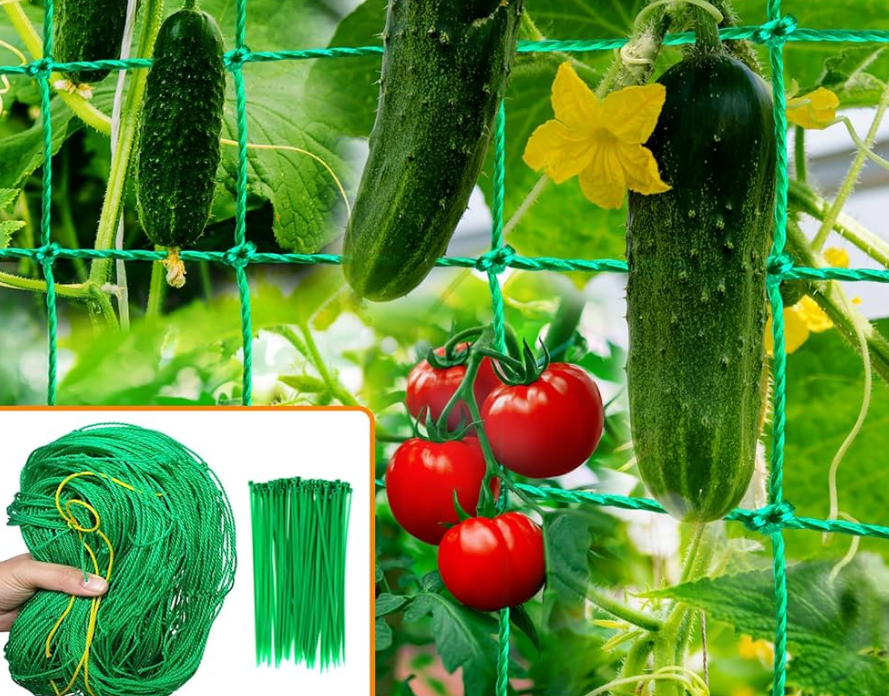
A closer examination, however, reveals problems. While a dry Nylon net is very strong, its strength diminishes when wet. More importantly, its tendency to absorb water and sag is a major flaw in a trellising application. As the net gets wet from rain or irrigation, it will stretch and droop, causing the supported plants to slump downwards. This can reduce air circulation, promoting disease, and can even cause the plants to come into contact with the ground.
A heavy-gauge HDPE netting, by contrast, provides a much more stable support structure. It does not stretch or sag when wet, maintaining its tautness and keeping the plants properly elevated throughout the season. While its absolute tensile strength might be lower than Nylon’s, it is more than sufficient for the vast majority of climbing crops. For exceptionally heavy plants, a better solution than Nylon would be a specialized, heavy-duty HDPE net or one reinforced with steel wire, which provides strength without the liabilities of water absorption.

Heavy-Duty and Specialized Applications
Are there any garden or agricultural scenarios where Nylon’s unique profile makes it the preferred choice? Such applications are rare, but they may exist. They would be characterized by a need for extremely high tensile strength or abrasion resistance, combined with minimal exposure to sunlight and moisture.
One could imagine a custom indoor hydroponics setup where a netting system is used to suspend heavy planters, and where UV exposure is nil. Or perhaps a harvesting sling designed to be used for short periods to lift very heavy produce, where its toughness and abrasion resistance are prioritized over weatherability.
Another area is in related fields, like sports. High-end backstop nets for baseball or barrier nets for golf driving ranges are often made from specialized, heavily UV-treated Nylon. In these applications, the net must absorb the extremely high, sudden impact of a fast-moving ball—a task where Nylon’s toughness and elasticity excel. The higher cost and eventual need for replacement are justified by the extreme performance requirement. These are, however, highly specialized cases. For the everyday challenges of a garden, these extreme properties are overkill, and the associated weaknesses are a significant liability. Choosing the right durable sports netting involves a similar, but distinct, set of calculations based on impact energy rather than environmental exposure.
الأسئلة المتداولة (FAQ)
Which netting is better for protecting my fruit trees from birds?
For protecting fruit trees, HDPE netting is the recommended choice. Its primary advantages are its excellent UV resistance, which allows it to last for many seasons in direct sunlight, and its light weight, which makes it easier to drape over large trees without damaging branches or fruit. It does not absorb water, so it will not become heavy and sag after it rains.
Can I leave Nylon netting outside all year?
It is generally not advisable to leave standard Nylon netting outside year-round, especially in climates with strong sun or frequent rain. Nylon degrades relatively quickly under UV radiation, becoming brittle and weak. It also absorbs water, which causes it to sag and lose strength. Unless it is a highly specialized, expensive grade with advanced UV and water-repellent treatments, Nylon netting is best used for temporary applications or in sheltered environments.
Is HDPE netting safe for my organic garden?
Yes, HDPE netting is considered very safe for organic gardening. HDPE is an inert and stable plastic. It does not leach harmful chemicals into the soil or onto your plants. It is the same type of plastic widely approved for food containers, such as milk jugs and cutting boards, because of its stability and safety profile.
My netting sags badly whenever it rains. What material is it likely made from?
If your netting sags significantly when wet, it is almost certainly made of Nylon or another polyamide. Nylon is hydrophilic, meaning it absorbs water. This absorbed water adds weight and reduces the material’s stiffness, causing it to stretch and droop. HDPE netting, being hydrophobic, does not absorb water and maintains its shape and tautness in the rain.
Which material is actually stronger, HDPE or Nylon?
This question requires a nuanced answer. Nylon has a much higher tensile strength, meaning it’s stronger when you pull on it. However, HDPE has far superior environmental strength. It stands up to sunlight and water much better. For a garden net, which must survive outdoors for years, HDPE’s environmental durability is a more valuable form of strength than Nylon’s raw tensile power.
How can I tell the difference between HDPE and Nylon netting if I’m unsure?
You can often tell by feel and a simple test. Nylon netting typically feels softer, more flexible, and more like a fabric. HDPE netting feels stiffer and more “plastic-y.” The definitive test is the water test: cut a small snippet of the netting and place it in a cup of water. HDPE is less dense than water and will float. Nylon is denser than water and will sink.
What is the environmental impact of these materials?
Both are petroleum-based plastics, but their end-of-life options differ. HDPE is one of the most commonly recycled plastics (coded as #2). A clean, retired HDPE net can often be recycled into new products like plastic lumber or pipes. Nylon (often coded as #7 or “other”) is much more difficult to recycle and is accepted by far fewer municipal programs. From a recycling perspective, HDPE has a clearer and more established path to a second life.
Final
The examination of High-Density Polyethylene and Nylon for use in garden netting reveals a clear narrative of specialization. The choice is not between a good and a bad material, but between a generalist perfectly suited for the outdoor environment and a specialist whose strengths lie elsewhere. Nylon, with its impressive tensile strength and abrasion resistance, is an engineering marvel, yet its virtues are undone by its fundamental incompatibility with the primary challenges of a garden: sunlight and water. Its susceptibility to UV degradation and its tendency to absorb moisture, leading to weakness and sagging, render it a poor long-term investment for most horticultural applications.
High-Density Polyethylene, by contrast, presents itself as the eminently practical and rational solution. While it may not possess the extreme tensile strength of Nylon, its capabilities are perfectly matched to the task at hand. Its profound resistance to ultraviolet radiation, especially when properly stabilized, ensures a long and functional life under the sun. Its hydrophobic nature guarantees that its properties remain consistent and reliable through rain, dew, and irrigation, preventing the sag and decay that plague its counterpart. Coupled with its lighter weight and lower cost, HDPE emerges not as the cheaper option, but as the one offering superior long-term value and peace of mind. The thoughtful gardener, in weighing the evidence from this HDPE vs. Nylon: A Material Showdown for Garden Netting, will recognize that true strength in the garden is not merely the ability to resist a powerful pull, but the resilience to endure, season after season.

اقرأ مقالاتنا الأكثر شعبية.
👉 قم بتنزيل فئات منتجاتنا المجانية
👉 كيفية اختيار شبك الطيور المناسب لمزارع التوت الأزرق
👉 كيف أنقذت مزرعة كروم في ولاية أوريغون $50 ألف دولار من خسارة المحاصيل من الطيور
👉 البولي إيثيلين عالي الكثافة مقابل شبك النايلون الرياضي: الدليل النهائي
👉 الدليل الشامل لعشرة أخطاء شائعة يرتكبها المزارعون عند تركيب شباك الطيور
👉 كيف تبدأ مشروعًا تجاريًا خاصًا للشبكات: إطار عمل من 5 خطوات للعمل