
The intentional modification of localized atmospheric conditions to optimize plant growth, known as creating microclimates, represents a sophisticated approach to modern agriculture and horticulture. This practice involves the strategic use of physical barriers to manipulate key environmental variables such as solar radiation, temperature, wind velocity, and humidity. Agricultural netting, in its various forms, serves as a primary tool for achieving such modifications. By deploying materials like shade cloth, windbreaks, insect screens, and thermal blankets, growers can mitigate the impacts of adverse weather, extend growing seasons, reduce pest pressure, and conserve water resources. The efficacy of these interventions hinges on a nuanced understanding of site-specific challenges, plant physiological requirements, and the physical properties of the netting materials themselves.

A systematic process involving environmental assessment, appropriate material selection, thoughtful structural design, proper installation, and continuous monitoring allows for the creation of tailored growing environments. This deliberate environmental engineering enhances crop resilience, improves yield quality and quantity, and promotes more sustainable cultivation practices in the face of climatic variability.
الوجبات الرئيسية
- Assess your site’s sun, wind, and soil to identify specific environmental pressures.
- Select netting—shade, windbreak, or pest—based on your primary cultivation goals.
- Properly design support structures to ensure stability and effective coverage.
- Mastering the creation of microclimates with netting can significantly boost crop yields.
- Monitor plant health and environmental data to fine-tune your netting setup over time.
- Ensure correct tensioning during installation to prevent damage and maximize lifespan.
- Regularly clean and inspect nets for damage to maintain their effectiveness.
The Fundamental Logic of Microclimates in Agriculture
What Constitutes a Microclimate?
At its core, a microclimate is a localized atmospheric zone where the climate differs from the surrounding area. Think of the cool, moist air under the canopy of a large oak tree on a hot summer day, or the pocket of warmth you might find on a south-facing stone wall. These are naturally occurring microclimates. Human-made structures, from skyscrapers that create wind tunnels to garden cold frames, also generate these effects. In the context of agriculture and horticulture, creating microclimates is the intentional and controlled formation of these localized zones to benefit plant life. It is an act of precision engineering on a living scale.

By erecting a barrier, such as a net, we are not building an impenetrable fortress against the elements. Instead, we are creating a semi-permeable membrane that filters, slows, and tempers the environmental forces that pass through it, establishing a more favorable set of conditions within a defined space.
The Unseen Forces: Light, Temperature, Wind, Humidity
To understand how to modify a growing environment, we must first appreciate the primary forces at play. These four factors are deeply interconnected, and a change in one often precipitates a change in the others.

Light, or more specifically solar radiation, is the engine of photosynthesis. Its intensity, duration, and quality (the spectrum of wavelengths) dictate a plant’s ability to produce energy. Too much light can be as damaging as too little, leading to photoinhibition (sunburn), heat stress, and excessive water loss.
Temperature, both of the air and the soil, governs the rate of all metabolic processes within a plant. Every species has an optimal temperature range for germination, vegetative growth, flowering, and fruiting. Deviations from this range can slow growth, inhibit pollination, or, in extreme cases, cause cellular damage and death.
Wind affects plants in numerous ways. Physically, it can cause abrasion, breakage, and lodging (the bending or breaking of stems). Physiologically, it strips away the thin layer of humid air—the boundary layer—that naturally surrounds each leaf, dramatically increasing the rate of transpiration. This forces the plant to draw more water from the soil, leading to water stress.
Humidity, the amount of water vapor in the air, is closely tied to both temperature and wind. High humidity can reduce a plant’s transpiration needs but may also promote fungal diseases. Low humidity, especially when combined with wind, accelerates water loss and can desiccate plant tissues.
Creating a microclimate is the art of turning the dials on these four interconnected forces, nudging them toward a balance that is ideal for a specific crop.

Why Manipulate the Natural Environment?
The impulse to modify a plant’s environment stems from a desire to overcome limitations and reduce risk. In a world of increasing climate unpredictability, the ability to exert some control over growing conditions is not merely a convenience; it is a critical strategy for ensuring food security and economic viability. The goals are manifold. One grower might aim to extend the growing season, using a thermal blanket to protect tender seedlings from a late spring frost,

thereby gaining several weeks of growth. Another, in a hot, arid region, might use shade cloth to reduce the scorching midday sun, conserving precious water and preventing fruit scalding on tomatoes or peppers.
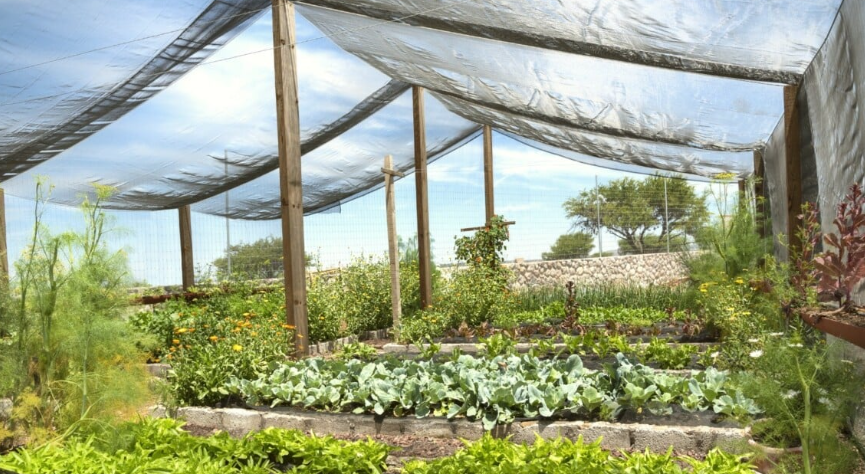
A third, situated in a windswept coastal area, might erect a windbreak to protect an orchard from salt spray and physical damage, allowing for the successful cultivation of fruit that would otherwise be impossible.

The manipulation of the environment also serves to protect against biological threats. Fine-mesh netting can create a physical barrier that excludes harmful insects, reducing the need for chemical pesticides. Similarly, bird netting protects valuable fruit crops from devastation just before harvest. In each case, netting acts as a tool of mediation, standing between the plant and a hostile external force, whether that force is abiotic (like wind or sun) or biotic (like a pest).
This intervention allows the plant to allocate more of its energy to growth and reproduction, rather than to defense and survival, ultimately leading to higher-quality yields and greater productivity.
Step 1: Assessing Your Unique Environmental Challenges

Before any structure can be built or any tool employed, a period of careful observation and diagnosis is necessary. To effectively modify your growing environment, you must first develop an intimate understanding of its existing character, its strengths, and its vulnerabilities.
Conducting a Site Analysis: Sun, Wind, and Water
The process begins with a comprehensive survey of the environmental forces that define your growing area. This is a practical, on-the-ground investigation.
First, consider the sun.

Where does it rise and set at different times of the year? Are there areas that receive intense, direct sun during the hottest part of the day? Are there other areas cast in shadow by trees, buildings, or natural landforms? You can map the path of the sun by simply observing and taking notes over the course of a day, or by using one of the many available smartphone apps that chart solar trajectories. Understanding your site’s solar exposure is fundamental to deciding if, where, and what percentage of shade netting might be required. For example, an area with punishing afternoon sun might be an ideal candidate for a 40% shade cloth to protect sensitive greens, while an area with only morning sun may need no shading at all.
Next, turn your attention to the wind.

From which direction does the prevailing wind blow? Is it a constant, gentle breeze or does it come in powerful, damaging gusts? Are there certain times of the year when winds are particularly problematic? Look for evidence of wind’s effect: flagged trees (where branches grow predominantly on the leeward side), soil erosion, or previously failed crops. Tying ribbons to stakes placed around your property can provide a simple, visual indicator of wind direction and strength. Identifying the primary wind corridors is the first step in planning the orientation and placement of a windbreak.
Finally, evaluate the movement and presence of water. Where does rainwater flow and collect? Are there low-lying spots that are prone to waterlogging or becoming frost pockets?

Conversely, are there high, exposed areas that dry out quickly? Understanding your site’s topography and hydrology will inform not only irrigation strategies but also how you manage temperature and humidity. For instance, a low, damp area might benefit from the improved air circulation a netted tunnel provides to discourage fungal diseases.
Identifying Plant-Specific Needs and Vulnerabilities
Once you have a map of your site’s environmental personality, the next layer of analysis involves the plants themselves. Every species, and even every variety, has its own unique set of preferences and tolerances. A crop that thrives in one location may struggle in another, and the reasons can almost always be traced back to the interplay of light, temperature, wind, and water.

Research the ideal growing conditions for the crops you intend to cultivate. A lettuce plant, for instance, requires moderate light and cool temperatures; it will quickly bolt (flower prematurely) in excessive heat. A pepper plant, by contrast, is a heat-loving crop that demands high light levels to produce abundant fruit. A raspberry cane is highly susceptible to wind damage, which can snap the canes and reduce fruit yield.
Consider the entire life cycle of the plant. A seedling’s needs are very different from those of a mature, fruiting plant. Young transplants are particularly vulnerable to wind, intense sun, and temperature swings. A crop may need protection early in the season to get established, but that same protection might become detrimental later on if it limits light needed for fruit ripening. Your strategy for creating a microclimate must be dynamic, capable of adapting to the changing needs of the plant over time.
Defining Your Goals: Season Extension, Pest Protection, or Yield Improvement?
With a clear understanding of both your site’s characteristics and your plants’ needs, you can now define the specific goals of your intervention. What problem, precisely, are you trying to solve? Having a clear objective is paramount, as it will determine the type of netting and structure you choose.

Is your primary goal to extend the growing season? If so, your focus will be on temperature moderation. You might be looking to protect against late spring frosts to plant earlier, or to shield crops from early autumn freezes to harvest later. This would point you toward thermal blankets or low tunnels that trap daytime heat.
Is your main concern pest management? Perhaps cabbage moths devastate your brassicas each year, or birds consume your blueberries before you can pick them. In this case, your goal is exclusion, and the solution will involve selecting an insect or bird net with a mesh size small enough to block the target pest while still allowing adequate airflow and light penetration.

Or is your objective to improve the overall quality and quantity of your yield? In a hot climate, this might mean reducing heat stress and sunscald with shade cloth. In a windy location, it could mean using a windbreak to increase pollination rates (as bees are less active in high winds) and reduce water stress. Often, the goals are intertwined. A windbreak, for example, not only prevents physical damage but also raises the ambient temperature slightly and reduces water loss, contributing to both yield improvement and season extension.

By clearly articulating your primary objective—be it protection from frost, sun, wind, or pests—you transform a vague desire for “better results” into a concrete problem that can be solved with a specific, targeted tool.
Step 2: Selecting the Appropriate Netting Solution
After a thorough assessment of the environmental context and a clear definition of one’s cultivation objectives, the inquiry naturally turns to the selection of the appropriate tool. The world of agricultural netting is diverse, with each type of net engineered to perform a specific function. Choosing the right net is not a matter of finding a single, universal solution, but of matching the physical properties of the material to the specific environmental modification you wish to achieve. This selection process requires a discerning eye and an understanding of how different materials interact with light, air, and living organisms.
The Spectrum of Netting: A Comparative Overview
Agricultural nets can be broadly categorized by their primary function: managing light, controlling wind, excluding pests, or regulating temperature. Many nets offer secondary benefits, but their design is typically optimized for one dominant purpose. A clear comparison reveals the distinct role each type plays in creating microclimates.
| نوع الشباك | الوظيفة الأساسية | Key Mechanism | Common Applications |
|---|---|---|---|
| Shade Net | Reduce solar radiation & temperature | Blocks a percentage of incoming light (e.g., 30%, 50%, 70%) | Protecting sensitive crops (lettuce, ginseng), reducing sunscald on fruits, lowering greenhouse temperatures, reducing water evaporation. |
| Windbreak Net | Decrease wind velocity | Porous structure slows wind rather than stopping it, reducing turbulence. | Protecting orchards and field crops from physical damage, reducing soil erosion, creating calmer zones for pollinators, conserving moisture. |
| Insect Net | Exclude specific pests | Mesh size is calibrated to be smaller than the target insect’s body. | Protecting vegetables from moths and aphids, securing greenhouses against whiteflies, creating virus-free growing zones. |
| Bird Net | Prevent bird damage to crops | Large mesh allows light and air but physically bars birds from accessing fruit. | Vineyards, berry patches, cherry orchards, fish ponds. |
| Thermal/Frost Net | Trap radiant heat | Heavier, non-woven fabric slows the escape of heat from the ground at night. | Protecting tender plants from light frosts, promoting earlier germination and growth in spring. |
This table serves as a foundational guide. The decision becomes more nuanced when we delve into the specific properties within each category.
Shade Nets: Mastering Light and Temperature
Shade netting is perhaps the most widely used tool for creating microclimates, particularly in regions with high solar intensity. Its primary metric is the “shade factor,” expressed as a percentage that indicates how much light the net blocks. A 30% shade net allows 70% of light to pass through, while a 70% net allows only 30%.

The choice of shade factor is not arbitrary; it is a critical decision based on the light requirements of the specific crop, known as the light saturation point. A plant like corn has a very high light saturation point and would rarely benefit from shade. In contrast, a fern or lettuce has a low saturation point and suffers under direct sun. Research from agricultural extensions often provides recommended shade percentages for various crops (Kittas et al., 2009).
Beyond simply reducing light intensity, shade nets also lower the ambient and leaf-surface temperature. By blocking a portion of the solar radiation, they reduce the energy load on the plant and the surrounding air. This can be the difference between a plant that is merely surviving and one that is actively thriving during the peak heat of summer. This temperature reduction also leads to a decrease in transpiration, meaning the plant loses less water through its leaves, resulting in significant water savings—a crucial benefit in arid climates.
Windbreak Nets: Taming the Destructive Power of Wind
The purpose of a windbreak is not to stop the wind, which would create damaging turbulence on the leeward side, but to slow it down. For this reason, windbreak nets are designed with a specific porosity, typically between 40% and 60%. An effective windbreak reduces wind speed by a significant margin for a distance of up to ten times its height. A two-meter-high fence made from a 50% porosity windbreak net can create a zone of calmer air extending 20 meters downwind.

The benefits of this reduction in wind speed are profound. Physical damage from torn leaves and broken stems is minimized. The “boundary layer” of higher humidity around each leaf is preserved, drastically reducing water loss and mitigating stress. In colder weather, reducing wind chill can keep the ambient temperature in the protected zone several degrees warmer. Pollinating insects, which are often inactive in winds above 15 kilometers per hour, are able to work more effectively within the sheltered area, leading to better fruit set in crops like berries and tree fruits.

When selecting a windbreak, the key is to choose a porosity that provides adequate protection without creating negative pressure and eddies.
Bird and Insect Nets: A Barrier Against Biological Threats
Unlike nets that modify climate, pest nets function as a form of physical exclusion. Their effectiveness is determined almost entirely by their mesh size. For bird netting, the mesh is large, often 2-4 cm, sufficient to prevent birds from accessing the crop while having a minimal impact on light and airflow.
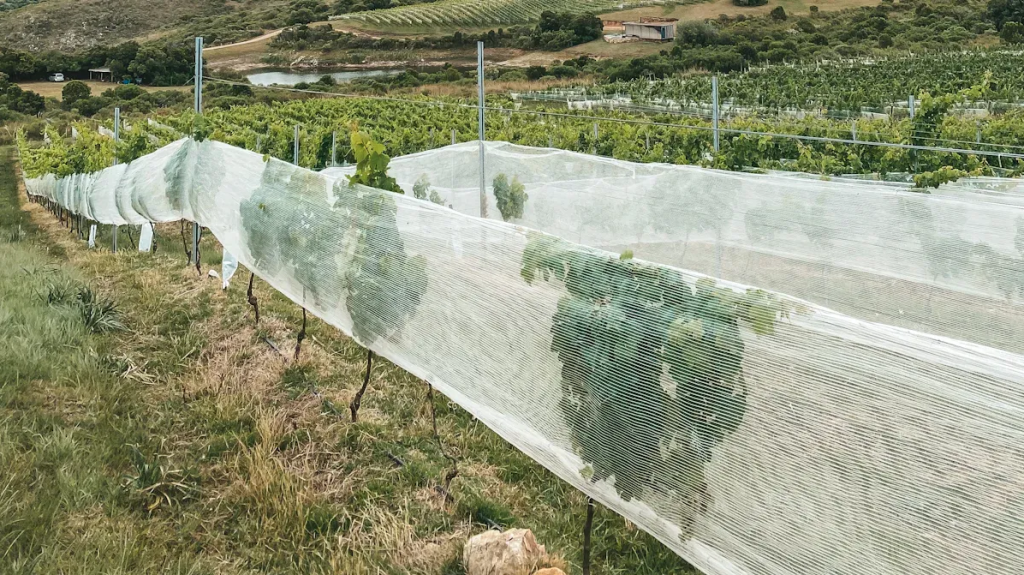
Insect netting is a far more precise technology. The mesh must be small enough to block the target pest. For example, a net designed to exclude cabbage moths might have a mesh of 1.0-1.5 mm. To exclude smaller pests like thrips or whiteflies, a much finer mesh, perhaps 0.4 mm or even smaller, is required. There is a direct trade-off with fine-mesh nets: as the mesh size decreases, so does airflow. This can lead to an increase in temperature and humidity inside the protected area, which may be beneficial in some cases but can also promote fungal diseases if not managed properly. Therefore, choosing an insect net involves identifying the smallest pest you need to exclude and selecting the largest possible mesh size that will still be effective, ensuring a balance between exclusion and ventilation. A wide range of custom agricultural netting solutions are available to meet these specific pest-exclusion needs.
Frost Blankets and Thermal Nets: Defying the Cold

Frost blankets, also known as floating row covers, are typically made from non-woven polypropylene fabric rather than knitted or woven mesh. They function on a simple principle: slowing the loss of radiant heat from the soil. During the day, the soil absorbs solar energy. At night, it radiates this heat back out. A frost blanket acts like a cloud, trapping a portion of that outgoing long-wave radiation and keeping the air temperature around the plants several degrees warmer than the surrounding environment. The level of protection is measured by the weight of the fabric, with heavier fabrics offering more insulation but blocking more light. A light cover might offer 1-2°C of protection, while a heavier one could protect against a frost of -4°C or more. These covers are invaluable for getting an early start in the spring and for protecting high-value crops from unexpected late-season frosts, effectively extending the productive window of a farm or garden.
Material Considerations: Durability, UV Resistance, and Longevity
The material from which a net is made is as important as its design. The vast majority of modern agricultural nets are made from high-density polyethylene (HDPE). This material is favored for its strength, light weight, and resistance to moisture and rot. However, not all HDPE nets are created equal. The most critical factor for longevity is UV stabilization. Unprotected polyethylene will degrade rapidly when exposed to sunlight.
Quality netting is treated with UV inhibitors during the manufacturing process. The lifespan of a net—which can range from 3 to over 10 years—is directly correlated to the quality and quantity of its UV stabilization package.
| Material Property | بولي إيثيلين عالي الكثافة (HDPE) | بوليستر | نايلون |
|---|---|---|---|
| مقاومة الأشعة فوق البنفسجية | Good to Excellent (with stabilizers) | ممتاز | Fair (degrades faster in sunlight) |
| Strength/Durability | جيد جداً | ممتاز | ممتاز |
| امتصاص الماء | Very Low (does not rot) | منخفضة | Moderate (can stretch when wet) |
| التكلفة | منخفضة إلى متوسطة | عالية | عالية |
| Common Use | Most shade, wind, and pest nets | Specialty applications requiring high strength | Limited use due to cost and UV issues |
When investing in a netting system, it is often more economical in the long run to choose a higher-quality material with superior UV protection. A net that must be replaced every three years can be more expensive over a decade than a premium net that lasts for ten years, especially when the labor cost of re-installation is considered.
The choice of material is an investment in the resilience and longevity of the microclimate you are creating.
Step 3: Designing and Structuring Your Netted Environment
With the appropriate netting selected, the focus shifts from the material itself to the form it will take. The design of the support structure is not a secondary consideration; it is integral to the function and longevity of the entire system. A well-designed structure ensures that the net is held in the correct position to do its job effectively, withstands environmental stresses like wind and snow, and allows for practical access to the crops for maintenance and harvesting. This phase is where abstract goals are translated into physical dimensions and engineering principles.
Principles of Structural Design: Tunnels, Flat Covers, and Vertical Screens
The architecture of a netted installation is dictated by its purpose and the type of crop being grown. There are three primary structural forms.
Low Tunnels and High Tunnels: These structures involve draping netting over a series of hoops to create a protected tunnel over one or more rows of crops. Low tunnels are typically less than a meter high and are ideal for low-growing crops like strawberries, leafy greens, or newly transplanted vegetables. They are relatively inexpensive and easy to install and move. High tunnels are walk-in structures, often made with a steel-pipe framework, that can cover a much larger area. They offer superior protection and allow workers to tend crops in any weather. Tunnels are exceptionally effective for temperature regulation (using frost cloth) and insect exclusion (using fine-mesh nets), as they fully enclose the growing space.

Flat or Horizontal Covers: For large, contiguous fields or orchards, a “roof” of netting is often the most practical solution. This involves stretching the net horizontally over the entire growing area, supported by a grid of posts and cables. This design is commonly used for shade netting over nurseries, ginseng gardens, or fruit orchards to prevent sunscald. It is also the standard method for deploying bird netting over vineyards or berry farms. The key engineering challenge here is to ensure the structure can support the weight of the net, especially if it is in an area that might receive snow, and to maintain proper tension to prevent sagging.

Vertical Screens or Fences: This design is used almost exclusively for windbreaks. The netting is stretched vertically between a series of sturdy posts, oriented perpendicular to the prevailing wind direction. The height of the fence is the most critical design parameter, as the zone of protection extends downwind as a multiple of the fence’s height. The posts must be deeply and securely anchored to withstand the constant pressure of the wind. For very long windbreaks, occasional bracing or guy wires may be necessary to provide additional stability.

Calculating Dimensions and Support Requirements
The success of any design hinges on getting the numbers right. This begins with accurately measuring the area to be covered. Always add extra length and width to your calculations to account for anchoring and draping—a common rule of thumb is to add 10-20% to each dimension.
For tunnel structures, the width of the net required depends on the height and width of the hoops. You must measure the distance over the top of the hoop from ground to ground, not just the straight-line width of the row.

For vertical windbreaks, the spacing of the support posts is critical. Spacing them too far apart will allow the net to sag and flap in the wind, which causes abrasion and dramatically shortens its lifespan. A typical spacing might be every 3 to 5 meters, depending on the height of the fence and the expected wind load.

For horizontal cover systems, the engineering is more complex. A grid of high-tensile steel cables is typically used to support the net. The spacing of the main support poles and the tension on the cables must be calculated to handle not only the net’s own weight but also potential loads from wind, rain, or snow. For large-scale projects, consulting with an agricultural engineer or a specialized netting supplier is often a wise investment. Sourcing the right durable netting products and pairing them with a professionally designed structure is the best way to ensure a long-lasting and effective system.
Ensuring Proper Ventilation and Airflow
Creating a microclimate is a balancing act. While the goal is to buffer the plants from harsh conditions, it is possible to over-protect them. A common mistake, particularly with enclosed structures like tunnels, is to restrict airflow too much. Stagnant, humid air is the ideal breeding ground for fungal and bacterial diseases like powdery mildew and botrytis.

The design must incorporate mechanisms for ventilation. For high tunnels, this can mean roll-up sides, vents in the roof, or large doors at either end that can be opened to create a cross-breeze. For low tunnels, the netting can be lifted on hot, calm days to allow air to circulate. Even the choice of netting itself plays a role. As discussed earlier, a very fine insect mesh will reduce airflow more than a larger mesh. If a fine mesh is necessary, the structure may need to be larger to create a greater volume of air, or it may require active ventilation (fans) to compensate. In a flat shade-net installation, leaving a gap between the edge of the net and the ground can help promote natural convective airflow, as hot air rises and escapes while cooler air is drawn in from below.
Integration with Existing Infrastructure
Often, netting systems are not built in isolation but are added to existing farm or garden infrastructure. This requires careful planning to ensure compatibility.
For example, if you are adding a shade system to an existing greenhouse, you must consider how it will be attached to the greenhouse frame. The structure must be strong enough to support the net and any additional load from wind or precipitation. Some systems are designed to be deployed on the exterior of the greenhouse, while others are installed internally. An external net is more effective at reducing heat gain, but an internal system is protected from the elements and may be easier to automate.
When installing a windbreak, consider its proximity to roadways, buildings, and other crops. You must ensure that the protected zone it creates actually covers the intended area. Similarly, when retrofitting an orchard with bird netting, the support structure must be designed to accommodate the mature size of the trees and allow for the passage of equipment for mowing and spraying. Thoughtful integration saves time, reduces costs, and results in a system that complements, rather than complicates, your existing operations.
Step 4: Installation and Best Practices
The transition from a well-conceived design to a functional reality is a critical juncture. The most sophisticated netting material and the most elegant structural plan can be rendered ineffective by poor installation. Proper installation is not merely a matter of assembly; it is a craft that ensures the netting performs its function optimally, resists damage from the elements, and achieves its maximum potential lifespan. Attention to detail during this stage is an investment that pays dividends for years to come.
A Step-by-Step Guide to Secure Installation
While the specifics will vary depending on the type of structure (tunnel, flat cover, or vertical screen), a set of universal principles applies to most netting installations.
- Prepare the Site: Before unrolling any netting, ensure the ground is clear of sharp objects like rocks, sticks, or old metal debris that could snag or tear the material. For permanent structures like windbreaks or orchard covers, this is also the time to install all posts, anchors, and primary support cables according to the design plan.
- Choose the Right Conditions: If possible, avoid installing netting on a windy day. Wind can make a large sheet of netting act like a sail, making it incredibly difficult and dangerous to handle. A calm, overcast day is ideal.
- Handle the Net with Care: Always unroll or unfold the netting carefully. Do not drag it across the ground or over rough surfaces. For large nets, it is best to have multiple people, each holding a section, to lift and carry it into position over the structure.
- Initial Positioning: Drape the net over the structure, ensuring it is centered and has sufficient overlap on all sides for attachment. For tunnels, make sure the net is evenly distributed over the hoops. For large horizontal covers, it is often easiest to pull the net across the support cables section by section.
- Begin Securing from the Center: Start attaching the net loosely at a few points near the center of the structure. This helps to hold it in place while you work your way outwards. Do not fully tighten any one point yet.
- Work Towards the Edges: Gradually move from the center towards the edges, attaching the net to the frame, cables, or ground anchors. Work systematically, for instance, along one side and then the opposite side, to maintain even tension.
- Apply Final Tension: Once the net is fully attached, go back and apply the final tension. The goal is a taut, smooth surface with no sagging or flapping areas. This is the most critical step for the net’s longevity.
Avoiding Common Pitfalls: Sagging, Tearing, and Poor Coverage
Tensioning and Anchoring for Maximum Stability
Proper tensioning is the single most important factor in preventing premature failure of a netting system. A loose or sagging net is highly susceptible to wind damage. The flapping motion, known as “luffing,” causes friction and abrasion wherever the net touches the support structure or itself. Over time, this will wear through even the most durable material.
The method of attachment and tensioning depends on the system.
- For Tunnels: The netting is often secured by burying the edges in a trench along the length of the tunnel. This provides a continuous and secure anchor. Alternatively, specialized clips or wiggle wire (spring lock) systems can be used to attach the net to a baseboard or metal frame.
- For Vertical Windbreaks: The net is typically attached to the posts and a top support cable using UV-stabilized cable ties, lacing cord, or specialized clips. The key is to have attachment points every 30-50 cm to distribute the load evenly and prevent any single point from being over-stressed. Tension should be applied horizontally along the length of the fence.
- For Horizontal Covers: These systems often use a perimeter cable. The edge of the net is clipped or laced to this cable, which is then tightened using turnbuckles or tensioners. This creates a drum-tight surface across the entire installation.
Anchoring is the foundation of the entire system. Ground anchors for posts or perimeter cables must be appropriate for the soil type. In soft soil, screw-in anchors or “deadman” anchors (buried horizontal logs or concrete blocks) may be necessary to provide sufficient holding power.
Several common mistakes can compromise a netting installation. Being aware of them can help you avoid costly and time-consuming repairs.
- Sagging: As mentioned, this is usually a result of insufficient tension or too few attachment points. A sagging net not only wears out faster but also fails to perform its function correctly. A sagging shade net will not provide even shade, and a sagging bird net may droop low enough for birds to sit on it and peck through to the fruit below.
- Tearing: Tears can happen during installation if the net is snagged on a sharp object. Inspect all structural components—posts, wires, clips—for sharp edges or burrs before pulling the net over them. A small tear should be repaired immediately with a patch kit or by lacing it shut with UV-stabilized twine to prevent it from growing larger.
- Poor Coverage: This results from miscalculation. If the net is too small, it will leave gaps at the edges, rendering it useless for insect or bird exclusion. Always measure the area to be covered and then order a net that is larger than those dimensions. It is far easier to trim a small amount of excess material than it is to try and stretch a net that is too small.
Seasonal Adjustments and Management
A netting system is not a static object; it is a dynamic part of the growing environment that may require management throughout the year.
Shade nets may only be needed during the hottest summer months. In climates with significant snowfall, they must be removed before winter to prevent catastrophic structural failure due to the weight of accumulated snow. Many large-scale systems are designed for easy removal and re-deployment.
Frost blankets are, by their nature, temporary. They are deployed when a frost is forecast and often removed the next morning to allow the plants to receive full sun.
Windbreaks are typically permanent, year-round structures. However, they should be inspected regularly, especially after major storms, to check for damage and ensure tension remains adequate.

Insect netting on tunnels may need to be lifted or removed for pollination if the crop requires it (unless beehives are placed inside the tunnel) or for weeding and harvesting access. Well-designed systems facilitate this access without compromising the integrity of the barrier. Proper management ensures the netting is only in place when its benefits outweigh any potential drawbacks, such as light reduction.
Step 5: Monitoring, Adapting, and Optimizing Your Microclimate
The installation of a netting system is not the final act in creating a microclimate; it is the beginning of an ongoing process of observation and refinement. The environment within the netted area is now different, and both the plants and the grower must adapt to these new conditions. Success lies in actively monitoring the changes, understanding the responses of the crops, and making intelligent adjustments to optimize the system. This iterative loop of monitoring, analysis, and adaptation is the hallmark of sophisticated environmental management.

Tools for Measurement: Thermometers, Anemometers, and Light Meters
While a grower’s intuition and experience are invaluable, objective data provides a much clearer picture of the changes a netting system has wrought. Simple, affordable instruments can quantify the new microclimate and provide a basis for informed decisions.
A set of maximum-minimum thermometers is an essential tool. Place one inside the netted area and one outside in a comparable location (e.g., at the same height and with similar sun exposure). By comparing the daily high and low temperatures in both locations, you can precisely measure the effectiveness of a shade net at reducing peak temperature or the ability of a frost blanket to retain nighttime warmth.

A handheld anemometer, or wind meter, is indispensable for evaluating a windbreak. Taking readings on the windward side of the net and at various distances on the leeward side allows you to map the zone of protection and confirm that the net is performing as expected. You might discover, for example, that the wind speed is reduced by 70% at a distance of five times the fence’s height, but only by 30% at ten times the height.
Light or PAR (Photosynthetically Active Radiation) meters can quantify the exact reduction in light intensity under a shade net. While a net may be rated as “40% shade,” the actual light reaching the plant canopy can vary with the angle of the sun and the age of the net. A light meter can help you verify that your plants are receiving light within their optimal range and can signal when an old net has degraded and is no longer providing the intended level of shade.
Observing Plant Responses and Making Adjustments
The ultimate measure of a microclimate’s success is the health and productivity of the plants themselves. This requires careful and regular observation. Are the plants under the shade cloth showing signs of etiolation (stretching and becoming spindly)? This could indicate too much shade, and you might consider switching to a net with a lower shade factor. Are the leaves on the plants protected by the windbreak larger and greener than those on unprotected plants? This is a positive sign of reduced water stress.

Look for subtle clues. Check the underside of leaves for pests. Even with insect netting, some pests may find their way in, and the protected environment could allow their populations to grow rapidly if not detected early. Monitor soil moisture. You will likely find that areas under shade or protected from wind require less frequent irrigation. Adjusting your watering schedule accordingly can lead to significant water savings and prevent problems associated with overwatering, like root rot.
Based on these observations, you may need to make adjustments. This could be as simple as raising the sides of a tunnel on a hot day or as significant as deciding to double the height of a windbreak after observing that it provides an insufficient zone of protection. The key is to treat the system not as fixed, but as adaptable.
Long-Term Maintenance and Netting Care
To ensure the longevity of your investment, a regular maintenance schedule is essential. The primary task is cleaning. Dust, pollen, and debris can accumulate on netting, reducing light transmission and airflow. For shade nets and greenhouse covers, this can be a significant issue. Most nets can be cleaned with a low-pressure spray of water and, if necessary, a soft brush and a mild, non-abrasive detergent. Always rinse thoroughly to remove any soap residue.

Regularly inspect the entire installation for any signs of wear and tear. Look for small holes or tears in the net, especially at attachment points. Check the tension of cables and the stability of posts and anchors. Repairing a small problem immediately is far easier and cheaper than dealing with a major failure later.
When a net is removed for the season (e.g., a shade net in winter), it should be cleaned, dried completely, and stored properly. Folding or rolling it neatly and storing it in a dry location out of direct sunlight and away from rodents will protect it from damage and ensure it is ready for deployment the following season.
The Iterative Process of Environmental Modification
Creating a microclimate is a dynamic process of learning and responding. The first year you install a system, you will learn a great deal. You might find that your 50% shade cloth works perfectly for lettuce but is too dense for your tomatoes. The following year, you might decide to use a 30% shade cloth over the tomatoes or to delay its deployment until the peak of summer.

Think of your netted area as a laboratory. Keep records from year to year. Note which nets were used, when they were deployed, and what the results were, both in terms of measured data (temperature, wind speed) and crop performance (yield, quality, pest incidence). This body of knowledge, specific to your land and your crops, becomes your most valuable asset. It allows you to move beyond simply reacting to problems and toward proactively shaping an ideal growing environment. This iterative process of installation, monitoring, observation, and adaptation embodies the art and science of creating microclimates.
Beyond the Basics: Advanced Applications and Innovations
Once the fundamental principles of using netting to modify an environment are understood, a world of more sophisticated applications opens up. Agricultural science is continually pushing the boundaries of what is possible with these simple materials, moving from brute-force protection to nuanced, targeted manipulation of plant physiology. These advanced techniques represent the frontier of creating microclimates, where netting becomes a tool not just for defense, but for actively steering plant development.
Colored Shade Nets and Photoselective Filtering
Standard black or white shade nets are primarily designed to reduce the quantity of light. However, recent research has focused on photoselective nets that alter the quality of light—that is, the spectrum of wavelengths that reaches the plants. Plants use different colors of light for different physiological processes. Red and far-red light, for example, are known to influence stem elongation, flowering, and branching. Blue light affects leaf thickness and stomatal opening.
By manufacturing nets in specific colors (e.g., red, blue, yellow, pearl), it is possible to create a light environment that encourages desirable traits in specific crops. For instance, studies have shown that red shade netting can promote vegetative growth and increase the size of leafy greens and herbs. Blue netting, on the other hand, can lead to more compact, sturdy plants, which is beneficial for ornamental flowers and nursery stock (Oren-Shamir et al., 2001). Pearl or white-colored nets scatter light more effectively than black nets, creating a more diffuse light environment. This diffused light can penetrate deeper into the plant canopy, illuminating lower leaves and potentially increasing overall photosynthetic efficiency, a phenomenon well-documented in greenhouse studies (Ilić et al., 2017).

Choosing a colored net is a highly specific decision. The effects can vary dramatically between plant species. A red net that benefits one crop might have a neutral or even negative effect on another. This approach requires a deeper level of knowledge about plant photobiology, but it offers a powerful way to fine-tune a microclimate for very specific outcomes, such as enhancing the coloration of red-leaf lettuce or increasing the number of branches on a flowering shrub.
Combining Netting Types for Multi-faceted Protection
In many agricultural settings, crops face multiple environmental threats simultaneously. A grower might have to contend with intense sun, damaging winds, and insect pressure all at once. In these situations, the most effective solution is often to combine different types of netting into a single, integrated system.
Imagine an orchard of high-value fruit trees. A vertical windbreak net could be installed on the windward perimeter to reduce wind stress. Above the trees, a flat-top system could be designed with two layers of netting. A permanent layer of bird netting would provide constant protection for the fruit. Above that, a retractable shade net could be deployed only during the hottest months of the year to prevent sunscald on the fruit and reduce heat stress on the trees. This multi-layered approach provides comprehensive protection, with each component addressing a specific threat.

Another common combination is the use of insect netting on the sides of a high tunnel with a shade net over the top. The insect netting provides pest exclusion, while the shade net mitigates the heat buildup that would otherwise occur in a tunnel sealed with fine-mesh screens. This allows the grower to achieve pest control without “cooking” the plants inside. The design of these combined systems requires careful planning to ensure the structure can support the multiple layers and that the different nets do not interfere with one another’s function.
Case Studies: Success Stories from Diverse Climates
The theoretical benefits of netting are best illustrated by real-world examples from different climatic zones.
Case Study 1: A Vineyard in an Arid, Sunny Climate (e.g., Central Valley, California) A grape grower was experiencing significant crop loss due to two factors: sunscald on the west-facing side of the grape clusters, which were exposed to the intense afternoon sun, and bird predation as the grapes approached ripeness. The solution was the installation of a 20-30% white shade net over the rows. The white color provided the necessary shade to prevent burn while also diffusing the light, improving canopy health. The netting itself served as a physical barrier against birds. The result was a dramatic reduction in culled fruit, a higher percentage of marketable grapes, and a noticeable decrease in irrigation needs due to lower canopy temperatures and reduced evapotranspiration.

Case Study 2: A Brassica Farm in a Temperate, Windy Climate (e.g., The Netherlands or Coastal UK) A farmer growing organic cabbage, broccoli, and kale was struggling with persistent damage from cabbage white butterflies and root flies. The constant wind in the region also stunted the growth of young transplants. The farmer erected low tunnels over the crop rows using a fine-mesh insect net. The tunnels were installed immediately after transplanting. The netting provided a complete physical barrier against the pests, eliminating the need for any sprays. As a secondary benefit, the tunnel created a calm, slightly warmer microclimate that accelerated the growth of the young plants, leading to an earlier harvest and more uniform, higher-quality heads.

These cases demonstrate the power of using netting to solve specific, context-dependent problems. The California grower needed to subtract a negative (excessive sun), while the European farmer needed to create a complete barrier (against insects) and buffer against another negative (wind). In both instances, the thoughtful application of the correct netting technology led to increased profitability and more sustainable production.
الأسئلة المتداولة (FAQ)
1. What is the difference between knitted and woven netting? Knitted netting is made from a single filament looped together, much like a sweater. This construction makes it more flexible and resistant to tearing; if a hole does appear, it is less likely to run or unravel. Woven netting is made by interlacing multiple threads, like cloth. It is generally less stretchy and can be more stable dimensionally, but a cut or tear can unravel more easily along the weave. For most agricultural applications requiring flexibility and durability, like shade and windbreak nets, knitted HDPE is the preferred choice.

2. Can I use one type of net for multiple purposes, like a shade net that also stops hail? While some nets offer secondary benefits, they are optimized for a primary function. A shade net might offer minimal protection against very light hail, but a dedicated anti-hail net is required for reliable protection. Anti-hail nets are typically white, knitted with a very strong, small-mesh construction designed to withstand high impact without tearing. Using the wrong net for a primary purpose like hail protection can lead to catastrophic crop and system failure.

3. How do I determine the right shade factor for my plants? The ideal shade factor depends on the plant species, the local climate, and the time of year. A good starting point is to research recommendations from your local agricultural extension service. As a general rule, heat-sensitive crops like lettuce and spinach might need 40-60% shade in summer. Fruit-bearing vegetables like tomatoes and peppers might benefit from 20-30% shade during the hottest part of the season to prevent blossom drop and sunscald. Nurseries growing shade-loving ornamentals might use 70% shade or higher.
4. How long does agricultural netting last? The lifespan of a net is primarily determined by its UV stabilization. A low-cost, non-stabilized net might last only a single season. A high-quality, professionally graded net made from UV-stabilized HDPE can last anywhere from 5 to 12 years, or even longer, depending on the specific UV package, the local climate’s solar intensity, and how well it is maintained. Investing in a net with a longer warranty and higher UV resistance is typically more cost-effective over time.
5. Will installing a windbreak create too much shade on my crops? This is a valid concern. The amount of shade cast by a windbreak depends on its height, its porosity, and its orientation relative to the sun. A highly porous net (e.g., 60% porosity) will cast a very light, dappled shade. To minimize shading on the crop area, the windbreak should be placed as far to the north of the crops as possible (in the Northern Hemisphere) while still providing wind protection. The benefits of reduced wind stress, improved temperature, and better moisture retention often far outweigh the minor shading effect.
6. Do I need to remove my nets in the winter? It depends on the net type and your climate. In areas with significant snowfall, any horizontal netting (like shade or bird nets) absolutely must be removed. The weight of accumulated snow can easily destroy the netting and the support structure. Vertical windbreaks can often be left up year-round, as snow does not accumulate on them. Frost blankets are used specifically in cool weather and removed when the threat of frost has passed.

7. How do I repair a small tear in my netting? Small tears should be repaired immediately to prevent them from getting bigger. For minor damage, you can use a UV-stabilized lacing cord or even heavy-duty zip ties to stitch the torn edges together. For larger holes, specialized repair kits are available which often include a patch of matching material and clips or twine for attachment. A timely repair can add years to the life of your net.
The deliberate act of creating a microclimate with agricultural netting is a testament to the grower’s role as both a nurturer and an engineer. It moves beyond the passive acceptance of given conditions, embracing a proactive and intelligent engagement with the environment. By understanding the fundamental forces of light, temperature, wind, and humidity, and by employing the precise tools designed to modify them, we can craft pockets of stability and abundance in an often unpredictable world. The process, from the initial, careful assessment of a site to the ongoing, iterative cycle of monitoring and adaptation, is a discipline of attentiveness. It demands that we observe our plants closely, listen to the language of our land, and respond with thoughtful, targeted interventions.

Netting, in this context, is more than just a physical barrier; it is a medium through which we can temper extremes, exclude threats, and ultimately create an environment where life can flourish with greater resilience and vitality.

اقرأ مقالاتنا الأكثر شعبية.
👉 قم بتنزيل فئات منتجاتنا المجانية
👉 الدليل الشامل لتركيب شبكات مكافحة الحشرات في الصوبات الزراعية
👉 Pest-Proofing Your Orchard: An Integrated Netting Approach for 2026
👉 The Ultimate Guide To Choosing Garden Netting: Pest, Material, and Crop Considerations
👉 كيف تبدأ مشروعًا تجاريًا خاصًا للشبكات: إطار عمل من 5 خطوات للعمل