
An initial low purchase price for industrial, agricultural, or sports netting often obscures a more substantial, long-term financial burden.

A comprehensive examination utilizing the Total Cost of Ownership (TCO) framework reveals that seemingly economical netting solutions frequently incur significant downstream expenses. These hidden costs manifest through accelerated material degradation, necessitating frequent replacement cycles with their associated repurchase prices. Moreover, each replacement event accrues substantial labor costs for removal, disposal, plus new installation.

Operational downtime caused by premature net failure can lead to severe revenue loss, particularly in commercial settings like sports facilities or agricultural enterprises. Perhaps most critically, substandard netting introduces considerable safety liabilities, exposing organizations to potential litigation, regulatory penalties, plus irreparable reputational damage. A TCO analysis demonstrates that investing in higher-quality, durable netting, characterized by superior materials plus construction, mitigates these risks.
Over the product’s lifecycle, a premium initial investment yields a lower total cost, superior performance, plus greater peace of mind, making it the more prudent economic choice.
Principales conclusiones
- Look beyond the sticker price to evaluate the full lifecycle expense of netting.
- Factor in recurring labor costs for replacing low-durability nets multiple times.
- Calculate potential revenue loss from operational downtime due to net failure.
- Recognize that quality netting minimizes significant safety plus liability risks.
- A complete Total Cost of Ownership analysis reveals the long-term value of durable materials.
- Frequent replacements of cheap nets carry a substantial environmental burden.
- Choose custom netting solutions designed for longevity in your specific environment.
Unpacking the Total Cost of Ownership (TCO) Framework
When we make a purchase, our attention is often captured by a single, prominent number: the price tag. It is a simple, immediate metric that feels easy to compare. Yet, a fixation on initial cost can be a profound economic misstep, especially for assets intended for long-term use. A more sophisticated and revealing approach is to consider the Total Cost of Ownership, or TCO. What does a TCO analysis involve? It is a comprehensive assessment of all direct plus indirect costs associated with an asset throughout its entire lifecycle, from acquisition to disposal (Panjaitan et al., 2024).

It invites us to think not as mere consumers making a one-time purchase, but as long-term investors managing an asset.
Beyond the Initial Purchase: What is TCO?
Imagine you are choosing between two cars. Car A is cheaper to buy, but its fuel efficiency is poor, its maintenance schedule is demanding, plus its parts are known to fail sooner. Car B has a higher initial price, but it sips fuel, requires less frequent servicing, plus has a reputation for reliability. A TCO analysis would tally not just the purchase price but also the projected costs of fuel, insurance, taxes, repairs, maintenance, plus even the eventual resale value over a set period, say seven years (Wilkins, 2024). Very often, the “cheaper” Car A reveals itself to be the more expensive proposition when viewed through a TCO lens. The analysis shifts our perspective from “What does it cost to buy?” to “What does it cost to own?”.

A detailed TCO evaluation considers multiple cost factors, including depreciation, fuel, maintenance, plus opportunity costs, to provide a complete financial picture of ownership. A purchase decision is transformed from a simple transaction into a strategic financial calculation.
Why TCO Matters for Netting Solutions
How does a concept developed for vehicles or IT infrastructure apply to something as seemingly simple as netting? The logic holds with remarkable force. Netting for a baseball backstop, a construction site, or an agricultural orchard is not a disposable good; it is a piece of functional infrastructure. It is an asset expected to perform a specific job—protecting people, property, or produce—over a period of years. The initial purchase price is merely the entry point into a long-term relationship with that asset. A failure to apply TCO thinking to netting procurement is a common but costly error. The true cost of cheap netting is rarely apparent at the checkout. Instead, it quietly accumulates over time, surfacing in unexpected repair bills, frustrating replacement projects, operational interruptions, plus, in the worst cases, safety incidents.

Opting for a low-cost net based solely on its upfront price is akin to choosing Car A; you may save money on day one, only to pay far more over the asset’s lifespan.
The Allure and Pitfall of Low Upfront Costs
The appeal of a low initial price is rooted in basic human psychology. It offers immediate gratification plus a sense of resourcefulness. For a business or organization operating on a tight budget, saving a few hundred or even a few thousand dollars on an initial purchase can feel like a victory. The procurement manager gets praised for coming in under budget. The project seems more profitable from the outset. However, the victory is often short-lived. A low price in the world of industrial materials is rarely a result of magic or efficiency; it is almost always a direct consequence of compromise. The compromise might be in the quality of the raw materials, the application of protective treatments like UV inhibitors, the strength of the weave or knots, or the robustness of the border finishing. These compromises are precisely what plant the seeds of future costs.
The central argument of a Total Cost of Ownership analysis for netting is that these future costs—replacement, labor, downtime, liability—are not just possible; they are probable, plus their sum almost invariably outweighs the initial savings.
Expense #1: The Cycle of Frequent Replacement and Material Degradation
The first, most direct hidden expense of choosing cheap netting is the accelerated need for replacement. A net that fails after two years instead of eight does not just represent a single failed purchase; it initiates a costly cycle of repurchasing that erodes any initial savings. To understand why, we must look into the material science that differentiates a quality net from an inferior one.
Material Science of Cheap vs. Quality Netting
Netting may appear uniform to the untrained eye, but its durability is determined at a molecular level. Low-cost netting is typically fabricated from unstabilized, low-grade polymers like standard polyethylene (PE) or polypropylene (PP).
While inexpensive to produce, these materials possess an inherent vulnerability to environmental stressors. The most significant of these is ultraviolet (UV) radiation from sunlight. UV rays act like molecular scissors, breaking down the long polymer chains that give the netting its strength. The result is a material that becomes brittle, weak, plus prone to tearing with even minor physical stress.
In contrast, high-quality netting employs superior materials engineered for longevity. High-Density Polyethylene (HDPE) or high-tenacity nylon are common choices. Crucially, these premium polymers are infused with specialized UV inhibitors during the manufacturing process. These additives function like a powerful sunscreen for the fibers, absorbing or deflecting harmful UV radiation before it can cause degradation.

Heavy-Duty Wind Protection Net for Farms and Greenhouses
Designed with 2mm PE mesh and an 80% shade rate, this windproof privacy net enhances perimeter safety, supports stable load distribution, withstands outdoor exposure, and maintains consistent mesh geometry for long-term fencing and balcony applications.
The difference in performance is not subtle; it is profound. A quality UV-treated HDPE net can retain its strength for many years, even in sun-drenched environments like Australia or the southern United States, while an untreated PE net might lose a significant portion of its tensile strength within a single season.
Let’s examine a direct comparison.
| Característica | Low-Cost Netting | High-Quality Netting |
|---|---|---|
| Primary Material | Standard Polyethylene (PE) or Polypropylene (PP) | High-Density Polyethylene (HDPE) or Nylon |
| UV Protection | Minimal or none; topical spray at best | Fully integrated UV inhibitors |
| Fabricación | Often extruded quickly with inconsistencies | Precision extrusion/weaving for uniform strength |
| Expected Lifespan | 1-3 years | 7-10+ years |
| Degradation Mode | Becomes brittle, chalky, tears easily | Retains flexibility and strength over time |
| Long-Term Value | Low; requires frequent replacement | High; provides long-term reliable service |
Calculating the Financial Drain of Repurchasing
The implications of material choice become starkly clear when we apply simple arithmetic. Consider a scenario for a community baseball field that needs a backstop net.
- Option A: The Cheap Net. The initial cost is $800. The material is standard, untreated PE. Based on local climate conditions, its functional lifespan is estimated to be 2 years before it becomes a safety concern.
- Option B: The Quality Net. The initial cost is $2,000. The material is premium, UV-stabilized HDPE, supplied by a reputable manufacturer of custom sports netting. Its expected lifespan is 8 years.
Let’s project the costs over an 8-year period, focusing only on the purchase price for now.
- Cost of Option A: The net must be replaced every 2 years. So, purchases happen at Year 0, Year 2, Year 4, plus Year 6. The total expenditure is 4 purchases * $800/purchase = $3,200.
- Cost of Option B: A single purchase at Year 0 provides service for the entire 8-year period. The total expenditure is 1 purchase * $2,000/purchase = $2,000.
In this simplified model, the “cheaper” net ends up costing $1,200 more in material expenses alone. The initial savings of $1,200 were not just erased; they were inverted into a significant loss. A Total Cost of Ownership analysis forces a recognition of the product’s entire lifecycle, a concept vital in optimizing pricing plus value over time .
Environmental Impact of Disposable Netting
Beyond the direct financial calculation, there is an environmental cost to the cycle of frequent replacement. Each time a cheap net degrades plus is discarded, it contributes to landfill waste. These petroleum-based plastics do not biodegrade for hundreds of years. The manufacturing plus transportation of four separate nets instead of one also consumes more energy, water, plus raw materials, resulting in a larger carbon footprint. While not always captured on a company’s balance sheet, these external costs represent a genuine societal burden.
A commitment to quality is also a commitment to sustainability. Choosing a durable product that lasts longer is an inherently more responsible environmental decision, reducing the overall consumption cycle (Gössling et al., 2022).
Expense #2: The Escalating Labor and Installation Costs
The purchase price of netting is only the first expenditure. The second, often overlooked expense in the true cost of cheap netting is the recurring cost of labor. Replacing a net is not a simple swap; it is a project that consumes time, energy, plus money. When a net must be replaced three or four times as often, these labor costs multiply, dramatically shifting the TCO calculation.
The Hidden Labor of Re-installation
Think about what is actually involved in replacing a large backstop or a section of construction safety netting. The process typically includes:
- Mobilization: Getting a crew, lifts, or other necessary equipment to the site.
- Removal: Carefully detaching the old, often brittle plus tangled net from its support cables or structure.
- Disposal: Bundling up the old net plus transporting it for proper disposal, which can sometimes involve fees.
- Installation: Unpacking the new net, hoisting it into position, plus meticulously securing it to the entire perimeter.
Each of these steps requires skilled or semi-skilled labor, plus that labor has a price. Let’s return to our 8-year baseball backstop scenario. Assume a two-person crew takes a full 8-hour day to replace the net. At a conservative labor rate of $45 per hour per person, the labor cost for a single installation is:
2 workers * 8 hours/worker * $45/hour = $720
Now, let’s incorporate labor into our TCO comparison:
- Option A (Cheap Net): 4 installations over 8 years.
- Material Cost: $3,200
- Labor Cost: 4 * $720 = $2,880
- Total Cost: $6,080
- Option B (Quality Net): 1 installation over 8 years.
- Material Cost: $2,000
- Labor Cost: 1 * $720 = $720
- Total Cost: $2,720
The picture has now become dramatically clearer. The true cost of cheap netting, once labor is factored in, is more than double that of the quality option. The initial $1,200 savings has metastasized into a $3,360 loss.
The Skill and Time Tax of Inferior Products
The calculation above assumes that installing a cheap net takes the same amount of time as installing a quality one. Unfortunately, is often not the case. Inferior products frequently impose a “time tax” on the installation crew. Why?
- Inconsistent Dimensions: Cheap netting can be manufactured with poor quality control, resulting in dimensions that do not quite match the specifications. A net that is supposed to be 20 feet tall might be 19.5 feet on one end plus 20.5 on the other, creating a nightmare for installers trying to achieve a taut, professional fit.
- Tangling and Memory: Low-grade materials can hold “memory” from being folded or baled, making them difficult to unfurl. They may also be more prone to tangling, forcing the crew to spend precious hours just getting the net ready to be lifted.
- Lack of Proper Finishing: Quality nets often come with a reinforced rope border stitched into the perimeter. A border makes installation vastly easier, providing a strong, consistent edge to attach to the support structure. Cheap nets may lack a border, forcing installers to attach directly to the weaker mesh, a process that is slower plus results in a less secure fit.

A frustrated installation crew spending extra hours wrestling with a subpar product adds directly to the labor cost, further widening the TCO gap between the cheap option plus the quality one.
Opportunity Cost: What Else Could Your Team Be Doing?
For organizations that use their own maintenance staff for installation, it can be tempting to think of labor as a “soft cost.” After all, the staff is on salary anyway. A TCO analysis challenges such thinking by introducing the concept of opportunity cost. The hours your maintenance team spends replacing a failed net for the third time are hours they are not spending on other vital tasks: repairing plumbing, painting facilities, servicing equipment, or performing preventative maintenance that saves money elsewhere.
The recurring distraction of the “netting problem” pulls resources away from core operational needs. The true cost of cheap netting, therefore, includes the value of the work that did not get done because your team was once again dealing with a predictable failure.
Expense #3: The Unseen Toll of Operational Downtime
We have now seen how cheap netting costs more in materials plus labor over time. The third hidden expense, operational downtime, can be even more financially devastating. When a net fails, it does not just create a replacement project; it can shut down the very activity it was meant to support, causing a direct halt to revenue generation plus a cascade of other problems.
When the Net Fails: Quantifying Lost Revenue
The cost of downtime varies by application, but it is almost always significant. A Total Cost of Ownership analysis demands that we attempt to quantify it. Let’s consider a few examples:

- Commercial Sports Facility: A popular commercial batting cage facility has a primary backstop net that tears. For safety reasons, the cages must be closed until a replacement is installed. If the facility generates $1,000 per day in rental fees, plus it takes three days to get a new net delivered plus installed, the lost revenue is a straightforward $3,000. For a facility with recurring net failures, these losses can become a major drain on profitability.
- Agricultural Operation: A vineyard installs cheap bird netting to protect its valuable grape crop. A windstorm, which a quality net would have survived, shreds large sections of the inferior netting just before harvest. Birds descend on the exposed crop. The value of the lost grapes could easily run into tens of thousands of dollars, a catastrophic loss far exceeding the “savings” on the netting.
- Construction Project: A debris net on a high-rise construction site fails an inspection or tears, forcing a stop-work order from a safety officer. The entire crew of 50 workers is idled. The daily cost of that crew (wages, insurance, equipment rental) might be $25,000. A two-day delay caused by a failed $500 net could cost the project $50,000 plus derail the entire project schedule.
The following table illustrates how these downtime costs can dwarf the initial price of the netting itself.
| Aplicación | Netting Type | Failure Scenario | Estimated Daily Downtime Cost | Potential Total Loss (3-Day Downtime) |
|---|---|---|---|---|
| Golf Driving Range | Barrier Netting | Tear allows balls to escape, range closed | $2,500 in lost fees | $7,500 |
| Apple Orchard | Bird Netting | Net tears before harvest, crop exposed | $8,000 in potential crop damage | $24,000+ |
| Construction Site | Debris Netting | Net fails inspection, work stopped | $25,000 in labor/equipment costs | $75,000 |
| Community Tennis Court | Court Divider Net | Net sags/tears, making court unplayable | $200 in lost court booking fees | $600 |
The Ripple Effect on Customer Satisfaction and Reputation
The costs of downtime are not purely financial. A facility that is frequently closed for repairs or appears dilapidated with torn, sagging nets develops a poor reputation. Customers who arrive at a batting cage only to find it closed will go to a competitor next time. A golf driving range known for having holes in its barrier netting will be perceived as unsafe plus unprofessional.

In the digital age, a few negative online reviews about poor facility conditions can permanently damage a business’s ability to attract new customers. The true cost of cheap netting includes the long-term loss of customer goodwill, a valuable but fragile asset. Rebuilding a tarnished reputation is far more expensive than investing in reliable infrastructure from the start.
Scheduling Nightmares and Logistical Hurdles
An unexpected net failure throws a wrench into the finely tuned gears of any operation. It creates a cascade of logistical problems that consume administrative time plus energy. A sports league manager has to reschedule a dozen games. A construction site manager has to re-sequence subcontractors plus deal with late-delivery penalties.
An orchard owner has to scramble to find a crew for an emergency harvest before more of the crop is lost. These administrative headaches are a real, though indirect, cost. Ordering a replacement net on an emergency basis often involves paying exorbitant rush shipping fees, adding another layer of expense that would have been unnecessary if a durable product had been chosen initially. The chaos introduced by an avoidable failure is a significant component of the Total Cost of Ownership.
Expense #4: The High Stakes of Safety and Liability
Of all the hidden costs associated with cheap netting, the issue of safety plus liability carries the highest stakes. While a torn net might lead to financial loss, a net that fails to perform its primary safety function can lead to injury or even death. The resulting legal plus financial consequences can be ruinous for an organization, dwarfing all other costs combined. A Total Cost of Ownership analysis must therefore treat safety not as a feature, but as a foundational requirement.
The Legal and Financial Consequences of Net Failure
The purpose of many netting installations is, fundamentally, to stop a moving object. For a baseball backstop, it is a foul tip. For a golf barrier, it is an errant drive. For a construction safety net, it is a falling tool or, in the most critical application, a falling worker. When a cheap, degraded net fails to perform this function, the consequences can be severe.
- Personal Injury Lawsuits: If a spectator is injured by a baseball that passes through a hole in a backstop, or a car is damaged by a golf ball that escapes a driving range, the facility owner is likely to face a lawsuit. The cost of legal defense, settlements, or judgments can easily run into the hundreds of thousands of dollars.
- Regulatory Fines: In the construction industry, safety standards are codified into law. Organizations like the Occupational Safety and Health Administration (OSHA) in the United States mandate specific requirements for the strength, installation, plus testing of personnel and debris nets. Using a non-compliant or degraded net can result in heavy fines, project shutdowns, plus even criminal charges in cases of gross negligence.
- Increased Insurance Premiums: An organization’s safety record directly impacts its insurance costs. A facility with a history of incidents related to net failure will be seen as a higher risk by its insurer, leading to a sharp increase in annual premiums for general liability coverage. Over time, these elevated premiums can add up to a substantial sum, another hidden tax levied by the decision to buy cheap.

Imagine a scenario where a small piece of equipment falls from a building under construction, punches through a cheap, UV-degraded debris net, plus injures a pedestrian below. The initial “savings” of a few thousand dollars on the netting purchase would be rendered tragically insignificant in the face of the ensuing legal and medical costs.
Peace of Mind as an Intangible Asset
A TCO analysis primarily deals with quantifiable costs, but it is important to acknowledge the intangible value of peace of mind. For a facility manager, business owner, or site supervisor, knowing that your safety systems are robust plus reliable is invaluable. It is the ability to focus on your core business without the nagging worry that your infrastructure might fail. It is the confidence that you have taken every reasonable step to protect your employees, your customers, plus the public. Investing in high-quality, certified netting is not just a financial decision; it is an ethical one. It demonstrates a commitment to safety that builds trust with stakeholders plus allows leaders to sleep better at night.
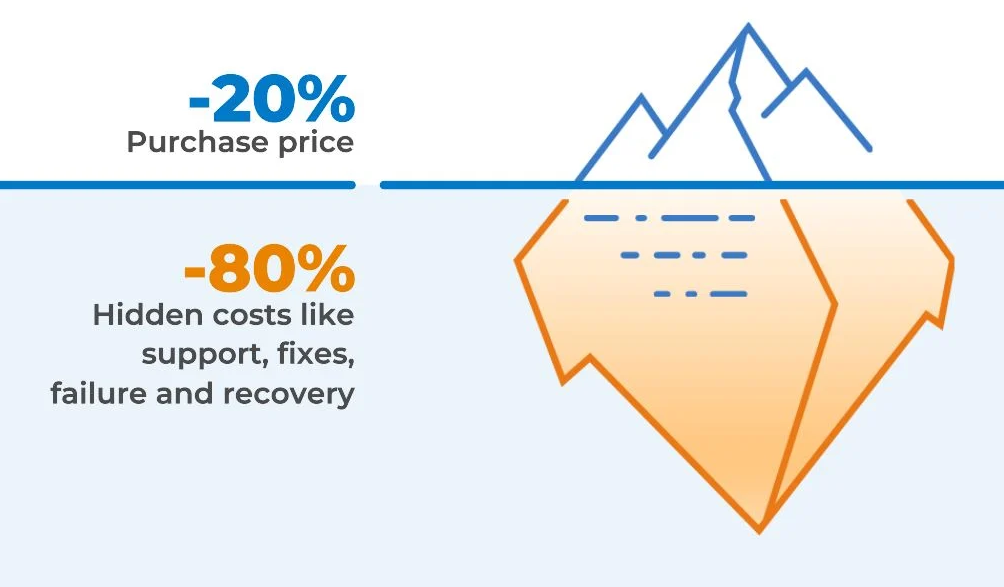
While you cannot put a precise dollar figure on peace of mind, its absence creates stress, distraction, plus anxiety, which are themselves costs to personal plus organizational well-being.
Meeting and Exceeding Industry Safety Standards
Reputable netting manufacturers design plus test their products to meet specific industry standards. For instance, sports netting might be tested for its specific impact resistance against baseballs or golf balls at high velocity. Construction safety nets undergo rigorous testing protocols to certify their load-bearing capacity and energy absorption.

These certifications are a customer’s assurance that the product is fit for its intended purpose. Cheap, unbranded netting often comes with no such documentation. There is no guarantee of its breaking strength, no data on its UV resistance, plus no proof it meets any recognized safety standard. When you purchase such a product, you are not just buying a net; you are buying an unknown level of risk.
A proper procurement process for any life-safety product should demand documentation of compliance with relevant standards. The refusal or inability of a supplier to provide such documentation is a major red flag, signaling that the initial low price is likely concealing a dangerous compromise on safety.
Expense #5: The Diminishing Returns of Poor Performance and Maintenance
The final hidden expense in the true cost of cheap netting relates to its gradual but steady decline in performance. Failure is not always a sudden, catastrophic event like a massive tear. More often, it is a slow process of degradation that diminishes the net’s functionality, aesthetics, plus value over time. This decline also creates an ongoing maintenance burden, consuming yet more time plus resources.

The Gradual Decline: Sagging, Stretching, and Fading
A quality net is engineered to be dimensionally stable. It resists stretching under its own weight plus maintains its tension over many years. Cheap netting, made from inferior polymers without proper heat-setting or stabilization, behaves very differently.
- Sagging: Under the constant pull of gravity, a cheap net will begin to sag. A sagging backstop looks unprofessional plus can create a “ramp” effect for balls hitting the bottom. A sagging overhead net in a sports facility can become a hazard that interferes with play.
- Stretching: The mesh itself can stretch out. A baseball or lacrosse net with a 1.75-inch mesh might stretch to over 2 inches after a year of use plus sun exposure. A mesh that has stretched is a mesh that can now allow a ball to pass through, defeating its purpose.
- Fading: The color in cheap netting is often a superficial dye that quickly fades under UV exposure. A black net turns a dusty gray, while a green net becomes a pale, sickly yellow. For facilities where aesthetics are important, like a high-end tennis club or a public park, a faded, discolored net makes the entire property look neglected plus run-down.

This gradual decline means that even when the cheap net has not “failed” in a structural sense, it has ceased to perform its job effectively plus professionally. The value it delivers diminishes long before it needs to be replaced.
The Sisyphean Task of Repair and Upkeep
One might argue that a cheap net can simply be repaired as it degrades. However, repairing inferior materials is often a frustrating plus futile exercise, much like the Greek myth of Sisyphus, who was condemned to endlessly push a boulder up a hill only for it to roll back down. When a brittle, UV-damaged net tears, the material around the tear is just as weak. A patch applied today may only lead to another tear right next to it tomorrow. The fibers are too weak to hold stitching, plus the material continues to degrade around any repair. Maintenance crews find themselves in a constant, reactive cycle of patching and mending, a “willingness to repair” that is ultimately defeated by the poor quality of the product itself (Ackermann et al., 2023).
Quality netting, by contrast, is more conducive to effective repair. A tear in a strong, flexible nylon or HDPE net can be cleanly stitched with a high-strength twine, providing a durable fix because the surrounding material remains robust.
The time spent on the Sisyphean task of patching a failing net is another hidden labor cost that must be added to the TCO ledger.
The True Meaning of “Durable”: A Lifecycle Perspective
A Total Cost of Ownership analysis forces us to redefine what “durable” truly means. It is not merely about avoiding catastrophic failure. True durability is the ability of an asset to maintain its performance, safety, plus aesthetic characteristics throughout its entire expected service life. A durable net is one that is still taut, strong, plus functional in year seven, not just in year one. It is a product that delivers consistent value. This lifecycle perspective is the core of the TCO philosophy.
When you procure soluciones de mallas a medida, you have the opportunity to specify materials plus features—like extra-heavy rope borders or specialized coatings—that are explicitly designed to enhance this long-term durability for your unique application, whether it is a coastal environment with salt spray or a high-altitude location with intense UV. The small, upfront investment in these features pays for itself many times over by extending the asset’s functional life plus reducing the total cost of ownership.
Making an Informed Decision: A Practical Guide to Netting Procurement
Understanding the theory of Total Cost of Ownership is the first step. The next is applying it to make smarter purchasing decisions. Armed with a TCO mindset, you can approach the procurement process not as a bargain hunter, but as a strategic investor. You can ask better questions, analyze quotes more intelligently, plus ultimately choose a product that delivers the best long-term value.
Questions to Ask Your Netting Supplier
When you evaluate a netting supplier, move the conversation beyond price. A reputable manufacturer will be able to answer detailed technical questions about their product. If a supplier is evasive or cannot answer these questions, consider it a serious warning sign.
Key questions to ask include:
- Material Composition: What specific polymer is the netting made from? Is it High-Density Polyethylene (HDPE), nylon, polyester, or standard Polyethylene (PE)?
- UV Protection: Is the material UV stabilized? If so, what is the process? Are inhibitors integrated into the polymer melt, or is it a temporary topical coating? What is the expected percentage of strength loss per year (kLy)?
- Construcción: Is the netting knotted or knotless? What is the twine size or diameter in millimeters? What is the breaking strength of a single twine?
- Mesh Treatment: Has the netting been “heat-set” or “pre-shrunk”? A treatment process ensures the mesh size is stable plus prevents sagging or stretching over time.
- Acabado: What kind of border finishing is included? Is it a rope border, plus if so, what is its diameter plus material? Is it sewn or woven in?
- Documentation and Warranty: Can you provide a technical specification sheet for the product? What does the warranty cover, plus for how long? Does it cover UV degradation specifically?
The answers to these questions provide a far better indicator of quality plus durability than the price tag alone.
Reading Between the Lines of a Quote
When you receive a quote for a netting project, look for the details. A low-price quote is often characterized by what it omits.
- A Vague Quote: It might say “100ft x 50ft PE Netting” for $1,500.
- A Detailed Quote: It will specify “100ft x 50ft of #42 HDPE Knotted Netting, 1.75-inch square mesh, UV-stabilized, black, with a 3/8-inch braided rope border sewn to all perimeters” for $3,500.
The second quote provides the information you need to assess the product’s quality. The first quote is a gamble. It gives the supplier the freedom to provide the cheapest possible material that meets the basic description. By demanding specificity in your quotes, you force suppliers to compete on quality, not just on price.
Always request an “apples-to-apples” comparison by providing all potential suppliers with the exact same detailed specifications.
A Final TCO Calculation Exercise
To put it all together, you can perform your own simplified TCO calculation. Create a simple spreadsheet or use a notepad.
- Define the Analysis Period: Choose a realistic timeframe, such as 10 years.
- Gather Data for Option A (Cheap Net):
- Initial Purchase Price:
- Expected Lifespan (in years):
- Number of Replacements Needed (10 years / Lifespan):
- Total Material Cost (Price * Number of Replacements):
- Labor Cost per Installation:
- Total Labor Cost (Labor per Install * Number of Replacements):
- Estimated Annual Downtime/Risk Cost:
- Total Risk Cost (Annual Cost * 10 years):
- Gather Data for Option B (Quality Net):
- Initial Purchase Price:
- Expected Lifespan (in years):
- Number of Replacements Needed (10 years / Lifespan):
- Total Material Cost:
- Labor Cost per Installation:
- Total Labor Cost:
- Estimated Annual Downtime/Risk Cost (should be much lower):
- Total Risk Cost:
- Calculate the Grand Total: For each option, sum the Total Material Cost, Total Labor Cost, plus Total Risk Cost.

The result of this exercise will almost certainly reveal that the true cost of cheap netting is far higher than its initial price suggests, making the quality option the clear economic winner.
FAQ
What is Total Cost of Ownership (TCO)? Total Cost of Ownership is a financial principle that calculates the full lifetime cost of an asset. It includes the initial purchase price plus all subsequent expenses such as maintenance, repairs, labor for replacement, operational downtime, plus disposal costs. It provides a more accurate picture of an asset’s true financial impact than the upfront price alone.
Isn’t a cheap net good enough for temporary use? For very short-term, non-critical applications (like covering garden plants for a few weeks), a cheap net might suffice. However, for any application lasting more than one season or involving safety, the TCO model shows that recurring replacement plus labor costs quickly make the cheap option more expensive.

Custom golf driving range net to protect window from damage
Specification for Golf Driving Range Net
How can I tell if netting is high-quality? Look for specific material details. High-quality netting is typically made from High-Density Polyethylene (HDPE) or high-tenacity nylon. It should be explicitly described as “UV-stabilized” or “UV-treated.” It should also have a consistent, uniform mesh plus often includes a robust rope border. Ask the supplier for a technical specification sheet.
What’s the biggest hidden cost of cheap netting? While it varies by application, the costs of operational downtime or a safety liability incident are often the largest hidden expenses. A single day of lost revenue at a commercial facility or one liability claim can easily cost more than the entire netting system itself.

Does UV treatment really make a big difference? Yes, it is arguably the single most important factor for outdoor netting durability. UV radiation from the sun degrades plastic fibers, making them brittle plus weak. A proper, integrated UV inhibitor can extend the functional life of a net from 1-2 years to 8-10 years or more, making it a critical feature for long-term value.
How much longer does quality netting last? Generally, a quality, UV-stabilized HDPE or nylon net can be expected to last 4 to 8 times longer than a cheap, non-stabilized PE net in the same environmental conditions. A typical lifespan for a quality net is 7-10+ years, compared to 1-3 years for a low-cost alternative.

Is custom netting more expensive? While a custom-sized net may have a higher price than a standard “off-the-shelf” panel, it often lowers the total cost of ownership. A custom net fits perfectly, reducing installation labor plus waste material. It also allows you to specify the exact material quality plus features needed for your application, ensuring optimal durability plus performance.
The decision of which netting to purchase presents a choice between two fundamentally different philosophies. One path prioritizes immediate, visible savings, focusing intently on the initial price tag. It is a path of short-term thinking that, as a Total Cost of Ownership analysis reveals, often leads to a future burdened by recurring expenses, operational disruptions, plus unacceptable risks. The other path requires a broader perspective, a willingness to look beyond the immediate transaction to the entire lifecycle of the asset. It is a path of investment, not just expenditure.
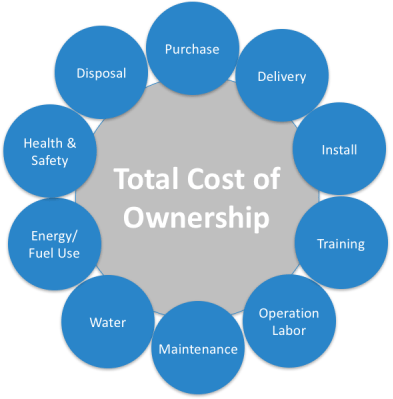
By embracing a TCO framework, we can see the true cost of cheap netting not as a single number on a receipt, but as a long, accumulating story of replacement purchases, repeated labor costs, lost revenue from downtime, the ever-present threat of liability, plus the quiet frustration of dealing with a perpetually failing product. The initial “savings” offered by an inferior net are revealed to be an illusion, a down payment on a much larger set of future costs.
Conversely, the higher upfront price of a quality, durable net is transformed in our understanding. It is not an extravagance but a prudent investment in reliability, safety, plus long-term operational continuity. It is a purchase that buys not only a physical product but also peace of mind plus predictable, lower costs over many years. The ultimate lesson from a TCO analysis is clear: in the world of functional infrastructure like netting, the most expensive choice you can make is often the one that appears to be the cheapest at first glance.

Lea nuestros artículos más populares.
👉 Descargue gratuitamente nuestras categorías de productos
👉 The Ultimate Guide to Installing Anti-Insect Nets in Greenhouses
👉 The Ultimate Guide to Choosing the Right Cargo Netting for Your Fleet
👉 HDPE vs Nylon Sports Netting: The Ultimate Guide
👉 A 5-Step Expert Guide: “Made to Order”: A Look at Our Custom Netting Process
👉 Cómo Empezar un Negocio de Redes de Marca Propia: Un marco de trabajo en 5 pasos
👉 La fabricación china frente a los proveedores locales: Guía del comprador de redes