
For first-time buyers, choosing custom netting can feel overwhelming due to the wide range of specifications and options available. This guide is designed to simplify the process by addressing the ten most common questions we receive from new customers. It walks through key considerations such as material selection—comparing HDPE, nylon, and polyester—as well as how to choose the right mesh size and twine thickness for different applications. We also explain the differences between knotted and knotless netting, along with practical topics like measuring, installation, UV protection, lifespan, cost, and lead times. The goal is to give you a clear, practical understanding of what matters most, so you can make confident, informed decisions.

Key Takeaways
- Select netting material based on moisture exposure: HDPE for outdoors, nylon for indoor strength.
- Match mesh size to the smallest object you need to contain, from golf balls to debris.
- Understand that knotted netting offers abrasion resistance, while knotless is smoother and often lighter.
- Always measure your space precisely, adding extra for sag and attachment points.
- This guide to the 10 most common questions we get from first-time netting buyers demystifies the process.
- Factor in UV treatment for any outdoor netting to ensure a longer functional lifespan.
- Recognize that custom sizes, materials, and treatments will influence the final project cost.
Question 1: Which Netting Material is Right for My Project—HDPE, Nylon, or Polyester?

For first-time buyers, terms like HDPE, nylon, and polyester can feel confusing at first. In reality, each material simply has its own strengths and limitations. The key is to match those characteristics to how and where the net will be used.
Instead of thinking of it as just picking a product, it helps to think in terms of fit: what conditions will the net face, and what do you need it to handle? Will it be exposed to sun, rain, and changing weather outdoors, or used indoors where strength and impact resistance matter most? Once you’re clear on that, choosing the right material becomes much more straightforward.
The Resilient Outdoor Choice: High-Density Polyethylene (HDPE)
High-Density Polyethylene, or HDPE, is widely used for outdoor netting because it handles weather extremely well. One of its biggest advantages is that it doesn’t absorb water. Unlike materials that soak up moisture and become heavier or stretched over time, HDPE stays light and stable whether it’s wet or dry.

This makes a real difference in outdoor applications. Think of a baseball backstop exposed to rain and humidity, or bird netting used in orchards season after season. If the material absorbs water, it can sag and put extra stress on the structure. HDPE avoids that problem, maintaining its shape and performance even in changing weather.
It also holds up well against chemicals commonly found outdoors, such as those in soil or bird droppings, and it doesn’t promote mold or mildew growth. While it’s not as strong as nylon in terms of pure tensile strength, HDPE stands out for its durability over time. For long-term outdoor use, it’s one of the most reliable and low-maintenance options available.
The Indoor Powerhouse: Nylon
Nylon shines when strength and energy absorption are the priorities. Its molecular structure gives it impressive tensile strength and elasticity, making it the material of choice for high-impact applications. A 100-mph fastball meeting a nylon net, for example, is safely absorbed as the fibers stretch and return to their original shape, reducing dangerous ricochets and protecting spectators.
But nylon has a key limitation: it absorbs water. When wet, the fibers can stretch 15–20% more and lose some strength, while the net becomes heavier and prone to sagging. For this reason, nylon is best suited for indoor or dry-weather use. Batting cages, indoor golf nets, or warehouse safety barriers are perfect settings. Using it outside without protection risks premature wear and reduced performance.
The Balanced Contender: Polyester
Polyester, or polyethylene terephthalate (PET), strikes a balance between HDPE and nylon, combining many of their strengths. Like HDPE, it absorbs very little moisture, staying stable in wet conditions and resisting mold and rot—giving it a clear advantage over nylon for outdoor use. In terms of strength, it exceeds HDPE and comes close to nylon, while also offering better resistance to UV radiation than untreated nylon, though UV protection is still recommended for long-term exposure.
Why isn’t polyester used everywhere? Mainly because it’s more expensive. Its manufacturing process is more complex, raising both material and finished-product costs. While strong, polyester is stiffer and lacks the elasticity of nylon, so it absorbs impact less effectively. For applications like indoor batting cages, the slight “give” of nylon is often preferred. Polyester shines where durability and strength outdoors are essential and the budget allows—think heavy-duty cargo nets, long-span stadium backstops, or architectural netting, where longevity and structural integrity are top priorities.
| Feature | High-Density Polyethylene (HDPE) | Nylon (Polyamide) | Polyester (PET) |
|---|---|---|---|
| Water Resistance | Excellent (Hydrophobic) | Poor (Hydrophilic) | Very Good |
| Tensile Strength | Good | Excellent | Very Good |
| UV Resistance | Good to Excellent (Often inherent) | Poor (Requires significant treatment) | Good |
| Abrasion Resistance | Very Good | Excellent | Very Good |
| Primary Application | Outdoor (Sports, Agriculture, Construction) | Indoor (High-Impact Sports) | Outdoor/Indoor (Premium, High-Strength) |
| Cost | Moderate | Moderate to High | High |
| Chemical Resistance | Excellent | Good | Good |
Question 2: How Do I Choose the Correct Mesh Size and Twine Diameter?
Once you’ve chosen the material, the next step is deciding on the net’s structure: the size of the openings, called the mesh, and the thickness of the strands, called the twine. These factors are closely linked—they determine the net’s strength, weight, wind resistance, and cost. Choosing the right combination starts with a clear understanding of the net’s purpose. What exactly are you trying to stop? The answer will guide every specification.
The Principle of Containment: Matching Mesh to Your Object
The rule for mesh size is simple: the openings must be smaller than the smallest object you want to contain or block. It sounds obvious, but it’s the most important decision. A net designed to stop golf balls is useless if the mesh is large enough for a ball to pass through at high speed. The right mesh ensures both safety and performance, preventing escapes without adding unnecessary weight or bulk.
Consider the spectrum of common applications:
Golf: A standard golf ball measures 1.68 inches (42.67 mm) in diameter. To safely contain high-velocity shots, a mesh size of 3/4 inch to 1 inch is standard. This provides a margin of safety, preventing balls from slipping through even on off-center hits where slight deformation occurs.

Baseball/Softball: A baseball is roughly 2.9 inches in diameter. For backstops and batting cages, a 1-3/4 inch mesh is typical. It’s small enough to stop balls reliably while still allowing clear visibility for players and spectators.

Hockey/Lacrosse: These sports involve smaller, harder projectiles. A hockey puck is 3 inches wide but only 1 inch thick, and a lacrosse ball is about 2.5 inches in diameter. A 1-1/2 inch mesh is needed to prevent these from slipping through.

Debris/Safety: Construction safety nets must catch falling tools or materials. Mesh size varies depending on regulations and the type of work, but 1/4 inch or smaller is common, often paired with a finer debris liner.

Bird Netting: To keep birds out, mesh size must be smaller than the target species. A 3/4 inch mesh deters pigeons, while a 1/2 inch mesh is suitable for smaller birds like sparrows.

Thinking about the “worst-case scenario” is a helpful mental exercise. Are you only stopping perfectly aimed shots, or must the net also contain a mis-hit, a ricochet, or the smallest piece of potential debris? The mesh must be sized for the most demanding possibility.
| Application | Smallest Object | Object Diameter | Recommended Mesh Size (Square) |
|---|---|---|---|
| Golf Impact | Golf Ball | 1.68″ (42.7mm) | 3/4″ to 1″ |
| Hockey/Lacrosse | Hockey Puck/Lacrosse Ball | ~1-3″ (25-76mm) | 1-1/2″ |
| Baseball/Softball | Baseball | 2.9″ (74mm) | 1-3/4″ |
| Soccer/Volleyball | Soccer Ball | ~8.6″ (22cm) | 4″ to 5″ |
| Construction Debris | Tools, Small Debris | Varies | 1/4″ to 2″ (often with liner) |
| Bird Control | Small Birds (Sparrows) | Body Size | 1/2″ to 1″ |
The Strength Factor: Understanding Twine Diameter
If mesh size dictates what the net can stop, twine diameter determines how much force it can endure over time. Twine diameter, sometimes indicated by a gauge or number (e.g., #36), measures the thickness and weight of the individual strands. Thicker twine contains more material, giving it higher tensile strength and better resistance to abrasion.
Consider two nets with the same 1-3/4 inch mesh for a baseball backstop. One uses #21 twine, the other #42. The #21 twine may be sufficient for a backyard cage used by a young player—it stops the ball reliably. The #42 twine, much thicker and stronger, is built for commercial batting cages or professional stadiums, where it must withstand thousands of high-velocity impacts daily for years. The thicker twine provides a larger margin of strength, resisting the cumulative wear and tear from both impacts and environmental exposure.
The choice involves a trade-off:
- Thicker Twine (e.g., #42, #60):
- Pros: Higher breaking strength, superior abrasion resistance, longer lifespan in high-use settings.
- Cons: Heavier weight (requiring a more robust support structure), lower visibility, higher cost, greater wind load.
- Thinner Twine (e.g., #18, #21):
- Pros: Lighter weight, better visibility, lower cost, reduced wind load.
- Cons: Lower breaking strength, shorter lifespan in high-impact or abrasive environments.
The choice of twine should be guided by how intensely the net will be used. For home use, a lighter twine is often the most practical and cost-effective option. For commercial facilities, schools, or professional teams, opting for a heavier twine is a wiser investment. It ensures greater durability, enhances safety, and reduces the need for frequent replacements over time.
Question 3: What Is the Difference Between Knotted and Knotless Netting?
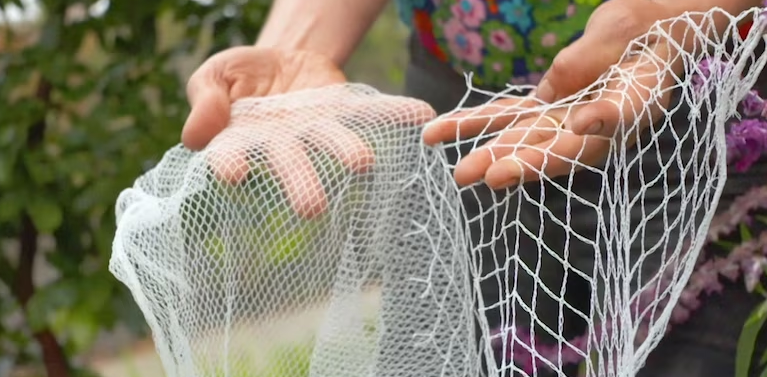
The way twines are joined at their intersections defines a key distinction in netting: knotted versus knotless construction. While this might seem like a subtle manufacturing detail, it has a significant impact on the net’s performance, durability, and how it interacts with the objects it contains. The presence—or absence—of knots influences the net’s surface texture, weight, and overall strength.
The Traditional Workhorse: Knotted Netting
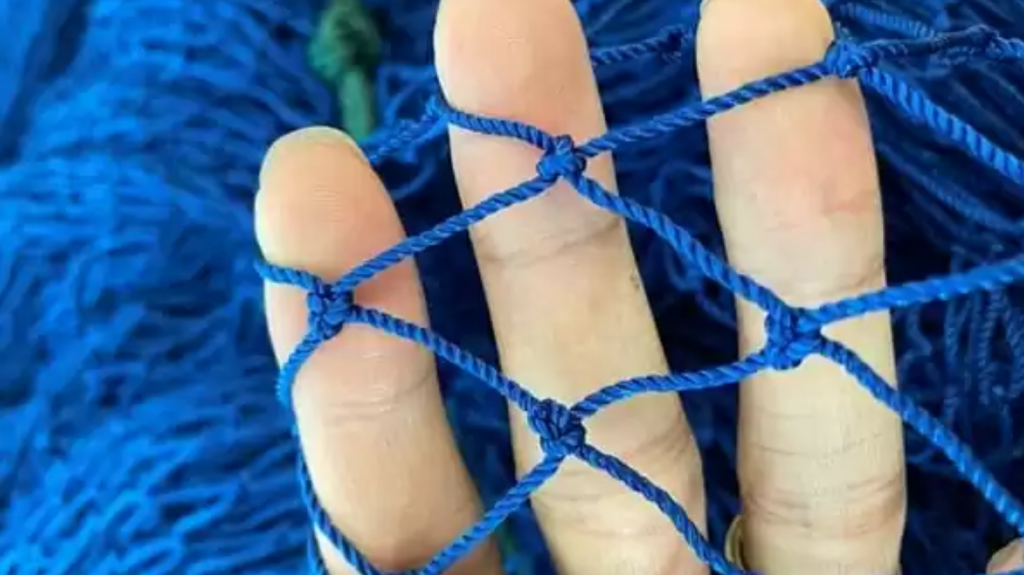
Knotted netting is the historical standard, produced by weaving twines and securing each intersection with a tight knot. The most common types are the square knot and the weaver’s knot. This construction method creates a net that is exceptionally strong and highly resistant to abrasion. The knots themselves act as raised, hardened points that can endure significant friction. Think of a cargo net being dragged over a rough surface or a trawl net scraping the seabed. The knots bear the brunt of this abuse, protecting the integrity of the twine spans between them. This ruggedness makes knotted netting a superior choice for applications involving rough contact. It is also easier to repair in the field. If a section of a knotted net is torn, a skilled user can often splice in a new piece, weaving and knotting it to match the original construction.
However, the knots are also a source of disadvantages.
- Stress Concentration: The knot itself creates a point of high stress, and the twine is often slightly weakened where it is bent and tightened. While the overall construction is robust, the knot is a theoretical point of failure.
- Weight and Bulk: The knots add material and therefore weight and bulk to the net. For very large installations, this can significantly increase the load on the support structure.
- Surface Abrasion: The raised profile of the knots can be abrasive to the objects it is meant to protect. For applications like hay nets for valuable livestock or delicate aquaculture pens, the constant rubbing against the hard knots could cause injury or damage.
The Modern Alternative: Knotless Netting

Knotless netting, as the name implies, is manufactured using a weaving or knitting process that creates the mesh structure without tying individual knots. The twines pass over and under one another in a stable, interlocking pattern. This results in a net that is perfectly flat and smooth.
The advantages of this construction are the direct inverse of the knotted net’s disadvantages:
- Consistent Strength: Because there are no knots to create stress points, knotless netting retains a higher percentage of the twine’s inherent breaking strength. The load is distributed more evenly across the entire structure. A study on fishing nets published in the Fisheries Research journal highlighted that knotless designs can offer better hydrodynamic properties and reduced drag (Kim, 2021).
- Lighter Weight: With no extra material used for knots, knotless netting is typically 15-20% lighter than a knotted net of the same twine diameter and mesh size. This makes it easier to handle and install and reduces the structural support requirements.
- Smooth Surface: The flat profile is much gentler on contact. This makes it the ideal choice for applications where the net will be in close contact with sensitive surfaces—player-friendly backstops, soft-sided enclosures, and agricultural uses where bruising of fruit is a concern.
- Consistency: The manufacturing process for knotless netting is highly regular, resulting in a very consistent mesh size and shape, which can be important for applications requiring precise filtration or sorting.
Knotless netting’s main drawback is its vulnerability to point abrasion. Without raised knots to absorb the wear, the twine takes the direct hit, leading to faster deterioration. Repairs can also be trickier and less seamless for the end user.
Ultimately, it comes down to what you value most. If durability and rough handling are top priorities, knotted netting remains the dependable choice. But if you prefer a lightweight setup with a smooth surface and excellent strength-to-weight ratio, knotless netting is the way to go.
Question 4: How Do I Accurately Measure My Area for a Custom Net?
Measuring for a custom net can feel a bit nerve-wracking—it’s easy to worry that even a small mistake will leave you with something that doesn’t fit quite right. The good news is that with a clear, step-by-step approach and a few practical guidelines, you can get accurate measurements with confidence. The key isn’t just measuring the space, but also considering how the net will actually behave once installed.
Think Before You Measure
Before picking up a tape measure, picture how the net will be used. Will it be pulled tight like a drum, or hang with some natural slack?
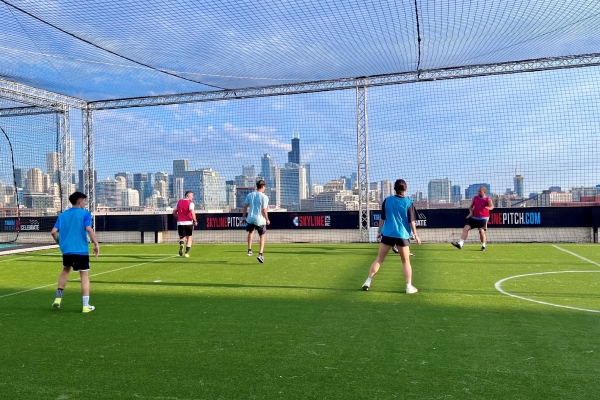
In most cases—especially for sports applications—a bit of sag is actually beneficial. A tightly stretched net can bounce objects back, sometimes dangerously. A slightly looser net, on the other hand, absorbs impact more effectively and performs better overall.
Step 1: Identify Your Anchor Points
Start by determining exactly where the net will be attached. This could be a cable, wall-mounted eye bolts, or ground posts.
Measure from these anchor points, not just the open space. The placement of these anchors defines the true size of your net.
Step 2: Use the Right Measuring Tool
For the most accurate results, use a steel tape measure or a laser distance measurer. Softer tapes (like fabric or fiberglass) can stretch and lead to small but important errors—especially over longer distances.
Step 3: Measure Precisely
Measure the exact height and width between your anchor points—no adjustments yet. Record these as your base dimensions.
If the area isn’t a perfect rectangle, take multiple measurements (e.g., left and right heights, top and bottom widths) and sketch a simple diagram. Clear labeling will help avoid confusion later.
Step 4: Account for Sag and Usage
Once you have your exact measurements, decide whether to add extra material based on how the net will be used:
• For impact netting (golf, baseball, etc.)
Add about 5% to both height and width.
Example: A 10 ft × 20 ft frame → order 10.5 ft × 21 ft net.
This allows the net to hang naturally and absorb impact without looking overly loose.
• For barrier or fence netting
If the net needs to be tight (e.g., perimeter fencing or debris screens), use your exact measurements. The material’s natural stretch is usually enough for a snug fit.
• For full enclosures (e.g., cages)
You’re measuring a continuous piece that forms the sides and top.
For example, a cage that is 10 ft high, 10 ft wide, and 20 ft long can be constructed as:
- Two side panels: 10′ × 20′
- One top panel: 10′ × 20′
Or as a single piece folded over the frame:
(10′ side + 10′ top + 10′ side) = 30′ × 20′
It’s always best to confirm with your supplier how they prefer cage dimensions to be specified.
Final Tip: Communicate Clearly
When placing your order, provide:
- Your exact measured dimensions
- The percentage of slack you want added
For example:
“My frame measures 12 ft high × 30 ft wide. Please add 5% for sag.”
This ensures the net manufacturer understands your intent and can produce a net that fits properly and performs as expected.
With careful measuring and clear communication, getting a well-fitting custom net is much more straightforward than it might seem.
Question 5: What Kind of Hardware and Support Structure Will I Need for Installation?
A high-quality net is only part of the equation—how you support and install it is just as important. The structure and hardware aren’t optional add-ons; they’re what ensure the net works safely and reliably over time. Every force acting on the net—impact, gravity, wind—gets transferred to this system, so it needs to be planned with care.
Start with the Structure
The support structure defines the shape, strength, and durability of your setup. What you choose depends on how large the installation is, whether it’s permanent, and how much stress it needs to handle.
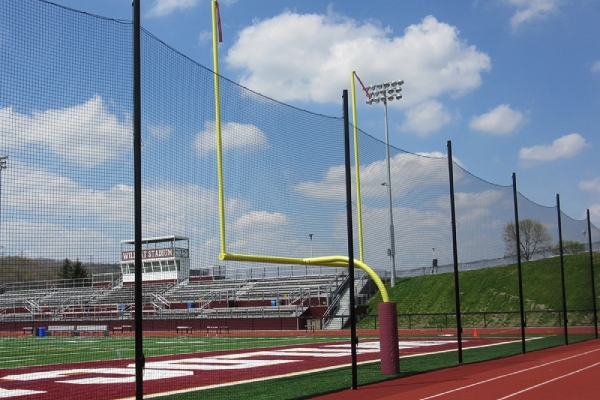
• Steel or wooden poles
For large outdoor setups—like backstops, driving ranges, or perimeter nets—steel or treated wood poles are the standard. Their size and how deeply they’re set (often in concrete) should match the height of the net, local wind conditions, and soil type.
A taller net in a windy area will always need a stronger, more stable pole system.
• Cable-supported systems
This is one of the most common solutions for larger nets. Steel cables (galvanized or stainless) run along the top—and sometimes the sides and bottom—of the net, then get tensioned between poles or walls.
This setup lets the net hang naturally and absorb impact well. The cable thickness should match the weight of the net and the span distance.

• Freestanding frames
For smaller or portable setups—like backyard cages—freestanding frames made of steel or aluminum tubing are a practical option. They’re easy to assemble and don’t require permanent installation.
Tip: When in doubt, choose a stronger structure than you think you need. Extra strength adds safety and longevity, while underbuilt systems are more likely to fail over time.
Choose the Right Hardware
Hardware connects the net to the structure—and plays a big role in durability and ease of use.
• Snap hooks (carabiners)
A popular and flexible option. They clip the net to a cable or frame, usually every 12–24 inches. Great for setups where the net may need to be removed or adjusted.

• Hog rings
Metal fasteners that clamp the net directly to a cable. They create a very secure, permanent connection—but removing the net later is more difficult.
• Cable ties (zip ties)
Useful for light-duty or temporary setups. Make sure they’re heavy-duty and UV-resistant. Not ideal for high-impact or long-term installations, as they can weaken over time.
• Rope or twine
Lacing the net onto a frame or pole distributes tension evenly along the edge. This method is reliable and gentle on the net.
• Turnbuckles
Essential for cable systems. They allow you to tighten or adjust cable tension, keeping everything properly aligned and secure.
• Eye bolts and anchors
These are your main attachment points on walls or poles. They must be installed into solid, load-bearing materials—like concrete or structural wood—not just surface layers.
Key Principle: Distribute the Load
The most important rule when installing a net is simple:
spread the force out.
Instead of relying on a few strong attachment points, use many evenly spaced ones. This prevents stress from concentrating in one area, which is a common cause of tearing or premature wear.
Think of your net system as a whole: the net, the structure, and the hardware all work together. A well-supported net not only performs better, but also lasts longer and stays safer under real-world conditions.
Question 6: How Long Will My Netting Last and How Can I Maximize Its Lifespan?
When investing in custom netting, durability is one of the biggest concerns. The lifespan of a net isn’t fixed—it depends on material, environment, usage, and maintenance. Understanding these factors helps you get the most value out of your purchase.
What affects netting lifespan?
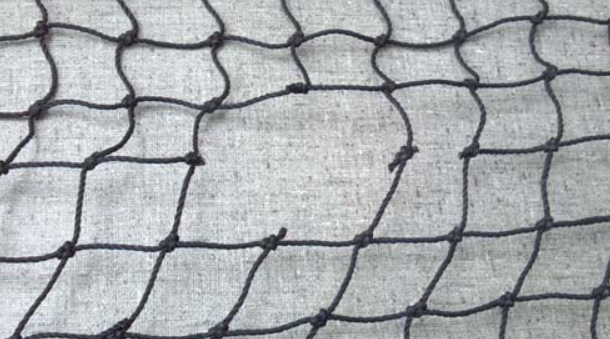
Several key factors determine how long your net will last:
- Material choice
The type of material plays a major role. HDPE netting is ideal for outdoor use because it resists UV rays and moisture. Nylon performs well indoors but degrades faster outside. Choosing the right material for your environment is the most important decision. - UV exposure
Sunlight is the biggest cause of wear for outdoor nets. Over time, UV rays weaken the fibers, making them brittle. High-quality UV-treated netting lasts significantly longer. - Usage and impact level
A commercial batting cage used daily will wear out faster than a backyard net used occasionally. The type of impact also matters—sharp abrasion or repeated stress shortens lifespan. - Installation quality
Poor installation creates uneven tension, which leads to early failure. Sharp edges or weak attachment points can also damage the net over time.
Typical lifespan
- Outdoor HDPE or polyester netting: 5–10 years (or longer in mild climates)
- Indoor nylon netting: 10+ years, depending on usage
How to extend the life of your net
- Inspect regularly for fraying or damage
- Remove debris like leaves and dirt
- Clean gently with water (avoid harsh chemicals)
- Repair small holes immediately
- Store indoors during off-season if possible
With proper care, your netting system can last many years while maintaining safety and performance.
Question 7: What Is UV Treatment and Is It Necessary for My Netting?
If your net will be used outdoors, UV treatment isn’t optional—it’s essential.
What happens without UV protection?
Sunlight breaks down the fibers in netting through a process called photodegradation. Over time, this causes:
- Loss of strength
- Reduced flexibility
- Brittle, chalky texture
- Increased risk of tearing
A net can lose up to 70–80% of its strength without UV protection.
How UV-treated netting works
UV stabilization is built directly into the fibers during manufacturing—not applied afterward. It uses two main technologies:
- UV absorbers – act like sunscreen, blocking harmful rays
- HALS (stabilizers) – prevent long-term chemical breakdown
High-quality netting combines both for maximum durability.
If your net is exposed to sunlight—whether it’s for sports, construction, or agriculture—UV-treated netting is a must. It’s the difference between a product that lasts years and one that fails prematurely.
Question 8: Can I Order a Net in a Custom Size, Shape, and Color?
Yes—custom netting is designed specifically to fit your project. Most applications require more than standard sizes, especially for sports facilities, construction sites, or unique spaces.
Custom sizing
You can order netting in virtually any dimensions, from small repair patches to large-scale installations. This ensures a perfect fit without cutting or modifying on-site.
Custom shapes

Non-standard shapes are common. Options include:
- Angled or tapered nets
- Cutouts for poles, doors, or structures
- Irregular or curved layouts
A simple sketch with measurements is usually enough to get started.
Edge finishing options
- Rope border – strongest and most common; improves durability and load distribution
- Vinyl or webbing border with grommets – cleaner look, easier installation, often used indoors
Custom colors
Black is the most common due to built-in UV resistance, but other options like green, white, or blue are available. Custom colors can help match branding or blend into surroundings.
Note: Custom colors may require minimum order quantities and longer lead times.
Question 9: How Are the Costs of Custom Netting Calculated?
The price of custom netting depends on several key factors. Understanding these helps you balance performance and budget.
Main cost factors
- Material type – HDPE, nylon, and polyester vary in price
- Total size (square footage) – larger nets cost more
- Twine thickness & mesh size – thicker twine and smaller mesh increase material usage and cost
- Knot type – knotted vs. knotless can affect pricing
- Finishing options – rope borders, vinyl edges, and grommets add cost
- Color – standard colors are cheaper than custom ones
Additional costs to consider
- Shipping – large or heavy nets can increase freight costs
- Installation hardware – cables, hooks, poles, and turnbuckles are usually separate
How to reduce costs
If needed, you can adjust:
- Mesh size
- Twine thickness
- Edge finishing
This flexibility allows you to stay within budget without sacrificing essential performance.
Question 10: What Is the Typical Timeline from Ordering to Receiving My Net?
Custom netting is made to order, so production takes time. Knowing the timeline helps you plan your project effectively.

Step 1: Order processing (1–3 business days)
Order is reviewed and scheduled for production.
Step 2: Manufacturing (5–15 business days)
Depends on:
- Material availability
- Custom specifications
- Finishing complexity
- Current production volume
Step 3: Quality control & packaging (1–2 days)
Net is inspected, measured, and packed.
Step 4: Shipping (3–10+ days)
- Domestic shipping: typically 3–7 days
- International: longer, depending on location
Total estimated timeline:
About 9 to 25 business days
For urgent projects, rush production and expedited shipping may be available.
Frequently Asked Questions (FAQ)
Can netting be repaired?
Yes. Small holes can be fixed with a repair kit using matching twine. Larger damage may require replacement panels.
Is there a minimum order size?
Small orders may have a minimum charge due to setup and labor costs.
How should I store netting?
Keep it clean, dry, and away from sunlight. Store in a garage or shed to prevent damage.
Square mesh vs. diamond mesh—what’s the difference?
Netting is made in a diamond pattern. “Square mesh” simply means it’s installed in a different orientation.
Do I need professional installation?
Small setups can be DIY. Large or high-tension systems should be installed by professionals for safety.
Final Thoughts
Choosing the right custom netting comes down to understanding your needs—environment, usage, durability, and budget. With the right material, proper installation, and regular maintenance, your netting system will deliver reliable performance for years.
If you approach the process carefully and communicate clearly with your supplier, you’ll end up with a solution that fits perfectly and performs exactly as expected.

Read our most popular articles.
👉 Download our free product categories
👉 A 5-Point Buyer’s Guide to The True Cost of Sourcing: Beyond the Price Tag
👉 A 5-Point Expert Checklist: Knotted vs. Knotless Netting: Which is Right for Your Application?
👉 A 5-Step Expert Guide: “Made to Order”: A Look at Our Custom Netting Process
👉 The 2026 Chinese Manufacturing vs. Local Suppliers: A Netting Buyer’s Guide — 7 Data-Backed Factors
👉 How to Start a Private Label Netting Business: A 5-Step Framework for Work
👉 The Chinese Manufacturing vs. Local Suppliers: A Netting Buyer’s Guide