
An evaluation of a netting system’s structural integrity is paramount for ensuring safety, operational efficiency, and economic prudence.
This analysis explores the multifaceted decision-making process involved in determining whether to repair or replace degraded netting. It examines the intrinsic properties of common netting materials, such as nylon, polyester, and polyethylene, and how environmental factors like ultraviolet radiation, chemical exposure, and mechanical stress contribute to their deterioration over time.
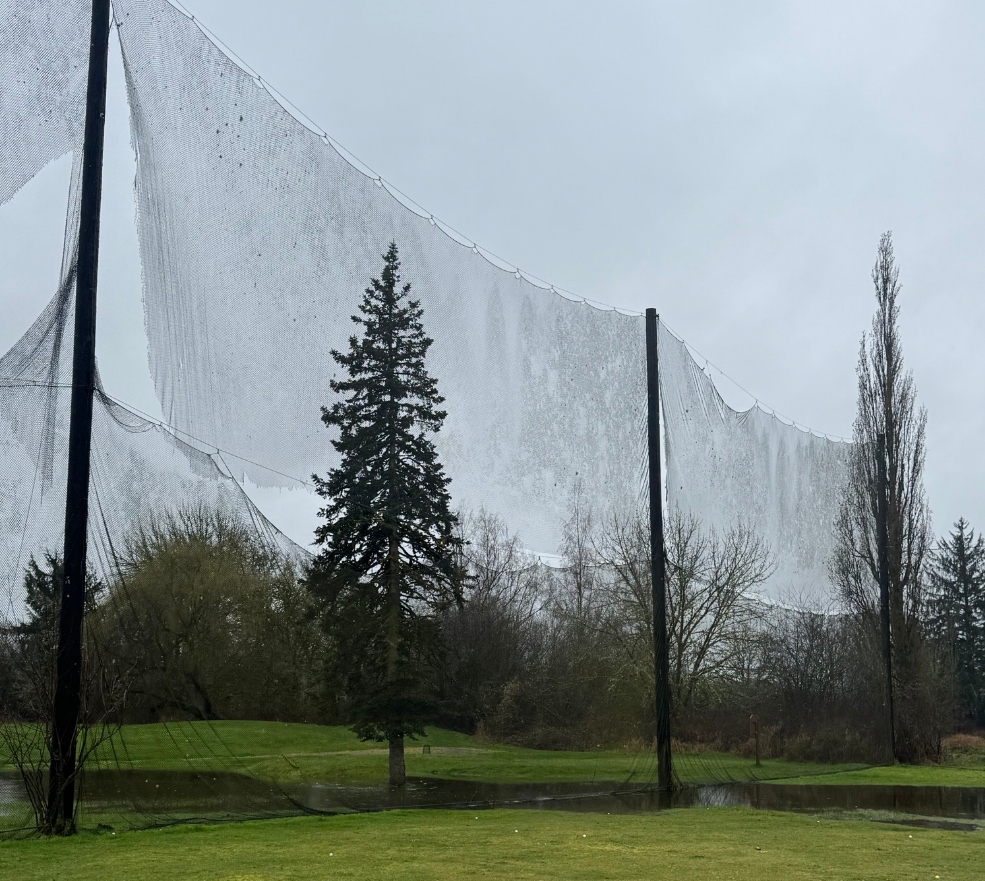
The document presents a systematic framework for inspection, categorizing damage from minor, localized tears to widespread, systemic degradation. It introduces practical assessment models, including a cost-benefit analysis that weighs the immediate expense of repair against the long-term value and reduced liability of a full replacement. By synthesizing principles from materials science, risk management, and economic theory.
This guide provides a coherent methodology for facility managers, agricultural professionals, and homeowners. The objective is to empower stakeholders with the knowledge to make informed, defensible decisions that optimize the net lifespan, safeguard against failure, and ensure a return on investment.
Point 1: Grasping the Fundamentals of Net Material and Construction
The object before you—a simple net—appears uncomplicated. It is a mesh of intersecting strands, designed to stop a ball, contain a shipment, or protect a crop. Yet, within its structure lies a complex story of material science and engineering choices. To truly grapple with the question of repair versus replacement, one must first develop a sensitivity to the material itself. Just as a physician must understand anatomy before diagnosing an ailment, we must understand the composition and construction of netting to properly assess its health and longevity. The decision is not merely about patching a hole; it is about evaluating the remaining useful life of the entire system.
The Fabric of Safety: Common Netting Materials
Material selection is the primary factor determining a netting system’s performance, durability, and suitability for specific applications. Each polymer offers a distinct balance of strength, environmental resistance, and operational limitations.
Nylon (polyamide)
Nylon is known for its high tensile strength, excellent shock absorption, and strong abrasion resistance, making it ideal for high-impact applications such as sports backstops and industrial safety systems.
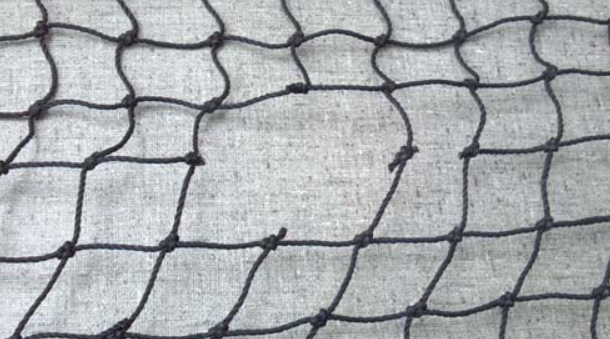
However, as a hydrophilic material, nylon absorbs moisture, which can reduce its tensile strength by 15–20% and increase stretch under load. It is also vulnerable to UV degradation and certain chemicals, requiring protective treatment for outdoor use.
Polyester (PET)
Polyester provides comparable strength to nylon with greater environmental stability. Its hydrophobic nature allows it to maintain consistent performance in wet or humid conditions.

It also offers strong resistance to UV exposure and acids, making it well-suited for long-term outdoor installations such as agricultural and marine netting. Its lower elasticity results in reduced shock absorption but improved dimensional stability.
Polyethylene (PE)
Polyethylene is a lightweight, cost-effective material with excellent resistance to moisture, chemicals, and environmental exposure.
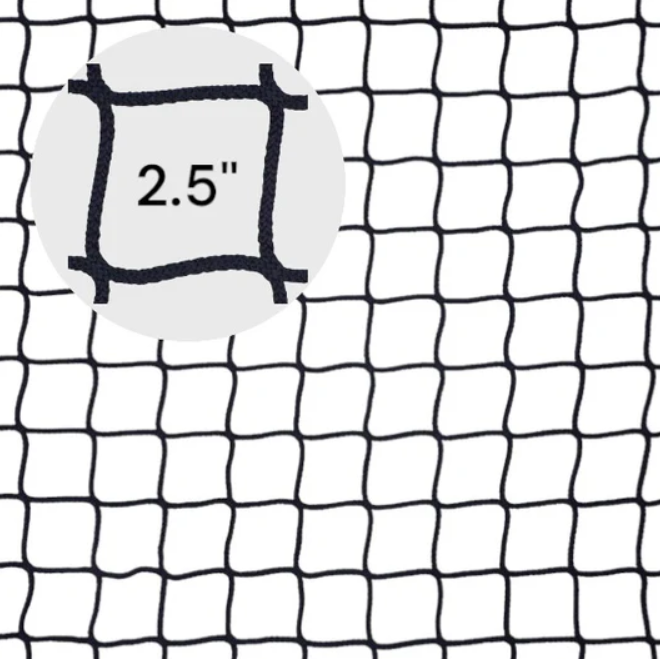
High-Density Polyethylene (HDPE) is particularly valued for its UV resistance, making it widely used in agricultural shade nets, bird netting, and general barrier applications. However, its lower tensile strength and low melting point limit its use in high-load or high-temperature environments.
Dyneema (UHMWPE)
Dyneema® represents the high-performance category, offering an exceptional strength-to-weight ratio—up to 15 times stronger than steel by weight.

It is lightweight, chemically inert, and highly resistant to UV and abrasion, making it suitable for critical applications such as sports infrastructure, aquaculture, and military systems. Its higher cost means it is typically reserved for scenarios where maximum strength and reliability are required.
Weaving the Story: How Construction Impacts Durability
The way the individual strands are joined to form a mesh is as consequential as the material itself. The two primary methods, knotted and knotless, create nets with different performance characteristics.
Filet noué : This is the traditional method, where strands are tied together at each intersection. These knots can provide a firm structure and prevent the mesh from distorting. However, the knots themselves can be a point of weakness. Under load, stress concentrates at the knot, which can have up to a 30% lower breaking strength than the strand itself. The knots also create raised points that are more susceptible to abrasion. Imagine dragging a knotted net across a rough surface; the knots will bear the brunt of the friction.
Filet sans nœuds : This construction method, often involving a woven or knitted pattern, creates a smoother, lighter, and often stronger product. By eliminating knots, the stress is distributed more evenly across the entire strand. This results in a higher overall breaking strength for the same material and twine size. The smooth surface reduces abrasion and is gentler on anything the net contains, whether it’s a valuable fish harvest or a person in a fall-arrest system. For applications like custom sports netting, a knotless design can also provide a more consistent playing surface with truer ball rebounds.
Environmental Foes: Understanding UV Degradation and Chemical Exposure
A net does not simply “get old.” It is actively broken down by its environment. The most relentless and pervasive of these environmental adversaries is ultraviolet radiation.
UV Degradation: Think of the long polymer chains that give a net its strength as long strands of connected paper clips. UV photons from sunlight act like tiny scissors, striking these chains and breaking the links. This process, known as photodegradation, makes the material brittle, weak, and discolored. A once-pliable net becomes stiff and prone to cracking. Materials like polyester and HDPE are engineered with UV inhibitors mixed into the polymer, which act as sunblock, sacrificing themselves to protect the polymer chains. But even these inhibitors have a finite lifespan. A study by the European Environment Agency (2024) highlights that extending product lifespans is a key goal for sustainability, but this requires understanding the factors that cause degradation. The rate of this decay depends on the material, the intensity of sunlight (geographical location and altitude), and the presence of any protective coatings.

Chemical Exposure: The chemical environment can be just as hostile. Airborne pollutants, acid rain, cleaning agents, pesticides in agriculture, or salt spray in coastal areas can all initiate chemical reactions that weaken the net’s fibers. Nylon, for example, is susceptible to strong acids, while polyester is more resilient. It is vital to consider the specific chemical soup your net will be living in when assessing its condition and potential lifespan.

Understanding these fundamental aspects of material, construction, and environmental interaction moves us from a simple visual check to a more profound analytical assessment. We are no longer just looking at a net; we are reading the story of its past and projecting its likely future.
Point 2: The Art of Inspection: Identifying the Tipping Point for Degradation
Having established a foundational understanding of what a net is made of and how it wearies, we can now approach the task of inspection with a more discerning eye. This is not a cursory glance but a deliberate, methodical examination. It is an act of inquiry, seeking to uncover the subtle narrative of wear and tear that the net tells. The goal is to identify the tipping point—the moment when the accumulation of minor issues signals an impending systemic failure. A regular, documented inspection is the most powerful tool in your arsenal for understanding net lifespan and making the correct repair or replace decision.
A Visual and Tactile Examination: Your First Line of Defense
Your own senses are the primary instruments for this assessment. The process should engage both sight and touch, as each can reveal different aspects of the net’s condition.
Visual Inspection: Begin by standing back and looking at the net as a whole. Are there areas of obvious discoloration? UV damage often manifests as a bleaching or fading of the original color. A once-black net turning grey is a clear sign of significant sun exposure.

Look for sagging or distortion in the mesh, which could indicate stretching or damage to the hanging points. Then, move closer. Examine the individual twines for broken filaments, which look like fuzzy “hairs” sprouting from the main strand. This is a classic sign of abrasion or internal fiber fatigue. Of course, identify any obvious holes or tears and note their size and location.
Tactile Inspection: Touch is a surprisingly effective diagnostic tool. Run your hand along the netting (wearing gloves is advisable). Does the material feel pliable and flexible, or is it stiff and brittle? Brittleness is a red flag for advanced UV degradation; a brittle net has lost its ability to absorb impact and is prone to shattering rather than stretching.
Squeeze a section of the twine between your fingers. If it feels hard and cracks or crumbles, the polymer’s integrity is severely compromised. Try to flex a single strand. If it snaps easily, the net has reached the end of its useful life, regardless of whether there are visible holes. This tactile feedback provides data that a purely visual check might miss.

Beyond the Obvious: Recognizing Subtle Signs of Wear
Catastrophic failures rarely happen without warning. The challenge is learning to recognize the quiet precursors to a loud break.
Changes in Mesh Geometry: A new net has uniform, symmetrical mesh openings. Over time, particularly in high-stress areas, these openings can become distorted, elongated, or irregular. This indicates that fibers have stretched permanently or that knots have slipped.

This is more than a cosmetic issue; it signifies an uneven distribution of load. The distorted sections are no longer carrying their fair share of the weight, putting excess strain on the surrounding areas and creating a focal point for future failure.
Hardware and Attachments: A net is only as strong as its connections. Pay meticulous attention to the hardware used to hang and tension the net. Look for rust or corrosion on metal hooks, carabiners, and turnbuckles.
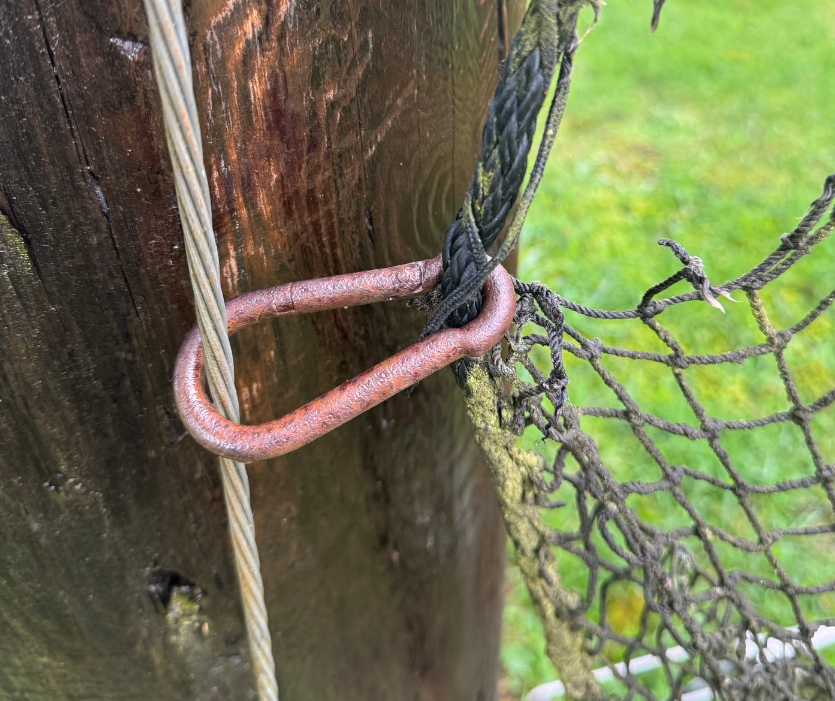
Check the rope or cable border for fraying, especially where it passes through grommets or attaches to anchor points. These peripheral components are often the first to fail and can lead to a “zipper effect,” where a small failure cascades along the edge of the net, causing a complete detachment.
The “Bathtub Curve” of Failure: It is helpful to visualize a product’s life using the “bathtub curve” model, often used in reliability engineering (U.S. Department of Energy, 2013). A product’s life has three phases:
- Infant Mortality: Early failures due to manufacturing defects. A quality net should have a very low rate of this.
- Useful Life: A long period with a low, constant failure rate. This is where regular inspections and minor repairs are effective.
- Wear-Out: The failure rate begins to increase exponentially as the material degrades from age and accumulated stress.
Your inspection goal is to determine if the net is still in its “useful life” phase or if it has entered the “wear-out” phase. Signs like widespread brittleness, extensive discoloration, and multiple small failures suggest you are on the upward slope of the curve, where replacement becomes the only logical choice.

| Inspection Area | Checkpoint | Bon | Juste | Poor (Action Required) |
|---|---|---|---|---|
| Center/High-Impact Zone | Discoloration/Fading | Uniform color | Slight fading | Significant graying/bleaching |
| Brittleness/Stiffness | Pliable and flexible | Slightly stiff | Hard, cracks when flexed | |
| Fraying/Abrasion | Smooth twines | Minor fuzziness | Hairy appearance, thin spots | |
| Edges/Borders | Rope/Cable Integrity | No visible wear | Minor scuffing | Fraying, broken strands |
| Hardware (Hooks, Clips) | Clean, no rust | Surface rust | Deep corrosion, deformation | |
| Points d'attachement | Grommets/Loops | Secure, no tearing | Minor stretching | Torn fabric, pulled out |
| Overall Mesh | Mesh Shape/Symmetry | Uniform squares | Slight distortion | Elongated, irregular shapes |
| Hole Count/Size | Zero to one small hole | A few small holes | Multiple large holes |
Establishing a Routine: The Importance of Regular Inspection Schedules
An inspection is not a one-time event. It is a continuous process. The frequency of inspection should be dictated by the application’s risk level and the intensity of use.
- High-Risk/High-Impact (e.g., amusement park safety nets, professional sports backstops): Formal, documented inspections should occur monthly, with daily visual checks.
- Moderate Use (e.g., schoolyard soccer goals, agricultural bird netting): A thorough inspection each season (quarterly) is a reasonable baseline.
- Low Use/Low-Risk (e.g., backyard garden netting): An annual check-up before the season of use may suffice.
Documenting these inspections is not bureaucratic overhead; it is essential data collection. A simple logbook or spreadsheet noting the date, inspector, findings, and actions taken creates an invaluable history of the asset.

This record allows you to track the rate of degradation, providing an empirical basis for understanding the net’s lifespan in your specific environment and justifying the eventual decision to replace it. This disciplined approach transforms guesswork into risk management.
Point 3: The Repair vs. Replace Calculus: A Framework for Decision-Making
With the data gathered from a thorough inspection, we arrive at the central question: do we repair, or do we replace? This is not a simple choice between saving money now and spending money later. It is a complex calculus involving safety, liability, performance, and long-term value. To navigate this, we need a rational framework that moves beyond gut feelings and toward a defensible, logical conclusion. This involves applying practical rules of thumb, quantifying the extent of the damage, and conducting a clear-eyed cost-benefit analysis.
The 50% Rule: A Practical Guideline for Assessment
In the world of maintenance and asset management, a widely used heuristic is the “50% Rule.” It states that if the cost of repairing an asset exceeds 50% of the cost of replacing it, replacement is the more economically sound option. Let’s think about why this makes sense.

A repair costing, say, 60% of a new net’s price is a significant investment in an old asset that already has accumulated wear and will continue to degrade. The remaining lifespan of the repaired net is likely short, meaning you will soon face another repair bill or the full replacement cost anyway. You are essentially paying a premium for a short-term solution. Pouring significant resources into an asset that is already in the “wear-out” phase of its life yields a poor return on investment.
Conversely, a minor repair costing 5% of a new net’s price is an excellent investment. It extends the useful life of an otherwise healthy asset for a minimal outlay. The 50% rule is not an ironclad law but a powerful starting point for your financial deliberation. It forces you to quantify the costs and compare them against a clear benchmark, preventing the common pitfall of throwing good money after bad.
Quantifying the Damage: Minor Tears vs. Systemic Failure
The nature of the damage is more important than the number of holes. We must learn to distinguish between localized wounds and systemic illness.
Localized Damage: This includes small, isolated tears, punctures, or abrasion spots, typically caused by a specific incident—a sharp object snagging the net or a single, powerful impact. The surrounding netting remains in good condition: it is pliable, strong, and retains its color.
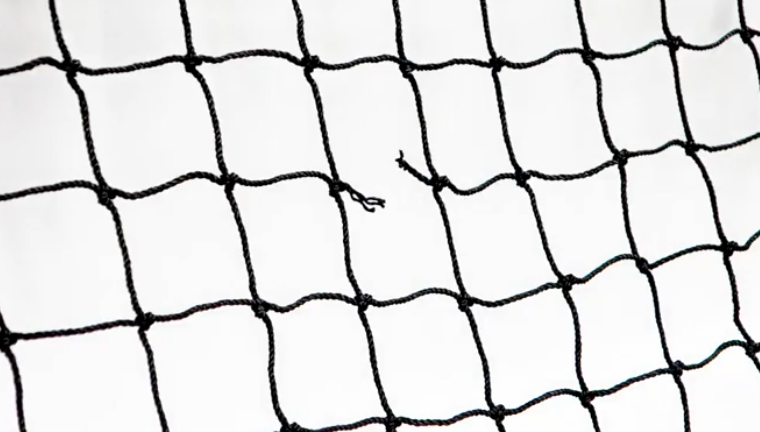
In these cases, a properly executed patch or darn is often a perfectly acceptable and safe solution. The repair restores the net’s integrity at that specific point without compromising the whole. Think of it as a surgeon stitching a clean wound on a healthy patient.

Systemic Failure: This is a much more ominous diagnosis. Systemic failure is indicated by symptoms that affect the entire net, such as widespread brittleness from UV degradation, extensive discoloration, or the presence of countless small frays and micro-tears across a large area.

Patching a hole in a brittle net is like putting a new shingle on a rotten roof. The patch may hold, but the material around it is ready to fail. The next impact will simply create a new tear next to your fresh patch. Attempting to repair systemic degradation is often futile and, more importantly, can create a false sense of security. It addresses a symptom while ignoring the underlying disease.
| Damage Characteristic | Assessment | Safety Risk | Recommended Action | Raison d'être |
|---|---|---|---|---|
| Single Hole (< 2″ Diameter) | Localized | Faible | Repair | Damage is contained; surrounding material is sound. |
| Multiple Small Holes in One Area | Localized | Moyen | Repair (with a large patch) | A larger patch can consolidate the repair and reinforce the area. |
| Large Tear (> 12″ or >5 mesh squares) | Borderline | Haut | Replace (or professional consult) | The tear may have compromised the structural tension of the whole net. |
| Widespread Fraying/Abrasion | Systemic | Haut | Replace | Indicates the fibers have lost significant tensile strength throughout. |
| Brittleness/Stiffness | Systemic | Très élevé | Replace Immediately | The net has lost its ability to absorb energy and will fail under load. |
| Hardware Corrosion/Failure | Component | Haut | Replace Hardware (if net is sound) | A weak link that can cause total failure; often an easy fix. |
| Permanent Sagging/Distortion | Systemic | Moyen | Replace | Shows the net has been stretched beyond its elastic limit; load is uneven. |
The Cost-Benefit Analysis: Weighing Short-Term Fixes Against Long-Term Security
The final step is to conduct a more formal cost-benefit analysis that goes beyond the 50% rule and incorporates the non-financial aspects of the decision.
Cost of Repair: This includes not only the materials (twine, patches) but also the labor. What is the value of the time your staff will spend making the repair? If a professional is required, what is their fee? You must also factor in the cost of any downtime while the net is out of service.
Cost of Replacement: This is the price of the new net plus any new hardware and the labor cost for installation. When sourcing a new net, consider investing in a higher-grade material or one with better UV protection. The slightly higher initial cost may be offset by a longer lifespan, a concept central to achieving a circular economy (National Institute of Standards and Technology, 2023).
A high-quality filets agricoles solution, for example, might cost more upfront but save years of crop losses and replacement costs.
Cost of Failure: This is the most critical and often overlooked variable. What are the potential consequences if the net fails?
- Financial: For a sports facility, it could mean damage to property or lost revenue. For an agricultural operation, it means crop loss. For a cargo company, it means damaged goods.
- Liability: In a safety application, failure can lead to injury or death, resulting in devastating legal and financial consequences. The cost of a single lawsuit will dwarf the cost of a new net by orders of magnitude.
- Reputational: A net failure can damage your organization’s reputation for safety and professionalism.
When you frame the decision this way, the calculus often shifts. A “cheap” repair might look very expensive when you factor in a 10% chance of a costly failure. A new, high-quality replacement, while costing more upfront, effectively buys down this risk to near zero, providing not just a physical barrier but peace of mind. This is the essence of understanding net lifespan: it is an exercise in risk management.
Point 4: Executing a Proper Repair: Techniques for Extending Net Lifespan
Should your analysis lead you to the conclusion that a repair is the appropriate course of action, the task must be approached with the same seriousness as a replacement. A shoddy repair is worse than no repair at all, as it creates a dangerous illusion of safety. A proper repair, on the other hand, can genuinely and safely extend the useful life of your netting. The methodology depends on the material, the type of damage, and having the right tools for the job.
Tools of the Trade: Assembling Your Net Repair Kit
Being prepared is half the battle. You wouldn’t try to fix a car with just a hammer, and you shouldn’t try to fix a net without the proper implements. A well-stocked repair kit is a small investment that pays dividends.

Your kit should contain:
- Replacement Twine: This is the most crucial component. You must use twine that is an exact match to the original netting in material (nylon, polyester, etc.), diameter, and color. Using a different material can cause issues with uneven stretching and weathering. Mismatched thickness will create stress concentrations.
- Netting Needles/Shuttles: These specialized tools are designed to hold a length of repair twine and pass it through the mesh efficiently. They come in various sizes to match different twine diameters. Trying to repair a net with a standard sewing needle is an exercise in frustration.
- Sharp Knife or Scissors: A clean cut is essential for preparing the damaged area and trimming the finished repair. A dull blade will mash and fray the fibers.
- Gloves: Protect your hands from abrasion and keep the netting clean.
- Measuring Tape: For assessing the size of the damage and cutting patches.
- Lighter or Heat Gun (for synthetic nets): To carefully melt and seal the ends of synthetic twines like nylon and polyester, preventing them from unraveling. This step is vital for a durable repair.
The Patching Process: A Step-by-Step Guide for Common Materials
Let’s walk through the process of repairing a typical hole, about the size of a fist, in a knotted polyethylene net. The principles can be adapted for other materials and damage types.

- Preparation: First, prepare the damaged area. Trim away any frayed, weak, or brittle fibers around the hole until you are left with a clean opening surrounded by sound netting. The goal is to anchor your repair to strong material, not to weak, degraded fibers.
- The Starting Point: Load your netting needle with a generous length of matching twine. Identify a sound knot one or two meshes above the top of the hole. Secure your repair twine to this knot using a robust knot, such as a double sheet bend. Melt the end of the new twine to the knot for extra security.
- Weaving the Repair: Now, begin to re-weave the missing mesh. Follow the original pattern of the net. Pass the needle down to the first broken strand on one side of the hole. Loop around it and tie a knot that mimics the original knots in the net. Then, carry the twine across to the corresponding broken strand on the other side and repeat the process. You are essentially rebuilding the grid, square by square. Maintain consistent tension so the new patches are not too tight or too loose compared to the surrounding mesh.
- Closing the Loop: Continue this process, working your way down until you have filled the entire hole. The final knot should be tied to a sound knot one or two meshes below the bottom of the damage. Secure it tightly, trim the excess twine, and carefully melt the end to lock it in place.
- Patching Larger Areas: For larger areas of damage, weaving individual strands can be too time-consuming. In this case, a patch is more effective. Cut a replacement piece of netting that is several meshes larger than the hole in all directions. Lay this patch over the damaged area, ensuring the mesh aligns. Using your needle and twine, essentially “sew” the patch onto the original net around its entire perimeter, tying a secure knot at every point where the patch’s twine intersects with the original net’s twine. This ensures the load is transferred smoothly from the patch to the main body of the net.

When to Call a Professional: Recognizing the Limits of DIY Repairs
It is equally important to recognize when a repair is beyond your capabilities. Attempting a complex repair without the right skills or equipment can lead to a failed net and potential liability. You should strongly consider calling a professional netting installer or manufacturer for consultation or service in the following situations:

- Damage to Structural Borders: If the main border rope or cable is damaged, this is a structural issue. These borders are responsible for tensioning the entire system, and a failed repair here could lead to a complete collapse.
- Very Large or Complex Tears: A tear that spans a significant portion of the net’s width or height requires a specialized approach to maintain proper tension and safety.
- High-Risk Applications: For any netting used for life safety, such as fall protection or public safety barriers, repairs should only be undertaken by certified professionals who understand the applicable safety standards and regulations. The liability is simply too great.
- Uncertainty: If you inspect the net and are genuinely unsure if it is systemically compromised or if you are capable of making a sound repair, that uncertainty is your signal to seek expert advice. A reputable manufacturer can often assess the situation from photos or a site visit and provide a trustworthy recommendation.
A well-executed repair is a craft. It requires patience, the right materials, and an understanding of the forces the net will endure. Done correctly, it’s a sustainable practice that maximizes the value of your assets. Done poorly, it’s a risk you cannot afford to take.
Point 5: The Strategic Replacement: Investing in Future Safety and Performance
When your analysis points unequivocally to replacement, the task is not merely to buy a new net. It is an opportunity to make a strategic investment. This is your chance to learn from the lifespan of the previous net and select a product that will offer superior performance, enhanced safety, and a better long-term return. A thoughtful replacement process involves careful sourcing, meticulous installation, and a proactive maintenance plan to ensure the new asset delivers its maximum potential lifespan.
Sourcing for Longevity: What to Look for in a New Net
The replacement process begins with selection. Instead of simply re-ordering the same product, consider what you’ve learned from the old net’s failure. Did it degrade quickly due to sun exposure? Did it fail under impacts it should have withstood? Use this knowledge to upgrade.
- Material Upgrade: If your nylon net failed prematurely due to moisture and UV exposure in an outdoor setting, replacing it with a high-grade, UV-treated polyester or HDPE net is a strategic upgrade. The initial cost may be slightly higher, but the extended lifespan will likely result in a lower total cost of ownership. Research shows that consumers desire products to last significantly longer than they currently do (Wieser & Hübner, 2025), and choosing a more durable material is a direct way to achieve this.
- Construction and Specifications: Look beyond just the material. Consider the twine diameter (a thicker twine generally lasts longer), the mesh size (is it appropriate for the application?), and the construction (knotless often offers better durability). Ask potential suppliers for detailed specification sheets that list tensile strength, UV inhibitor levels, and material composition.
- Reputable Manufacturer: Partner with a manufacturer that demonstrates expertise and transparency. A reliable supplier, such as a company that provides detailed consultations for custom netting solutions, will be able to guide you toward the best material and construction for your specific environment and use case. They should be able to provide data on their products’ expected lifespans and stand behind their quality. Avoid a supplier who cannot answer detailed questions about their materials’ properties. The ability to differentiate products by life expectancy is a growing need for consumers and industry alike (National Institute of Standards and Technology, 2023).
The Installation Imperative: Ensuring Correct and Secure Fitting
The world’s best net will fail if installed improperly. A poor installation can create stress concentrations, induce abrasion, and ultimately shorten the net’s lifespan from day one.
- Follow Manufacturer Guidelines: The manufacturer provides installation instructions for a reason. These guidelines are designed to ensure the net is tensioned correctly and attached securely. Deviating from them can void warranties and compromise safety.
- Correct Tensioning: A net that is too loose will sag and can create an entanglement hazard. It will also be less effective at absorbing impact, as it will billow excessively before engaging. A net that is too tight is under constant strain, which accelerates fiber fatigue and makes it more vulnerable to damage from impacts or wind. The goal is a “drum-tight but not board-tight” tension that allows the net to have some give to absorb energy.
- Smooth, Secure Hardware: Ensure all attachment points are smooth and free of burrs or sharp edges that could abrade the net’s border rope. Use hardware that is appropriately rated for the load and is corrosion-resistant for the environment (e.g., stainless steel for coastal areas). Spacing attachment points evenly is critical for distributing the load uniformly around the net’s perimeter.
Future-Proofing Your Investment: Maintenance for Maximizing Net Lifespan
Once the new net is installed, your work is not done. The key to maximizing its lifespan is a proactive maintenance program.
- Keep it Clean: Dirt, grime, and organic debris can hold moisture against the fibers, promoting mildew growth and chemical breakdown. For many applications, a periodic rinse with a low-pressure hose is sufficient to keep the net clean. Avoid harsh detergents unless recommended by the manufacturer.
- Minimize Unnecessary UV Exposure: If the netting is for seasonal use, such as a backyard batting cage or a garden enclosure, take it down and store it in a cool, dark, dry place during the off-season. This simple act can dramatically extend its life by protecting it from months of unnecessary UV exposure and harsh weather.
- Continue the Inspection Cycle: Your regular inspection schedule should begin immediately with the new net. Documenting its condition from the start will create a valuable baseline. Early detection of any minor damage from installation or an unforeseen incident allows for a quick, easy repair before it becomes a larger problem.
By treating a replacement as a strategic cycle of improvement—sourcing better, installing correctly, and maintaining proactively—you transform a recurring expense into a long-term investment in safety, performance, and efficiency.
This approach is fundamental to a sustainable and responsible management of your facilities and operations, aligning with the broader goal of extending product lifespans to reduce environmental impact (European Environment Agency, 2024).

Foire aux questions (FAQ)
Questions fréquemment posées
1. Q: How long should a good quality outdoor sports net last?
A: The lifespan varies significantly depending on material, climate, and usage. A high-quality, UV-treated polyester or HDPE net in a moderate climate can last around 5–8 years. In contrast, a basic nylon net used in high-sun, high-humidity environments may only last 2–3 years. Premium materials such as Dyneema® can exceed 10 years even under heavy use. In practice, regular inspection is more reliable than relying on a fixed lifespan.
2. Q: Is a small hole in a safety net a big deal?
A: Yes, it can be. Even a small hole is a critical warning sign. It creates a stress concentration point that can rapidly expand under load or impact. It may also indicate broader material degradation. Any damage in a life-safety net should be addressed immediately, and the net should be removed from service until properly repaired or replaced.
3. Q: Can I repair a net made from one material with twine from another?
A: This is strongly discouraged. Different materials have different stretch, strength, and environmental resistance properties. For example, using nylon twine to repair a polyester net can introduce uneven stress and accelerate failure. Always use repair twine that matches the original material exactly.
4. Q: My netting has faded from black to grey. Is it still safe?
A: Significant fading is a clear sign of advanced UV degradation. The loss of black color indicates that the UV-stabilizing carbon black has been depleted, leaving the fibers brittle and weakened. Even if the net appears intact, it has likely lost much of its strength and shock-absorbing capability. It should be considered high-risk and scheduled for replacement.
5. Q: How does knotless netting compare to knotted for durability?
A: Generally, knotless netting is more durable when made from the same material and twine size. Knots create stress points that can reduce breaking strength by up to 30%. Knotless construction also offers a smoother surface, improving abrasion resistance. For most applications, especially high-impact or snag-prone environments, knotless netting provides a longer and more reliable service life.
6. Q: What is the best way to clean my netting?
A: The recommended method is a gentle rinse with a low-pressure hose to remove dirt and debris. For deeper cleaning, use mild soap and a soft brush. Avoid pressure washers, as they can damage fibers. Always allow the net to dry completely before storage to prevent mildew.
7. Q: Does the color of the netting matter for its lifespan?
A: Yes, color can influence durability. Black netting typically lasts longer outdoors because carbon black pigment acts as an effective UV inhibitor. Lighter-colored nets may degrade faster unless they are treated with specialized UV stabilizers.

Read our most popular articles.
👉 Download our free product categories
👉 A 15-Point Practical Guide: The Complete Checklist for Sports Netting Installation
👉 Beyond Breaking Strength: A Comprehensive Guide to Netting ion, Safety, and Risk Management
👉 5 Reasons Why Durable, Long-Lasting Products are the New Definition of “Cost-Effective”
👉 The True Cost of Cheap Netting: A Total Cost of Ownership Analysis
👉 UV Stabilizers in Sports Netting: A Comprehensive Guide to Longevity
👉 Beyond Breaking Strength: A Comprehensive Guide to Netting ion, Safety, and Risk Management