
Protecting blueberry crops from birds is a major challenge that can significantly impact farm profitability. This document provides a concise framework for selecting appropriate bird netting, including identifying problem species, choosing the right mesh size, and evaluating material properties. It highlights the durability and UV resistance of high-density polyethylene (HDPE) nets and compares the practical and economic aspects of drape-over versus full-enclosure systems. The goal is to give growers a clear, evidence-based approach to safeguard their harvest, maximize ROI, and support sustainable farming.
Fast Reading
- Assess bird species and their size to determine the most effective mesh opening for exclusion.
- Select UV-stabilized High-Density Polyethylene (HDPE) netting for superior durability and weather resistance.
- Evaluate drape-over versus full-enclosure systems based on your farm’s scale, budget, and labor.
- Understand how to choose the right bird netting for blueberry farms by analyzing long-term return on investment.
- Implement a consistent plan for installation, tensioning, and post-season maintenance to extend netting life.
- Consider netting color, as black netting offers the best UV resistance and is less visible to humans.
Step 1: Evaluating Your Specific Threat – Bird Species and Behavior

Before any decision about netting can be made, a farmer must first become a student of the local ornithology. The choice of a defense is predicated on a clear understanding of the aggressor. Therefore, the first step is a careful and specific assessment of the avian population that frequents your land.
Understanding the Adversary: Common Culprits on Blueberry Farms
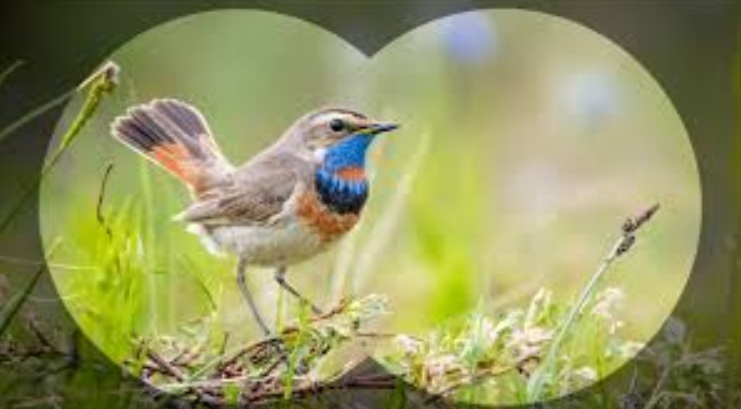
How can you identify them? Spend time in your fields, particularly in the early morning and late afternoon when bird activity is highest. Use binoculars. Take notes. Are they large birds that perch heavily on branches, or small, agile ones that flit from bush to bush? Do they arrive in massive, coordinated flocks or in smaller, scattered groups? This field intelligence is the foundation upon which your entire crop protection strategy will be built.
The Principle of Exclusion: Matching Mesh Size to Bird Size
Once you have identified the primary bird species threatening your crop, the next logical consideration is the mesh size of the netting. The principle is simple: the hole in the net must be small enough that the target bird cannot push its head through it. A bird that can get its head through an opening can often work its entire body through. Even if it cannot, it can become trapped, leading to the bird’s death and potential damage to your netting.
A common mistake is to select a mesh size that is too large in an attempt to save on material costs or to allow for maximum light penetration. This is a false economy. A net that fails to exclude the target species is worthless. The table below provides a general guide for matching mesh size to common bird types.
| Bird Type | Espèces communes | Taille de maille recommandée |
|---|---|---|
| Petits oiseaux | Finches, Sparrows, Silvereyes | 15mm (approx. 5/8 inch) |
| Oiseaux moyens | Starlings, Robins, Blackbirds, Waxwings | 25mm – 30mm (approx. 1 inch to 1.25 inch) |
| Grands oiseaux | Pigeons, Crows, Grackles, Parrots | 50mm+ (approx. 2 inches+) |
For most blueberry operations, the primary threats are small to medium-sized birds, making a mesh size in the 15mm to 30mm range the most common and effective choice.
Behavioral Considerations: Do Birds Perch or Feed on the Fly?
Understanding how birds interact with your bushes also informs your choice of netting system, a topic we will explore in greater depth in Step 3. Some birds, like starlings, may land on the net itself. If the net is simply draped over the bushes, their weight can press the material down, allowing them to peck at the fruit through the mesh. Other, more agile birds might attempt to land on branches directly through the netting or find their way in from the ground.

Observing this behavior helps you anticipate weaknesses in your defense. If birds are perching on the net, a more rigid, tensioned structure might be necessary to keep the netting taut and away from the fruit. If they are attempting to enter from below, securing the bottom edges of the netting to the ground becomes a paramount concern. The inquiry into how to choose the right bird netting for blueberry farms is as much about bird psychology as it is about material specifications.
Step 2: Selecting the Optimal Netting Material and Construction
Once the threat is understood, attention turns to the netting itself. The material defines the net’s strength, durability, and resilience in harsh farm conditions. Sun, rain, wind, and chemical sprays can quickly wear down inferior materials, so choosing the right netting is an investment in protection that lasts for years.
The Case for High-Density Polyethylene (HDPE): Strength and Longevity
While various plastics might be used to produce netting, the consensus among agricultural professionals points toward High-Density Polyethylene (HDPE) as the superior choice.
First, it is incredibly strong for its weight. A lightweight HDPE net is easier to install and puts less stress on support structures, yet it can withstand significant tension and resist tearing. Second, HDPE is chemically inert. It does not react to most agricultural sprays, nor does it rot or mildew when exposed to moisture, a clear advantage over organic fibers or even some other plastics like nylon, which can absorb water and stretch or degrade. Third, and perhaps most importantly, when properly treated, it is highly resistant to ultraviolet (UV) radiation from the sun. An untreated plastic left outdoors will become brittle and fail, sometimes within a single season. HDPE, infused with quality UV inhibitors during the manufacturing process, can last for many years, even under intense sun.
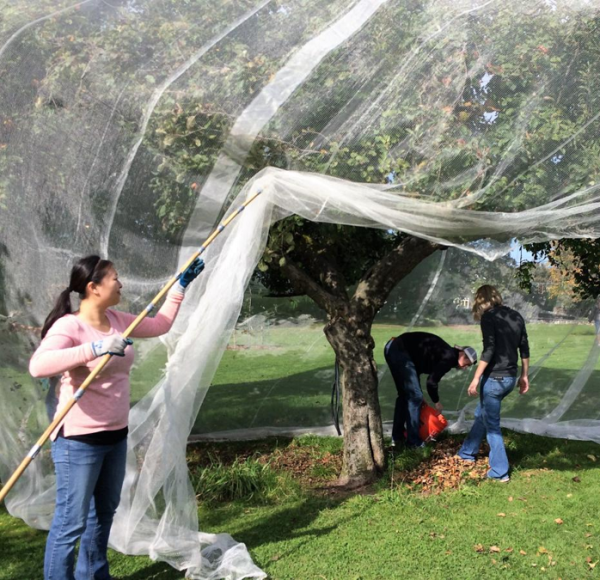
HDPE 40 Mesh Apple Tree Protection Net
HDPE 60-mesh ensures safe pest isolation. High load capacity supports stable canopy coverage. UV-resistant durability adapts to diverse climates. Uniform mesh maintains long-term shape stability and airflow balance.
When sourcing your netting, look for manufacturers who specify the use of 100% virgin HDPE resin, not recycled material. Virgin resin provides greater consistency and strength. Also, inquire about the quality and concentration of the UV stabilizer used; this is a key determinant of the product’s lifespan.
Knitted vs. Extruded Netting: A Structural Comparison
Bird netting is typically made in one of two ways: knitted or extruded, and the differences have practical consequences for growers.
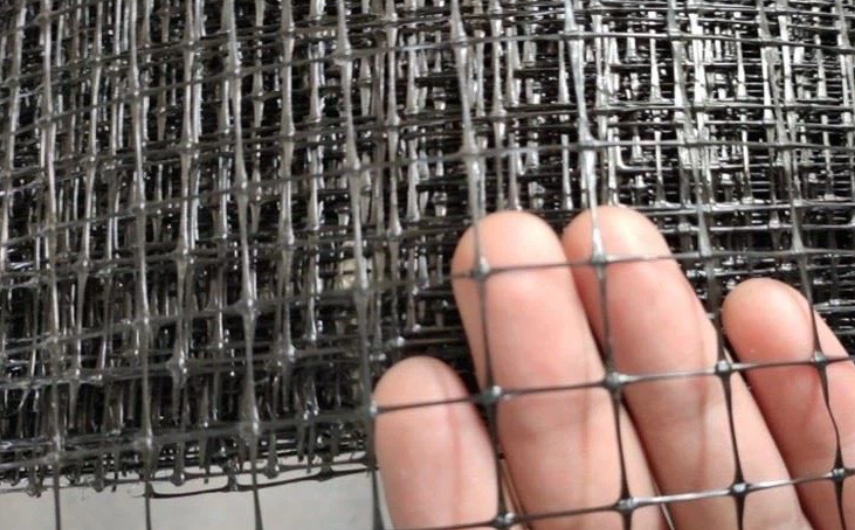
Extruded netting is formed by forcing molten plastic through a die, creating a single, rigid mesh—essentially a plastic sheet. Knitted netting, on the other hand, is made by interweaving HDPE filaments, much like a fabric or sweater, resulting in a softer, more flexible material.

For most blueberry applications, knitted netting is preferred. Its flexibility reduces tearing and stress points when draped over bushes or structures, and it is easier to handle, repair, and store. Extruded netting can be harder to work with in large sections and may crack over time if not handled carefully. High-quality, lock-stitch knitted netting is especially valuable, as it resists unraveling even if a strand is cut or broken.
The Significance of UV Stabilization: A Defense Against Solar Degradation
A UV stabilizer is a chemical additive blended with the HDPE resin before it is made into filament. The most effective stabilizers, like Hindered Amine Light Stabilizers (HALS), work by actively scavenging the free radicals that are produced during photodegradation, effectively neutralizing the sun’s attack at a chemical level.
When selecting bird netting for blueberry farms, ask suppliers about their UV treatment and any warranties or ratings for solar exposure. Untreated or poorly stabilized nets may save money initially but are likely to fail sooner, leading to costly replacements and leaving crops unprotected.
Color Theory in the Field: Does Netting Color Matter?
Netting is most commonly available in black, white, and sometimes green. Does the color make a difference? Yes, it does, in several ways.
Black netting is generally the superior choice. The carbon black used as a pigment is itself an excellent UV stabilizer, working in concert with chemical additives like HALS to provide the longest possible lifespan. Black netting is also the least visually obtrusive from a distance, blending into shadows and preserving the aesthetic landscape of the farm more effectively than white. For the birds, the black color is highly visible up close, which can help them see and avoid the barrier, reducing the chances of collision and entanglement (Martin & M. M. R., 2011).
White netting reflects more light, which can be perceived as a slight advantage for photosynthesis underneath. However, this effect is generally minimal. The primary drawback of white netting is that it is more susceptible to UV degradation than black netting. The white pigments do not offer the same protective qualities as carbon black. It is also more visually prominent in the landscape.
Green netting is an attempt at a compromise, aiming to blend in with foliage. Its performance and longevity typically fall somewhere between black and white. For maximum durability and a professional appearance, black knitted HDPE netting is the industry standard for a reason.
Step 3: Determining the Right Netting System for Your Farm
The two primary approaches are the drape-over method and the full-enclosure system.
The Drape-Over Method: A Simple Solution for Smaller Operations
The most straightforward way to use bird netting is to simply drape it directly over the blueberry bushes just before the fruit begins to ripen. This method is appealing for its low initial cost and simplicity. It requires no permanent support structure. The netting can be rolled out over the rows and secured at the edges with soil, pins, or rocks.
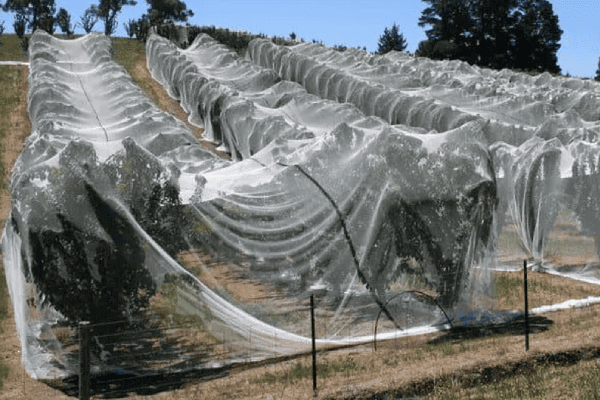
However, this simplicity comes with trade-offs.
- Fruit Contact: As mentioned earlier, the netting rests directly on the plants. This means birds can still perch on the net and peck at the fruit through the mesh. It also means that any fruit touching the net is vulnerable.
- Plant Growth: Draping can restrict new shoot growth and can make harvesting more cumbersome, as the netting must be lifted or navigated around.
- Durabilité : The netting is more likely to snag on branches during application and removal, leading to tears.
- Labor: While the initial setup is simple, the annual process of applying and removing the netting can be labor-intensive, especially as the bushes grow larger.
The drape-over method can be a viable starting point for very small-scale growers, backyard enthusiasts, or for a trial period.
However, for any commercial operation, its limitations often lead growers to seek a more robust and permanent solution.
The Full-Enclosure System: Building a Fortress for Your Berries
A full-enclosure system, also known as a canopy or tunnel system, uses a permanent or semi-permanent framework over the blueberry rows. Built from wood posts, metal poles, and high-tensile wires, the structure holds the netting above the bushes. The net is stretched taut over the frame, fully enclosing the crop on the top and sides.

This approach represents a more significant upfront investment in materials and labor. However, the benefits are substantial and often provide a superior long-term return.
| Fonctionnalité | Drape-Over System | Full-Enclosure System |
|---|---|---|
| Initial Cost | Faible | Haut |
| Effectiveness | Moderate to Good | Excellent |
| Crop Access | Difficult (during harvest/pruning) | Easy (walk/drive inside) |
| Plant Health | Can restrict growth, damage shoots | No impact on plant growth |
| Netting Lifespan | Shorter (snags, abrasion) | Longer (protected from plant contact) |
| Annual Labor | High (apply and remove each year) | Low (open/close sides, minimal maintenance) |
| Polyvalence | Single-purpose (bird protection) | Can support shade or hail cloth |
With a full-enclosure system, the netting never touches the fruit, providing 100% protection from pecking. Access for workers, pollinators, and small machinery is unimpeded. Pruning and harvesting can proceed as normal within the protected environment. The netting itself is under less stress and protected from abrasion, dramatically extending its usable life. Many large-scale commercial farms find that the reduction in annual crop loss and labor costs quickly justifies the initial expense of a full-enclosure structure. Such systems can be sourced from specialized providers offering complete custom netting solutions tailored to specific field dimensions and crop types.
Economic Analysis: Calculating Return on Investment (ROI)
Choosing between drape-over and full-enclosure systems requires more than comparing upfront costs—you need to consider total ownership over the netting’s lifespan.
Estimate Annual Loss: Start by assessing how much of your crop is lost to birds each year. For example, a one-acre field yielding 10,000 pounds of blueberries at $3 per pound generates $30,000 in revenue. A 15% loss to birds equals $4,500 annually.
Compare System Costs:
- Drape-Over: Netting plus annual labor for installation and removal.
- Full-Enclosure: Netting, posts, wire, hardware, and initial installation labor.
Project Long-Term Value: A full-enclosure system may cost $15,000 to install, while a drape-over system costs $3,000. At first glance, drape-over seems cheaper. But if the enclosure eliminates the $4,500 annual loss, it pays for itself in just over three years. If drape-over reduces losses by only half and adds $1,000 in yearly labor, its net benefit is much lower. Add in replacement cycles—drape-over every 4 years versus enclosure lasting 10+ years—and the long-term financial advantage of the enclosure becomes clear.
For serious growers, bird netting should be viewed as a capital investment rather than a recurring expense.stment, rather than an annual expense, is the correct financial perspective for a serious grower.
Step 4: Planning Installation and Structural Support
Even the best netting and system won’t perform if installed poorly. Gaps, sagging, or weak supports can let birds in, damage fruit, or fail in strong winds. Proper installation ensures the system works as intended and lasts for years. This is especially important for full-enclosure systems, which need a sturdy support framework.
Designing the Support Structure: Posts, Wires, and Tension
Posts: Upright posts form the backbone of a full-enclosure system. Treated wood, like pressure-treated pine, is common and cost-effective, while steel poles offer greater strength and longevity at a higher price. Posts should be tall enough to clear mature blueberry bushes and allow easy access underneath—typically 8–10 feet (2.5–3 meters).
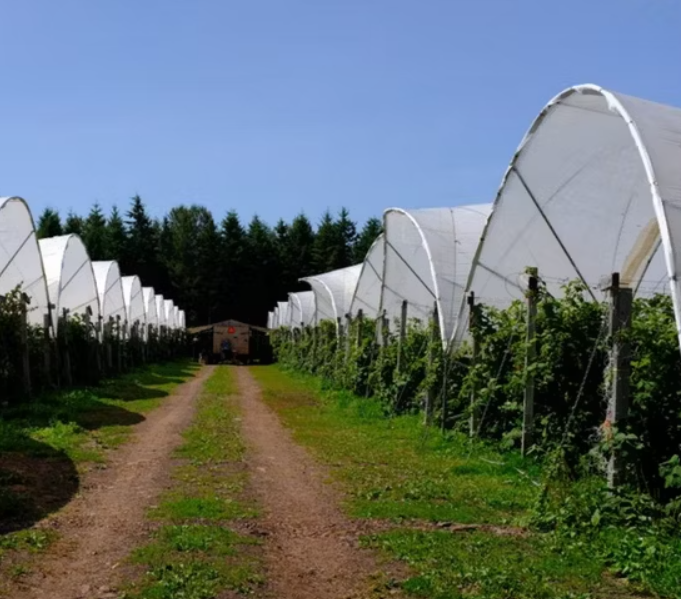
Anchoring: End and corner posts bear the most tension and must be firmly anchored, often with deeper footings, concrete, or angled braces, similar to building a strong fence.
Cabling: High-tensile steel wire runs between the tops of the posts to support the netting and prevent sagging. A central ridge cable along the row, combined with cross cables at intervals, creates a stable framework. Turnbuckles or wire tensioners maintain proper tension. A taut structure is stronger, sheds rain more effectively, and withstands wind far better than a loose one.
Designing this framework requires some basic engineering considerations, and consulting an experienced installer can help ensure the system is safe and effective.
The Installation Process: From Unrolling to Securing
Once the support structure is in place, the netting can be installed. This is often the most delicate part of the process and is best done on a calm, windless day.
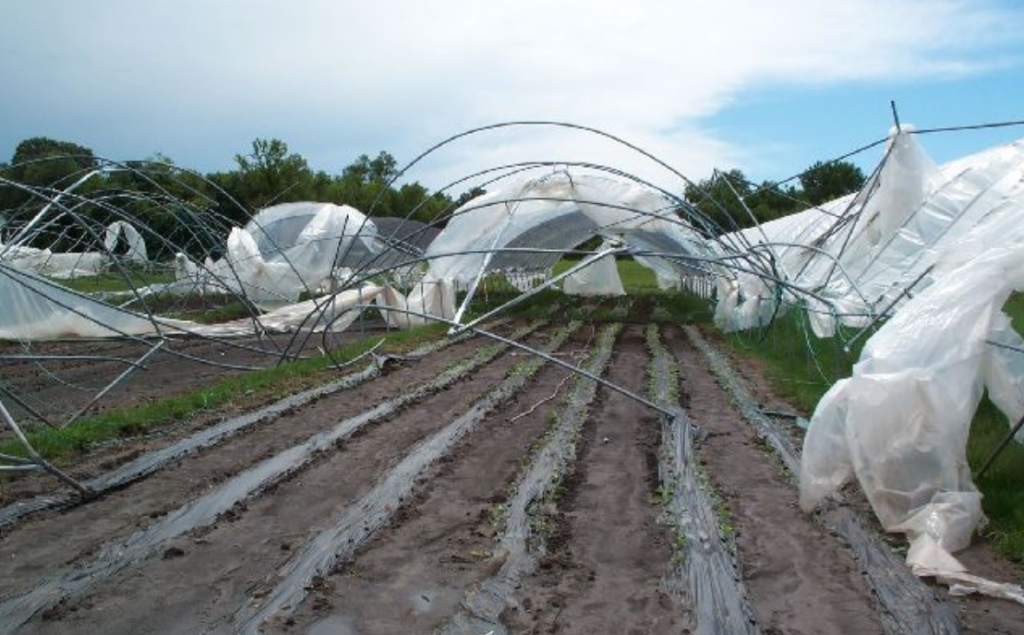
- Deployment: Large rolls of netting are heavy and unwieldy. Using machinery like a tractor with a front-end loader or a specialized netting deployment rig can make the process much safer and more efficient. The net is carefully unrolled over the top of the cable structure.
- Joining Seams: Fields are often wider than a single roll of netting. Multiple panels must be joined together. This can be done by overlapping the nets and fastening them with specialized netting clips, hog rings, or by lacing them together with a durable twine (often a UV-treated polyester). A securely joined seam is just as important as the net itself.
- Attachment: The netting is then attached to the perimeter cables and posts. Again, purpose-made netting clips are the best tool for this job. They are designed to hold the net securely without tearing the filaments. Using simple zip ties is a common shortcut, but many are not UV-stabilized and will become brittle and break after a season or two, creating a point of failure.
Securing the Perimeter: Keep Birds Out
It’s easy to focus on the top of the netting and overlook the sides and base—but birds will exploit any weak spot.

Side netting should reach all the way to the ground. The bottom can be buried in a shallow trench, attached to a baseboard, or fitted with a durable “skirt.” Make sure gates and entry points close tightly— even a one-inch gap is enough for a persistent bird. A fully sealed perimeter keeps your crop safe and secure.
Step 5: Implementing Long-Term Maintenance and Storage Practices
The investment in a bird netting system does not end with installation. Like any piece of farm equipment, netting requires regular maintenance and proper care to deliver its maximum service life. A few hours of preventative maintenance each year can add several years to the life of your netting, further improving your return on investment.
Post-Harvest Care: Cleaning and Repairing Netting
After harvest, it’s time to inspect your system. Walk the perimeter and check the canopy for rips, tears, or holes from branches, animals, or equipment, paying close attention to seams and attachment points.
Cleaning: Remove leaves, twigs, and debris to prevent rot and reduce stress on the structure. For removable drape-over nets, gently wash away dirt and bird droppings.
Repair: Patch small holes with matching netting, UV-resistant twine, or hog rings. For knitted nets, a simple lacing stitch works. Fixing minor damage promptly prevents larger failures. Many suppliers offer repair kits for this purpose.
Proper Storage to Extend Lifespan
For nets removed off-season, storage is as important as use.
- Clean and Dry: Store only when completely dry to prevent mold and fiber damage.
- Roll, Don’t Fold: Rolling onto a core prevents creases that weaken the material.
- Avoid Sun: Even UV-stabilized nets should be stored indoors or shaded.
- Protect from Rodents: Keep nets in sealed containers or off the ground to prevent chewing damage.
Annual Maintenance Checklist
Pré-saison :
- Inspect posts, anchors, and wires for damage.
- Tighten all cables and tensioners.
- Check stored nets for rodent damage.
Post-Harvest:
- Walk the system and mark all holes.
- Repair flagged damage.
- Remove debris from the net.
- For removable nets: clean, dry, roll, and store in a shaded, rodent-proof location.
Following a regular inspection and maintenance routine ensures your netting remains effective, protecting your blueberry crop and safeguarding your investment for years.
Questions fréquemment posées
How long does quality bird netting last?
The lifespan of bird netting depends heavily on the material, UV treatment, and installation system. High-quality, UV-stabilized, black knitted HDPE netting used in a permanent full-enclosure system can last 10 years or more. A similar net used in a drape-over application, which sees more wear and tear, might last 4-7 years. Cheaper, non-UV-treated polyethylene or nylon nets may only last 1-2 seasons.
Can I install bird netting myself?
A small, drape-over system can certainly be a DIY project for a few people. However, installing a large-scale, full-enclosure system is a significant construction project. It requires specialized tools for tensioning wire, the ability to safely handle large and heavy rolls of netting, and knowledge of structural anchoring. While possible for a skilled individual, many growers opt to hire experienced agricultural contractors to ensure the structure is safe, effective, and built to last.
Les filets anti-oiseaux nuisent-ils aux oiseaux ?
When selected and installed correctly, bird netting should not harm birds. The key is using the proper mesh size to prevent birds from getting their heads trapped. A taut installation also helps, as it creates a clear barrier that birds can see and avoid, rather than a loose trap they can become entangled in. Regularly inspecting the nets for trapped birds is also a responsible practice.
Does netting affect pollination?
This is a valid concern. Blueberry pollination is primarily done by bees. Netting with a mesh size of 15-30mm is large enough to allow free passage for most bees and other beneficial insects. Enclosure systems that allow the side netting to be rolled up during the bloom period provide an easy solution. You can open the structure to allow maximum pollinator access and then close it up once fruit begins to set and becomes attractive to birds.
What is the cost of bird netting for a one-acre blueberry farm?
Costs can vary dramatically based on the system. For a simple drape-over system, the netting itself might cost between $2,000 and $5,000 per acre. For a full-enclosure system, including posts, cable, hardware, and professional installation, the cost could range from $12,000 to $25,000 per acre or more, depending on the height and quality of the components. While the upfront cost is higher, the long-term ROI of a full enclosure is often superior.
Can the same netting be used for other fruits?
Yes, absolutely. The principles of exclusion are universal. The same HDPE bird netting used for blueberries can be highly effective for protecting cherries, raspberries, grapes, and even fruit trees. The main consideration would be adjusting the support structure to fit the growth habit of the specific crop.
How do I calculate the amount of netting I need?
For a drape-over system, measure the length of the row and the width over the top of the bushes from one side to the other. Add extra for securing the edges. For a full-enclosure system, you will need one piece for the top (Length of area x Width of area) and separate pieces for the sides (Length of area x Height of posts, for each side) and ends (Width of area x Height of posts, for each end). Always add at least 5-10% extra to your measurements to account for overlap, seams, and attachment.
Conclusion
Choosing the right bird netting for blueberry farms goes beyond a simple purchase—it’s a proactive way to protect your crop. It calls for observation, planning, and a long-term perspective. By assessing the bird threat, selecting durable UV-stabilized HDPE, and choosing a system—whether drape-over or full enclosure—that fits the farm’s scale and budget, growers can turn potential losses into a secure, predictable harvest. This isn’t about defeating nature, but setting a boundary that allows for a productive coexistence. The right netting is an investment in peace of mind, letting farmers view a ripening crop with confidence and satisfaction, knowing it is well protected.

Read our most popular articles.
👉 Download our free product categories
👉 How an Oregon Vineyard Saved $50k in Crop Loss from Birds
👉 Practical Buyer’s Guide: HDPE vs. Nylon: A Material Showdown for Garden Netting
👉 How to Start a Private Label Netting Business: A 5-Step Framework for Work
👉 The Chinese Manufacturing vs. Local Suppliers: A Netting Buyer’s Guide