
Protecting high-value fruit crops such as apples and cherries from environmental and biological threats is a paramount concern for both commercial growers and private orchardists. This document provides a comprehensive examination of netting as a primary strategy for crop protection.
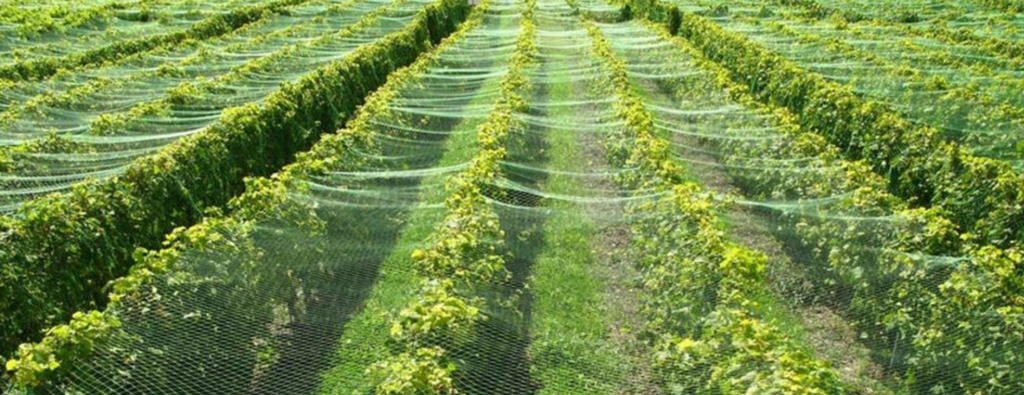
It evaluates the multifaceted challenges facing orchards, including depredation by birds, damage from insects, and destruction caused by adverse weather like hail. The analysis extends to the material science of netting, comparing the properties of High-Density Polyethylene (HDPE), polypropylene, and nylon. A detailed framework is offered for selecting the appropriate mesh size based on the specific threat, from larger meshes for avian pests to finer meshes for insect exclusion.

Furthermore, the guide investigates the structural engineering principles behind effective netting systems, contrasting simple drape-over methods with robust full-enclosure structures. The procedural aspects of installation, maintenance, and off-season storage are meticulously detailed to maximize the longevity and efficacy of the investment. This work synthesizes horticultural science, pest management principles, and material engineering to create a holistic guide for implementing successful netting strategies.
Principaux enseignements
- Assess your orchard’s specific threats, from birds to hail, to choose the right protection.
- Select netting material and mesh size based on durability and the primary pest you need to exclude.
- Design a support structure, like a full enclosure, that matches your orchard’s scale and topography.
- Properly time your netting installation after pollination to ensure a fruitful harvest.
- Implement a routine for maintenance and proper storage to extend the life of your netting.
- Consider professional guidance for a comprehensive plan on protecting your orchard: netting strategies for apple and cherry trees.
- Regularly inspect nets for damage and make immediate repairs to maintain a secure barrier.
Step 1: Assessing Your Orchard’s Unique Vulnerabilities
Before a single strand of netting is unfurled, a grower must first become a student of their specific environment, undertaking a careful diagnosis of the risks that threaten their harvest. This initial assessment is not a mere preliminary step; it is the foundational act upon which all successful netting strategies are built. To proceed without this understanding is to work in the dark, potentially investing in a solution that is ill-suited to the real-world pressures the orchard will face.

Identifying the Primary Threats: A Triage Approach
The threats to an apple or cherry crop are varied, each demanding a particular defensive posture. A rational approach involves categorizing and prioritizing these threats based on their prevalence in your region and the severity of the damage they can inflict.
First, consider the most visible and often most frustrating adversaries: birds. Species like starlings, robins, cedar waxwings, and finches are notorious for their love of ripening fruit, particularly sweet cherries. They do not merely take a single fruit; a flock can descend upon an orchard and decimate a significant portion of the crop in a matter of hours. Their damage is characterized by peck marks, shredded fruit, and dislodged clusters, often leaving behind a wasteful and unsanitary scene. Understanding which species are local to your area is informative, as the size of the bird dictates the necessary mesh size of the netting, a topic we will explore in depth later.

Second, we must look to the smaller, often unseen world of insects. For apple growers, the codling moth (Cydia pomonella) and apple maggot (Rhagoletis pomonella) are formidable foes. The codling moth larva burrows into the core of the apple, rendering it unmarketable. The apple maggot fly lays its eggs beneath the fruit’s skin, leading to a network of destructive tunnels. For cherries, the cherry fruit fly (Rhagoletis cerasi and R. cingulata) poses a similar threat, with larvae that develop inside the ripening fruit. Exclusion netting, when deployed correctly, can function as a physical barrier, interrupting the life cycle of these pests by preventing adult insects from accessing the fruit to lay their eggs (Zavagli et al., 2020).

Third, the unpredictable violence of weather, specifically hail, presents a catastrophic risk. Unlike the gradual damage from pests, a single hailstorm can obliterate an entire year’s crop in minutes. Hailstones cause bruising, splitting, and tearing of the fruit, creating entry points for secondary infections like brown rot. Protecting against hail requires a different type of netting and a more robust support structure than what is typically used for birds.

Finally, less dramatic but still significant factors like excessive sun (leading to sunscald) and strong winds (causing fruit drop and limb damage) can be mitigated with the correct type of netting, which can act as a diffuser of light and a brake against wind.
Evaluating Orchard Scale and Layout
Once the threats are identified, the physical characteristics of the orchard itself must be carefully measured. The size and shape of your trees are a primary determinant of your netting strategy. A small backyard orchard of a few dwarf apple trees presents a very different challenge than a multi-acre commercial operation with long rows of semi-standard cherry trees.
Dwarf trees, with their smaller stature and manageable canopies, are more amenable to simpler solutions like individual tree bags or simple drape-over netting.
Standard, full-sized trees, with their expansive canopies, often necessitate a more engineered, structural approach. The training system you employ—whether it’s a traditional open-center, a central leader, or a high-density trellis system like the “super slender axe”—will profoundly influence the design of an effective support structure. For instance, a uniform, hedgerow-style planting is ideally suited for a single-row tunnel netting system.

The layout of the orchard is equally significant. Consider the spacing between rows. Is there enough room for tractors and other equipment to pass once a netting structure is in place? The topography of the land also plays a role. Installing a large-scale enclosure on a steep, uneven slope is a far more complex engineering task than doing so on a flat, uniform parcel of land.
A Framework for Threat Prioritization
To bring these considerations together into a coherent plan, it can be helpful to think like a risk manager. You can create a simple mental or written matrix. On one axis, list the potential threats: starlings, codling moths, hail, etc. On the other axis, assess two factors for each threat: the likelihood of it occurring in a given season (low, medium, high) and the potential economic or personal impact if it does occur (low, medium,high).

For example, a cherry grower in the Pacific Northwest might rate starlings as “high likelihood” and “high impact,” making bird netting a top priority. The same grower might rate hail as “low likelihood” but “high impact,” making hail protection a secondary but still important consideration. An apple grower in New England might rate the apple maggot as “high likelihood” and “high impact,” pushing them to investigate insect exclusion netting. This structured thinking moves the decision-making process from a place of anxiety to a place of rational, strategic planning, forming the solid foundation for protecting your orchard.
Step 2: Selecting the Optimal Netting Material and Mesh Size
With a clear understanding of the specific vulnerabilities of your orchard, the next logical progression is to the tool of protection itself: the netting. The choice of netting is not a single decision but a series of interrelated judgments about material, mesh size, and even color. These choices are not arbitrary; they are deeply rooted in the science of materials and the biology of the pests you aim to exclude. Selecting the wrong type of net can be as ineffective as using no net at all, resulting in a frustrating waste of capital and labor.

Demystifying Netting Materials: A Comparative Analysis
Orchard netting is predominantly manufactured from synthetic polymers, chosen for their strength, longevity, and resistance to environmental degradation. The most common material you will encounter is High-Density Polyethylene (HDPE). HDPE is the workhorse of the agricultural netting industry for several compelling reasons. It is exceptionally strong for its weight, making it possible to create large, continuous spans of netting that do not sag excessively. Crucially, it is highly resistant to ultraviolet (UV) radiation, the primary cause of degradation in plastics exposed to sunlight. Manufacturers treat HDPE netting with UV inhibitors, and its molecular structure is inherently stable, allowing it to last for many seasons in direct sun without becoming brittle (Espí et al., 2006). It also does not absorb water, so it won’t become heavy and stretch after a rainstorm.
Another material you might see is Polypropylene (PP). Like HDPE, it is a durable and lightweight plastic. However, its UV resistance is generally considered to be slightly lower than that of HDPE unless it is heavily treated with inhibitors. It can be a cost-effective alternative for applications where longevity is not the absolute highest priority or in regions with lower UV intensity.
Nylon is a third possibility, though it is less common for large-scale orchard enclosures. Nylon is known for its exceptional tensile strength. However, its primary drawback in this context is that it is hydrophilic, meaning it absorbs water. A wet nylon net can become significantly heavier, placing additional strain on the support structure, and it can be more prone to stretching and sagging over time.
| Netting Material | Résistance aux UV | Durability/Strength | Weight (Dry) | Absorption de l'eau | Typical Lifespan (Years) |
|---|---|---|---|---|---|
| Polyéthylène haute densité (PEHD) | Excellent | Haut | Faible | Très faible | 8-15+ |
| Polypropylène (PP) | Good to Very Good | Moyenne-élevée | Faible | Très faible | 5-10 |
| Nylon | Modéré | Très élevé | Moyen | Haut | 3-7 |
The Science of Mesh Size: Matching the Hole to the Hazard
The size of the openings in the net—the mesh size—is perhaps the most critical specification in protecting your orchard. The principle is simple: the hole must be small enough to physically block the target pest, but large enough to allow for adequate airflow and sunlight penetration.
For bird control, the mesh size is determined by the smallest bird species you need to exclude. For larger birds like crows or pigeons, a mesh of 1 to 2 inches (25-50 mm) might suffice. However, for the more common and destructive pests of apples and cherries, such as starlings, robins, and waxwings, a smaller mesh is required. A mesh size of 3/4 inch to 1 inch (19-25 mm) is generally effective. If very small birds like finches are a primary problem, you may need to go as small as 1/2 inch (13 mm). It’s a balancing act; an excessively small mesh can trap more heat, reduce airflow (potentially increasing fungal disease pressure), and intercept more light than necessary.
For insect exclusion, the requirements become far more stringent and the mesh much finer. To exclude pests like the codling moth or cherry fruit fly, mesh sizes must be incredibly small, often in the range of 0.03 to 0.06 inches (less than 1.6 mm). This type of fine-mesh netting, sometimes called “insect-proof netting,” presents a different set of challenges. It is heavier, more expensive, and significantly reduces airflow and light transmission. The reduction in airflow can lead to higher temperatures and humidity under the net, which must be carefully managed. However, for organic growers or those facing intense insect pressure, it can be an invaluable, non-chemical control method (Zavagli et al., 2020).
For hail protection, the focus shifts from exclusion to impact absorption. Hail netting is typically a different weave (often a “leno” or “raschel” weave) and is made with thicker, stronger filaments. The mesh size is usually around 1/8 to 1/4 inch (3-6 mm). The goal is not to stop the hailstone completely at the surface but to absorb its kinetic energy, slow it down, and allow it to fall gently through the net or be shed to the sides of the structure. The netting must be strong enough to withstand the impact and the weight of accumulated hail without tearing.
| Threat | Common Pest Examples | Recommended Mesh Size (Square) | Key Considerations |
|---|---|---|---|
| Grands oiseaux | Crows, Pigeons | 1″ – 2″ (25 – 50 mm) | Less light reduction; may not stop smaller birds. |
| Medium/Small Birds | Starlings, Robins, Waxwings | 3/4″ (19 mm) | The standard for most apple and cherry protection. |
| Very Small Birds | Finches, Sparrows | 1/2″ (13 mm) | May slightly reduce airflow and light. |
| Insects | Codling Moth, Cherry Fruit Fly | < 1/16″ (< 1.6 mm) | Significantly impacts airflow, light, and temperature. |
| Hail | Small to medium hailstones | 1/8″ – 1/4″ (3 – 6 mm) | Requires a stronger weave (e.g., leno) and robust structure. |
Color Theory in Orchard Protection
The final consideration in netting selection is its color. While it may seem like a purely aesthetic choice, color has tangible impacts on the microclimate within the orchard.
White or translucent netting is the most common choice. It reflects a portion of the solar spectrum, which can have a slight cooling effect on the orchard environment. Most importantly, it allows for the highest level of light transmission to the tree canopy, which is vital for photosynthesis and proper fruit ripening.
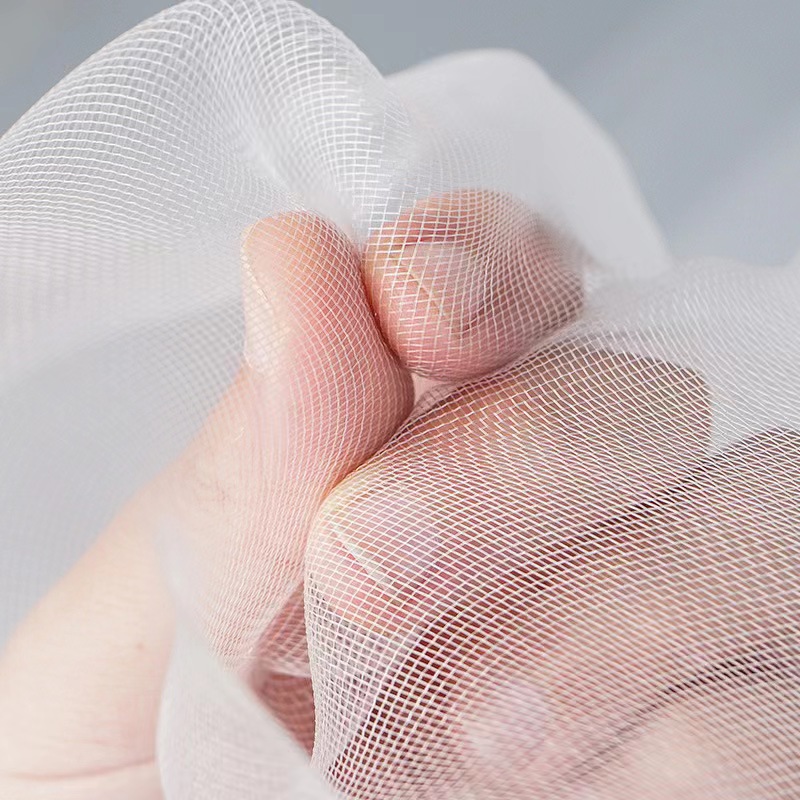
Black netting, on the other hand, absorbs more light. This has two primary effects. First, black netting typically has the longest lifespan because the carbon black pigment used is an extremely effective UV stabilizer. Second, it can slightly increase the temperature under the net. In cooler climates, this may be a slight advantage, but in hot, sunny regions, it could potentially contribute to heat stress.

Other colors, such as green or grey, are also available. These are often chosen for aesthetic reasons, to help the structure blend in with the surrounding landscape. Their effects on light and temperature generally fall between those of white and black netting. Some research has even explored how colored nets can selectively filter light wavelengths to influence fruit quality or pest behavior, though for most growers, the choice between white and black remains the most practical one (Mupambi et al., 2018).

Making the right choice among these options requires synthesizing your threat assessment with this technical knowledge. It is a decision that directly impacts the effectiveness of your crop protection and the health of your orchard environment.
Step 3: Designing and Building the Support Structure
Once you have meticulously selected the ideal netting material and mesh size for your orchard’s specific needs, the focus must shift to the physical framework that will support it. The support structure is the skeleton of your protection system; its design and integrity determine not only the effectiveness of the netting but also its longevity and the ease of orchard operations. A well-designed structure presents the netting to the environment in a way that maximizes protection while minimizing interference with the trees and the grower. The choice ranges from simple, temporary solutions to permanent, engineered enclosures.
The Drape-Over Method: Simplicity and Its Limitations
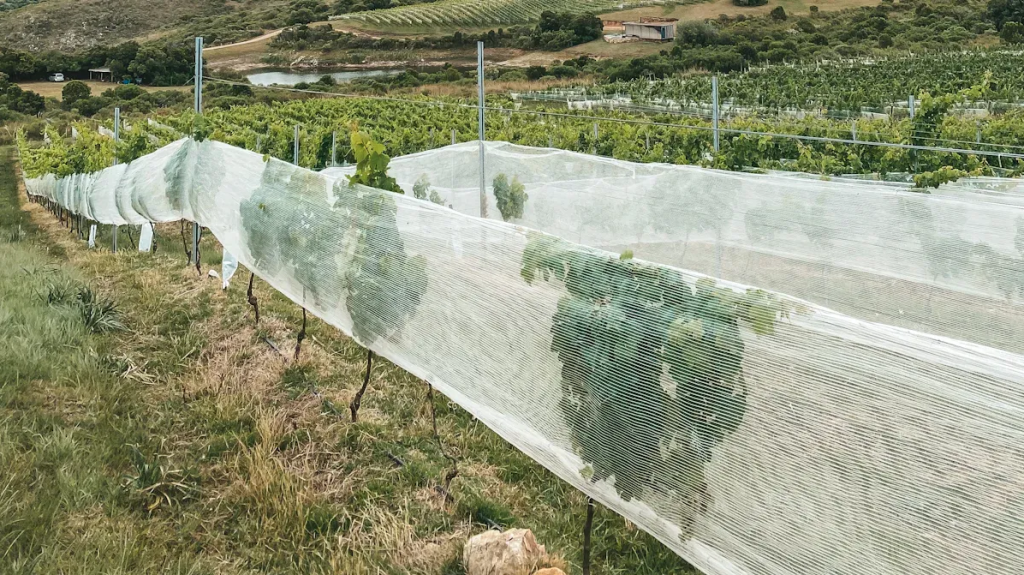
The most straightforward approach to netting an orchard is the drape-over method. As the name implies, this involves simply laying or “draping” the netting directly over the canopies of the trees. For a home gardener with a few dwarf cherry trees or for a commercial grower needing to protect a small block of young trees for a short period, this method can be appealing due to its low cost and simplicity.
The process is direct: a large sheet of lightweight agricultural bird netting is unrolled over the top of the tree or row of trees. The edges are then secured to the ground with pegs, sandbags, or by burying them in a shallow trench. The goal is to create a complete seal to prevent birds from finding their way in from underneath.

However, the limitations of this method become apparent quickly. First, direct contact between the net and the tree can cause problems. Wind can cause the net to rub against tender new growth, leaves, and developing fruit, causing abrasions. Second, the very pests you are trying to exclude can learn to defeat it. A determined bird can land on the net and press it down against the fruit, pecking at it directly through the mesh. Third, accessing the trees for monitoring or spraying becomes a cumbersome process of lifting and re-securing the netting. Finally, for larger trees, the weight of the net, especially when wet, can cause branches to bend or even break. The drape-over method is a viable short-term tactic, but it is not a robust long-term strategy for serious fruit production.
The Full-Enclosure System: The Gold Standard in Orchard Protection
For growers seeking the highest level of protection and operational efficiency, a full-enclosure system is the superior choice. This approach involves constructing a permanent or semi-permanent framework of posts and cables that supports the netting well above and around the tree canopy. This creates a protected “room” in which the trees can grow, unmolested by external threats. These systems can be categorized into two main designs.
Single-row tunnels are an excellent option for modern, high-density orchards where trees are grown in distinct, narrow rows. The structure resembles a long, high tunnel or “hoop house” built over each row. It typically consists of steel or fiberglass hoops connected by a central ridge wire or pole. The netting is stretched over this framework and secured at the ground level. This design provides excellent protection for the individual row and allows for machinery access in the alleys between the rows.
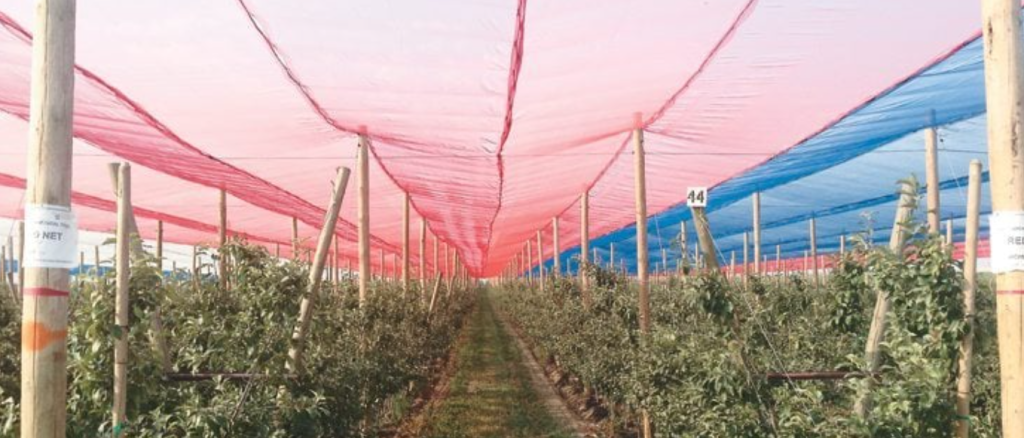
Multi-row bays, or full-canopy cover, represent the most comprehensive and expensive form of orchard protection. This system is used to cover entire blocks of trees, regardless of the planting system. A grid of tall posts—made from treated wood, galvanized steel, or concrete—is installed throughout the orchard. A network of high-tensile steel cables is then run between the tops of these posts, creating a strong, level grid suspended high above the tallest trees. The large panels of netting are then pulled out over this grid of cables and fastened together, creating a massive, continuous ceiling over the orchard. Additional netting is hung from the perimeter of this ceiling down to the ground to enclose the sides, creating a complete, pest-proof box. This system offers unparalleled protection against birds and, if the right net is chosen, hail. It allows for complete freedom of movement for workers and machinery within the orchard.
Engineering Considerations for a Durable Structure
Building a full-enclosure system is a significant construction project that requires careful engineering considerations. The structure must be able to withstand not just the weight of the netting itself, but also significant environmental loads.
Wind load is a primary concern. A large expanse of netting acts like a sail, catching the wind and exerting immense force on the posts, cables, and anchors. The structure must be designed to handle the maximum expected wind speeds for your location. This involves selecting posts of adequate diameter and strength, using properly tensioned cables, and, most importantly, installing robust anchoring systems at the ends of the rows and around the perimeter.
In regions that experience snowfall, snow load becomes another critical factor. While nets are typically removed before winter, an unexpected early snow can be disastrous if the structure is not designed to handle the weight. For hail netting, which is often left on year-round, the structure must be engineered to support the potential weight of accumulated hailstones during a severe storm.

The height of the posts must be sufficient to provide clearance between the netting and the mature height of the trees, plus a buffer for tree growth and to prevent birds from pushing the net down onto the fruit. The spacing of the posts and the tension of the cables are calculated to prevent excessive sagging of the net, which can create low points where water or debris can accumulate.
The anchoring systems are the literal foundation of the structure’s stability. These can range from screw-in earth anchors for stable soils to large concrete deadman anchors for loose or sandy conditions. The strength and placement of the anchors are what allow the cable grid to be tensioned to the required specifications, creating a taut and stable support for the netting. The design and construction of such a system is a serious undertaking, but the resulting peace of mind and near-total crop security can provide a return on the investment for many years (Lobos et al., 2014).
Step 4: The Art and Science of Net Installation
The successful implementation of an orchard netting strategy does not end with the selection of materials or the design of a structure. The physical act of installing the netting is a critical phase where precision and care are paramount. A flawlessly designed system can be rendered ineffective by a sloppy or ill-timed installation. This process is a blend of scientific understanding—particularly regarding tree and pest biology—and the practical art of working with large, unwieldy materials in a field environment.
Timing is Everything: When to Deploy Your Nets
One of the most consequential decisions a grower makes is when to cover the trees. Deploying the nets too early can be as detrimental as deploying them too late. The central biological process that must be respected is pollination. Apple and cherry trees are overwhelmingly dependent on insects, primarily bees, to transfer pollen between blossoms, which is the essential prerequisite for fruit set. If you install the netting before or during the bloom period, you will effectively block these vital pollinators from accessing the flowers, resulting in a catastrophic failure of fruit development.
Therefore, the cardinal rule of netting installation is to wait until pollination is complete and the petals have fallen from the blossoms. At this stage, the tiny, nascent fruits have been “set.” The ideal window for deployment is the period after this point but before the fruit becomes attractive to the target pests. For cherries, this is typically when the fruit begins to lose its green color and starts to develop a “blush” of yellow or red. This is the signal that the sugar content is increasing, and birds will soon take notice. For apples, the timing is often dictated by the life cycle of insect pests like the codling moth; the nets must be in place before the first generation of adult moths emerges to lay its eggs on the developing fruitlets. Consulting local university extension resources can provide precise timing information based on pest models for your specific region.
A Step-by-Step Guide to Installation
The physical process of installation varies greatly depending on the scale of the orchard and the type of system being used, but some core principles apply universally.
First, prepare the site. The area around and under the trees should be mowed and cleared of any fallen branches, sharp rocks, or other debris that could snag or tear the delicate netting. For full-enclosure systems, this is also the time to ensure the support structure, including all posts, wires, and anchors, is secure and in good repair.
Next is the deployment of the net itself. For a single backyard tree, this might be a manual task for two people, carefully lifting the net over the canopy. For large, multi-acre commercial systems, this is a mechanized operation. Large rolls of netting are mounted on specialized hydraulic machinery, often attached to a tractor, which unspools the net over the cable structure. Whether manual or mechanical, the key is to handle the netting gently, avoiding dragging it on the ground and minimizing any pulling or stretching that could create weak spots.
Once the netting is in place, the most critical step is securing the edges and sealing all gaps. This is the most common point of failure in any netting system. A bird or insect needs only a small opening to gain entry, and once inside, they can become trapped and cause significant damage. For drape-over systems, the edges of the net must be brought down to the ground and firmly secured. This can be done by burying the edge in a shallow trench, weighing it down with a continuous line of sandbags, or using specialized ground pegs. For full-enclosure systems, the side walls of netting must be sealed to the ground in a similar fashion, and the junctions where different panels of netting meet must be meticulously overlapped and clipped together. Zippers or other access systems must be planned and installed to allow people and equipment to move in and out without compromising the integrity of the enclosure. The goal is to create a hermetically sealed environment.
Common Installation Pitfalls and How to Avoid Them
Even with a careful plan, several common problems can arise during installation. Foreknowledge of these pitfalls is the best defense against them.
Tears and snags are the most frequent issue. Netting is strong but not indestructible. It can easily catch on a broken branch, a piece of wire on a trellis, or even the corner of a piece of equipment. The rule is to move slowly and deliberately. If the net catches, stop immediately and free the snag rather than trying to pull it through. It is wise to have a repair kit on hand during installation, containing zip ties, UV-resistant twine, or small patch pieces, to fix any small tears on the spot before they become larger problems.
Inadequate tension is another pitfall, particularly in full-enclosure systems. A net that is too loose will flap and billow in the wind. This constant movement not only causes chafing and premature wear on the net where it contacts the cables but can also create startling noises that disturb workers. Proper tensioning, according to the system’s design specifications, is vital for stability and longevity.
Finally, a surprisingly common mistake is forgetting to plan for access. Before the final edge is sealed, double-check how you will get inside the netted area for essential tasks like crop monitoring, irrigation adjustments, or eventual harvesting. Well-placed, resealable entry points, such as zippered doors or overlapping flaps, are not an afterthought but an integral part of the system design. A moment of planning here can save hours of frustration later in the season.
Step 5: Maintenance, Removal, and Storage for Longevity
The purchase and installation of an orchard netting system represent a significant financial and labor investment. It is not a “set it and forget it” solution. To maximize the return on this investment and ensure the system provides effective protection for many years, a disciplined approach to maintenance, removal, and storage is necessary. The forces of nature—sunlight, wind, and wildlife—are relentless, and diligence is required to counteract their degrading effects. Proper stewardship of your netting system is as important as the initial installation.
In-Season Monitoring and Repair
Once the nets are deployed and the orchard is sealed, the work of maintenance begins. It is a mistake to assume the barrier is impenetrable and permanent. Regular inspections are a fundamental part of protecting your orchard. At least once a week, and always after a significant wind or rain event, you should walk the perimeter and interior of the netted area.
Your primary task during these inspections is to look for damage. Search for any rips, tears, or holes in the netting panels. A small hole caused by a snagged branch or a chewing rodent can quickly be exploited by birds and become a major breach. Pay close attention to the seams where panels are joined and the areas where the net comes into contact with the support structure, as these are common points of wear.

When you find a tear, repair it immediately. Do not wait. A small, 1-inch hole is a quick fix; a large, 1-foot gash is a major repair. The best method for patching depends on the size of the hole. For very small punctures, a few UV-stable zip ties can be used to cinch the hole closed. For larger tears, the most durable repair involves using a piece of spare netting as a patch. Place the patch over the tear and “sew” it in place using a large needle and UV-resistant twine, or by stitching it on with heavy-duty zip ties.
During your inspections, you must also be vigilant for any trapped wildlife. Despite your best efforts to seal the enclosure, an animal or bird may occasionally find its way inside. It is imperative to remove them as quickly and humanely as possible. A trapped, panicked bird can cause significant damage to the net in its attempts to escape. More importantly, it is an ethical responsibility to release the animal. Often, this involves gently guiding it towards a planned exit or temporarily creating an opening for it to escape.
The Post-Harvest Process: Removal and Cleaning
The lifespan of your netting is directly related to its exposure to the elements, particularly UV radiation and physical stress. Therefore, unless you are using a dual-purpose hail net designed for year-round use, the netting should be removed as soon as possible after the harvest is complete. Leaving bird netting on through the autumn and winter exposes it to unnecessary UV degradation and, more critically, to the risk of damage from snow and ice accumulation, which can stretch or tear the net and even damage the support structure.

The process of removal is essentially the reverse of installation. It should be done on a calm, dry day. Begin by detaching the nets from their ground anchorages. Then, carefully disconnect the panels from each other and from the cable structure. As with installation, using specialized machinery for large-scale systems makes the process far more efficient and reduces the risk of damage. The goal is to take the netting down as cleanly as possible.
Before storing, it is highly advisable to clean the netting. Over the course of a season, the nets will accumulate leaves, twigs, bird droppings, and other organic debris. If left on the net, this material can promote mold and mildew during storage and can attract rodents. The best way to clean the net is to stretch it out on a clean, grassy area or driveway and gently sweep or blow it off with a leaf blower. For more stubborn dirt, a gentle spray with a hose may be necessary, but ensure the net is completely dry before you store it.
Proper Storage: Protecting Your Investment
How you store your netting during the off-season is the single most important factor in determining its lifespan, aside from the material itself. Improper storage can ruin a high-quality net in a single winter.
The two primary enemies of stored netting are sunlight and rodents. The storage location must be a dry, enclosed space that is completely dark. A barn, shed, or garage is ideal. Direct or even indirect sunlight will continue to degrade the UV inhibitors in the polymer, even during the off-season.

Rodents, such as mice and rats, are notoriously destructive to stored nets. They will chew through the material to create nesting material, turning a valuable asset into a useless, hole-filled tangle. Storing the nets in heavy-duty, rodent-proof containers is the best defense. Large plastic bins with tight-fitting lids or sealed metal drums are excellent choices.

Before placing it in storage, the net must be folded or rolled correctly. A tangled net is a nightmare to deploy the following season and is highly susceptible to damage during untangling. For long panels, the best method is to “flake” it back and forth like a climbing rope or fire hose, then loosely tie the bundle together. For large, square sheets, folding them neatly into a compact rectangle is effective. The goal is to have a bundle that can be easily handled and will deploy smoothly the following spring. Taking the time to maintain, remove, and properly store your netting system is the final, essential step in a successful, multi-year strategy for protecting your precious apple and cherry harvest. Seeking out durable products from providers specializing in custom netting solutions can also contribute to a longer service life and better overall performance.
Foire aux questions (FAQ)
Can I use the same netting for both birds and hail?
While it is possible, it is often not ideal. Bird netting is designed for exclusion and is typically lightweight with a mesh size of around 3/4 inch. Hail netting is engineered for impact absorption, requiring a much stronger, heavier weave (like a leno weave) and a more robust support structure. Using standard bird netting for hail will likely result in tearing and failure. Conversely, using heavy hail netting for birds is possible but may be overkill and can reduce light more than necessary. Some hybrid products exist, but it is generally best to choose a net specifically designed for the primary threat in your region.
How long does orchard netting typically last?
The lifespan of orchard netting depends primarily on the material, the quality of its UV inhibitors, and how well it is maintained and stored. High-quality, UV-stabilized High-Density Polyethylene (HDPE) netting, when removed and stored properly during the off-season, can last 8 to 15 years or even longer. Nets left out year-round, like some hail netting systems, will have a shorter lifespan, typically in the 7 to 12-year range. Cheaper materials like polypropylene or nets with poor UV resistance may only last 3 to 5 seasons.
Will netting reduce my fruit yield by blocking sunlight?
Any covering will reduce the amount of light reaching the canopy, but high-quality orchard netting is designed to minimize this effect. White or translucent netting allows for high light transmission, and the reduction is typically not enough to negatively impact photosynthesis or fruit yield in most climates (Espí et al., 2006). In very hot, sunny regions, the slight shading effect can even be beneficial, reducing the risk of sunscald on apples. Very fine insect netting or dark-colored nets will block more light, a factor that needs to be considered in the selection process.
What is the best way to deal with a bird or animal trapped in the netting?
If you find a trapped animal, the priority is to release it as quickly and calmly as possible for both the animal’s welfare and to prevent damage to the net. Approach slowly to avoid panicking the animal further. Often, you can gently guide it towards an opening. It may be necessary to create a temporary exit by unclipping a seam or lifting a secured edge. For birds tangled in the mesh, you may need to carefully cut a few strands of the net to free them—it is better to have a small, repairable hole than an injured animal. Always wear gloves to protect yourself.
Is it possible to automate the deployment and retraction of nets?
Yes, for large-scale, commercial orchards, automated or semi-automated systems are becoming more common. These systems use motors to roll and unroll netting along cables, often controlled from a central point. They are most common on single-row or multi-row structures with fixed designs. While the initial investment is very high, these systems can dramatically reduce labor costs and allow for rapid deployment or retraction of nets in response to weather forecasts or operational needs. For smaller orchards, manual or machine-assisted installation remains the most practical method.
How much does a full orchard netting system cost?
The cost varies dramatically based on the type of system, materials, and labor. A simple drape-over application for a few trees might only cost a few hundred dollars. A fully engineered, multi-acre, full-canopy enclosure is a major capital investment. Costs can range from $10,000 to over $30,000 per acre, depending on the height of the structure, the type of netting (hail netting is more expensive), soil conditions (affecting anchor costs), and whether you use professional installers or provide the labor yourself.
Can I install netting on my own, or do I need a professional?
This depends entirely on the scale and complexity of the project. A homeowner can certainly manage a drape-over installation on a few backyard trees. Even a single-row tunnel on a small scale could be a DIY project for someone with construction skills. However, for a large, multi-row bay system covering an acre or more, professional consultation and installation are highly recommended. The engineering required to handle wind and snow loads is complex, and the specialized equipment used by professional installers makes the job safer and more efficient.
The journey of protecting an orchard with netting is a thoughtful process that extends far beyond simply throwing a cover over some trees. It is an integrated strategy that begins with a deep, empathetic understanding of the specific orchard’s place in the world—its climate, its pests, its very soil. From this intimate knowledge, a rational path emerges. It leads through the careful science of material selection, where the virtues of HDPE are weighed and the precise geometry of a mesh size is matched to a specific foe. It continues into the realm of structural design, demanding a respect for the forces of wind and weather, culminating in a framework that is both strong and sensitive to the needs of the trees it protects.

The implementation of this strategy, through well-timed and meticulous installation, transforms the plan into a physical reality, a sealed sanctuary for the developing fruit. Yet, the work is not finished. The final, and perhaps most defining, phase is one of sustained stewardship. Through diligent maintenance, careful post-harvest removal, and proper off-season storage, the grower ensures that this significant investment endures, providing security season after season. Adopting a comprehensive approach to protecting your orchard with these netting strategies is not merely a defensive measure against loss; it is a proactive affirmation of the value of the harvest and a commitment to seeing the promise of blossoms through to the reward of fruit.

Read our most popular articles.
👉 Download our free product categories
👉 The Ultimate Guide to Installing Anti-Insect Nets in Greenhouses
👉 Anti-Insect Nets vs. Chemical Pesticides — A 3-Point Health and Yield Comparison
👉 Practical Buyer’s Guide: HDPE vs. Nylon: A Material Showdown for Garden Netting
👉 The Ultimate Guide To Choosing Garden Netting: Pest, Material, and Crop Considerations
👉 How to Start a Private Label Netting Business: A 5-Step Framework for Work
👉 The Chinese Manufacturing vs. Local Suppliers: A Netting Buyer’s Guide