
الخلاصة
Choosing between light-duty and heavy-duty netting is a critical decision for project managers and facility operators in construction, agriculture, and sports. The stakes go beyond budget: the wrong specification can mean either paying for unnecessary over-engineering or—far worse—facing catastrophic failure from under-specified materials.

This analysis breaks down the key differences between these two netting categories using five practical factors:
- Specific application and impact forces
- Material properties and durability
- Environmental exposure and degradation
- Safety compliance and legal requirements
- Total cost of ownership vs. initial price
By working through each factor, this guide offers a clear, rational framework for decision-making. Our goal is to help you move past simple cost comparisons and make an informed investment that balances performance, longevity, and financial responsibility—so you can protect both safety and your bottom line.
الوجبات الرئيسية
- Assess your project’s specific impact forces before choosing a netting type.
- Look at tensile strength and UV resistance, not just material names.
- Consider how sun, moisture, and chemical exposure will affect the net’s lifespan.
- The right choice in the light-duty vs. heavy-duty debate ensures regulatory compliance.
- Analyze total cost of ownership—including replacement and liability—not just upfront price.
- Choose knotted or knotless construction based on abrasion and impact needs.
- Verify that the netting meets relevant industry standards such as ASTM or OSHA.
The temptation to go with the cheaper, light-duty option is understandable—especially when budgets are tight. Conversely, playing it safe by buying the most rugged heavy-duty netting available can lead to unnecessary spending on a solution far more robust than the job actually requires. So how do you navigate this decision wisely?

This guide offers a framework built on five foundational factors. By considering each one methodically, you can move from uncertainty to confident, rational decision-making—ensuring your investment is both appropriate and effective.
Factor 1: The Nature of the Application and Its Associated Impact
Any sound decision starts with a deep understanding of what you’re asking the netting to do. What, exactly, must it intercept? A person? Debris? A ball? Birds? The nature of that task dictates the physical demands on the netting fibers and structure. Misjudging those demands is the most common cause of both catastrophic failure and wasteful overspending.
Let’s separate applications into broad categories based on the level of force involved.
Low-Impact and Static Load Applications
Imagine a garden. You want to protect ripening tomatoes from birds. The impact is minimal. A bird weighing just a few ounces will be gently turned away. The net isn’t required to absorb significant kinetic energy—its main job is exclusion. The same goes for a simple privacy screen on a balcony or a net covering a koi pond to keep out leaves. These are static or near-static applications. The forces are gentle and predictable: the net’s own weight, light wind, or the accumulation of dry leaves.

In these scenarios, light-duty netting isn’t just sufficient—it’s the most logical choice. These nets are typically made from lighter-gauge polyethylene or polypropylene, with thinner twine and often larger mesh openings. Their design prioritizes coverage and visibility, not energy absorption. Choosing heavy-duty netting here would be like using a sledgehammer to crack a nut: functionally excessive and economically unsound.
High-Impact and Dynamic Load Applications
Now consider a different environment: a high-rise construction site in a dense urban center. Here, the net isn’t keeping things out—it’s catching things that fall. That could be a dropped hammer, a piece of concrete, or, in the most extreme case, a worker. The physics are entirely different. A two-kilogram hammer falling from 50 meters carries tremendous kinetic energy on impact. The net must not only stop the object but absorb and dissipate that energy without tearing. This is a high-impact, dynamic load scenario.

Sports facilities present similar challenges. A baseball or softball backstop must repeatedly withstand balls traveling over 150 kilometers per hour. A golf barrier net must stop a small, hard ball moving at immense velocity. In these cases, the net’s ability to stretch, deform, and absorb energy is paramount. This is the domain of heavy-duty netting. These products are engineered for strength, with thicker twine, high-tenacity materials like nylon or polyester, and often more robust construction—such as knotted mesh—to prevent unraveling on impact.
The table below provides a comparative overview to help you place your specific needs within this spectrum.
| Factor | Light-Duty Netting | Heavy-Duty Netting |
|---|---|---|
| الوظيفة الأساسية | Exclusion, containment of light materials | Impact absorption, personnel safety, heavy debris |
| Typical Applications | Garden bird netting, leaf collection, privacy screens | Construction debris/personnel safety, sports backstops |
| Impact Force | Low (birds, leaves, light wind) | High (falling tools, fast-moving balls, people) |
| Material Weight | Lighter, smaller twine diameter | Heavier, larger twine diameter |
| Economic Logic | Cost-effective for non-critical barriers | Higher initial cost justified by safety and durability |
الدور الحاسم لحجم الشبكة
Beyond the duty rating, mesh opening size is a functionally critical parameter. The mesh must be smaller than the smallest object it’s meant to contain. For light-duty bird netting, 1–2 cm mesh might be perfect for excluding small sparrows. For heavy-duty construction debris netting, you’ll need much finer mesh to catch small screws, bolts, or concrete chips that could otherwise endanger people below.
However, there’s a trade-off. Smaller mesh means more material per square meter, which increases weight and cost. It also increases surface area exposed to wind—a phenomenon known as the sail effect. A large net with very fine mesh can behave like a ship’s sail in high winds, putting enormous stress on its anchor points. So mesh selection requires careful balance: containment needs against weight, cost, and wind load. This complexity is exactly why a one-size-fits-all approach to the light-duty vs. heavy-duty netting question is bound to fail.

Factor 2: The Intrinsic Properties of the Netting Material
Once you have a clear grasp of your application’s demands, focus shifts to the net’s actual material. The term “plastic” or “synthetic fiber” is far too broad to be useful. The specific polymer—plus any treatments and construction details—determines performance: strength, longevity, and suitability for the task. To choose wisely, you need to become a student of materials, at least at a basic level.
A Tale of Three Polymers: Polyethylene, Polyester, and Nylon
Most modern netting is made from one of three primary synthetic polymers: High-Density Polyethylene (HDPE), Polyester (PET), or Nylon (Polyamide). Each has a distinct set of strengths and weaknesses that make it better suited for some jobs than others.
بولي إيثيلين عالي الكثافة (HDPE): Think of HDPE as the dependable workhorse. It’s perhaps the most common material for general-purpose netting. Its primary virtue is outstanding environmental resistance. HDPE doesn’t absorb water, so it won’t rot, grow mold, or get heavier when wet. It also offers excellent UV resistance and is largely inert when exposed to a wide range of chemicals. That makes it ideal for outdoor applications where constant exposure is a given—agricultural bird netting, aquaculture pens, and general-purpose debris nets. However, its tensile strength is generally lower than nylon or polyester, making it more suitable for light- to medium-duty applications where extreme impact absorption isn’t required.
نايلون: If HDPE is the workhorse, nylon is the shock absorber. Nylon’s standout characteristic is its combination of high tensile strength and excellent elasticity. It can stretch significantly under load—up to 30–40% of its length—and then return to its original form. That stretch allows it to absorb kinetic energy from sudden impacts far more effectively than a more rigid material. Imagine catching a fast-moving baseball with a rigid bucket versus a flexible glove: the glove gives, softening the impact. That’s what nylon does at a microscopic level. This property makes it the premier material for heavy-duty safety applications, such as fall-arrest personnel nets on construction sites and backstop netting for high-velocity sports like baseball and lacrosse. Its main vulnerability is a tendency to absorb water, which can reduce strength by up to 15% and cause sagging. It also has lower UV resistance than treated HDPE or polyester, requiring special coatings for long-term outdoor use.
Polyester (PET): Polyester occupies a middle ground, blending some of the best qualities of both HDPE and nylon. It offers high tensile strength—approaching that of nylon—but with much lower stretch. It has excellent UV resistance (superior to untreated nylon) and very low water absorption (similar to HDPE). This combination makes it a superb choice for heavy-duty applications where dimensional stability is key. For example, in a large stadium backstop or permanent perimeter fence, you don’t want the net to sag or stretch over time due to weather changes. Polyester holds its shape. It’s a premium material, often used for heavy-duty cargo nets, permanent sports installations, and applications demanding both strength and environmental stability.
| Material Property | البولي إيثيلين عالي الكثافة | نايلون (بولي أميد) | Polyester (PET) |
|---|---|---|---|
| قوة الشد | جيد | ممتاز | ممتاز |
| Elasticity / Stretch | منخفضة | عالية | منخفضة |
| امتصاص الماء | منخفضة جداً | عالية | منخفضة جداً |
| مقاومة الأشعة فوق البنفسجية | ممتاز | Fair (requires treatment) | جيد جداً |
| مقاومة التآكل | جيد | ممتاز | جيد جداً |
| حالة الاستخدام المثالية | General outdoor, agriculture, light debris | High-impact safety, sports backstops | Heavy-duty, low-stretch applications |
The Significance of Twine Construction and Coatings
The material is only part of the story. How the fibers are assembled into a net matters just as much. Twine diameter is a direct indicator of strength—a #42 twine is significantly stronger than #18 twine of the same material.
Nets are also constructed in two primary ways: knotted and knotless.
- Knotted netting: In this traditional construction, twines are knotted together at each mesh intersection. These knots provide excellent abrasion resistance and help lock the mesh in place, preventing distortion. That makes knotted construction a favored choice for rugged, heavy-duty applications where the net might be dragged or subjected to friction. The knots themselves, however, can be stress concentration points and are slightly weaker than straight twine.
- Knotless netting: This modern alternative is woven or knitted without knots. The result is a lighter, smoother, and often stronger net for a given twine weight, since stress is distributed more evenly across the fibers. Knotless netting is common in sports applications (where a smooth surface is desirable) and in light-duty applications where cost and weight are primary considerations.
Finally, coatings and treatments can dramatically enhance a material’s natural properties. UV inhibitors act like a powerful sunscreen for the fibers, absorbing or reflecting harmful ultraviolet rays that would otherwise break down polymer chains. This treatment can elevate a net’s outdoor lifespan from a few years to a decade or more. Fire-retardant coatings can be added to meet building codes, and bonding agents can further stabilize the mesh and improve abrasion resistance. When comparing light-duty vs. heavy-duty netting, always ask about these invisible enhancements—they’re often what truly separates a budget product from a professional-grade one.
Factor 3: The Realities of Environmental Exposure
A net rarely exists in a vacuum. It lives in the real world, subject to a constant barrage of environmental forces that seek to degrade it. A heavy-duty net that performs perfectly on day one can become a dangerously weak light-duty net after a few years of neglect if it wasn’t chosen with its environment in mind. Long-term performance—and therefore true cost-effectiveness—is inextricably linked to its ability to withstand its specific environmental context.
The Unseen Enemy: Ultraviolet (UV) Radiation
Sunlight, for all its life-giving properties, is the primary adversary of most synthetic polymers. The ultraviolet portion of the solar spectrum carries high-energy photons that can sever the long molecular chains giving plastics their strength and flexibility. This process, known as photodegradation, makes the material brittle, weak, and prone to cracking. We’ve all seen this effect in an old plastic lawn chair or a child’s toy left outside for a summer.
This is where material distinctions become profoundly important. As noted, HDPE and polyester have inherently good UV resistance. Nylon, despite its superior strength, is more vulnerable. But modern manufacturing offers a powerful defense: UV stabilization. This involves incorporating chemical additives into the polymer melt before fibers are extruded. These stabilizers absorb UV radiation and dissipate it as harmless heat, effectively sacrificing themselves to protect the polymer’s structural integrity.
When choosing between light-duty and heavy-duty netting for any outdoor application, the question shouldn’t just be “What material is it?” but “Is it UV stabilized, and to what degree?” A light-duty, UV-stabilized HDPE garden net may well outlast a non-stabilized, heavy-duty nylon net used for the same purpose—even though the nylon net was initially much stronger. For long-term installations like customized netting for sports facilities or agricultural enclosures, specifying a high level of UV protection isn’t a luxury. It’s a fundamental requirement for a sound investment.
The Persistent Problem of Moisture and Rot
Water presents a different set of challenges. For natural fibers like cotton or manila, moisture is a death sentence, leading to rot and rapid decomposition. While synthetic fibers are immune to biological rot, water can still affect them.

As noted earlier, nylon’s high water absorption (hygroscopy) causes it to temporarily lose strength and stretch or sag. That can be a real problem for a large, taut installation like a tennis court net or perimeter fence. After a rainstorm, the net may droop, only returning to proper tension as it dries. Heavy-duty polyester or HDPE nets, which absorb almost no water, are dimensionally stable—making them far superior where consistent tension is required.
In marine or consistently damp environments—aquaculture, coastal areas—the choice tilts heavily toward HDPE or polyester. A light-duty HDPE net will maintain its properties indefinitely when submerged, whereas a heavy-duty nylon net would suffer from persistent strength loss and dimensional change.
The Corrosive Touch of Chemicals and Pollutants
The air and water surrounding a net are rarely pure. In industrial or urban settings, netting can be exposed to airborne chemicals, from acid rain to exhaust fumes. In agricultural contexts, it might contact pesticides or fertilizers.
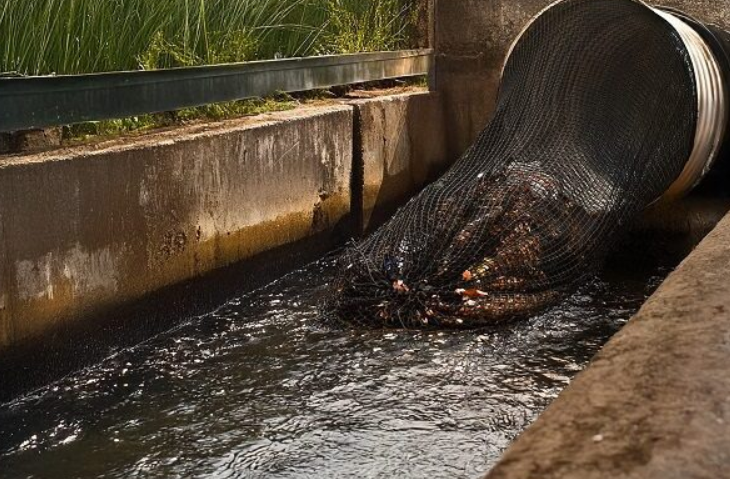
This is another area where HDPE shines. Its chemical inertness is remarkable, making it resistant to a wide array of acids, alkalis, and solvents. That makes it an excellent choice for applications like containment netting around industrial plants or protective covers in agricultural settings. Polyester also offers good chemical resistance. Nylon, while generally robust, can be susceptible to degradation from strong acids.
When evaluating a potential netting solution, consider the chemical environment. Will it be near saltwater? Exposed to industrial pollutants? Used with agricultural sprays? A light-duty net made of the right chemically resistant material will invariably perform better and last longer than a heavy-duty net made from a susceptible one. Duty level must be considered in concert with chemical resilience.
Factor 4: The Mandates of Safety, Regulation, and Liability
In many applications, the choice between light-duty and heavy-duty netting isn’t a matter of preference or budget—it’s dictated by law. For industries like construction, worker and public safety are paramount, and regulatory bodies like OSHA have established specific, non-negotiable standards. Ignoring these mandates isn’t just a financial risk; it’s an ethical failure with potentially devastating human consequences.
Understanding Personnel vs. Debris Netting
A critical distinction in construction safety is between personnel nets and debris nets. The performance requirements for these two applications are vastly different, and they represent a clear-cut example of the light-duty vs. heavy-duty netting divide.
Personnel fall arrest systems: These are the ultimate heavy-duty nets. Their sole purpose is to save a life by catching a falling worker. OSHA standard 1926.502(c) sets out stringent requirements. These nets must be drop-tested with a 400-pound (181 kg) bag of sand dropped from the height at which the net will be used—and they must not fail. Mesh openings can be no larger than 6 inches by 6 inches (15 cm x 15 cm) to prevent a worker from falling through. The materials (typically high-strength nylon or polyester) and installation must be certified to withstand immense impact forces. There’s no ambiguity here: using anything less than a certified, heavy-duty personnel net for fall protection is illegal and unconscionably dangerous.

High-Tensile Polyester Fall Safety Net for Construction Protection
Engineered with high-tensile polyethylene for exceptional strength, durability, and UV resistance, this fall safety net provides dependable protection for construction and industrial work sites.
Debris netting: This category is designed to catch falling objects, not people. The primary goal is to protect the public and property below the work area. While still a safety product, the forces involved are generally lower than in a personnel fall, so the standards differ. Debris nets can be of lighter construction, often using UV-stabilized polyethylene with much smaller mesh to contain small items like tools, bolts, or masonry fragments. They are still robust, engineered products that must meet specific tear strength and durability criteria. Using a simple, light-duty garden net for this purpose would be wholly inadequate and a violation of safety protocols.

Reinforced HDPE Scaffold Debris Containment Protection Safety Netting
Built with reinforced HDPE and a close-mesh design, this scaffold debris netting delivers durable, weather-resistant, and highly effective containment performance across demanding construction environments.
The Role of Standards and Certification
How can you be certain that a net meets these critical safety requirements? You must look for proof of compliance with established standards. Organizations like ASTM develop standardized test methods for evaluating netting properties. For example, ASTM F2080 provides test methods for fencing system strength, relevant for perimeter netting.
Reputable manufacturers of heavy-duty safety netting have their products independently tested and certified to meet relevant OSHA, ANSI, or EN standards. That certification is your assurance that the product has been rigorously evaluated for its intended purpose. When sourcing netting for any safety-critical application, always demand documentation of that certification. A supplier who cannot provide it shouldn’t be considered. The debate between light-duty vs. heavy-duty netting becomes moot in these contexts: the standard dictates the choice.
The Specter of Legal Liability
Beyond the letter of the law lies legal liability. In the event of an accident—a tool falling from a building and injuring a pedestrian, or a spectator at a sporting event being struck by a foul ball—the choice of netting will come under intense scrutiny. If it’s found that a substandard, light-duty net was used where a heavy-duty solution was clearly required, the legal and financial consequences for the building owner, contractor, or facility operator can be ruinous.

Investing in the appropriate heavy-duty netting isn’t just an operational expense. It’s a form of insurance. It’s a demonstrable act of due diligence showing a commitment to safety. The potential cost of a single lawsuit from a netting failure can easily exceed the entire lifetime cost of the best available netting system by orders of magnitude. From this perspective, choosing the correct, certified heavy-duty netting is one of the most financially prudent decisions a project manager can make.
Factor 5: A Deeper Economic Analysis—Total Cost of Ownership
The most common mistake in procurement is confusing price with cost. Price is the number on the invoice—the initial cash outlay to acquire the netting. Cost, properly understood, is the Total Cost of Ownership (TCO) over the product’s entire service life. A light-duty net may have a lower initial price, but it can often prove far more expensive in the long run.
A sophisticated analysis of the light-duty vs. heavy-duty netting question must adopt this broader economic perspective.
The Calculation of Service Life
Consider a hypothetical scenario. You need to install a perimeter barrier net around a driving range, exposed to constant sunlight and occasional high winds.
- Option A: Light-Duty Net. A basic polyethylene net with minimal UV stabilization. Initial price: $2,000. Due to photodegradation, fibers become brittle, requiring replacement every 3 years.
- Option B: Heavy-Duty Net. A high-tenacity polyester net with premium UV inhibitors and robust knotted construction. Initial price: $5,000. Engineered to last 10 years in the same environment.
If we look only at upfront price, Option A seems the clear winner. But let’s calculate the cost over 10 years, including labor for replacement (estimated at $1,000 per installation).
Cost of Option A over 10 years:
- Year 0: $2,000 (purchase) + $1,000 (install) = $3,000
- Year 3: $2,000 (replacement) + $1,000 (install) = $3,000
- Year 6: $2,000 (replacement) + $1,000 (install) = $3,000
- Year 9: $2,000 (replacement) + $1,000 (install) = $3,000
- Total 10-Year Cost: $12,000
Cost of Option B over 10 years:
- Year 0: $5,000 (purchase) + $1,000 (install) = $6,000
- Total 10-Year Cost: $6,000
Suddenly, the cheaper light-duty net is revealed to be twice as expensive over the project’s lifespan. The heavy-duty net, despite its higher initial price, represents a far superior return on investment. This TCO calculation is a powerful tool for justifying higher upfront expenditure on quality materials.
The Hidden Costs of Failure and Downtime
The TCO calculation above only includes predictable replacement costs. It doesn’t account for the potentially astronomical costs of failure. If the light-duty driving range net fails during a windstorm in its second year, what are the consequences?
- Downtime: The range must close until a replacement can be sourced and installed—lost revenue.
- Reputational damage: Customers may perceive the facility as poorly maintained or unsafe.
- Liability: If the failed net allows a golf ball to escape and damage property or injure someone, the financial and legal repercussions could be severe.
These hidden costs are rarely factored into a simple price comparison, but they are very real business risks. A heavy-duty net is engineered with a greater margin of safety, making it far less likely to fail unexpectedly. That reliability and peace of mind have tangible economic value that must be part of the decision-making process.
Making a Rational Investment
Viewing the purchase of netting as an investment—rather than an expense—changes the entire decision framework. An investment is expected to provide a return. The return from a well-chosen netting solution comes in many forms: years of reliable service, regulatory compliance, accident prevention, asset protection, and reduced labor for replacement and maintenance.
When you invest in durable, tailored netting products, you are buying down risk and securing long-term operational stability. The initial price difference between a generic light-duty product and a purpose-built heavy-duty one often pales in comparison to the value it delivers over its service life. A thoughtful leader or project manager understands this dynamic and allocates capital not to the cheapest option, but to the one offering the best overall value and the greatest protection for people and enterprise.
الأسئلة المتداولة (FAQ)
What is the single most important factor when choosing between light-duty and heavy-duty netting?
The most decisive factor is the application’s required impact resistance. First determine whether the net needs to stop high-energy impacts (falling people, tools, or high-velocity sports balls) or simply act as a passive barrier (birds or leaves). That tells you whether a heavy-duty or light-duty solution is even an option.
Can I use a heavy-duty net for a light-duty purpose?
Yes, but it’s often a case of overspending. Using a heavy-duty construction debris net in a home garden to keep out birds will certainly work, but you’ll pay a premium for strength and features you don’t need. It’s economically inefficient.
How much stronger is heavy-duty netting than light-duty netting?
There’s no single answer—it depends on materials and construction. However, a heavy-duty personnel fall-arrest net can have a minimum breaking strength of 5,000 pounds (22.2 kN) as required by OSHA, whereas a light-duty bird net might have a breaking strength of less than 50 pounds. The difference can be a factor of 100 or more.
هل لون الشباك مهم؟
Color can have minor effects on performance and major effects on aesthetics. Black netting often contains carbon black, an excellent UV inhibitor, typically giving black nets a longer lifespan than colored or white nets of the same material. For sports applications, black is also the most common choice because it provides the best visibility for seeing through the net to the action beyond.
How do I know if the netting I’m buying is truly heavy-duty and meets safety standards?
Request documentation from the manufacturer or supplier. For safety-critical applications, ask for a certificate of compliance explicitly stating the product meets specific standards, such as OSHA 1926.502 for personnel nets. Reputable suppliers will provide this information readily.
What is denier and how does it relate to netting strength?
Denier is a unit of measurement for the linear mass density of fibers, defined as the mass in grams per 9,000 meters of fiber. A higher denier number indicates a thicker, heavier fiber, which generally corresponds to greater strength, all else being equal. It’s one of several specifications—along with material type and twine construction—that contribute to a net’s overall duty rating.
Is knotted or knotless netting better?
Neither is universally better; their advantages are application-specific. Knotted netting offers superior abrasion resistance and is often preferred for rugged, heavy-duty uses where the net might be dragged or scraped. Knotless netting is lighter, smoother, and can be stronger for a given weight, making it ideal for sports and applications where a uniform surface is important.

اقرأ مقالاتنا الأكثر شعبية.
👉 قم بتنزيل فئات منتجاتنا المجانية
👉 دليل عملي من 15 نقطة: قائمة المراجعة الكاملة لتركيب الشباك الرياضية
👉 Beyond Breaking Strength: A Comprehensive Guide to Netting ion, Safety, and Risk Management
👉 5 Reasons Why Durable, Long-Lasting Products are the New Definition of “Cost-Effective”
👉 The True Cost of Cheap Netting: A Total Cost of Ownership Analysis
👉 مثبتات الأشعة فوق البنفسجية في الشباك الرياضية: دليل شامل لطول العمر الافتراضي