
Procuring construction safety netting is a serious ethical and operational decision for any project manager or site supervisor. A poor choice can lead not only to significant regulatory penalties, but also to catastrophic failures that result in injury or death.

This document examines the multifaceted process of selecting the right fall protection and debris containment systems. It moves beyond a simple product comparison and into the core principles of worksite safety. By framing the decision around seven guiding questions, this analysis provides a structured approach to evaluating netting solutions. It addresses the complex relationship between regulatory compliance, hazard-specific application, material science, performance testing, installation protocols, and long-term economic value.
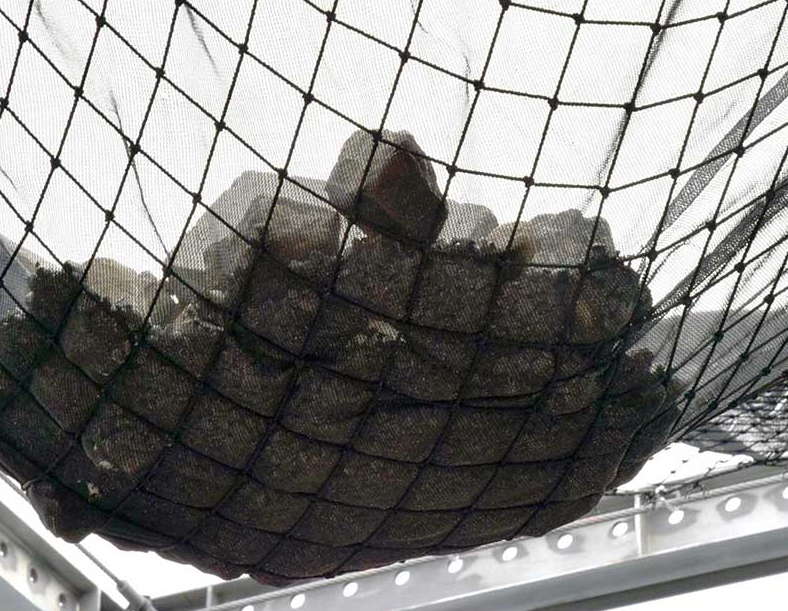
The goal is to equip decision-makers with the conceptual tools needed to select a system that protects workers and the public, satisfies legal and ethical obligations, and supports the safe, efficient progress of a construction project. In that sense, purchasing becomes not just a procurement task, but a deliberate exercise in risk mitigation and human-centered planning.
Key Takeaways
- Confirm that the netting complies with all applicable OSHA, ANSI, and EN safety standards.
- Identify the primary hazard—personnel falls or debris—to select the correct type of net.
- Evaluate material characteristics such as UV resistance and fire retardancy based on site conditions.
- Request and closely review manufacturer test reports for load capacity and impact absorption.
- Plan for correct installation and regular inspection; the system is only as reliable as its setup.
- Select a mesh size appropriate for the specific tools and materials in use on site.
- Assess the true cost of ownership, including the long-term durability of the construction safety netting.
1. What Specific Standards and Regulations Must the Netting Comply With?
These standards are not arbitrary bureaucratic obstacles. They are the codified result of a century of industrial experience, grounded in prevention and shaped by the analysis of past accidents. Ignoring them is effectively a gamble with human lives and the survival of your business. For that reason, compliance is the first—and most serious—question any responsible project manager must address.
The Global Landscape of Safety Standards: OSHA, ANSI, and EN
Construction safety is governed by a network of regulatory bodies, each with its own scope and requirements. In the United States, the Occupational Safety and Health Administration (OSHA) establishes the baseline legal requirements.

OSHA standard 1926.502(c), in particular, sets the criteria for safety net systems used in fall protection. It defines minimum mesh opening sizes, border rope strengths, and strict drop-testing procedures to verify that a net can safely arrest a worker’s fall.
OSHA, however, is not the only standard that matters.
The American National Standards Institute (ANSI), a private non-profit organization, develops voluntary consensus standards that often provide more detailed technical guidance than government regulations.

The relevant standard here, ANSI/ASSP A10.11, covers safety requirements for personnel and debris nets. Although ANSI compliance is often described as voluntary, many contracts require it, and courts frequently treat it as the benchmark for standard industry practice in liability cases. OSHA is the law; ANSI is the technical playbook for meeting that law at a professional standard.
In Europe, the governing standards are EN 1263-1 and EN 1263-2. These European Norms define the safety requirements and test methods for safety nets in Part 1 and the requirements for their installation in Part 2. They are comprehensive, covering material properties, static and dynamic load capacity, and aging tests. A net certified to EN 1263-1 has gone through a demanding testing process that provides a high level of confidence in its performance.
Understanding the Nuances: Personnel vs. Debris Netting Regulations
A common and dangerous mistake is to confuse netting designed to catch people with netting designed to catch materials. The governing standards draw a sharp distinction between the two because their performance requirements are fundamentally different.

Personnel safety nets, or fall arrest nets, are engineered to absorb the tremendous kinetic energy of a falling human body and decelerate it safely. The regulations reflect that function. OSHA, for example, requires these nets to be drop-tested with a 400-pound bag of sand from the highest potential fall point, proving that they can perform without failure. Their mesh size is limited to 6 inches by 6 inches to prevent a worker’s head or limbs from passing through.

Debris netting, by contrast, is intended to contain tools, construction materials, and other falling objects. Its primary requirement is a mesh size small enough to capture the expected debris. While it must be strong enough to support the weight of accumulated material and resist wind loads, it is not subject to the same dynamic impact tests as personnel netting.

Using a debris net for fall protection is a catastrophic error, like using a fishing net to stop a car. The standards are explicit on this point, and any reputable manufacturer will label these products clearly.
The Role of Local and Regional Codes
Beyond national and international standards, project teams must also pay close attention to local and regional building codes and safety ordinances. A city such as New York, with its dense urban environment, has its own regulations, including Local Law 11, which mandates detailed façade inspections and can affect the type of debris containment systems required.

Likewise, coastal areas in Florida or along the Gulf Coast may impose stricter requirements related to the wind-load performance of any netting or screening attached to a building exterior. A project manager has a responsibility to verify these local requirements.

Failure to comply can trigger immediate stop-work orders, fines, and costly delays. Assuming federal standards alone are enough is a risky mistake.
How to Verify Compliance: Requesting Documentation
How can you be sure that the netting you are considering actually meets these requirements? The answer is documentation. Never rely solely on a salesperson’s claim. You should request and review the following:
- Manufacturer’s Certificate of Compliance: This document should clearly state which standards the netting meets, such as “Meets or exceeds OSHA 1926.502(c) and ANSI/ASSP A10.11.”
- Independent Laboratory Test Reports: For personnel safety netting, this is essential. The report should detail the results of the drop tests, static load tests, and material strength tests. Check the test date carefully, because materials and product specifications can change.
- Product Labeling and Tagging: The net itself should be tagged with critical information, including the manufacturer’s name, date of manufacture, material type, and applicable standards. For EN-compliant nets, this tag is a required part of the system.
Reviewing these documents is a core part of due diligence. If a supplier is unwilling or unable to provide them, that is a major red flag. This is not an area where trust should replace verification. Documentation is your proof that the product is what it claims to be: a life-saving system.
2. What Is the Primary Hazard I Am Trying to Mitigate?
The second question focuses on the specific role the netting will play on your site. The choice among different types of construction safety netting is not about preference; it is about purpose. A clear-eyed assessment of the primary hazard—whether falling personnel, falling debris, or both—determines the necessary specifications of the system. Misidentifying the hazard leads directly to selecting the wrong solution, making the safety investment ineffective and creating a dangerous false sense of security.
Personnel Fall Arrest: The Last Line of Defense
When the primary hazard is a worker falling from height, you are dealing with a fall arrest application. According to the Bureau of Labor Statistics, falls remain one of the leading causes of death in construction, which makes this one of the most critical uses of safety netting. A personnel safety net serves as the final layer of protection when systems such as guardrails or personal fall arrest lanyards are not feasible or have failed.
These nets are engineered with a clear understanding of material science and physics. They are not designed to be rigid barriers. They are intended to stretch and deform under impact. That deformation increases the time over which the falling worker decelerates, significantly reducing the peak force on the body. A rigid surface would stop the body abruptly, causing severe internal injury even if the surface itself remained intact.

A proper fall arrest net cushions the impact. OSHA and EN requirements are built around this principle, which is why their drop tests are designed to evaluate not only whether the net holds, but how it performs under load. When you purchase personnel netting, you are purchasing an engineered energy-absorption system.
Debris Containment: Protecting the Public and Property Below
On many construction sites—especially in urban settings or during renovation work—the primary hazard is not to the workers on the scaffold, but to the people, vehicles, and adjacent property below. A dropped hammer, a chunk of masonry, or an accumulation of smaller debris can become a deadly projectile. In these cases, the goal is containment.
Debris netting is designed for that purpose. Unlike personnel nets, its defining characteristic is a smaller mesh opening. These nets are often made from high-density polyethylene (HDPE) and may have mesh sizes as small as a few millimeters. Some are equipped with fine-mesh liners to capture dust and very small particles.

Their strength is designed to support the static weight of collected debris and withstand environmental forces such as wind and rain. They are typically installed vertically, wrapping a building façade or scaffold structure like a protective skin. When selecting debris netting, the key question is simple: What is the smallest, heaviest object that could fall? The mesh size must be smaller than that object.
The Hybrid Scenario: When You Need Both
What if workers are operating on a scaffold where both personnel falls and falling tools or materials are possible? This is a common scenario. In these cases, a hybrid approach is often required. That may mean installing a robust horizontal personnel fall arrest net below the working level while separately rigging a vertical debris netting system around the perimeter.

Some manufacturers also offer hybrid nets. These are typically personnel-rated nets with a fine-mesh debris liner sewn into them, creating a single-system solution for both hazards. While convenient, these systems must be evaluated carefully.
You need to confirm that the base net fully complies with personnel fall arrest standards such as OSHA 1926.502(c), and that the liner is durable and securely attached. Hybrid systems also carry greater weight and wind-load characteristics, both of which must be considered in the support structure design.

Table Comparing Personnel and Debris Netting Characteristics
| Feature | Personnel Safety Netting | Debris Containment Netting |
|---|---|---|
| Primary Function | Arrest the fall of a worker, absorbing kinetic energy. | Contain falling tools, materials, and construction debris. |
| Governing Standard | OSHA 1926.502(c), ANSI/ASSP A10.11, EN 1263-1 | Often covered by general site safety rules; ANSI/ASSP A10.11 |
| Key Test | Dynamic drop test (e.g., 400 lb bag dropped from height). | Tensile strength, tear resistance, UV degradation tests. |
| Mesh Size | Larger, typically ≤ 6″ x 6″ (15cm x 15cm) to prevent pass-through. | Smaller, from 1/4″ to 2″ (0.6cm to 5cm) depending on debris. |
| Material | High-tenacity synthetics like Nylon or Polypropylene. | Often knitted HDPE; can be PVC-coated polyester. |
| Installation | Horizontal, below the work area, with sufficient clearance. | Typically vertical, attached to scaffolding or building facade. |
| Analogy | A firefighter’s life net; designed to catch and cushion. | A sieve or screen; designed to filter and contain. |
3. What Material and Coating Are Best Suited for My Project’s Environment?
Once the purpose of the netting and the standards it must satisfy are clear, the next question is material composition. The choice of polymer and protective coating is not a minor detail. It directly affects the net’s service life, reliability, and overall safety performance. Construction sites are harsh environments. Netting is exposed to ultraviolet radiation, moisture, chemical contaminants, and mechanical abrasion. Choosing a material that can withstand the specific conditions of your project is an exercise in foresight.
The Material Science of Safety: Nylon, Polypropylene, and HDPE
Construction safety netting is typically made from three main polymers, each with its own performance profile.
- High-Tenacity Nylon (Polyamide): Nylon is often considered the premium material for personnel fall arrest nets. Its standout characteristic is high strength combined with excellent energy absorption. Nylon fibers are highly elastic, allowing them to stretch significantly under load before breaking. That is exactly what you want when safely decelerating a falling person. It provides a softer catch. However, nylon has an important weakness: it absorbs water. When wet, it can lose 10–20% of its tensile strength and becomes more vulnerable to UV degradation. For that reason, nylon nets are often treated with protective coatings.
- Polypropylene: Polypropylene is also widely used for both personnel and debris nets. It is lighter than nylon and, importantly, does not absorb water, so its strength remains stable in wet conditions. It also offers good resistance to many chemicals commonly found on construction sites. While its energy absorption is generally lower than nylon’s, high-tenacity grades of polypropylene can still be engineered to meet fall arrest requirements. It often offers a practical balance between performance and cost.
- High-Density Polyethylene (HDPE): HDPE is the standard workhorse for debris netting. It is lightweight, economical, and highly resistant to moisture and chemicals. It is commonly produced through a knitting process, creating a fabric that resists unraveling even if cut. Although strong enough for debris containment and general-purpose use, standard HDPE does not have the tensile strength or energy absorption needed for personnel fall arrest. Its primary function is as a vertical barrier or screen.
The Invisible Shield: UV Coatings and Their Importance
Perhaps the greatest environmental threat to a synthetic safety net is sunlight. Ultraviolet (UV) radiation attacks the long polymer chains that give the fibers their strength, making them brittle and weak over time. This process, known as photodegradation, is gradual and often invisible. A net may appear intact while having lost a substantial portion of its strength after months of exposure.
For any project lasting more than a few weeks, or for sites in intense sun conditions such as Arizona or Australia, specifying a net with a high-quality UV-resistant treatment is not optional. It is necessary. Manufacturers achieve this either by adding UV inhibitors to the polymer resin before extrusion or by applying protective coatings after weaving. When purchasing, ask for data on the expected service life of the net under specific UV conditions, often measured in kLangleys, a unit of solar radiation. A cheap untreated net that must be replaced in the middle of a project is far more expensive than a durable UV-stabilized net that lasts through the full project and possibly beyond. For buyers looking for longer service life, specialized providers of durable construction netting may offer products designed specifically for extended outdoor exposure.
Fire Retardancy: A Non-Negotiable in High-Risk Areas
You also need to consider the fire risk of the environment where the netting will be used. Will there be hot work nearby, such as welding, grinding, or cutting? Is the net being installed inside a building where fire code requirements are stricter? In these situations, standard synthetic netting can create a serious fire hazard. Molten slag or sparks can ignite the material, and once ignited, it can melt and drip, spreading fire to lower levels.

In these applications, fire-retardant (FR) netting must be specified. FR netting is treated with chemicals that inhibit combustion. It will char and self-extinguish once the ignition source is removed instead of continuing to burn. Several standards apply to fire retardancy, including NFPA 701 in the United States. If your project carries any meaningful fire risk, you should request and verify FR certification. The extra cost of FR netting is insignificant compared with the possible consequences of a construction site fire.
Table Comparing Netting Materials
| Property | High-Tenacity Nylon | Polypropylene | High-Density Polyethylene (HDPE) |
|---|---|---|---|
| Energy Absorption | Excellent; very high elasticity (“soft catch”). | Good; sufficient for personnel nets but less than nylon. | Poor to Fair; not suitable for personnel fall arrest. |
| Strength (Dry) | Excellent; highest tensile strength of the three. | Very Good; strong and durable. | Good; sufficient for debris containment. |
| Water Resistance | Poor; absorbs water and loses 10-20% of strength when wet. | Excellent; hydrophobic, does not absorb water. | Excellent; fully waterproof and buoyant. |
| UV Resistance | Fair; requires significant UV inhibitors and coatings. | Good; inherently more resistant than nylon. | Good to Very Good; often has excellent UV stability. |
| Chemical Resistance | Good; susceptible to strong acids and oxidizing agents. | Excellent; resistant to most acids, alkalis, and solvents. | Excellent; highly inert and resistant to chemicals. |
| Primary Application | Personnel Fall Arrest Nets (premium). | Personnel & Debris Nets (versatile). | Debris & General Purpose Nets (economical). |
| Cost | Highest. | Medium. | Lowest. |
4. What Are the Netting’s Tested Load Capacity and Energy Absorption?
This question goes to the heart of performance engineering. A safety net’s true value is not defined by appearance or material alone, but by its proven ability to perform under extreme impact stress. A compliance statement on a data sheet is only a starting point. A real understanding of tested performance gives you a much stronger level of assurance. That requires looking past marketing language and learning how to interpret mechanical test data.
Beyond the Label: Understanding Test Methods
When a manufacturer says a net meets a given standard, they are saying it has passed a prescribed series of tests. For personnel safety nets under OSHA or EN standards, the most important of these is the dynamic drop test.

Picture the test scenario: a complete net system is installed the way it would be on an actual job site. A test weight—typically a 180 kg (approximately 400 lb) sandbag or solid mass—is then dropped from the highest point from which a worker could fall relative to the net position. The result is essentially pass or fail: does the net catch the weight without any part of the system breaking? That includes the mesh, the border ropes, and the connection points.
This test simulates a worst-case event. It does not simply measure raw strength; it measures the system’s ability to absorb a sudden and severe shock load. It is a test of total system integrity. When reviewing a test report, pay attention to the details. What was the drop height? What was the test mass? Was the procedure carried out exactly in accordance with EN 1263-1 or OSHA 1926.502(c)? Any deviation may make the result less meaningful.
The Physics of a Fall: Why Energy Absorption Matters
To fully understand a personnel net, it helps to think in terms of basic physics. A person falling from height has kinetic energy, which depends on body mass and fall distance. When that fall is stopped, the energy has to go somewhere. If the stop is instantaneous—like hitting concrete—the deceleration is extreme, and the force on the body is catastrophic.
Force = Mass × Acceleration (or Deceleration)

A safety net works by increasing the time over which deceleration occurs. As the net stretches and deforms, it lengthens the duration of impact from milliseconds to a significant fraction of a second. That increase in time dramatically reduces the peak force on the body. A well-designed personnel net made from a material such as high-tenacity nylon has a strong capacity for work absorption, the technical term for this energy-dissipation ability. It is the difference between being caught by a rigid steel plate and by a firefighter’s life net. One almost guarantees injury; the other creates the possibility of survival. That is why the right question is not only “Is it strong?” but also “Is it elastic and resilient enough to provide a soft catch?”
Requesting and Interpreting Test Reports
Do not hesitate to ask a potential supplier for full test documentation.

A reputable manufacturer should be willing to provide it. When you receive the report, focus on the following:
- The Testing Body: Was the testing performed in-house or by a certified independent third-party laboratory? Third-party validation carries far more weight.
- The Specific Product Tested: Does the report correspond to the exact model and material you are considering? A report for another product is not relevant.
- Test Procedures: Does the report clearly state which standard test method was used, such as “Testing conducted in accordance with EN 1263-1, Section 7.5”?
- The Data: The report should provide more than a simple “Pass.” It may include maximum net deflection, forces recorded at the anchor points, and notes on any observed material damage.
- Aging Tests: EN-compliant nets require testing of aged samples. These nets are supplied with removable test meshes, one of which is tested annually to measure strength loss from UV exposure and general wear. The initial report should provide the baseline for that ongoing evaluation.
If the report is difficult to interpret, ask the manufacturer’s technical representative to explain it. Their ability to discuss the results clearly is often a good indicator of their technical competence.
The Perils of Untested or Falsely Certified Netting
The market includes suppliers who offer netting at unusually low prices. In many cases, those lower prices reflect the fact that the rigorous and expensive testing and certification process has been skipped. In some situations, documentation may even be falsified.
The consequences of using such products can be severe. An untested net provides only the illusion of safety. If a fall occurs, the system may fail, resulting in serious injury or death. The legal and financial consequences for the project manager and company can be enormous. Regulatory fines for a willful violation leading to a fatality can reach hundreds of thousands of dollars. Civil liability claims can be devastating.
The small amount saved by purchasing non-compliant, untested netting is not worth the risk. Tested load capacity and energy absorption are not just technical figures. They are the measured assurance that the system will perform when it matters most.
5. How Will the Netting Be Installed, Inspected, and Maintained?
Even a perfectly engineered and fully certified construction safety net is functionally useless—or worse, dangerous—if it is not part of a properly implemented system. The netting panel is only one component.
Its performance depends heavily on the hardware used to connect it, the structure that supports it, and the processes used to maintain its integrity over time. Installation and maintenance, therefore, are not secondary issues. They are just as important as selecting the net itself.

The System Approach: Netting Is Only as Strong as Its Installation
It is a mistake to think of a net as a standalone product. It should be understood as the core component of a safety net system. That system includes:
- The Netting Panel: The high-strength fiber fabric itself.
- The Border Rope: A heavy-duty rope stitched or woven into the net perimeter. All attachment forces are transferred through this rope, so its strength must match the system’s capacity.
- Connecting Hardware: Snap hooks, carabiners, shackles, and tie ropes used to secure the border rope to the support structure. These must be load-rated and corrosion-resistant.
- The Support Structure: The building frame, outrigger poles, or cable system to which the net assembly is anchored. This structure must be engineered to withstand the shock load of a fall arrest event.

If any one of these components fails, the system fails. A 5,000-pound border rope attached with a 500-pound zip tie is still only a 500-pound system. The installation plan should be developed in line with the manufacturer’s instructions and relevant standards such as EN 1263-2. It should define anchor points, connection spacing, and the required clearance below the net so that a falling worker does not strike an obstruction.

Developing a Rigorous Inspection Protocol
A safety net system is not something you install and forget. It is a working piece of equipment in an active site environment. It can be damaged by welding slag, chemical spills, abrasion from stacked materials, or misuse. A formal inspection protocol is therefore not just good practice; it is a regulatory requirement.
OSHA 1926.502(c)(5) requires that safety nets be inspected at least once a week for wear, damage, and other deterioration. They must also be inspected after any event that could affect their integrity. These inspections must be carried out by a competent person.
A proper inspection protocol should include:
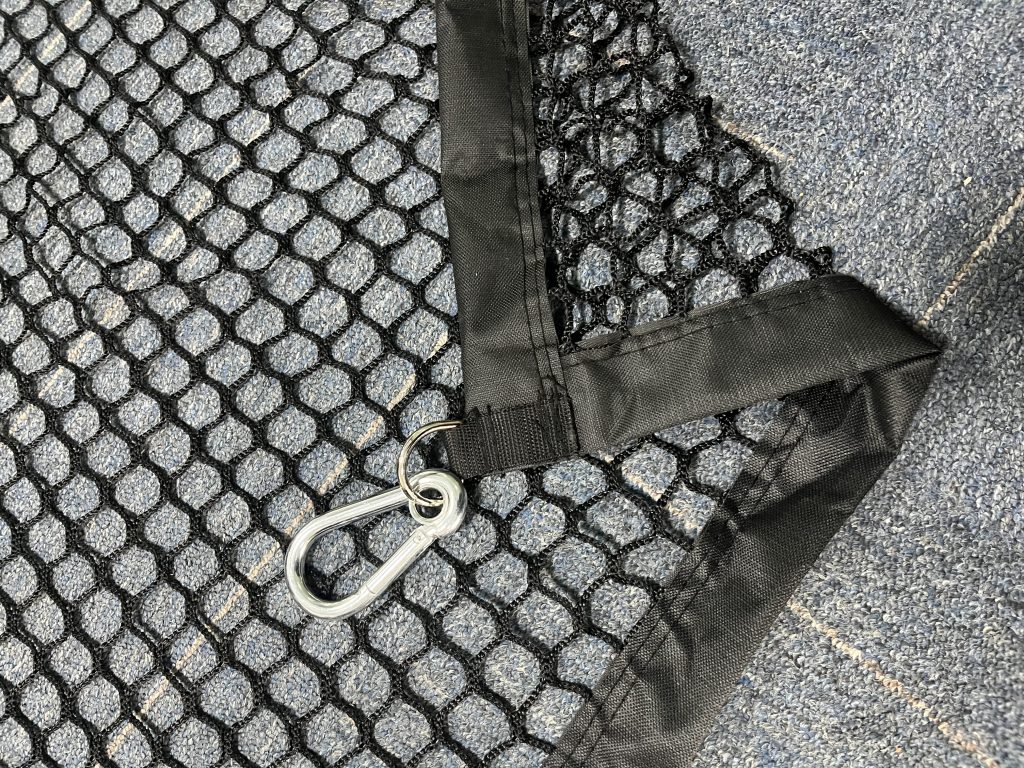
- A Visual Check: Inspect the mesh and border rope for cuts, tears, fraying, discoloration, brittleness, or other signs of damage and UV degradation.
- Hardware Inspection: Check all snap hooks, shackles, and tie ropes for deformation, corrosion, and damage. Verify that locking mechanisms function properly.
- Anchorage Check: Confirm that structural anchor points remain secure and uncompromised.
- Clearance Verification: Make sure the area below the net is clear of obstructions and that collected debris has not reduced the net’s ability to deform safely.
- Logbook: Record every inspection in an on-site logbook, including the date, inspector’s name, findings, and any corrective action taken. This logbook is an important legal record.
Maintenance and Storage: Extending the Lifespan of Your Investment
Proper care can significantly extend the useful life of a safety net system. Maintenance is generally straightforward, but it requires consistency. Minor damage, such as a cut yarn, should be repaired immediately using the repair twine and methods specified by the manufacturer. Never use wire or other unapproved materials. The net should be kept free of debris. If heavy soiling occurs, clean it with water and a mild detergent, not harsh solvents or high-pressure spray that could damage the fibers.

Storage matters just as much. When not in use, the net should be kept indoors in a dry location away from direct sunlight and heat sources. It should be protected from rodents, which may chew through fibers, and kept away from chemicals.

A net left in a pile in a sunny yard corner will degrade quickly. A net that is cleaned, inspected, and stored in a designated bag or container can often be redeployed on future projects, improving return on investment.
The Hidden Costs of Poor Installation and Maintenance
The purchase price of a safety net system is only one part of its total cost. Poor installation and poor maintenance can create much greater expenses,
including:
- Cost of Re-installation: If an inspector finds the installation non-compliant, the work must be redone, adding labor cost and causing delays.
- Cost of Premature Replacement: A net damaged through improper use or neglected maintenance may need early replacement, wiping out any initial savings.
- Cost of an Accident: This is the ultimate cost. Medical expenses and insurance are only part of it. There are also work stoppages, investigations, lawsuits, regulatory penalties, reputational damage, and the human cost of injury or death.
Investing in a quality netting system also means investing in the training, time, and discipline needed to install and maintain it properly. The two cannot be separated.
6. What Mesh Size and Configuration Do I Need?
The spacing between the strands of a net—the mesh size—may seem like a small detail, but it is a critical parameter that directly affects both function and safety. Answering this question requires careful thought about exactly what the net is supposed to catch. A mesh that is too large can make debris netting ineffective. A mesh that is too small can introduce new problems, including increased wind load. The overall configuration of the net, including liners or multiple layers, follows the same logic.
Sizing the Mesh for the Hazard: From Workers to Small Tools
The basic principle is simple: the mesh opening must be smaller than the hazard you need to contain. Applying that principle, however, requires a realistic assessment of the work happening above.
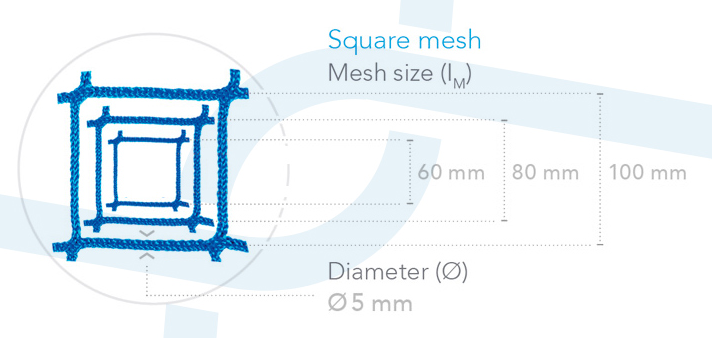
- For Personnel Safety Nets: The standards give clear limits. OSHA requires that the mesh opening not exceed 36 square inches, with no single dimension longer than 6 inches. This is intended to prevent a worker’s body, head, or torso from passing through during a fall. Because the system is meant to catch the entire person, a relatively large mesh is acceptable and even useful, since it reduces the panel’s weight and wind load.

Heavy-Duty Construction Fall Protection Work Safe Bridge Net
The Heavy-Duty Work Safe Bridge Net is a high-strength, durable, and easily installed knotless polyester mesh that ensures worker safety, prevents material falls, and maintains structural stability across bridge construction sites.
- For Debris Netting: The calculation is more site-specific. You need to think through the likely falling objects. Are workers using bolts, wrenches, rivets, or cutting tools? Could concrete spall or brick fragments fall? The mesh size must be smaller than the smallest dangerous object. A 2-inch mesh may catch a hammer but let a bolt pass through. That is why debris nets are available in a wide range of mesh sizes, from several inches down to 1/4 inch or less. For fine materials such as sandblasting grit or stucco debris, a standard debris net may not be enough.

Reinforced HDPE Scaffold Debris Containment Protection Safety Netting
Built with reinforced HDPE and a close-mesh design, this scaffold debris netting delivers durable, weather-resistant, and highly effective containment performance across demanding construction environments.
The Impact of Mesh Size on Wind Load and Visibility
There is always a trade-off when selecting a very fine mesh. Smaller openings mean less open space in the fabric. That increases the solidity ratio, which is the ratio of solid material area to total area. A net with a higher solidity ratio catches more wind.
This is not a minor issue. On a large scaffold wrapped in fine-mesh debris netting, the force created by strong wind can become enormous—potentially thousands of pounds. That wind load has to be accounted for in the engineering of the scaffold or support structure. If it is not, the entire system can fail. For that reason, when fine-mesh netting is being considered, a structural engineer should verify that the anchorage and support system can handle the increased load.
Very fine mesh can also reduce light and airflow to the work area, affecting visibility and worker comfort. Modern knitted debris nets are often designed to balance containment with airflow, but this is still an important consideration.
Liners and Dual-Net Systems for Fine Debris
What if you need the strength of a personnel-rated net while also containing very small debris? Or what if the debris is so fine that even the smallest standard mesh is too large? In these cases, liners and dual-net systems become practical solutions.

- Debris Net Liners: A common approach is to attach a separate fine-mesh liner to the primary safety net. For example, you may install a 4-inch mesh personnel net horizontally and then attach a 1/4-inch debris liner to it. This setup provides both fall protection and small-object containment. The liner must be securely attached and must not interfere with the performance of the main net.
- Pre-Lined and Hybrid Nets: Some manufacturers offer integrated systems where a fine-mesh liner is factory-sewn onto a heavier structural net. These custom netting solutions can simplify installation and improve compatibility, since the manufacturer has already addressed the connection between the layers.
- Dual-Net Systems: In higher-risk situations, two completely separate systems may be installed—for example, a horizontal personnel net below the work deck and a separate vertical debris net enclosure around the perimeter. This creates a redundant level of protection and is common in high-rise urban construction.
A Thought Experiment: Visualizing Debris Trajectories
To better understand the importance of mesh size, imagine your worksite. Now picture a worker at the highest level accidentally tipping over a bucket of bolts. Think through the path those bolts would take. Would the vertical debris net contain them? If one bounced outside the perimeter, would a horizontal net below catch it? What if the object were not a bolt but a larger crescent wrench, or a spray of plaster or paint?
This kind of mental simulation helps shift the discussion about mesh size from an abstract specification to a practical jobsite decision. It forces you to think in terms of specific, foreseeable falling-object hazards and how the netting system will actually perform.
7. What Is the True Cost of Ownership Beyond the Purchase Price?
The final question asks you to think less like a buyer and more like an asset manager. The number on the invoice for a roll of construction safety netting is only the starting point in a larger economic equation. The cheapest net is rarely the least expensive in the long run. A sound evaluation looks at the full lifecycle of the product—from acquisition and installation to maintenance, reuse potential, and eventual disposal. That total cost of ownership (TCO) is the real financial measure of the decision.
Calculating the Lifecycle Cost: Purchase, Installation, Maintenance, and Replacement
The TCO of a safety netting system includes several distinct costs over its useful life:
- Initial Purchase Price (Acquisition Cost): This is the most obvious cost, but it can be misleading when viewed alone. A lower-quality net may cost less upfront.
- Installation Cost: This includes labor required to install the system correctly. A well-designed system with clear instructions and quality hardware may reduce labor time. A poorly made system that requires adjustments or rework will increase it.
- Inspection and Maintenance Costs: These are the labor and material costs associated with ongoing inspections, cleaning, and minor repairs. A more durable net generally requires less intervention.
- Replacement Cost: This is a major consideration. If a low-cost, non-UV-stabilized net degrades halfway through a two-year project, you may end up paying twice for the product, twice for installation, and absorb project delays as well. A higher-quality net that lasts through the whole project—and perhaps beyond—can have a much lower TCO.
- Disposal Cost: While usually smaller, the cost of removing and disposing of netting at the end of its life should still be included.
When comparing options, do not stop at price per square foot. Estimate these other costs over the expected project duration. The result is often different from what the initial price suggests.
The Value of Durability and Reusability
Durability is one of the strongest drivers of low total cost of ownership. A net that resists UV damage, chemical exposure, and abrasion remains valuable longer. Consider a high-quality EN-compliant personnel safety net. These systems are typically supplied with removable test meshes. If the net is properly maintained and stored, one of those meshes can be sent to a laboratory each year for recertification. If it passes, the net may be safely reused on another project.
For example, imagine buying a premium net for $5,000 that can be used across three separate one-year projects. Your effective cost per project drops to about $1,667. Now compare that with a lower-quality net costing $2,500 that must be discarded after one project. The cheaper net is actually 50% more expensive on a per-project basis. That is the value of lifecycle thinking. Investing in durability and reusability can deliver substantial long-term savings.
The Economic Argument for Quality: The Cost of Failure
The most important part of the TCO calculation is the cost of failure. This is a risk-based cost. An accident may not occur on every project, but the potential cost of a single serious incident is so high that it has to be considered at the time of purchase.

Consider the potential consequences of a falling-object incident that seriously injures a member of the public:
- Immediate project shutdown and investigation.
- OSHA/HSE/WorkSafe fines that can reach hundreds of thousands of dollars.
- A multi-million-dollar civil lawsuit from the injured party.
- Sharp increases in insurance premiums for years afterward.
- Lasting damage to the company’s reputation, affecting future contract opportunities.
When you compare these potential multi-million-dollar consequences with the relatively small savings from buying substandard, non-compliant netting, the decision becomes straightforward. The premium paid for a high-quality, certified, durable construction safety netting system is not merely a cost. It is one of the most effective forms of insurance a contractor can buy. It is an investment in risk control, operational continuity, and corporate credibility.
Frequently Asked Questions
How often should construction safety netting be inspected?
Under OSHA standards, safety nets must be inspected at least once a week for wear, damage, and other deterioration. They must also be inspected after any event that could affect their integrity, such as a major storm or the impact of a falling object.
All inspections should be documented in an on-site logbook.
Can I reuse safety netting from a previous project?
Yes, but only if its integrity can be verified. Personnel safety nets, especially those compliant with EN standards, are often supplied with removable test meshes. One of these sample patches can be sent to a laboratory to confirm that the net still retains the required strength after use and storage. Never reuse a net that shows visible damage, has already arrested a fall, or cannot be recertified.
What’s the difference between knotted and knotless netting?
Knotted netting is made by tying individual strands together at each mesh intersection. It is a traditional and strong construction method, but the knots can become abrasion points and may feel harsher in a fall arrest event. Knotless netting is woven or knitted continuously, creating a smoother surface with fewer stress concentrations at the intersections. Modern high-strength knotless netting often offers an excellent balance of strength, durability, and a softer catch.
Does the color of the netting matter?
Although safety performance is the primary concern, color can have practical value. High-visibility colors such as orange or yellow make the net more noticeable to workers and reinforce awareness of the safety system. White or black nets may be chosen for aesthetic reasons on long-term projects in public view. Darker colors may offer slightly better UV resistance, but dedicated UV inhibitor treatment remains far more important.
How do I store safety netting properly?
Proper storage is essential to preserving the net’s strength. The net should be cleaned of debris, allowed to dry completely, and then stored in a cool, dry place away from direct sunlight.
It should be packed in a designated opaque, waterproof bag or container to protect it from UV exposure, moisture, chemicals, and pests such as rodents.

What are the signs that a net needs to be replaced?
A net should be removed from service immediately if it shows clear signs of damage. These include cuts, tears, excessive abrasion, or broken strands. Discoloration, stiffness, or brittleness may indicate advanced UV degradation. Any net that has arrested a fall should also be taken out of service, because the impact may have caused internal fiber damage that is not immediately visible. When there is doubt, the safer choice is replacement.
Is debris netting required on all construction sites?
Requirements vary based on location and the type of work being performed. However, whenever work at height creates a risk of falling objects that could endanger people or property below, some form of containment is generally required under site safety obligations. In many urban jurisdictions, vertical debris netting on scaffolding is explicitly required by local code for projects above a certain height.
Conclusion
When approached with the seriousness it deserves, the process of selecting and purchasing construction safety netting becomes more than a basic commercial transaction. It reflects a company’s safety culture and its ethical commitment to workers and the public. The seven questions outlined in this guide are not simply a checklist. They are a structured way to think through risk, technology, compliance, and responsibility. By moving from standards to hazards, from materials to performance testing, and from installation to long-term value, a project manager can approach the market with greater clarity and confidence.

Read our most popular articles.
👉 Download our free product categories
👉 5 Reasons Why Durable, Long-Lasting Products are the New Definition of “Cost-Effective”
👉 5 Proven Factors in Chinese-Made Nets vs. Local Suppliers: An Honest Cost-Benefit Analysis
👉 The 5-Pillar Framework for OSHA Fall Protection Compliance: A 2026 Contractor’s Guide
👉 The True Cost of Cheap Netting: A Total Cost of Ownership Analysis
👉 The Essential 7-Point Checklist for Ordering Custom Made Cargo Nets in 2026
👉 Beyond Breaking Strength: A Comprehensive Guide to Netting ion, Safety, and Risk Management