
Key point of this guide
- Always inspect your netting, anchor points, and truck bed before each use for any signs of wear or damage.
- Distribute cargo weight evenly, placing heavier items low and centered to maintain vehicle stability.
- Drape the net to fully cover the load, ensuring no portion of the cargo is exposed at the edges.
- Use a symmetrical “star pattern” when tightening to apply consistent, even pressure across the load.
- The complete Step-by-Step: How to Properly Secure a Flatbed Load with Cargo Netting is a process—not a single action.
- Perform in-transit checks, especially within the first 50 miles, as loads can settle and shift.
- Never use damaged equipment; the cost of failure far exceeds the cost of replacement.
Understanding the Stakes
Before handling cargo or deploying a net, it is critical to understand the forces involved and the responsibility that comes with securing a load on a flatbed trailer. This is not simply a matter of tying cargo down.
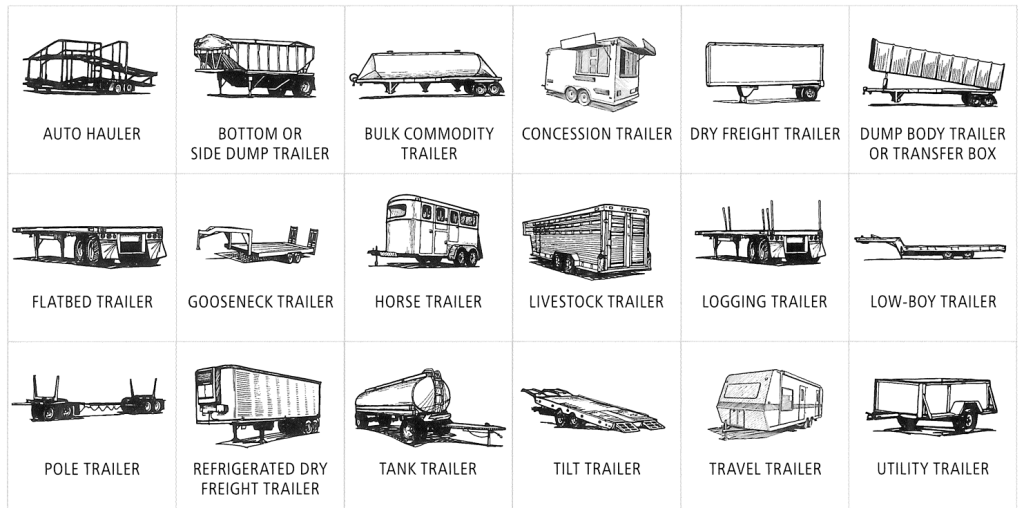
Think of the flatbed as a moving platform carrying mass with inertia—the tendency to resist changes in motion. During acceleration, the cargo resists being left behind. Under braking, it continues moving forward. During turns, it pushes outward. The role of any securement system—chains, straps, or netting—is to counteract these forces.
The forces involved are substantial. FMCSA cargo securement regulations require systems to withstand a forward force of 0.8 g (80% of the cargo’s weight) and a rearward and lateral force of 0.5 g (50% of the cargo’s weight) (Federal Motor Carrier Safety Administration, 2013). In practical terms, 0.8 g corresponds to hard braking.
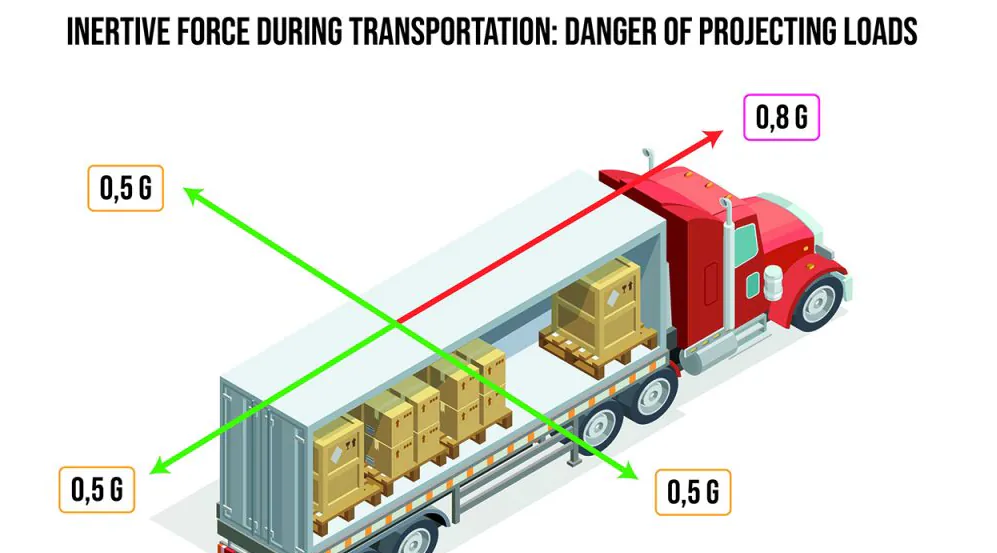
Your securement system must be capable of holding the full load under those conditions. This is not theoretical—it is the standard for preventing failure.
A Tale of Two Nets: Choosing the Right Tool for the Job
Not all cargo nets perform the same. Selecting the right net requires an understanding of material properties, construction, and the specific characteristics of the load. The two most common materials—polyester and nylon—offer distinct performance advantages.
Polyester is the dependable workhorse of cargo securement. Its defining characteristic is low stretch, or low elongation. Once tension is applied, a polyester net tightens quickly and stays tight with minimal give. That makes it especially effective for heavy, rigid loads that need to remain firmly in place with little movement. Polyester also offers excellent resistance to UV exposure and absorbs very little water, so its strength remains stable in wet conditions.
Nylon, by contrast, is more elastic. Think of it as a much stronger, industrial-grade rubber band. That stretch allows it to absorb shock loads more effectively. If a load may shift and settle, or if it has some flexibility of its own, a nylon net can adapt and maintain tension where a stiffer polyester net may loosen. That same elasticity, however, also means nylon requires more careful tensioning to ensure the load is truly contained. Nylon is also more vulnerable to long-term UV degradation and can lose up to 15% of its strength when saturated with water.
| Feature | Polyester Cargo Netting | Nylon Cargo Netting |
|---|---|---|
| Stretch / Elongation | Low (approx. 3%) | High (approx. 6-10%) |
| Primary Advantage | Maintains tension with minimal give, preventing load shift. | Absorbs shock loads and conforms to shifting cargo. |
| Best For | Heavy, rigid, stable loads (e.g., crates, machinery). | Irregularly shaped items, bundled goods, shock-sensitive loads. |
| Water Resistance | High. Absorbs very little water, maintains strength. | Lower. Can absorb water and lose some strength when wet. |
| UV Resistance | Excellent. Resists degradation from sunlight well. | Good, but less resistant than polyester over the long term. |
| Abrasion Resistance | Very Good. | Excellent. |
| Common Mistake | Consequence | Corrective Action |
|---|---|---|
| Using a Damaged Net | Sudden failure under load, complete loss of containment. | Inspect every strap and stitch before each use. Discard if frayed, cut, or sun-damaged. |
| Uneven Tensioning | Creates high-stress points on the net and allows parts of the load to remain loose. | Tighten anchor points in a cross-pattern, similar to tightening lug nuts on a wheel. |
| Ignoring Weight Distribution | Poor vehicle handling, risk of rollover, and excessive strain on axles and tires. | Place heaviest items low and centered over the trailer’s axles. |
| Insufficient Coverage | Items at the edge of the load can escape from under the net. | Use a net large enough to drape over the sides of the cargo by at least several inches. |
| Attaching to Weak Points | Anchor point failure, causing the entire net to loosen instantly. | Only use designated, rated anchor points on the trailer frame or rub rail. |
Point 1: The Foundation of Safety – Pre-Trip Preparation and Cargo Assessment
Properly securing a flatbed load with cargo netting begins well before the net is unfolded. It starts with a disciplined inspection of every component involved. Skipping this step undermines the entire process—no matter how carefully the later steps are handled, the system is already compromised. This preparatory phase centers on three areas: equipment, cargo, and net selection.

Inspecting Your Equipment: The Net, the Truck, and the Anchors
Your cargo net is the primary tool in the system, and it deserves a full inspection before every use. Lay it out completely on a clean, dry surface. Start with a visual check. Look for cuts, tears, or significant fraying in the webbing. Pay close attention to the stitching, especially where straps intersect or hardware is attached. Broken or pulled threads are clear signs of weakening.
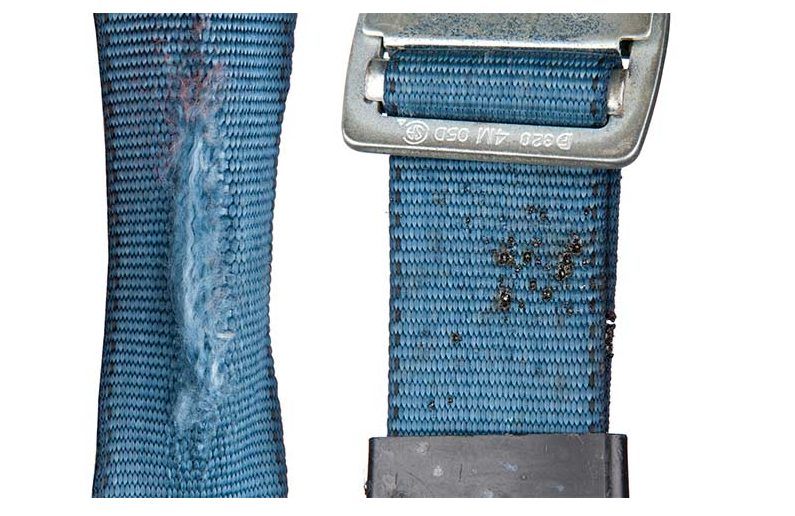
Then move to a hands-on inspection. Run gloved hands along the webbing. If it feels brittle or stiff, that may indicate UV degradation, where sunlight has broken down the synthetic fibers and reduced their strength. Check for melted or glazed spots, which suggest friction damage. Inspect all hardware—hooks, D-rings, ratchets, and cam buckles—for cracks, bending, or heavy rust that could affect performance. A ratchet that does not engage cleanly or a hook that has been bent open should be taken out of service immediately.

The inspection should not stop with the net. Check the flatbed trailer itself. The deck should be clean and free of debris, oil, or ice that could reduce friction and make the cargo more likely to slide. Most importantly, inspect the anchor points you plan to use. These may include stake pockets, D-rings welded to the frame, or the rub rail itself. Pull on them. Check for cracked welds, signs of metal fatigue, or any indication that they are not securely attached to the trailer structure. A failed anchor point is just as dangerous as a torn net.
Understanding Your Cargo: Weight, Shape, and Stability
Once the equipment checks out, turn your attention to the cargo. It is not enough to describe it broadly as “machine parts” or “building materials.” You need a working understanding of its specific characteristics. Start with the total weight, since that determines the minimum required Working Load Limit (WLL) for the securement system. Then consider the cargo form. A single heavy crate behaves very differently from a pallet of loose bags.

Evaluate the center of gravity. A tall, top-heavy load is less stable by nature and will exert more leverage on the securement system during braking and turns. Look for sharp edges. A metal corner can act like a blade against webbing under tension, so corner protectors should be part of the plan anywhere sharp contact points exist. Also consider the surface condition. Smooth stone or plastic-wrapped pallets offer very little friction, meaning the securement system will be doing nearly all the work of resisting movement. In those situations, friction mats under the cargo can be a smart supplemental measure.
Choosing the Right Cargo Netting
With a clear understanding of your equipment and cargo, you can make an informed choice about which net to use. The first factor is the Working Load Limit. The total WLL of the securement system must meet or exceed the regulatory requirements for the load. If the cargo net is being used as a single unit over the load, its rating must be appropriate for that application.
Net size matters just as much. One common mistake is using a net that is too small. A properly sized net should cover the top of the load and drape down the sides enough to provide real containment. A net stretched tightly across only the top of a tall load does little to prevent side items from working loose. You need enough material to wrap the load, not just cap it.
Mesh size should also match the cargo. Large boxes may be fine under a wider mesh, but smaller, loose items such as firewood or sports gear require tighter openings to prevent pieces from slipping through. That detail is essential to complete containment. Choosing a properly sized, properly rated heavy-duty truck netting is not just a purchase decision—it is part of doing the job safely and compliantly.
Point 2: The Art of Balance – Strategic Cargo Placement and Distribution
Once the equipment and cargo have been assessed, the next step is placing the load on the trailer. This is not a simple matter of filling space. It is a deliberate exercise in stability engineering. Load placement directly affects braking, handling, and overall vehicle safety. Even the best securement system cannot fully compensate for poor weight distribution.
The Principles of Weight Distribution
The basic goal is to keep the center of gravity as low and as centered as possible. Heavy items should always be placed directly on the deck, never stacked on top of lighter cargo. The same principle that keeps a tightrope walker stable—a lower center of gravity—applies to a flatbed trailer.
The weight must also be distributed in a way that complies with axle limits and preserves vehicle control. Too much weight at the front or rear of the trailer can overload specific axle groups, leading to fines and unsafe handling.
A rear-heavy trailer can reduce weight on the tractor’s drive axles, lowering traction and even causing the front of the trailer to lift under acceleration. A front-heavy trailer can overload the drive axles and make steering feel heavy and sluggish. The best arrangement places the majority of the weight between the trailer’s axle groups. When dealing with multiple pieces of varying weight, even a quick sketch or rough load plan can help prevent problems before loading begins.

Grouping and Blocking Irregular Items
Many loads are not made up of neat, uniform crates. More often, you are dealing with items of different shapes and sizes. The objective is to create a stable, unified load out of those separate pieces. Group similar items together. If possible, build a shape with relatively flat sides and a flat top. That gives the net a better surface to bear against and improves overall containment.

When the cargo cannot be arranged into a clean block, blocking and bracing become essential. Blocking means placing sturdy lumber or other restraining material against the base of the cargo to stop it from sliding. Bracing helps prevent tipping. A tall, narrow piece of machinery, for example, may be strapped down but still prone to tipping. Angled braces running from the top of the cargo down to the trailer deck create a triangular support structure that resists that motion. The net should be the final layer of restraint, not the only measure holding an unstable load together. It works best when the load is already reasonably stable on its own.
Creating a Stable Foundation
The first layer of the load is the foundation for everything above it, so it must be solid and non-shifting. If pallets are involved, make sure they are in good condition. A damaged pallet can collapse and destabilize the entire stack. Pack the bottom layer tightly, leaving as little empty space as possible. Gaps invite movement, and movement leads to load consolidation, which loosens the securement system during transit.
If the cargo includes round items such as pipes or barrels, they must be cradled to prevent rolling.

That can be done with chocks or by arranging them in a nested pattern. For example, a second layer of pipes should sit in the grooves created by the first layer. This interlocking arrangement adds significant stability. The goal is to create a single, unified mass before the net ever goes on. By the time the cargo is placed, you should be able to look at it and feel confident that it is internally stable and well balanced. The cargo net’s role is to keep that stable mass secured to the trailer—not to create order out of a chaotic load.
Point 3: The Initial Embrace – Draping and Positioning the Cargo Net
With the cargo assessed, arranged, and stabilized, it is time to position the net. This step is more than simply throwing a net over the load. It is a controlled process that sets up the entire securement system.
Proper placement ensures full coverage, prevents damage, and creates the geometry needed for even tensioning later. Rushing this step often results in unsecured gaps, uneven pressure, and a weaker overall setup.
Unfolding and Orienting the Net
Start by making sure you have enough room to work. If possible, lay the net out fully on the ground next to the trailer. This gives you a final chance to inspect it and makes it easier to identify the center and corners before lifting it into place. Many nets include tags or colored stitching to help with orientation. Match the length and width of the net to the dimensions of the load before lifting it.

Large, heavy-duty nets can be awkward to handle. In many cases, this is best done with two people. If you are working alone, one effective method is to fan-fold the net like an accordion. That allows you to carry it as a compact bundle to the center of the load, set it down, and then unfold it gradually toward the front, back, and sides. This approach is more controlled than trying to throw an entire unfolded net over the load and reduces the risk of the webbing catching on the trailer or the ground.
Centering the Net Over the Load
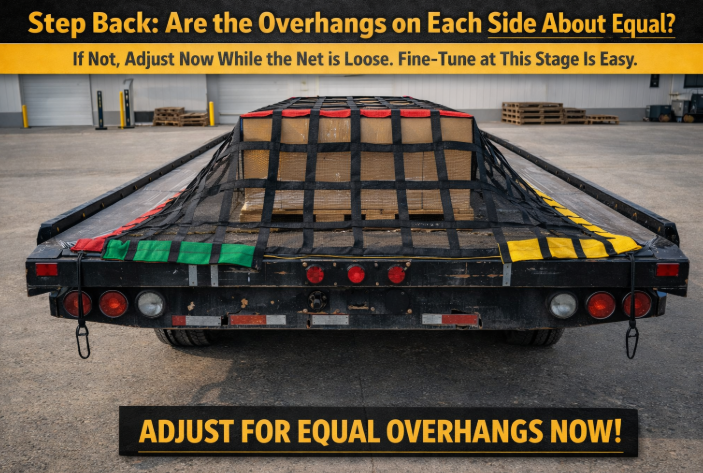
Centering matters. The geometric center of the net should sit over the visual center of the cargo’s mass. This is what allows balanced forces once tensioning begins. If the net is off-center, one side will have more slack than the other, and the attachment straps will sit at uneven lengths and angles. When tightened, the net will pull harder on one side, creating pressure points and leaving other areas loose.

Take a step back and look at the trailer from all sides. Is the overhang roughly equal on each side? If not, shift the net now while it is still loose. Small adjustments at this stage are easy. Trying to correct a poorly centered net after the straps are connected is much harder and usually less effective. That pause to verify alignment is part of a professional securement routine.
Ensuring Full Coverage and Avoiding Snags
The purpose of the net is complete containment. It should extend over the top and down the sides of the cargo. One common and dangerous mistake is leaving the edge of the net at the upper edge of the load. That offers almost no side restraint, which means items at the edge can work their way out from underneath. As a practical rule, the net should drape at least halfway down the side of the outermost layer, and often more.
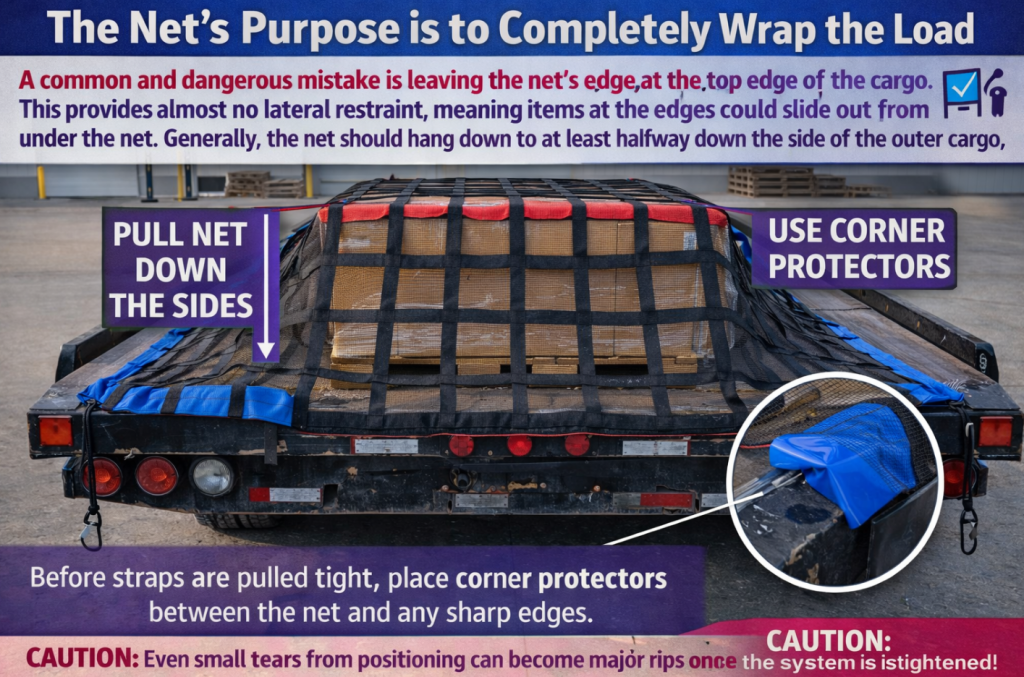
As you pull the net down over the sides, watch carefully for snag points. Sharp corners, protruding bolts, and irregular cargo surfaces can catch the webbing and tear it. This is where corner protectors become important. Place them between the net and any sharp edge before the webbing settles under tension. Also watch for trailer-related snag points and guide the net around them carefully. A small tear created during positioning can turn into a full failure once the system is tensioned. Careful handling at this stage protects the net and ensures it is ready to do its job.
Point 4: Making the Connection – Attaching and Securing Anchor Points
Once the cargo net is properly draped and centered over the load, the next step is connecting it to the trailer. This is where the net shifts from potential restraint to actual securement. The way the hooks, straps, and tensioning hardware are attached has a direct impact on the strength of the system. A strong net connected to weak points—or attached in a careless pattern—creates only the illusion of security.
Identifying and Inspecting Anchor Points on the Flatbed
Before attaching the first strap, you need a plan. Walk around the trailer and identify the anchor points you intend to use. As established during the pre-trip inspection, these must be rated, structural points. The most common options are stake pockets, the rub rail, and any installed D-rings or designated anchor assemblies.
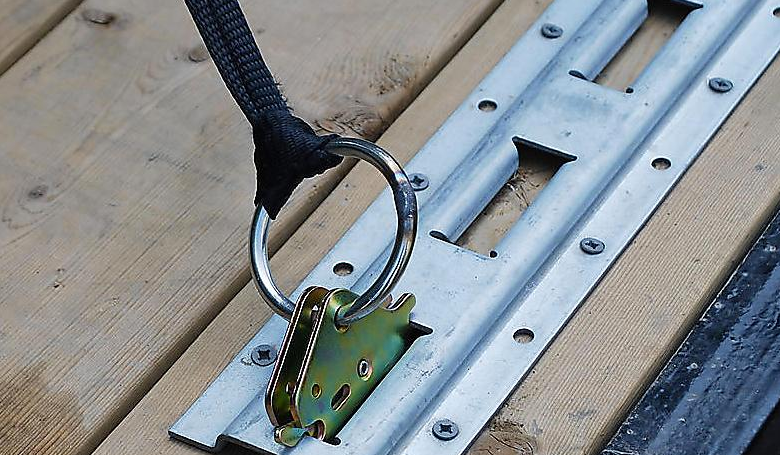
Never connect a cargo hook to a non-structural component such as a side panel, tarp hook, suspension part, or axle component. Those parts are not designed to handle cargo securement forces and may fail under load. If you are using the rub rail, make sure the hook style is intended for that application. A standard S-hook may not seat securely and can slip off under tension. A flat-profile hook made for rub rails is the safer choice. Before attaching anything, confirm once more that the anchor points are free from cracking, deformation, and excessive rust. You are about to rely on them to hold substantial force.
The Correct Way to Use Hooks, Ratchets, and Cam Buckles
The hardware on the cargo net straps is what allows you to apply and hold tension, so it needs to be used correctly. When attaching a hook, make sure it is fully seated in the anchor point. The hook tip should point away from the direction of pull, not into it, so it is less likely to come loose if the strap temporarily relaxes.
Your net may use either ratchet buckles or cam buckles. A cam buckle is a simple tensioning device that relies on friction. You pull the webbing through it, and a spring-loaded cam pinches the strap in place. They are quick and straightforward to use, but they depend on hand force alone, so they are generally better suited to lighter-duty applications.
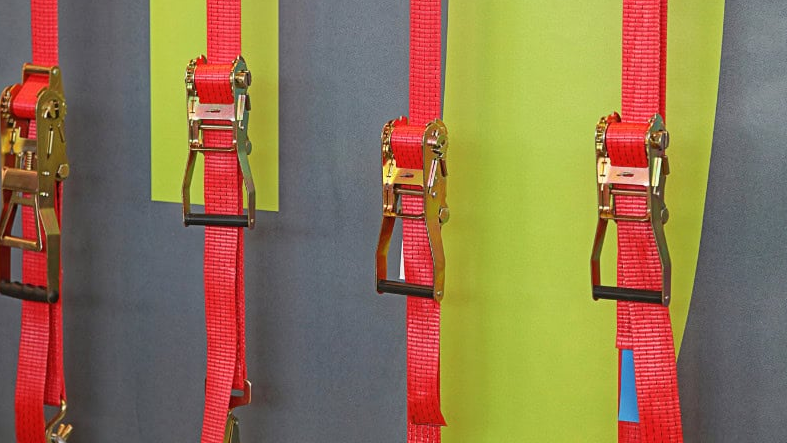
A ratchet buckle provides mechanical advantage, which makes it possible to apply much higher tension. To use it correctly, feed the loose end of the strap through the slot in the spool or take-up mandrel and remove as much slack as possible by hand first. Then operate the handle back and forth. Each stroke rotates the spool and pulls in more webbing. The webbing should wrap evenly on the spool. If it bunches to one side, both the strap and ratchet can be damaged.
Achieving Symmetrical Attachment Patterns
Do not attach the straps sequentially as you walk around the trailer. Even pressure depends on a symmetrical, opposing attachment pattern. If the net has twelve straps, for example, a good starting point is the four corners. Attaching those first helps square the net on the load.
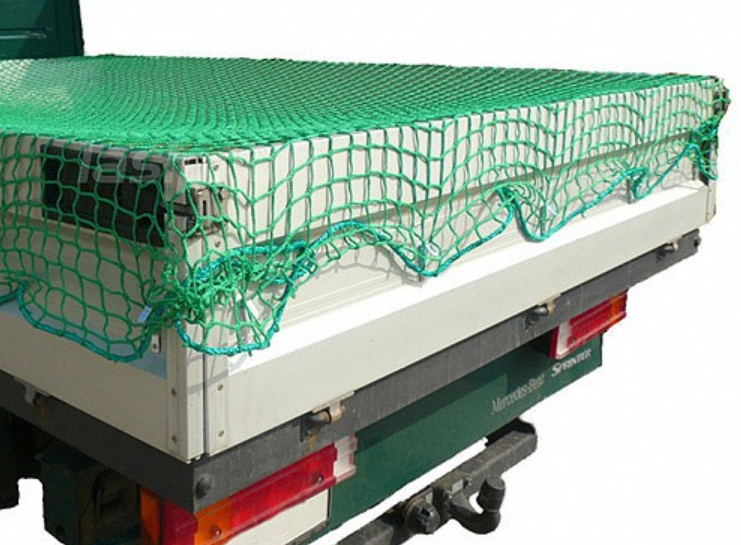
After the corners are connected, move to the center straps on the long sides, then to the center straps at the front and back. This opposing pattern distributes the initial pull evenly around the perimeter and helps prevent the net from being dragged off-center as the connections are made. At this stage, the goal is not final tension. You are simply getting all attachment points connected, removing obvious slack, and preparing the system for controlled tensioning in the next step. This methodical layout is what makes balanced securement possible.
Point 5: The Science of Tension – Applying Progressive and Even Force
This is the point where the system begins to do its real work. With the net positioned and all anchor points attached, the next task is applying the force that will hold the cargo in place against the forces of transport. Tensioning is not a matter of brute force. It is a controlled process designed to create even, reliable pressure across the load. Too little tension allows movement. Too much can damage both the cargo and the equipment. The goal is balanced restraint.
The “Star Pattern” Technique for Tensioning
The most effective way to build even tension is to use a crisscross approach similar to the star pattern used when tightening lug nuts. You do not tighten each point one after another around the load. Instead, you tighten opposing points in sequence so the force builds evenly.

Start with one corner strap and apply some initial tension—not the final level, but enough to seat the hook securely and remove obvious slack. Then move to the diagonally opposite corner and apply a similar amount of tension. Continue to the third corner and then its opposite. Once the corners have been tensioned lightly in this cross-pattern, move to the middle straps on opposite sides, then front and back, repeating the same approach.
Work in rounds rather than trying to fully tighten any one strap in a single pass. On the first round, you might bring every strap to roughly 25% of final tension. On the next pass, bring them up evenly again. This progressive approach allows the net to settle onto the load in a controlled way and reduces the risk of overloading one section while another remains loose. Done properly, it creates a balanced state where the load is evenly contained.
Avoiding Over-Tensioning and Damage
One of the most common mistakes in load securement is assuming tighter is always better. It is not. Every part of the system—webbing, stitching, hardware, and anchor points—has a Working Load Limit. Exceeding that limit through over-tensioning can cause failure. Using a cheater bar, such as a pipe over a ratchet handle for extra leverage, is unsafe and should never be part of the process.

Over-tensioning can also damage the cargo. Fragile crates can be crushed, pallets of boxed goods can be deformed, and softer materials can be permanently compressed or cut at the edges. The goal is not to squeeze the cargo as hard as possible. The goal is to remove slack and apply enough pressure that the load cannot shift. The webbing should feel taut, but the system should not be forced beyond what is necessary. Good tensioning is controlled, not aggressive.
The Role of Supplemental Straps
Cargo nets are excellent containment tools, especially for irregular loads and mixed freight. But for very heavy or tall cargo, a net alone may not provide enough direct clamping force or forward and rearward restraint to meet performance requirements. In those cases, the best practice is to use the cargo net as part of a broader system that includes individual ratchet straps.
For example, you may place two or four heavy-duty straps directly over the load to provide the primary downward force and forward/rearward restraint. The customizable cargo net then goes over the full assembly, adding side restraint and, just as importantly, containing smaller pieces that could otherwise come loose.

This layered system provides redundancy. The straps do the heavy restraining work, and the net ensures comprehensive containment. For complex loads, that is often the most reliable setup.
Point 6: The Final Verification – Inspection and Securing Loose Ends
Once tension has been applied, the job is not quite finished. The final stage before departure is verification. This is where you check the system as a whole, confirm that the load is stable, and make sure every loose end is secured. It is also the last opportunity to catch an issue before the truck is on the road.
The “Push-Pull” Test: A Manual Check for Movement
There is no substitute for a physical check. Go to each corner of the load and to several points along the sides. Put your hands directly on the cargo—not on the net—and try to push it forward, backward, and sideways. Try lifting where appropriate. Any rocking, clunking, or shifting is a warning sign.

If you can create movement by hand, the forces of braking and turning will multiply that movement dramatically once the vehicle is in motion. If you find any instability, stop and identify the cause. A section may need more tension, or the cargo may have settled into a void that requires repositioning, blocking, or added dunnage. In some cases, you may need to loosen part of the system, correct the problem, and re-tension it. Do not leave until the load feels like a single, stable unit integrated with the trailer.
Securing Strap Tails and Excess Netting
Loose strap tails and excess netting are not minor housekeeping issues—they are real hazards. At road speed, trailing strap ends can whip violently, damaging cargo, fraying themselves, striking nearby vehicles, or getting caught in wheels, suspension parts, or the driveshaft. Any of those outcomes can turn into a serious roadside incident.
There are several acceptable ways to manage excess strap length. One common method is feeding the tail back through the ratchet and wrapping it neatly around itself. Another is rolling or folding the excess webbing and securing it with a bungee cord, zip tie, or dedicated strap retainer. The same principle applies to loose netting. If portions of the net hang below the rub rail, gather and secure them so they cannot snag on road debris or rotating equipment. A clean setup is almost always a safer setup.
Documenting Your Securement Process
In some operations—especially when hauling high-value or hazardous cargo—it makes sense to document the final securement. That may be as simple as taking a few photos of the completed load from several angles with a phone. Those images create a time-stamped record showing that the cargo was properly secured before departure.

This kind of documentation can be valuable during inspections or after an incident. It shows due diligence and can help protect both the operator and the company if questions arise later. While not necessary for every load, it is a practice that reflects a strong professional standard and a proactive approach to risk management.
Point 7: The Journey Itself – In-Transit Checks and Diligent Adjustments
Load securement does not end when the truck pulls out of the yard. A flatbed load remains dynamic throughout the trip. Vibration, road shock, swaying, weather, and natural settling can all affect the stability of the cargo and the tension in the securement system. A load that was perfectly tight at departure can loosen significantly after an hour on the road. That is why in-transit checks are not optional—they are part of the job.
The Critical First 50 Miles
FMCSA regulations require drivers to inspect cargo and securement devices within the first 50 miles (or 80 kilometers) of a trip (Federal Motor Carrier Safety Administration, 2013).
That rule exists for a reason. The first part of the trip is when most settling happens. As the vehicle starts moving, vibration and motion allow the load to compact slightly and settle into any small voids that were present when it was first secured.

Even minor settling can reduce tension on both the cargo net and any supplemental straps. A strap that felt extremely tight at departure may show noticeable slack after just a short distance. Pull over in a safe location such as a rest area or a wide, stable shoulder. Walk the full perimeter of the trailer, repeat the push-pull test, and check the tension on every strap. It is very common to need a few additional ratchet clicks during this first stop. In many cases, this is the most important inspection of the entire trip.
Establishing a Regular Inspection Schedule
After the first 50-mile check, the responsibility continues. Regulations require additional inspections whenever there is a change in duty status, or after 3 hours of driving or 150 miles (240 kilometers), whichever comes first. That is the legal minimum. In practice, many professionals inspect more frequently if the road has been rough, the weather has changed, there has been heavy braking or sharp maneuvering, or something simply feels off.

These follow-up checks should be treated with the same seriousness as the pre-trip inspection. Walk the trailer. Look at the net. Has it shifted? Are there signs of new abrasion or stress? Look at the cargo. Has anything moved? Put your hand on each strap. Is it still tight? Check that hooks remain seated correctly and that all loose ends are still secured. Consistent, disciplined inspections catch small problems before they become major failures.
Responding to Shifting Loads or Loose Netting
If an in-transit inspection reveals a major problem—a loose strap, a torn net, or visible cargo movement—you need to stop and correct it immediately. This is not something to postpone until the next scheduled break. At that point, the load is actively unsafe, and continuing to drive means accepting an unacceptable level of risk.
Assess the root cause, not just the symptom. Did a hook slip? Did a ratchet back off? Did the cargo shift because it was not properly blocked in the first place? Simply re-tightening the visible loose point may not solve the real problem. You may need to release part of the system, reposition the cargo, add blocking or dunnage, and secure the load again from scratch. That can be frustrating, but it is the only responsible response. Carrying spare straps, extra dunnage, and the right tools can make the difference between a short delay and a long roadside shutdown.
Frequently Asked Questions (FAQ)
What are the most common mistakes people make when using cargo netting?
The most common mistakes include using a damaged or degraded net, selecting a net that is too small for the load, and failing to achieve even tension across the system. Many operators also overlook the need for corner protectors on sharp-edged cargo, which can cut the webbing under load. Another serious mistake is attaching hooks to non-structural parts of the trailer instead of rated anchor points.
How do I know how tight to make the cargo net?
The goal is snug and secure—not crushed. You want enough tension to remove all slack and prevent the cargo from moving when you push or pull on it. The webbing should feel taut, but you should not need excessive force or cheater bars to get there. Over-tensioning can damage both the cargo and the net. Using a progressive, star-pattern tightening method is the best way to arrive at the right balance.
Can I repair a torn cargo net?
For safety and liability reasons, field repairs on load-bearing cargo nets are not recommended. The webbing and stitching are engineered to meet specific strength ratings, and an improvised repair cannot reliably restore that performance. A patched area becomes a critical weak point. If a net has a cut, major tear, or broken stitching, it should be retired from service and replaced.
What do the regulations (like FMCSA) actually require for a cargo net?
The regulations are performance-based. They do not require one specific tool, but they do require that the cargo securement system be able to withstand defined forces: 0.8 g forward and 0.5 g sideways and rearward. The cargo must also remain fully contained. When a net is used, its manufacturer-rated Working Load Limit must be appropriate for the load, and it must be applied in a way that prevents any part of the cargo from shifting or falling from the vehicle.
How often should I replace my cargo net?
There is no fixed replacement schedule for cargo nets. Service life depends on frequency of use, exposure to sunlight, chemical exposure, abrasion, and general handling conditions. A net should be replaced immediately if it shows cuts, holes, major fraying, brittle fibers, or damaged hardware. The only reliable way to judge whether a net is still safe is to inspect it thoroughly before each use.
Is a cargo net enough on its own for all loads?
Not always. Cargo nets are excellent for containment and for securing irregular or loose items, but they may not provide enough direct clamping force for very heavy, dense loads. In those cases, the best practice is to use the net as part of a larger securement system that includes heavy-duty ratchet straps to provide the primary downward and forward/rearward restraint. The net then acts as the containment layer.
What is the difference between Working Load Limit (WLL) and break strength?
Break strength is the amount of force that causes a new piece of equipment to fail. Working Load Limit (WLL) is the maximum force that equipment should ever experience in normal use. WLL is only a fraction of break strength—often one-third—to provide a necessary safety margin. Securement calculations should always be based on WLL, never on break strength.
The Ethical and Practical Imperative of Securement
Completing the step-by-step process of properly securing a flatbed load with cargo netting is more than a technical task. It is the execution of a duty of care. Every truck on the road operates in shared public space, and the condition of that truck—including its load—reflects the operator’s respect for everyone around it. The practices outlined here, from careful inspection to balanced loading and disciplined in-transit checks, are not just operational suggestions. They are the practical expression of a professional commitment to prevent harm.
A load secured with this level of discipline reflects an operator who understands that transport work is inseparable from public safety. The real objective is not just moving cargo from point A to point B. It is doing so without incident, with the goods intact and the public protected every mile of the way. That level of diligence is what defines professionalism in the transport industry.

Read our most popular articles.
👉 Download our free product categories
👉 A Practical 3-Step Guide: How to Calculate the Correct Cargo Net Size and Capacity for Your Load
👉 Securing the Load: A 5-Step Guide to Mastering DOT/FMCSA Cargo Regulations
👉 5 Expert-Identified Risks: The Hidden Costs of Using Low-Quality Cargo Netting
👉 The Essential 7-Point Checklist for Ordering Custom Made Cargo Nets in 2026
👉 The Ultimate Guide to Choosing the Right Cargo Netting for Your Fleet