
The movement toward sustainable gardening represents a significant shift in horticultural philosophy, driven by a growing awareness of ecological fragility and a desire for healthier, self-sufficient food systems. This article examines the critical function of netting within this paradigm.\
It analyzes how various forms of netting—including pest exclusion nets, shade cloths, and trellis systems—serve as foundational tools for sustainable practice. By providing a physical barrier against pests, netting obviates the need for chemical pesticides, thereby protecting soil health, water quality, and local biodiversity.
Furthermore, specialized netting mitigates the harsh effects of climate change, such as extreme sun exposure and water scarcity, by creating stable microclimates that conserve resources and reduce plant stress. The use of trellis netting for vertical gardening is also explored as a method for maximizing spatial efficiency and crop yields in gardens of all sizes.

The analysis concludes that netting is not merely an accessory but an integral component, enabling gardeners to achieve resilience, productivity, and ecological harmony.
The Philosophical Grounding of Sustainable Gardening
Sustainable gardening is less about techniques and more about a shift in mindset: instead of controlling nature, we reconnect with it and take responsibility for our environment. Traditional approaches treated nature as something to dominate—using chemicals to kill pests and relying on synthetic inputs—leading to soil damage, pollution, and biodiversity loss.
In contrast, sustainable gardening views the garden as an interconnected ecosystem. Soil is alive, pests signal imbalance, and the gardener becomes a steward rather than a controller. The goal is not just to grow crops, but to support long-term ecological health while producing food—making simple tools like netting meaningful within this holistic approach.
Diagnosing the Gardener’s Dilemma: Pests, Climate, and Inefficiency
Every gardener, from the novice with a few pots on a balcony to the seasoned homesteader with sprawling plots, faces a trinity of fundamental challenges.
The Chemical Conundrum: Beyond Pesticides
The most immediate and visceral challenge for many is the relentless pressure from pests. The conventional, reflexive answer for decades has been to reach for a bottle of pesticide.
However, this approach is a classic example of a solution that creates more profound problems. Chemical pesticides are often indiscriminate, killing beneficial insects—like pollinators and predators that naturally control pest populations—alongside the targeted pests. This can create a “pesticide treadmill,” where the destruction of natural predators leads to a resurgence of pests, requiring even more potent chemical applications. These substances can seep into the groundwater, get carried into streams and rivers, and harm aquatic life, birds, and other wildlife. Furthermore, concerns about pesticide residues on the food we eat are valid and growing. The sustainable gardener seeks a way out of this chemical arms race, a method to protect their crops that does not poison the very environment they are trying to cultivate.
The Unpredictable Climate: Water Scarcity and Extreme Weather
The second great challenge is the increasing volatility of our climate. The stable, predictable seasons that gardeners once relied upon are becoming a thing of the past. We are now faced with longer, more intense heatwaves that scorch tender plants and rapidly deplete soil moisture. Photosynthesis, the very process of plant life, can begin to shut down in extreme heat, halting growth and reducing yields.
Concurrent with this heat is the problem of water. In many regions, droughts are more frequent and severe, making water a precious and expensive resource. Gardeners are rightly concerned about the sustainability of using vast amounts of potable water to keep their plants alive. On the other end of the spectrum, extreme weather events like intense downpours, high winds, and destructive hailstorms can physically shred a garden in minutes. A single hailstorm, for example, can wipe out an entire season’s worth of fruit, a devastating blow to both commercial growers and home gardeners (DiGiacomo et al., 2023).
The challenge, therefore, is to create a more stable, buffered environment for our plants—a microclimate that can shield them from the worst of these climatic shocks.
The Tyranny of Flat Space: Inefficiency in Small Gardens
The third challenge is one of geometry and ambition. Many of us garden in limited spaces: a small urban backyard, a community garden plot, or a suburban lawn. The traditional model of planting in long, single-file rows on a flat plane is profoundly inefficient. A great deal of surface area is dedicated to pathways, and vining plants like cucumbers, squash, and beans are allowed to sprawl, consuming valuable square footage that could be used for other crops.
This spatial inefficiency limits the quantity and variety of food that can be grown. It can be frustrating to feel that your gardening ambitions are constrained by the physical size of your plot. The sustainable gardener, always seeking to produce more with less, needs a way to break free from this two-dimensional thinking. The challenge is to utilize the often-overlooked vertical dimension, to grow upwards and dramatically increase the productive capacity of any given area.

The Physical Solution: Netting as a Cornerstone of Ecological Gardening
Having diagnosed the core challenges, we can now turn our attention to the solution. It is a solution that is elegant in its simplicity, yet profound in its effectiveness. It addresses all three of the gardener’s dilemmas by introducing a physical, rather than chemical, intervention. This solution is garden netting.
To grasp its importance, we must move beyond thinking of netting as a single product. Instead, let’s conceptualize it as a versatile material technology that allows us to selectively filter the garden’s interactions with the outside world.
It is a permeable barrier that we, as garden stewards, can deploy to control what comes in and what stays out. This simple concept is the key to unlocking a new level of sustainable practice.

A Paradigm Shift: From Chemical Warfare to Physical Defense
The most revolutionary application of netting is in pest control. Instead of spraying poisons to kill insects after they arrive, we can use fine-mesh netting to physically exclude them from ever reaching the plants in the first place. This represents a fundamental paradigm shift from a reactive, chemical approach to a proactive, physical one.
Imagine your row of broccoli. It is a prime target for the cabbage moth, which lays eggs that hatch into voracious caterpillars. The chemical approach involves waiting for the caterpillars to appear and then spraying an insecticide, which may also harm the bees pollinating your nearby squash blossoms. The physical approach, using netting, involves covering the broccoli with a fine mesh right after planting. The cabbage moth simply cannot pass through the barrier to lay its eggs.
The problem is prevented before it even begins. This is not warfare; it is intelligent defense. As research from Cornell University points out, tools like row covers (a form of netting) are highly effective pest management tools for growers of all scales . This simple act of exclusion preserves the beneficial insects, keeps the soil and plants clean, and ensures the food you harvest is free from harmful residues.
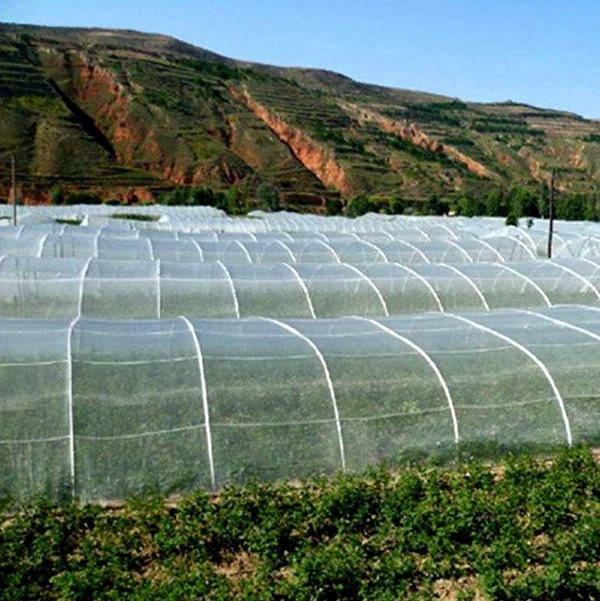
60 Mesh Garden Netting Insect Proof Net for Garden Protection
Material: PE
Mesh size: 1.5*1.5mm
Color: White
Safety and Protection: The 120 mesh PE netting ensures a dense, reliable barrier that provides superior safety in high-risk environments, effectively reducing the chance of accidental falls or entanglements.
Load-Bearing Capacity: With strong tensile strength, the PE netting supports heavy-duty loads without compromising its structure, making it ideal for use in industrial and construction settings.
Durability & Weather Resistance: Crafted from UV-treated polyethylene, this netting is highly resistant to outdoor elements, offering long-lasting durability even under harsh weather conditions.
Stability of Mesh Shape: The tight 120 mesh structure ensures stability and uniformity, preventing sagging or warping, thus maintaining reliable performance over time.
Netting as a Multifunctional Tool: Beyond Simple Barriers
The genius of netting lies in its multifunctionality. The same basic concept—a permeable barrier—can be adapted to solve different problems simply by changing the material’s properties, such as its color, thickness, and the size of its openings.
- For Climate Moderation: A white or aluminized mesh, known as shade cloth, can be stretched over a garden bed. It doesn’t block the sun entirely but diffuses it, reducing the intensity of light and lowering the ambient temperature. This prevents sun-scald on fruits like tomatoes and peppers and reduces heat stress on cool-weather crops like lettuce, allowing you to extend their growing season. It also significantly reduces water evaporation from the soil, conserving a precious resource.
- For Weather Protection: A stronger, more durable netting can be used to protect valuable crops from physical damage. In regions prone to hail, draping hail netting over fruit trees or garden beds can mean the difference between a bountiful harvest and a total loss. Similarly, windbreak netting can reduce wind speed, preventing physical damage to plants and reducing moisture loss from leaves.
- For Spatial Efficiency: A wide-mesh, high-strength netting, known as trellis netting, can be installed vertically. Vining plants, which would otherwise sprawl across the ground, can be trained to climb this netting. This simple act transforms your garden’s capacity, allowing you to grow an abundance of food in a small footprint.
Table 1: Comparative Analysis of Common Garden Netting Types
To make an informed choice, it is helpful to directly compare the different types of netting available. Each is designed with a specific purpose in mind, and using the right tool for the job is paramount to success in sustainable gardening.
| Netting Type | Primary Material(s) | Common Mesh Size | Primary Function(s) | Ideal Use Cases |
|---|---|---|---|---|
| Insect Netting | Polypropylene, Polyester | 0.8mm – 1.6mm | Pest Exclusion | Protecting brassicas from cabbage moths, carrots from carrot rust fly, and leafy greens from flea beetles. |
| Bird Netting | Polyethylene, Nylon | 15mm – 25mm | Bird & Large Animal Deterrence | Draping over berry bushes, fruit trees, and newly seeded lawns to prevent birds from eating seeds or fruit. |
| Shade Cloth | Woven or Knitted HDPE | Varies (rated by % shade) | Light Diffusion, Temperature Reduction | Covering greenhouses, high tunnels, or sensitive plants during peak summer heat to prevent scorch and reduce water needs. |
| Trellis Netting | Nylon, Polyester, Polypropylene | 100mm – 180mm | Vertical Plant Support | Supporting vining plants like cucumbers, peas, beans, non-bush tomatoes, and climbing flowers. |
| Hail Netting | High-Density Polyethylene (HDPE) | 5mm – 10mm | Impact Protection | Creating canopies over orchards, vineyards, and high-value vegetable beds in hail-prone regions. |
A Deeper Look at Pest Management: Netting as a Humane and Effective Shield
Let us now delve more deeply into what is, for many, the most compelling reason to embrace netting: pest management. The principle is straightforward exclusion, but the successful application requires a bit more nuance and understanding. It requires us to think like an entomologist and an engineer, combining knowledge of pest biology with the practical skill of constructing a proper barrier.
Identifying Your Adversary: Matching Mesh Size to Pest Type
The single most important factor in using netting for pest control is selecting a product with the correct mesh size. If the holes in the net are larger than the pest you are trying to exclude, the barrier will be completely ineffective. It’s like building a castle wall but leaving the main gate wide open.
This is where a little bit of local knowledge and research pays enormous dividends. You must first identify your primary pests. Are you battling tiny aphids, larger cabbage moths, or the minuscule carrot rust fly? Each requires a different level of filtration.
Think of it as setting a filter. A coarse filter might catch large debris but let fine sediment pass through. A very fine filter will catch everything, but may also block some things you want, like airflow. Your task is to choose a mesh size that is just small enough to block your target pest, while still allowing for maximum air and light penetration. A net designed to stop a bird will do nothing to stop a flea beetle. Conversely, an ultra-fine insect mesh might unnecessarily block smaller, beneficial parasitic wasps from accessing and controlling aphids under the net.
| Pest Category | Common Examples | Recommended Mesh Size (approx.) | Notes |
|---|---|---|---|
| Large Pests | Birds, Deer, Rabbits | 15mm – 50mm | Focus is on a strong, visible barrier. Mesh size is less critical than durability and secure installation. |
| Large Insects | Cabbage Moths, Cucumber Beetles, Squash Bugs | 1.3mm – 2.0mm | A standard “insect barrier” netting is often sufficient for these common, larger garden pests. |
| Medium Insects | Flea Beetles, Leaf Miners, Tarnished Plant Bugs | 0.8mm – 1.2mm | Requires a finer mesh. Proper sealing at the soil line is absolutely critical for these smaller insects. |
| Small/Tiny Insects | Aphids, Thrips, Whiteflies | < 0.8mm (e.g., 0.35mm – 0.6mm) | This is an “anti-insect” or “thrips” netting. It significantly reduces airflow and is best used on high-value crops where these pests are a major issue. |
Case Study: The Codling Moth and Apple Orchards
The power of this physical exclusion method is not limited to the home garden. It is being successfully scaled up in commercial agriculture as a viable alternative to chemical sprays. A compelling example can be found in apple production. The codling moth is a devastating pest for apple growers, with larvae that burrow into the developing fruit, rendering it unmarketable. The traditional management strategy has involved numerous, precisely timed insecticide applications throughout the growing season.
However, recent research has demonstrated the remarkable effectiveness of “drape netting” or “full-exclusion netting” systems. In these systems, entire rows of apple trees, or even entire orchard blocks, are covered with fine-mesh netting after the pollination period is complete. A study published in Frontiers in Insect Science found that such hail netting systems, which also exclude pests, can be an economically competitive alternative to insecticides for managing key pests in apple production (DiGiacomo et al., 2023).
The netting forms a complete barrier, preventing the adult moths from accessing the trees to lay their eggs. This single, physical installation can replace an entire season’s worth of chemical sprays. The benefits are manifold: reduced labor and material costs associated with spraying, no chemical residues on the fruit, protection for farmworkers and the local ecosystem, and the added benefit of protection from hail damage. This commercial-scale success story powerfully illustrates the validity and potential of the physical exclusion principle that home gardeners can apply to their own plots.
Installation Techniques for Maximum Efficacy
Simply draping a net over your plants is often not enough, especially when dealing with smaller, more persistent insects. Proper installation is key to creating a truly sealed and protected environment.
- Timing is Everything: The cover must be applied before the pest arrives. For a crop like carrots, this means covering the bed immediately after sowing to prevent the first generation of carrot rust flies from laying their eggs near the young seedlings. If you wait until you see the damage, you are only trapping the pests inside with their food source.
- Create a Support Structure: While some lightweight nets can be laid directly on top of crops (this is known as a “floating row cover”), it is often better to use a support structure. This can be as simple as a series of hoops made from PVC pipe, flexible rods, or bent electrical conduit. The support holds the netting up off the plants, preventing physical damage and ensuring that insects cannot lay eggs through the net directly onto the leaves. This air gap is a critical feature.
- Seal the Edges Securely: This is the most common point of failure. Any gap between the edge of the netting and the ground is an open door for pests. The edges of the net must be thoroughly sealed. You can achieve this by burying the edges with several inches of soil, or by weighing them down securely with rocks, bricks, or sandbags placed right next to each other to form a continuous seal. Check the perimeter regularly, especially after strong winds, to ensure the seal remains intact.
Beyond Insects: Deterring Birds, Deer, and Other Vertebrates
The principle of physical exclusion extends beyond the world of insects. Larger animals can cause just as much, if not more, damage in a short period. A flock of birds can strip a cherry tree or a patch of blueberries in an afternoon. A single deer can browse an entire row of beans to the ground overnight.
For these larger adversaries, the solution is a stronger, wider-meshed netting. The goal here is not to create a sealed environment but a robust physical deterrent. When protecting fruit trees or berry bushes with agricultural bird netting, the key is to ensure the net is suspended away from the fruit. If the net rests directly on the branches, birds can often still poke their beaks through and damage the fruit. By building a simple frame or using poles to tent the net over the plant, you create a space that prevents them from reaching their prize.
For larger animals like deer, a tall (at least 8 feet) and properly tensioned fence made of durable netting can be a highly effective and more aesthetic alternative to traditional wire fencing. The principle remains the same: a simple, physical barrier that respects the animal’s life while resolutely protecting the fruits of your labor.
Climate Moderation Through Netting: Crafting a Resilient Garden Microclimate
As we’ve discussed, modern gardeners are increasingly contending with a climate that is less of a gentle partner and more of a volatile force. Intense sun, unpredictable water availability, and destructive weather can undermine even the most carefully laid plans. Here, too, netting emerges as a crucial tool, not for excluding life, but for moderating energy and physical force. By using specialized netting, we can create a customized microclimate—a buffered, more stable environment where our plants can thrive despite the external chaos.
The Science of Shade Cloth: Regulating Light and Temperature
Plants need sunlight to live, but as with many things, too much of a good thing can be detrimental. In the peak of summer, especially in warmer climates, the sheer intensity of solar radiation can overwhelm a plant’s photosynthetic machinery. This condition, known as photoinhibition, is essentially a state of overload where the plant has to expend energy just to protect itself from the excess light, energy that would otherwise go into growth and fruit production. This is often coupled with heat stress, which can further slow or halt metabolic processes.
This is where shade cloth comes in. It is a knitted or woven fabric designed to block a certain percentage of sunlight. Shade cloths are rated by their density, typically from 30% (blocking 30% of light) to 90%. A 40-50% shade cloth is often ideal for most vegetable gardens.
How does it work? Imagine the intense, direct rays of the midday sun. Shade cloth intercepts these rays and diffuses them. The light that passes through is less intense and more scattered. This has several profound effects:
- Temperature Reduction: By blocking a portion of the solar energy, shade cloth can lower the ambient air temperature underneath by several degrees. This can be the difference between a plant surviving and a plant shutting down during a heatwave.
- Prevention of Sun Scald: Fruits with exposed “shoulders,” like tomatoes and peppers, can develop sun scald—a bleached, leathery patch caused by direct, intense sun exposure. Shade cloth prevents this damage, ensuring a higher quality harvest.
- Extended Harvests: Cool-season crops like lettuce, spinach, and cilantro are programmed to “bolt” (go to seed and become bitter) when temperatures get too high. By using shade cloth, you can keep the environment around them cooler for longer, extending your harvest of these crops well into the warmer months.
Conserving Water: How Shade Netting Reduces Evaporation
One of the most significant, yet often overlooked, benefits of shade cloth is its role in water conservation. Water is lost from the garden in two primary ways: transpiration (water released from plant leaves) and evaporation (water lost directly from the soil surface). Both processes are accelerated by high temperatures and direct sunlight.
By reducing the temperature and the intensity of solar radiation hitting the soil, shade cloth significantly slows the rate of evaporation. The soil stays moist for longer after each watering. Furthermore, by reducing the heat stress on the plants themselves, it can lower their rate of transpiration. The net effect is a dramatic reduction in the garden’s overall water requirement. In an era of drought and water restrictions, this is not just a minor convenience; it is a critical component of a truly sustainable gardening system. You can water less frequently but more deeply, encouraging deeper root growth and making your plants even more resilient.
Protection from the Elements: Hail, Wind, and Frost
Beyond moderating sun and conserving water, netting provides a physical shield against destructive weather events. As noted earlier, hail can be catastrophic for a garden. A well-supported structure covered with a durable, small-mesh hail netting can absorb the impact of hailstones, protecting the foliage and fruit below. Research on fruit crops consistently shows that innovative netting concepts are a cornerstone of protecting yields from such environmental hazards (Jemrić, 2022).
Wind can be another insidious problem. It physically damages plants, tatters leaves, and dramatically increases the rate of water loss through transpiration. A properly installed “windbreak” netting, which is designed to be permeable enough to slow the wind without creating damaging turbulence, can protect the garden and help maintain a more humid, stable microclimate.
Finally, even lightweight insect netting or row covers can offer a surprising degree of frost protection. On a clear, cold night, heat radiates away from the soil and plants. A simple layer of netting traps some of that radiating heat, keeping the temperature immediately around the plants a few degrees warmer than the surrounding air. This can be enough to protect tender seedlings from a light, early-season or late-season frost, effectively extending your growing season on both ends.
Maximizing Abundance in Limited Space: The Art of Vertical Gardening with Trellis Netting
We now turn to the third great challenge: the limitation of space. The sustainable gardener seeks abundance, diversity, and efficiency, goals that can seem at odds with the constraints of a small urban or suburban plot. The solution lies in a simple shift of perspective—from horizontal to vertical. By training vining and climbing plants to grow upwards on a support structure, we can unlock a vast new dimension of growing space. The most effective, versatile, and inexpensive material for creating this vertical plane is trellis netting.
Thinking Upwards: The Principles of Vertical Growth
Many of our most beloved food plants—cucumbers, pole beans, peas, indeterminate tomatoes, malabar spinach, and many types of squash—are natural climbers. In the wild, they would use other plants, rocks, and trees to pull themselves up towards the sunlight. Allowing them to sprawl across the ground in a traditional garden is, in a sense, forcing them to grow in an unnatural and inefficient way.
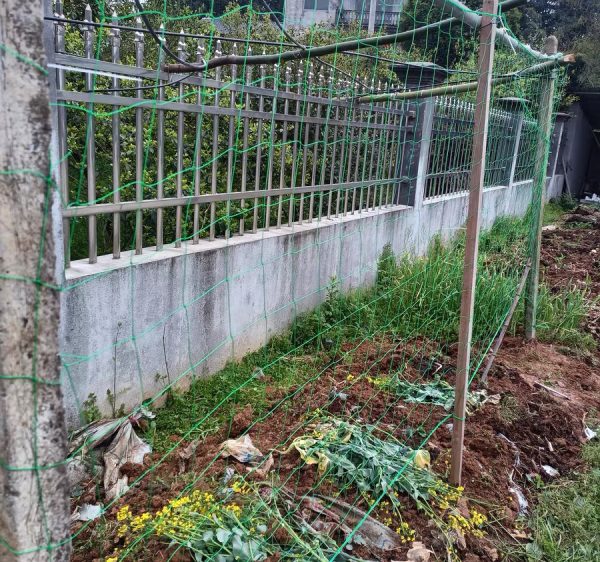
Heavy-Duty HDPE Climbing Plants Net for Greenhouse Vertical Growing
The 2cm knotted PE mesh delivers durable, lightweight, and highly effective bird protection for fruit trees and farm crops.
Trellis netting provides an ideal artificial support system for these plants. Its open mesh provides thousands of handholds for the plants’ tendrils or twining stems. By installing a sturdy frame and stretching trellis netting between its posts, you create a “living wall” of productivity. A single square foot of ground space can now support a plant that grows six or eight feet tall, bearing fruit along its entire length. This is a dramatic multiplication of your growing area. A bed that could only support two sprawling cucumber plants might now support six or eight plants growing vertically, producing three to four times the harvest from the same soil footprint.
Benefits of Trellising: Improved Airflow, Sunlight Exposure, and Harvestability
The advantages of vertical gardening with trellis netting go far beyond simple space-saving. It creates a healthier and more manageable growing environment.
- Improved Airflow: When plants are lifted off the ground, air can circulate freely around their leaves. This is hugely important for disease prevention. Many common garden afflictions, like powdery mildew and fungal blights, thrive in stagnant, humid conditions. The constant air movement around a trellised plant keeps the leaves dry and dramatically reduces the incidence of these diseases. This further reduces the need for any kind of intervention, chemical or organic.
- Better Sunlight Exposure: On a trellis, leaves are arranged vertically, allowing each leaf to capture sunlight more effectively. In a sprawling plant on the ground, lower leaves are often shaded out by upper growth, becoming unproductive and susceptible to disease. Vertical growth ensures a more even distribution of light, leading to more robust photosynthesis and higher overall yields.
- Easier and Cleaner Harvest: Harvesting fruit from a plant sprawling on the ground can be a chore. The fruit is often hidden under leaves, resting in the dirt where it is more susceptible to rot and pests like slugs. On a trellis, the fruit hangs down in plain sight, clean and easy to pick. This makes harvesting faster, more pleasant, and results in higher-quality produce.
- Companion Planting Opportunities: The space underneath the trellised plants is now open and available. This shaded, cooler area is the perfect spot to plant quick-growing, shade-tolerant crops like lettuce, radishes, or spinach during the hotter parts of the summer. This technique, known as “intercropping,” allows you to get multiple harvests from the same bed, further maximizing your garden’s efficiency.
Choosing and Installing Custom Netting Solutions for Vining Plants
While many standard-sized trellis nets are available, the ability to acquire soluções de redes personalizadas can be a game-changer, allowing you to perfectly match the support to your specific garden design and crop choice.
When selecting a trellis net, consider two main factors: mesh size and material strength. The mesh size should be large enough for you to comfortably reach your hand through to harvest fruit—typically between 4 and 7 inches (10-18 cm). The material needs to be strong enough to support the full weight of the mature, fruit-laden plants. Nylon and UV-treated polypropylene are excellent choices as they are strong, lightweight, and weather-resistant.
Installation is straightforward. The most common method is to drive sturdy posts (metal T-posts or 4×4 wood posts are excellent) into the ground at either end of your garden bed. Then, simply stretch the netting tautly between the posts, securing it at regular intervals. For very long rows, an additional post in the middle may be necessary to prevent sagging. As your vining plants begin to grow, gently guide their main stems towards the net. Once they make contact, their natural climbing instincts will take over, and they will begin their ascent, transforming a flat bed into a towering wall of green.
The Economic and Ecological Calculus of Investing in Garden Netting
A thoughtful gardener, operating from a place of stewardship, must consider the long-term implications of their choices. This includes an honest assessment of both the economic and ecological costs and benefits. When we apply this calculus to garden netting, it becomes clear that it is not an expense but a wise and sustainable investment.
Initial Investment vs. Long-Term Savings: A Cost-Benefit Analysis
There is, of course, an upfront cost to purchasing quality netting and any necessary support structures. This can feel like a significant outlay compared to a cheap bottle of pesticide or simply letting plants sprawl. However, this initial cost must be weighed against the long-term savings and value it generates.
- Savings on Inputs: A roll of insect netting, which can be reused for many seasons if cared for properly, can eliminate the need to purchase pesticides, fungicides, and other chemical treatments year after year. The cost of these consumables adds up significantly over time.
- Reduced Crop Loss: The primary economic benefit is the preservation of your harvest. Losing an entire crop of berries to birds or a bed of cabbage to caterpillars represents a real financial loss, not to mention the loss of your time and labor. Netting is insurance for your harvest. As demonstrated in commercial settings, the cost of netting is often quickly recouped through the prevention of crop damage (DiGiacomo et al., 2023).
- Increased Yields: As we’ve seen, using trellis netting can dramatically increase the yield from a given area. This means more food for your family, reducing your grocery bills. If you sell produce at a local market, this directly translates to increased income.
- Water Savings: In areas with metered water, the reduction in evaporation achieved by using shade cloth can lead to noticeable savings on your water bill over the course of a hot, dry summer.
When viewed through this long-term lens, a one-time investment in durable, high-quality netting pays for itself many times over, making it one of the most cost-effective tools in the sustainable gardener’s arsenal.

Contributing to Biodiversity: How Netting Protects Pollinators
An interesting and vital aspect of using netting is knowing when not to use it, or how to use it selectively. For crops that require insect pollination to produce fruit—such as squash, cucumbers, melons, and many fruit trees—the netting must be managed to allow pollinators access at the right time.
This is not a drawback but an opportunity for the gardener to become more deeply attuned to the life cycles of their plants. For these crops, the strategy is to use insect netting early in the plant’s life to protect the young, vulnerable seedlings from pests. However, once the plant begins to produce flowers, the netting must be opened up or removed during the day to allow bees and other pollinators to do their crucial work.
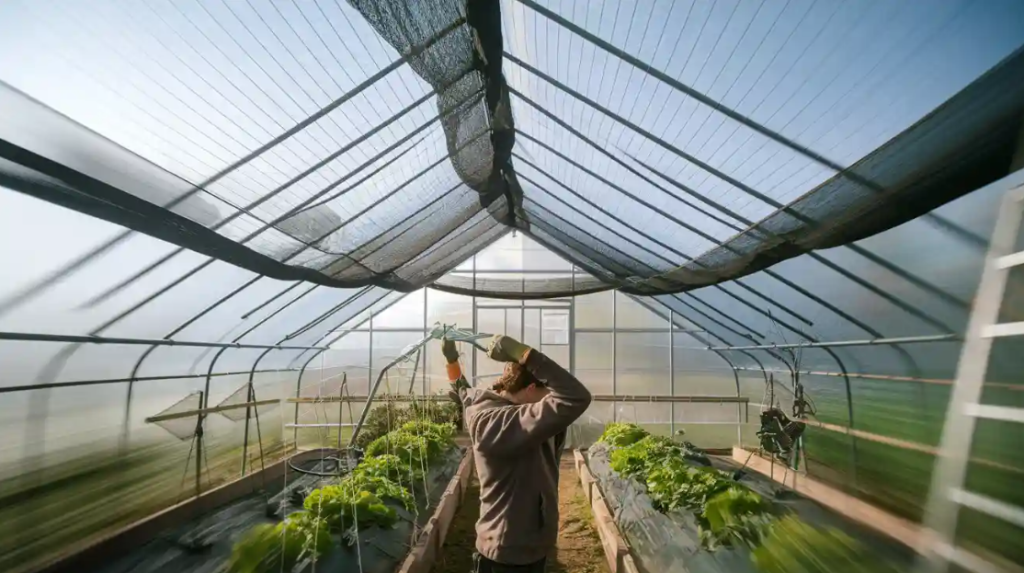
Then, it can be closed again in the late afternoon to protect against nocturnal pests. This mindful practice transforms the gardener from a passive user of a tool into an active collaborator with the natural world, fostering the very biodiversity that makes the garden thrive. The rise of sustainable gardening: how netting plays a key role is not just about exclusion, but also about intelligent, timed inclusion.
Perguntas mais frequentes
1. Will using insect netting reduce the amount of light and air my plants get?
Yes, all coverings will cause a minor reduction in light and airflow, but high-quality insect netting is designed to minimize this. The effect is generally negligible for plant health and is far outweighed by the benefits of pest protection. For most common pests, the mesh does not need to be so fine that it significantly impedes air movement. Only when dealing with very tiny pests like thrips is a super-fine mesh required, which may necessitate more careful management of heat and humidity underneath.
2. How many seasons can I expect a good quality garden net to last?
The lifespan of garden netting depends on the material, its UV stabilization, and how you care for it. High-density polyethylene (HDPE) or UV-treated nylon netting can last for many years, often 5 to 10 seasons or even longer. To maximize its life, handle it carefully to avoid rips, clean it at the end of the season, and store it in a dry place away from direct sunlight. Cheaper, non-UV-treated plastics may only last a single season before becoming brittle and breaking down.
3. Can I use the same net for pest control and frost protection?
Yes, to a degree. A standard insect net (often called a floating row cover) will provide a small amount of frost protection, typically raising the temperature underneath by 2-4°F (1-2°C). This is often enough to save plants from a light frost. However, for protection against a harder freeze, you would need a heavier, more insulating material known as a “frost blanket,” which is less suitable for season-long pest control due to its lower light transmission.
4. Is it difficult to water plants that are under netting?
No, it is quite easy. Water passes directly through the mesh of all common garden netting types. You can use a hose, a watering can, or a sprinkler system to water your plants right through the net without having to remove it. In fact, watering through the net can be beneficial as it helps to wash off any dust that may have accumulated on the surface, improving light transmission.
5. How do I choose the right shade cloth percentage for my garden?
The correct percentage depends on your climate and the types of plants you are growing. A good general-purpose choice for a mixed vegetable garden in a temperate or hot climate is 40-50% shade. This provides significant relief from heat stress without overly limiting light for sun-loving plants like tomatoes and peppers. For more tender, cool-season crops like lettuce or for starting seedlings, a higher percentage like 60% might be beneficial. In very hot, desert-like climates, up to 70% might be necessary for certain plants.
Final
The rise of sustainable gardening is a testament to a collective yearning for a more harmonious relationship with the earth. It is a practical philosophy that champions observation, empathy, and ecological stewardship over brute force and chemical intervention. Within this evolving practice, garden netting has firmly established itself not as a mere accessory, but as a transformative and indispensable technology.
We have seen how this simple tool, in its various forms, offers elegant and effective solutions to the gardener’s most persistent challenges. It provides a humane and highly effective defense against pests, liberating the gardener from the toxic cycle of chemical dependency. It moderates the harsh excesses of our changing climate, creating stable, water-wise microclimates where plants can flourish. It revolutionizes our use of space, allowing for astonishing abundance from the smallest of plots through the art of vertical growth.
To embrace netting is to embrace a proactive, preventative mindset. It is to choose physical defense over chemical offense, to work with the systems of nature rather than against them. The initial investment in time and materials is repaid many times over in protected harvests, reduced costs, healthier food, and the deep satisfaction that comes from cultivating a garden that is not only productive but also a vibrant, thriving ecosystem. As we move forward, the role of netting in sustainable gardening will only continue to grow, proving that sometimes the most powerful solutions are the ones that are as simple, and as intelligent, as a well-placed barrier.

Leia os nossos artigos mais populares.
👉 Descarregar as nossas categorias de produtos gratuitas
👉 The Ultimate Guide to Installing Anti-Insect Nets in Greenhouses
👉 Anti-Insect Nets vs. Chemical Pesticides — A 3-Point Health and Yield Comparison
👉 Guia prático do comprador: PEAD vs. Nylon: Um confronto de materiais para redes de jardim
👉 The Ultimate Guide To Choosing Garden Netting: Pest, Material, and Crop Considerations
👉 Como iniciar um negócio de redes de marca própria: Uma estrutura de 5 etapas para o trabalho
👉 O fabrico chinês vs. fornecedores locais: Guia do comprador de redes