
The selection of cargo netting, a decision often treated as a secondary consideration in logistics and transport, carries significant implications for operational integrity, financial stability, and public safety. A close look at the consequences of using substandard netting reveals a complex set of hidden costs that extend well beyond the appealing initial price point.
This analysis explores the range of risks involved, including direct financial losses from damaged goods and equipment, substantial legal and regulatory penalties for failing to comply with securement standards, and rising insurance premiums and liability claims following incidents. It also considers the less tangible, yet equally damaging, costs tied to reputational harm and the erosion of customer trust. At the center of the issue is a fundamental threat to human well-being, where equipment failure can lead to catastrophic accidents.

This discussion argues that investing in high-quality, durable cargo netting is not an expense, but a foundational part of responsible risk management—essential for protecting assets, preserving brand integrity, and, most importantly, upholding a duty of care to employees and the public.
Key Takeaways
- Recognize that initial savings from cheap netting are often offset by cargo damage and replacement costs.
- Understand that using low-quality cargo netting can lead to serious fines and legal consequences for non-compliance.
- Expect higher insurance premiums and the risk of denied claims following load-related incidents.
- Protect your brand’s reputation, as public spills and accidents quickly undermine customer confidence.
- Prioritize human safety by investing in reliable load securement to help prevent tragic accidents.
- Evaluate the long-term value of durable netting instead of focusing only on the immediate appeal of a lower price.
- Recognize that choosing quality netting reflects professional responsibility and sound ethical judgment.
The Deceptive Allure of Initial Savings
In business operations, the appeal of immediate cost reduction is powerful. When faced with two equipment options—such as cargo netting—where one is significantly cheaper than the other, the decision can seem deceptively straightforward. The lower price tag appears to be an obvious win, a practical move to protect the bottom line. Yet that perspective often depends on a narrow and incomplete understanding of value, one that confuses price with cost.
The real cost of a tool is not what you pay for it upfront, but what it costs you to use over its full service life.

Have you ever considered how a seemingly minor choice, like selecting a net, can create consequences far beyond what you intended? That initial saving is often a siren song, drawing operations toward financial and ethical risks they never planned for.
The Psychology of ‘Good Enough’
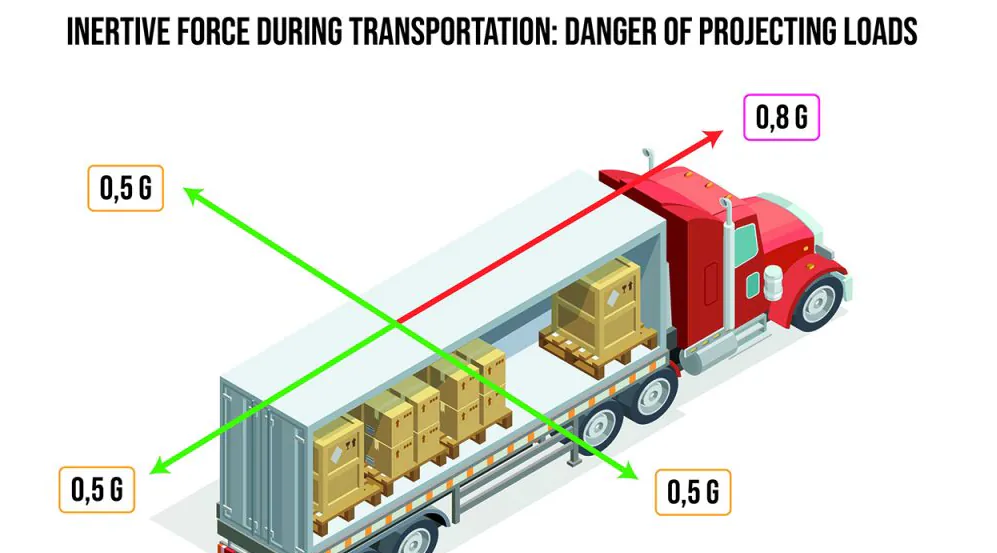
Human decision-making often relies on heuristics, or mental shortcuts, that help us navigate complexity. One of the most common in procurement is the “good enough” principle, also known as satisficing. We do not always pursue the absolute best option; we choose one that appears to meet a minimum acceptable standard. When it comes to something like cargo netting, it is easy to rationalize that a lower-cost product is “good enough.” It looks like a net, feels like a net, and the supplier assures you it will hold the load. What this thinking overlooks, however, is the harsh and dynamic environment in which the equipment must perform. A highway is not a static warehouse. A load in transit is exposed to constant vibration, g-forces from acceleration and braking, and environmental stressors such as UV radiation and moisture.
The “good enough” net that performs adequately in a mild test can fail catastrophically under real-world conditions it was never designed to withstand. This is a cognitive trap—a failure to anticipate the full range of conditions the equipment will face—and it is the first step toward the hidden costs of using low-quality cargo netting.
A Short-Term Gain, A Long-Term Financial Drain
Consider a simple thought experiment. Imagine you purchase a low-quality cargo net for $50, saving $100 compared to a high-quality, certified alternative priced at $150. It feels like a prudent decision. On its fifth use, however, the inferior webbing—already weakened by sun exposure—snaps during a routine braking maneuver. A single pallet of electronic goods, valued at $5,000, shifts and is damaged. Your initial $100 saving has instantly turned into a $4,950 net loss, and that figure does not yet include the cost of a replacement net, the administrative time required to process the loss, or the potential delivery delay experienced by the customer.
The high-quality net, manufactured from UV-treated, industrial-grade polyester, would likely have endured that event and hundreds more like it. Its higher upfront price is not simply an expense, but a form of protection spread across a far longer service life.
The cheaper net is a disposable item disguised as a durable good. Its frequent replacement needs, combined with the substantial financial risk it introduces every time it is used, make it the far more expensive option in any serious long-term analysis. The real choice is not between a $50 net and a $150 net. It is between a predictable one-time investment and an unpredictable chain of potentially catastrophic costs.
Comparative Analysis of Netting Materials
The material science behind netting is central to this discussion. The choice of polymer and the quality of the manufacturing process determine the net’s strength, durability, and resistance to environmental conditions.
Understanding these differences is essential to understanding why one net costs more than another—and why that price difference translates into a substantial difference in performance and safety.
| Caraterística | Low-Quality Netting (e.g., Standard Polypropylene) | High-Quality Netting (e.g., Treated Polyester/Nylon) |
|---|---|---|
| Material Strength | Lower tensile strength; prone to stretching and tearing under heavy loads or sudden shocks. | High tensile strength; maintains integrity under significant stress and dynamic forces. |
| UV Resistance | Poor. Degrades quickly when exposed to sunlight, becoming brittle and weak. | Excellent. Treated with UV inhibitors to prevent degradation, ensuring a longer service life. |
| Abrasion Resistance | Low. Easily frayed or cut by sharp edges on cargo or the vehicle, compromising the net. | High. Resistant to friction and rubbing, maintaining its structure even with abrasive loads. |
| Water Absorption | High. Absorbs water, making it heavy, prone to rot/mildew, and weaker when wet. | Low. Does not absorb water, retaining its strength in all weather and resisting biological decay. |
| Working Load Limit | Often untested, uncertified, or overstated. Provides a false sense of security. | Independently tested and clearly rated with a certified Working Load Limit (WLL). |
| Expected Lifespan | Short. May last only a few months with regular use, requiring frequent replacement. | Long. Can last for years with proper care, providing a much lower total cost of ownership. |
| Compliance | May not meet Department of Transportation (DOT) or other regulatory standards. | Designed and certified to meet or exceed all relevant transportation safety regulations. |
Risk 1: The Tangible Cost of Damaged Goods and Equipment
The most immediate and easiest-to-quantify consequence of a netting failure is damage to the very goods it was meant to protect. This is the first and most direct of the hidden costs. When a pallet shifts, a box falls, or an entire load is compromised, the financial impact rarely stops at the value of the damaged items alone. A single failure event sets off a chain of additional costs, turning a routine delivery into a costly operational problem. The condition of the cargo directly reflects the quality of the equipment used to secure it. Choosing low-quality cargo netting means accepting a higher likelihood of this kind of expensive failure.

The Ripple Effect of a Single Damaged Shipment
Consider the path of a single damaged item. First, there is the cost of the product itself, which must be written off as a loss. Then comes the cost of disposing of the damaged goods. Next, a replacement must be sourced and shipped, creating not only the expense of the new product but also potential expedited freight charges to meet the original deadline. Administrative time is consumed handling claims, documenting the damage, communicating with the customer, and adjusting inventory records. The customer, who was depending on that shipment, may face downstream consequences of their own, such as a production line shutdown or an empty retail shelf. Their dissatisfaction is another cost, even if it is harder to measure. What started as a broken strand on a cheap cargo net has now become a multi-layered financial and logistical problem. It is a clear example of how a failure in one seemingly small component of the supply chain can create disruptive and expensive ripple effects throughout the system.

Beyond the Cargo: Damage to Vehicles and Infrastructure
The damage caused by an unsecured load does not stop with the cargo. When heavy items shift or fall, they can inflict serious damage on the transport vehicle itself. A loose pallet can gouge the interior walls of a trailer, damage a truck bed, or even affect the vehicle’s axles or suspension. I once spoke with a fleet manager who described how a single unsecured piece of machinery shifted and punched a hole through the side of a brand-new trailer—a repair that cost thousands of dollars and took the vehicle out of service for more than a week.
The risk also extends beyond the vehicle. Cargo that falls onto a roadway becomes a direct hazard to public infrastructure and to other motorists. A heavy object can damage the road surface, destroy guardrails, or strike bridges. The party responsible for the spill is also responsible for cleanup and repair costs. Those costs can be substantial, particularly if they involve specialized hazardous-material cleanup crews or major roadway repairs. What begins as a load shifting inside a truck can quickly produce far-reaching physical and financial consequences for both private and public property.
Case Study: The Perishable Goods Catastrophe
A mid-sized food distribution company, looking to reduce operational costs, switched to a cheaper imported brand of cargo netting for its refrigerated trucks. The nets were made from untreated polypropylene, a material known to perform poorly under fluctuating temperatures and prolonged sun exposure. On a hot summer day, a truck carrying a load of premium ice cream valued at more than $20,000 was headed to a major supermarket chain. As the truck moved through a highway interchange, the netting—already made brittle by repeated UV exposure and less resilient in the refrigerated environment—failed.
Several pallets of ice cream tubs shifted and toppled, bursting open inside the trailer. The result was a total loss. Not only was the $20,000 shipment unsalvageable, but the cleanup was also extensive. Melted ice cream seeped into every crevice of the trailer, requiring hours of specialized cleaning and sanitizing that cost several thousand dollars.

The truck was out of service for two days, creating further scheduling disruptions. The supermarket, which had been relying on the delivery, was forced to leave sections of its freezer aisle partially empty during a peak sales weekend, damaging the distributor’s relationship with a key customer. The attempt to save a few hundred dollars on netting directly resulted in a loss of more than $25,000, not counting the intangible cost to the company’s professional reputation. It is a stark reminder that for certain types of cargo, the margin for error is zero—and the quality of securement is critical.
Risk 2: The Severe Penalties of Legal and Regulatory Non-Compliance
Beyond the direct financial losses associated with damaged goods, there is a second and more punitive category of cost: the costs imposed by law and regulation. Every country with a developed transportation network has established a legal framework governing how cargo must be secured. Regulations such as those issued by the Federal Motor Carrier Safety Administration (FMCSA) in the United States are not arbitrary. They are the codified result of decades of accidents, injuries, and fatalities caused by shifting or falling loads.
Using low-quality cargo netting is not merely a poor business decision; in many cases, it is a direct violation of those laws. That non-compliance exposes a company to fines, legal disputes, and operational sanctions that can far exceed the value of the cargo itself.

Navigating the Labyrinth of Securement Regulations
The rules governing cargo securement are detailed and specific. They establish the minimum number of tie-downs required for cargo of certain lengths and weights, and they define the performance standards that all securement devices must meet. For example, FMCSA regulations state that the aggregate working load limit (WLL) of all securement devices must equal at least 50% of the weight of the cargo. One of the main problems with low-quality cargo netting is that it is often sold without a certified WLL, or with a WLL that is unverified or misleading.

Imagine a law enforcement officer at a weigh station inspecting your load. They are not simply checking whether a net is present; they are trained to verify the tag that certifies the net’s WLL. If that tag is missing, or if the net is visibly degraded, frayed, or otherwise compromised, the vehicle is immediately in violation. These regulations are not suggestions—they are legal requirements. Ignorance is not a defense. A company has an affirmative obligation to know the rules and comply with them. Choosing a cheap, uncertified net is essentially a gamble that the vehicle will not be inspected—a gamble with poor odds and significant consequences. For companies seeking to stay compliant, investing in properly rated and tagged soluções de redes personalizadas is not merely best practice; it is a legal necessity.
The Anatomy of a Roadside Inspection Failure
Now consider what happens during a failed roadside inspection. A truck is pulled over. The inspector notices a cheap, unmarked cargo net covering a pallet of mixed goods. The webbing is thin, and several strands are visibly frayed. The driver cannot provide documentation certifying the net’s capacity.
First, the inspector will almost certainly issue a citation. This is not comparable to a simple parking ticket; fines for securement violations can easily reach into the thousands of dollars. Second, and often far more disruptive, the inspector can place the vehicle out of service.

That means the truck cannot continue until the violation is corrected. The driver is stranded. The company must either dispatch another vehicle carrying compliant netting or hire a local service to remedy the situation. The delivery is delayed for hours, if not an entire day. The driver’s hours of service are disrupted. The company’s Compliance, Safety, Accountability (CSA) score—a public measure of carrier safety performance—is negatively affected.

A worse CSA score leads to more inspections and higher insurance premiums. That single failed inspection leaves a lasting negative mark on the company’s official safety record.
Comparison of Potential Regulatory Fines
The financial penalties for non-compliance vary by jurisdiction, but they are consistently substantial. They are designed to serve as a strong deterrent. The table below offers a general overview of how quickly those costs can escalate.
| Violation Severity | Example Scenario | Potential Fine Range (USD) | Additional Consequences |
|---|---|---|---|
| Minor Infraction | Using a net with a small, frayed section or a missing tag, but the load appears stable. | $500 – $2,500 | Driver warning; notation on inspection report. |
| Serious Violation | Using a clearly inadequate net (e.g., lightweight net for heavy machinery) or an insufficient number of tie-downs. | $2,500 – $7,500 | Vehicle placed “out of service”; mandatory correction before proceeding. |
| Critical Violation | A load that has already shifted due to a failed net, even if it has not fallen from the vehicle. | $7,500 – $15,000+ | “Out of service” order; significant impact on the company’s CSA score. |
| Incident-Related | A failed net results in cargo falling onto the roadway, causing property damage or a minor accident. | $15,000 – $50,000+ | Fines, plus civil liability for all damages and cleanup costs. |
| Catastrophic Event | A failed net leads to an accident causing serious injury or fatality. | Potentially unlimited | Fines, civil lawsuits, and possible criminal charges (e.g., negligent homicide) against the driver and company management. |
When Fines Escalate to Criminal Charges
In the most tragic cases, the consequences move beyond the financial. If cargo falls from a vehicle because of failed or low-quality cargo netting and causes a fatal accident, the matter can escalate into a criminal investigation.

In many jurisdictions, prosecutors can and do bring charges such as criminally negligent homicide or manslaughter—not only against the driver, but also against company managers responsible for safety policies and equipment purchasing. A decision made to save a small amount of money on inferior netting could ultimately lead to a corporate officer facing prison time. This is the ultimate hidden cost: the devastation of lives, families, and careers, all tied to a failure to prioritize safety in what may have seemed like a minor operational decision. It forces a difficult but necessary question: what level of risk to human life is acceptable in exchange for cost savings? For any ethical business, the only acceptable answer is zero.
Risk 3: The Escalating Burden of Insurance and Liability
The third category of hidden costs lies in the complex world of insurance and legal liability. Your insurance provider is, in many ways, a partner in risk management. Premiums are based on the insurer’s assessment of your operational risk profile. Every decision that increases risk—including the decision to use low-quality cargo netting—can damage that relationship directly. A load securement failure clearly signals to insurers that a company’s risk management practices are lacking.
This leads not only to higher costs, but also to the unsettling possibility that after a major incident, your insurance may not respond the way you expect—leaving the company exposed to the full financial weight of a liability claim.
How Low-Quality Netting Inflates Your Premiums
Insurance companies do not rely on guesswork; they rely on data. They carefully track claim causes across the transportation industry. It is well established that improper or failed cargo securement is a leading cause of preventable accidents and cargo damage claims. When a company’s record shows load-securement violations or a pattern of minor claims caused by shifting cargo, its risk profile deteriorates.
At renewal time, the insurer sees that increased risk. They see a pattern of behavior that makes future—and potentially more severe—claims more likely. The result is a predictable increase in premiums for cargo, liability, and physical damage coverage. The annual savings you believed you were achieving by purchasing cheaper nets are gradually wiped out, and then exceeded, by the rising cost of the insurance you are legally required to maintain. Investing in high-quality, durable netting and building a culture of proper load securement is a clear, defensible way to demonstrate to your insurer that your company is a lower-risk partner—which is one of the most effective ways to manage long-term insurance costs.
The Peril of Denied Claims
Perhaps the most dangerous misconception is the belief that insurance will protect you regardless of your own actions. That is not how insurance works. Every policy includes clauses, conditions, and exclusions. One common condition is that the insured must take reasonable care to prevent loss and comply with all relevant laws and regulations.
Now imagine a major accident caused by a failed, low-quality cargo net. An investigation by law enforcement or by the insurer’s own adjusters reveals that the net was unrated, visibly degraded, and non-compliant with FMCSA standards. The insurance company could argue that your company failed to take reasonable care by knowingly using substandard equipment in violation of federal law. That argument could give them grounds to deny the claim.

Imagine facing a million-dollar liability lawsuit for an accident caused by your truck, only to be told by your insurer that the policy will not respond because of your own negligence in equipment selection. For most businesses, the financial consequences of that scenario would be catastrophic. The low purchase price of the net becomes a bitterly ironic detail in a much larger story of corporate damage.
Vicarious Liability: When Your Mistake Becomes Another’s Burden
The legal concept of vicarious liability, or respondeat superior, is a cornerstone of tort law. It holds that an employer is legally responsible for the actions of employees when those actions occur within the scope of employment. This principle has major implications for cargo securement. If your driver, using the low-quality cargo netting you supplied, improperly secures a load that later causes an accident, the law does not view it solely as the driver’s mistake. It also views it as the company’s failure.

You are liable for the driver’s failure to properly use the net. You may also be liable for failing to provide proper equipment and training in the first place. This exposure can extend to third-party logistics providers and brokers as well. Courts have increasingly found that brokers who hire unsafe carriers may be held partially liable for resulting accidents. If your company develops a reputation for cutting corners—evidenced by practices such as using cheap, non-compliant netting—you may find it harder to win work from reputable brokers unwilling to accept that added liability. The choice of cargo netting therefore sends a signal throughout the logistics chain about the quality and safety of your operation, affecting your ability to secure future business.
Risk 4: The Silent Erosion of Brand Reputation and Customer Trust
In today’s hyper-connected economy, a company’s reputation is one of its most valuable—and fragile—assets. It is built slowly through reliable service and consistently kept commitments, yet it can be damaged almost instantly. The hidden costs of using low-quality cargo netting extend into this intangible but essential area of public perception and customer trust. A physical equipment failure can quickly turn into a reputational failure that is difficult to undo. Unlike a damaged pallet, a damaged reputation cannot simply be replaced or written off. It remains, quietly weakening the foundation of the business over time.
The Public Spectacle of a Spill
Few things attract negative attention to a brand more effectively than a highly visible public failure. Picture one of your company’s trucks, logo clearly displayed, stopped on the shoulder of a major highway, surrounded by traffic cones and state troopers. The reason for the disruption? Your cargo has spilled across several lanes because a cheap net gave way. Every passing driver, every news helicopter, and every social media post from commuters stuck in the resulting backup becomes a form of negative exposure.

The image is deeply damaging: your company is associated with incompetence, disruption, and danger. It does not matter that the root cause was a $50 net. The public sees a brand failure. Incidents like this create powerful negative impressions that are difficult, if not impossible, to erase. Are you willing to have your company’s image defined by a highway spill?
Losing Contracts and Future Business
Your existing customers—and the customers you hope to win—are paying attention. In the B2B world, reliability is everything. A customer trusts you with their goods and, by extension, with their own relationships and commitments. When you fail, you are not merely failing to deliver a shipment; you are failing to uphold that trust. A single case of damaged goods or a major delay caused by a securement failure may be enough to push a client toward a more dependable transportation partner.

News of those failures travels quickly within industries. Competitors will not hesitate to use your mistakes as proof of their own relative reliability. The long-term loss of a major account—and the snowball effect of a weakened reputation making it more difficult to win new work—can carry financial consequences for years. The cost of acquiring a new customer is far higher than the cost of retaining an existing one. Choosing low-quality cargo netting puts valuable business relationships at unnecessary risk in exchange for what is ultimately a trivial short-term saving.
The Digital Aftermath: Negative Reviews and Social Media Scrutiny
In the past, the effects of a local incident might have remained relatively contained. Today, they are global and permanent. Someone involved in, or delayed by, an accident caused by your fallen cargo can post photos and videos to social media before cleanup crews have even arrived. Local news outlets can publish articles online, including your company’s name, and those stories may remain searchable for years. Dissatisfied customers can post negative comments on industry forums and review platforms.

This digital trail becomes part of your company’s public record. When a prospective client does their due diligence and searches for your company online, what will they find? Will they see evidence of reliability and professionalism? Or will they find stories about road closures, images of spilled cargo, and complaints from frustrated former customers? The digital echo of one preventable equipment failure can follow a company for years, creating a persistent drag on growth and business development. Choosing quality equipment is also an investment in maintaining a clean and credible digital reputation.
Risk 5: The Unacceptable Threat to Human Safety and Well-being
We have now covered the financial, legal, and reputational consequences of using low-quality cargo netting. But the most serious risk goes beyond balance sheets and regulations. It is the risk to human life and health. Cargo falling from a moving vehicle is not simply a logistics issue; it becomes a projectile capable of causing devastating harm. That reality places serious ethical weight on the decision of which equipment to use. It is a choice that can carry life-or-death consequences for your employees and for the public sharing the road.
The Physics of a Falling Load
To understand the danger, it is necessary to understand the basic but unforgiving physics involved. An object’s kinetic energy is equal to half its mass multiplied by the square of its velocity. Even a small object can become deadly at highway speed. According to a study by the AAA Foundation for Traffic Safety, road debris was a factor in more than 200,000 police-reported crashes over a four-year period, resulting in approximately 39,000 injuries and more than 500 deaths (AAA Foundation for Traffic Safety, 2016).

Think about a 20-pound object falling from a truck traveling at 65 miles per hour. It does not simply drop straight to the pavement. It continues moving forward at nearly 95 feet per second. A driver behind the truck has only a fraction of a second to react. They may swerve—potentially into another vehicle or off the road—or they may be struck directly. The forces involved in such an impact are immense. A cargo net failure is not a passive event; it actively creates a deadly hazard.
A Moral and Ethical Imperative
At this point, the discussion moves beyond business language and into the realm of ethics. A business operates with a social license—an unspoken agreement with society that it will conduct its operations responsibly. A core part of that agreement is the duty not to endanger the public. Knowingly using equipment that is not fit for purpose, that has a higher risk of failure, and that could reasonably lead to injury or death is a serious ethical failure.
It places a small, immediate financial benefit for the company above the safety and well-being of other people. That is not a defensible moral calculation. Leaders at every level of the company—from procurement to executive management—have a responsibility to create and maintain a culture of safety. That culture is not built through slogans or policy statements alone, but through concrete actions. Providing employees with the best and most reliable equipment, including certified and properly rated cargo netting, is one of the clearest ways to demonstrate that safety comes first—for both your people and the broader community.
The Psychological Toll on Drivers and Employees
The people most immediately exposed to the risks of failed equipment are your drivers. Requiring them to work with substandard, unreliable, or non-compliant gear is a betrayal of the trust they place in their employer. They are the ones who must face roadside inspectors. They are the ones who must carry the anxiety of wondering whether their load is truly secure.
If an accident occurs, the psychological trauma to a driver can be serious and long-lasting, especially if someone is injured. They may experience post-traumatic stress disorder, anxiety, and guilt, even when they were not technically at fault. A valued employee may be lost to the profession entirely, unable to return to a job they once took pride in.

Beyond that, a workplace culture known for cutting corners on safety is corrosive to morale. It sends a clear message that the company values profits over people. That leads to higher turnover, greater difficulty recruiting strong talent, and a broader decline in care and conscientiousness throughout the organization. The health of a company is reflected in the tools it gives its people to do their jobs safely and effectively.
Frequently Asked Questions (FAQ)
How can I identify low-quality cargo netting?
Look for the absence of essential information. High-quality netting should have a securely attached tag that clearly identifies the manufacturer, the material, and, most importantly, the certified Working Load Limit (WLL). Low-quality nets often have no tag at all, or only vague, uncertified labeling. The webbing on cheaper nets may feel thin, stretch too easily, and show signs of fraying or discoloration even when new.
What is a Working Load Limit (WLL) and why does it matter?
The Working Load Limit (WLL) is the maximum load a piece of securement equipment is certified to handle during normal use. It is established by the manufacturer through rigorous testing and is usually set at a fraction—such as one-third—of the material’s absolute breaking strength to provide a margin of safety. Using a net without a known WLL is essentially a dangerous guess. Regulations require the combined WLL of your securement system to equal at least half the weight of your cargo, which makes a certified WLL a legal requirement.
Is polyester or nylon better for cargo netting?
Both are strong choices for high-quality netting and are far superior to polypropylene. Polyester is the more common option for heavy-duty applications. It has very low stretch, which helps keep loads stable, and it offers excellent resistance to UV exposure and acids. Nylon is slightly stronger and more resistant to abrasion, but it stretches more than polyester and loses some strength when wet. The best option depends on your specific cargo and operating environment.
How often should I inspect my cargo nets?
Cargo nets should be inspected before every use. This is a critical safety practice. Check for cuts, fraying, broken stitching, or signs of chemical damage. Inspect the hardware for cracks or distortion. Pay close attention to the tag and make sure it remains legible. In addition, a more thorough and documented inspection should be performed regularly—such as quarterly or biannually—depending on how frequently the nets are used.
Can a damaged cargo net be repaired?
In nearly all cases, no. Field repairs—such as tying broken strands back together—are unsafe and not permitted for commercial transport. A repaired area creates a weak point and invalidates the original Working Load Limit certification. If a net shows any sign of damage, including cut webbing or broken stitching, it should be removed from service and destroyed to prevent accidental reuse.
Does the color of the netting matter?
While color does not directly affect the strength of the net, it can still serve a useful purpose in safety and operations. Some companies use color-coded nets to identify different sizes or load ratings more easily. Brightly colored webbing can also make cuts, fraying, or dirt easier to spot during inspection, which supports better maintenance practices.
What are the main regulations I need to be aware of?
In the United States, the primary rules are found in Title 49 of the Code of Federal Regulations, Parts 392 and 393, administered by the Federal Motor Carrier Safety Administration (FMCSA). Other countries and regions, including Canada, the European Union, and Australia, have their own similar—often harmonized—regulatory frameworks. As a transporter, it is your responsibility to understand and comply with the applicable rules in every jurisdiction where you operate.
Conclusão
A closer look at cargo netting—a component that can seem routine within the broader logistics industry—reveals an important truth about risk, responsibility, and value. Choosing a cheaper, lower-quality net is not simply an act of cost reduction. It is an acceptance of a complex and interconnected set of risks that can surface in highly damaging ways. It is a gamble against the predictable forces of physics, the strict demands of regulation, and the fragile nature of professional reputation.
The hidden costs—damaged cargo, punitive fines, rising insurance premiums, lost customers, and the unbearable weight of a preventable tragedy—far exceed the few dollars saved at the point of purchase. Choosing a high-quality, certified, and durable cargo net is a statement. It reflects a business that prioritizes long-term stability over short-term savings, values the safety of its employees and the public above all else, and understands the lasting connection between the quality of its tools and the integrity of its operations. In the end, it is the wiser, safer, and more profitable choice.

Leia os nossos artigos mais populares.
👉 Descarregar as nossas categorias de produtos gratuitas
👉 A Practical 3-Step Guide: How to Calculate the Correct Cargo Net Size and Capacity for Your Load
👉 Securing the Load: A 5-Step Guide to Mastering DOT/FMCSA Cargo Regulations
👉 The Ultimate Guide to Choosing the Right Cargo Netting for Your Fleet
👉 A lista de verificação essencial de 7 pontos para encomendar redes de carga feitas à medida em 2026
👉 A 9-Point Checklist for Securing Oversized and Over-Dimensional Loads in 2026
