
Oversized transport is not forgiving.
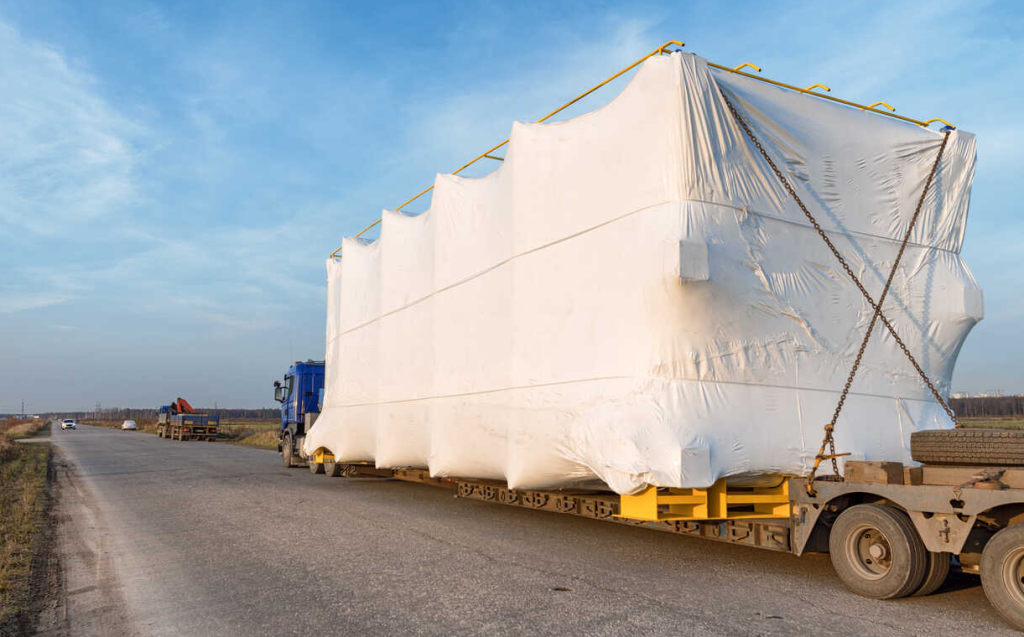
Most failures don’t come from a single mistake, but from small oversights—misjudged weight distribution, weak tie-down points, or skipped inspections. This framework focuses on execution details that directly affect safety and compliance.
Point 1: Navigating the Regulatory Labyrinth of Permits and Legal Compliance
Before any loading begins, the entire move must be legally defined. Oversized transport operates under permit conditions, not general traffic rules.
The Federal Baseline and State-Level Variations
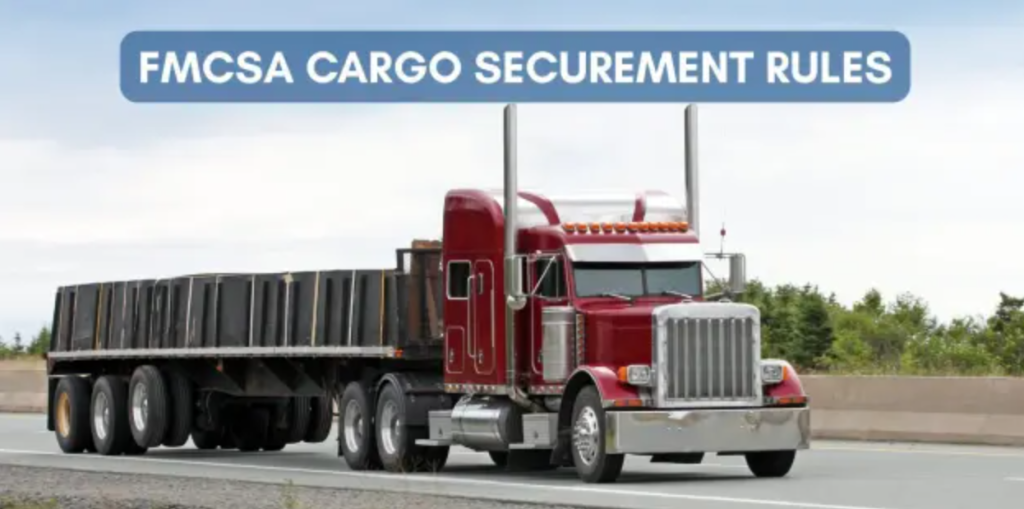
FMCSA regulations define minimum securement performance, but states control how oversized loads move within their borders. That includes what qualifies as oversized, when you can travel, and whether escorts are required. A route crossing multiple states means multiple rule sets, and inconsistencies are common.
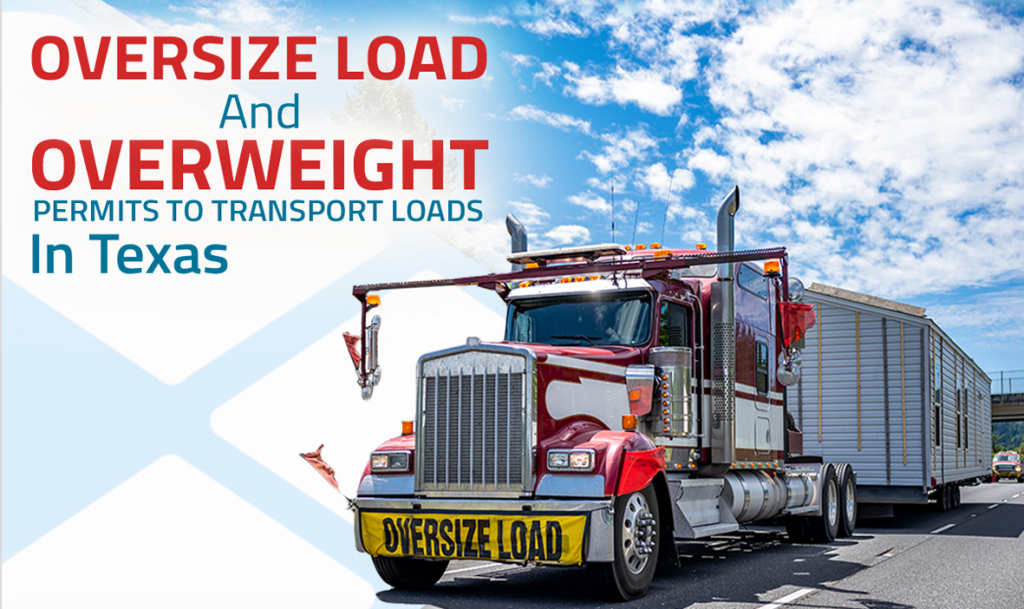
The Anatomy of a Permit
- Exact dimensions and gross weight allowed
- Mandatory route (often pre-approved)
- Travel windows (daytime, weekday restrictions)
- Escort requirements and positioning
Permits are not flexible documents. Deviating from route or conditions can result in immediate shutdown.
Escort Vehicles
Escort vehicles are not just for visibility—they are part of the safety system.
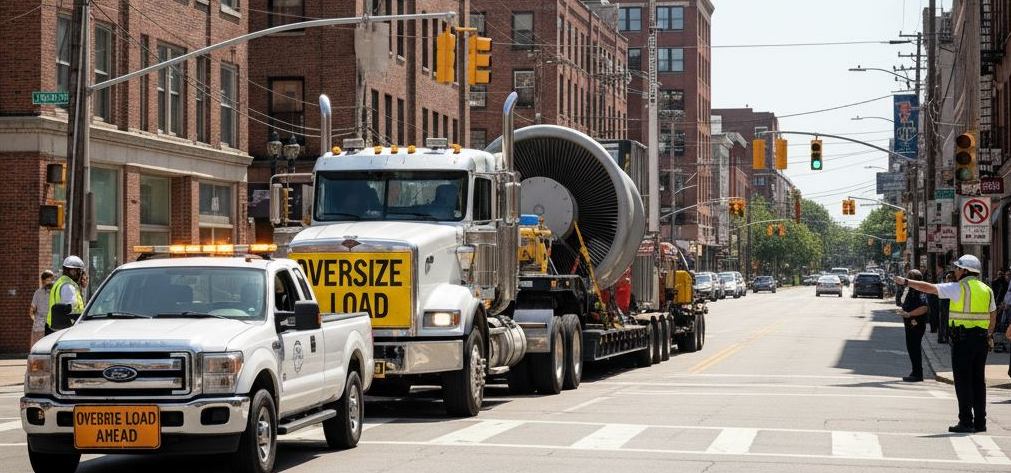
The lead vehicle checks clearance risks ahead, while the rear monitors load condition and traffic interaction. Poor coordination between truck and escort is a common failure point in complex moves.
Point 2: Foundational Analysis: Comprehensive Load Assessment and Route Planning
Center of Gravity and Load Distribution
Center of gravity determines how the load behaves under motion. A high or offset CG increases rollover risk, especially during lane changes or uneven road surfaces.
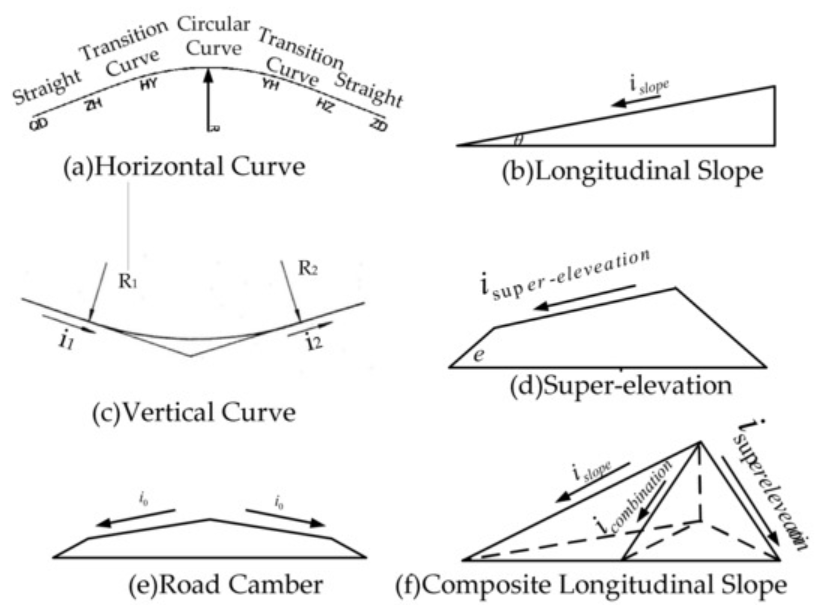
Proper placement on the trailer is critical—not just to meet axle limits, but to keep the entire combination stable.
Securement Points
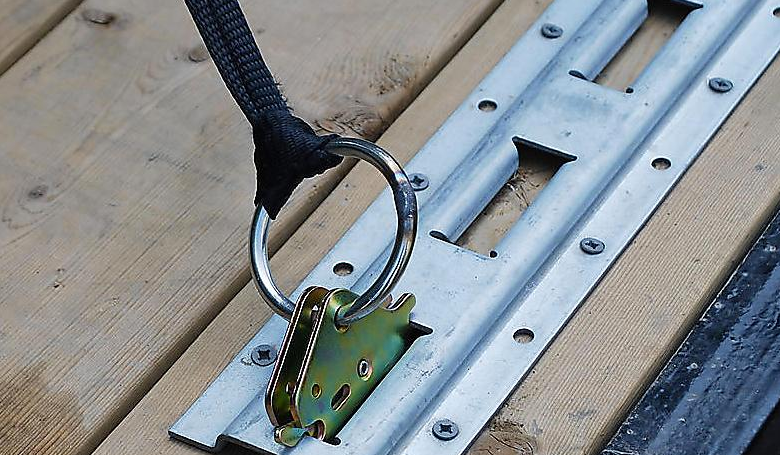
Not every structural element can take tie-down force. Using weak or non-structural points is a common mistake that leads to failure even when chains or straps hold. Manufacturer-designated points should always be prioritized.
Route Planning
- Measure actual clearance, not assumed values
- Check for temporary restrictions (construction, detours)
- Plan turns in advance—especially for long loads
- Avoid routes with poor road conditions where possible
Route issues are one of the main causes of last-minute delays and forced rerouting.
Point 3: Selecting the Appropriate Transport Vehicle for the Task
Trailer Types
- Flatbed – flexible but limited height clearance
- Step-deck – lowers deck height for taller cargo
- Lowboy – reduces center of gravity for heavy equipment
- Extendable trailer – supports long structural loads
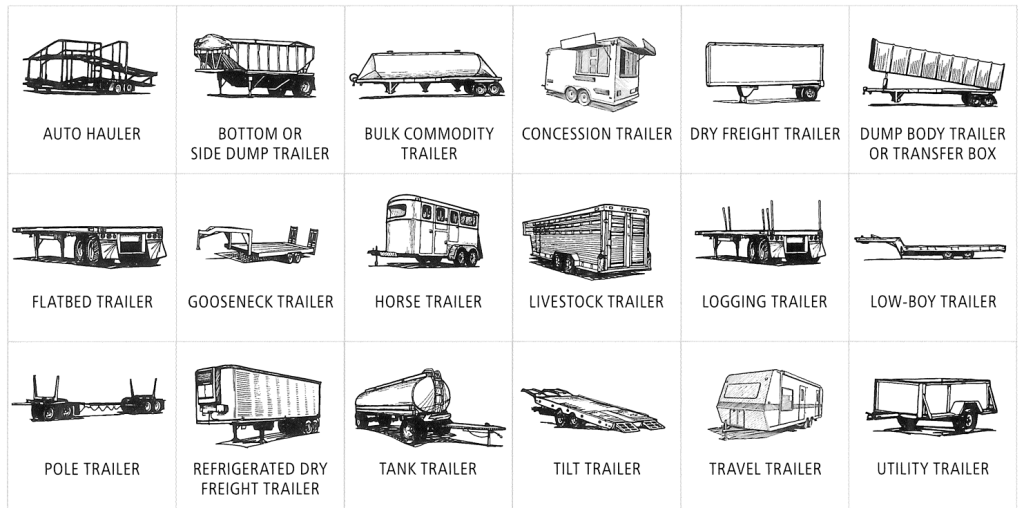
The wrong trailer choice creates problems that cannot be fixed with securement alone.
Weight Distribution and Axle Configuration
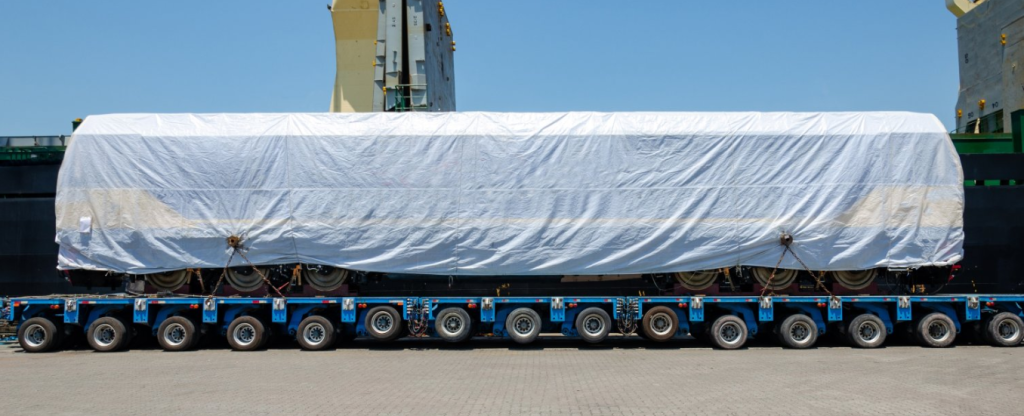
Axle overload is both a legal and safety issue. Heavy-haul setups often require additional axles or specialized configurations to distribute weight correctly.
Vehicle Condition
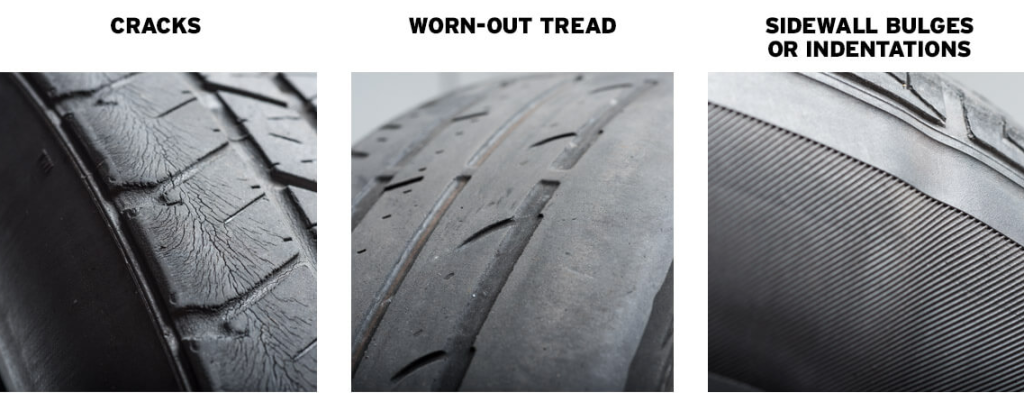
Basic issues—worn tires, weak brakes, damaged anchor points—are still a leading cause of failure. The trailer deck must also provide enough friction to prevent sliding.
Point 4: The Physics of Load Securement: Understanding the Forces at Play
- Forward force: up to 0.8 G during braking
- Rearward force: up to 0.5 G during acceleration
- Lateral force: up to 0.5 G during turning
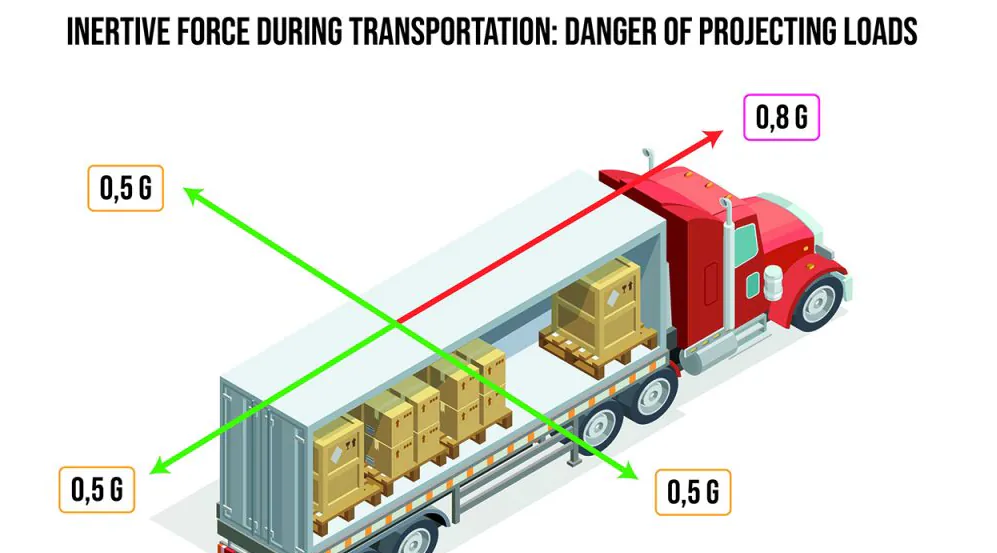
These forces scale directly with load weight. A heavy load under hard braking generates enormous forward force, which is why front securement is often the most critical.
Point 5: Choosing the Right Securement Equipment: Chains, Straps, and Netting
| Securement Device | Material | Strengths | Weaknesses | Best Use |
|---|---|---|---|---|
| Transport Chain | Steel | High strength, abrasion resistant | Heavy, can damage surfaces | Machinery, steel loads |
| Synthetic Strap | Polyester | Flexible, easy to handle | Vulnerable to cuts | Palletized goods |
| Industrial Netting | Synthetic Fiber | Containment of irregular loads | Not suitable for heavy rigid loads | Loose or stacked cargo |
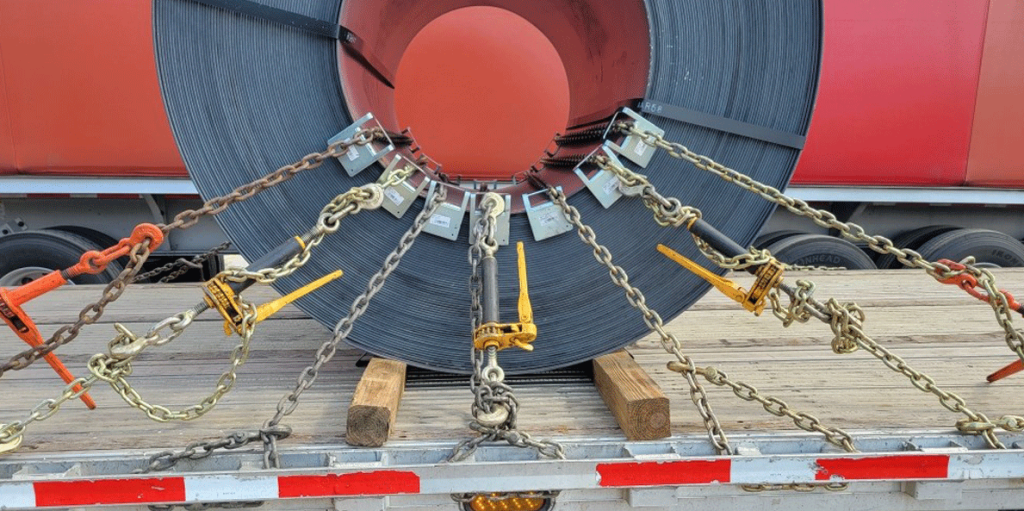
In many cases, combining systems is more effective than relying on one method alone.
Point 6: The Mathematics of Safety: Calculating Tie-Down Requirements
WLL Requirement: Total WLL must equal at least 50% of load weight.
This is the baseline, not a target. In practice, experienced operators often exceed it to account for real-world variables such as vibration and load settling.
| Load Length | Minimum Tie-Downs |
|---|---|
| < 5 ft and < 1,100 lbs | 1 |
| < 5 ft and > 1,100 lbs | 2 |
| 5–10 ft | 2 |
| > 10 ft | 2 + 1 per additional 10 ft |
Minimum counts do not replace capacity calculations—both must be satisfied.
Point 7: The Art of Application: Proper Placement of Securement Devices
Angle matters. Tie-downs applied too vertically provide little resistance to sliding. Shallow angles improve horizontal restraint.
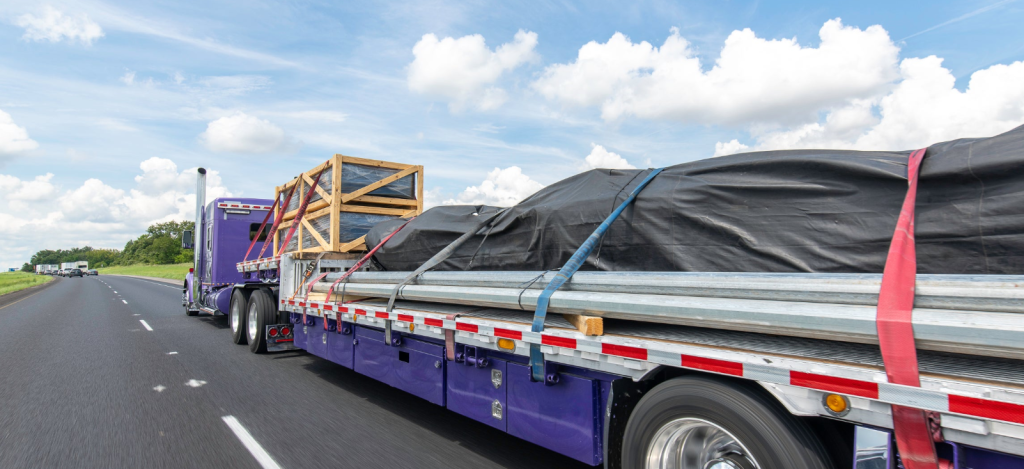
Symmetry also matters. Uneven placement can introduce rotational force, especially on irregular loads.
Edge protection is mandatory wherever contact occurs over sharp edges. Without it, straps can fail quickly under vibration.
Point 8: The Unsung Heroes: The Role of Blocking and Bracing
- Blocking prevents forward/backward movement
- Bracing prevents tipping or rolling
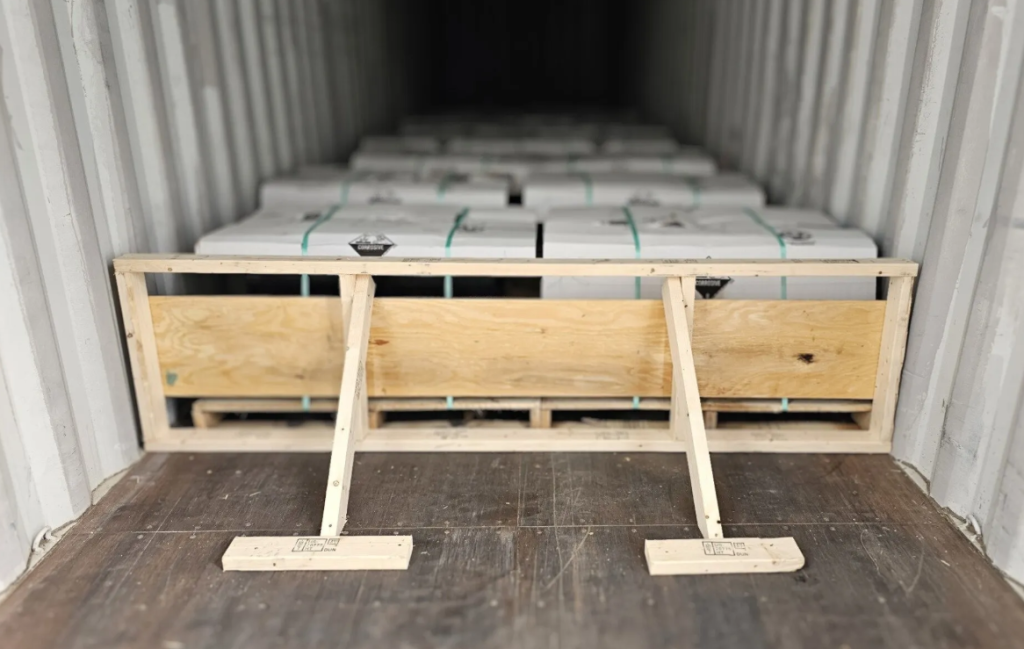
Blocking transfers force directly into the trailer structure instead of relying entirely on tie-down tension. This is especially important for heavy or smooth-surface loads.
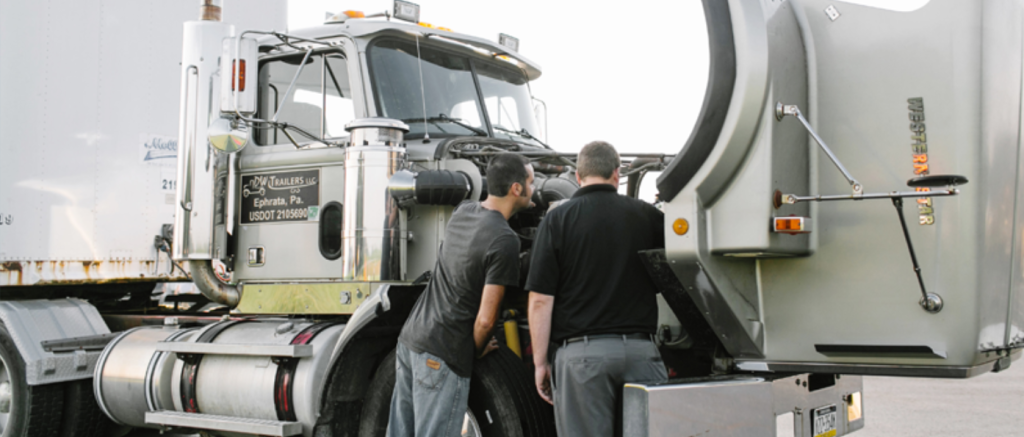
Point 9: The Circle of Safety: Pre-Trip, In-Transit, and Post-Trip Inspections
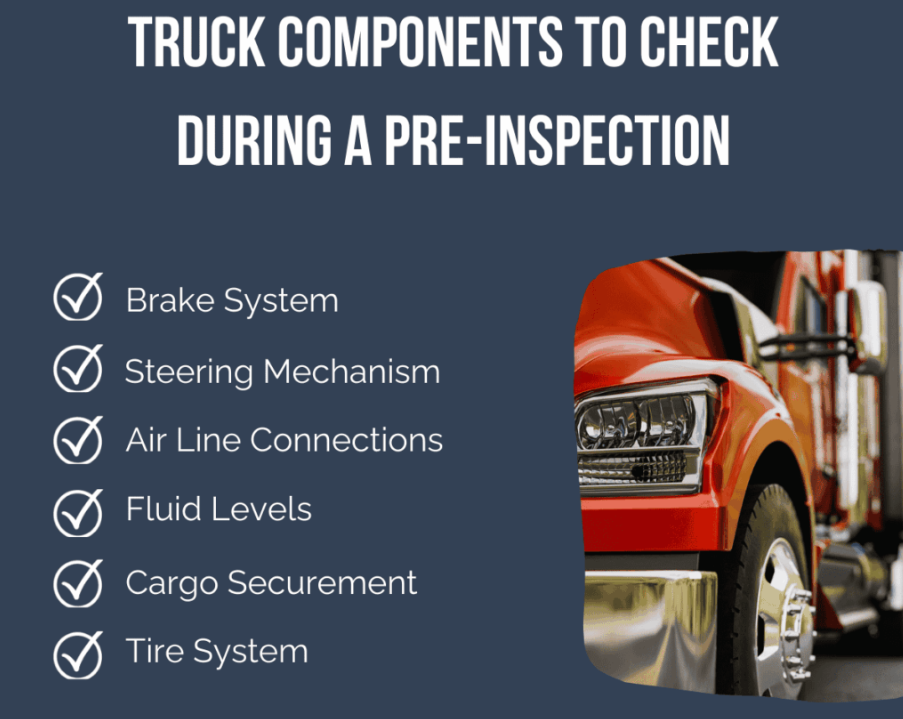
- Pre-trip: confirm tie-down count, tension, and load position
- In-transit: inspect within first 50 miles, then regularly
- Post-trip: check equipment condition and remove damaged items
Most loosening happens early in the trip. The first inspection is critical.
Frequently Asked Questions (FAQ)
What actually counts as an oversized load?
If your load exceeds legal limits for width, height, length, or weight in a given state, it is considered oversized and requires a permit—even if it’s only slightly over.
How do I know if my straps or chains are no longer safe to use?
Any visible damage is enough reason to remove them from service. For straps, look for cuts, fraying, or broken stitching. For chains, check for bent links, cracks, or corrosion.
Can I use fewer tie-downs if I choose higher-strength ones?
No. You still have to meet both the minimum number of tie-downs and the total WLL requirement. Strength alone doesn’t replace proper distribution.
What’s the most common mistake in load securement?
Running straps or chains over sharp edges without protection. It’s one of the fastest ways to cause a failure during transit.
Do I always need a permit, even for small overages?
Yes. There’s no tolerance buffer. If the load exceeds legal limits, a permit is required.
Conclusão
Securing oversized loads is a process that depends on consistency and attention to detail. Planning, correct equipment selection, and proper application all work together. Skipping steps or relying on assumptions is where problems start. A structured approach keeps operations predictable, compliant, and safe.

Leia os nossos artigos mais populares.
👉 Descarregar as nossas categorias de produtos gratuitas
👉 A Practical 3-Step Guide: How to Calculate the Correct Cargo Net Size and Capacity for Your Load
👉 Securing the Load: A 5-Step Guide to Mastering DOT/FMCSA Cargo Regulations
👉 5 Expert-Identified Risks: The Hidden Costs of Using Low-Quality Cargo Netting
👉 A lista de verificação essencial de 7 pontos para encomendar redes de carga feitas à medida em 2026
👉 The Ultimate Guide to Choosing the Right Cargo Netting for Your Fleet
