
Résumé
Commercial transportation costs are heavily influenced by insurance premiums, which are fundamentally tied to assessed risk. This analysis examines the direct relationship between the use of higher-grade cargo securement systems—specifically, high-quality cargo nets—and the potential for measurable reductions in commercial insurance costs.
The discussion begins by breaking down the mechanisms through which these nets reduce risk. Chief among them is the prevention of cargo-related incidents, which directly lowers both the frequency and severity of claims. In addition, meeting and exceeding regulatory standards, such as those required by the Federal Motor Carrier Safety Administration (FMCSA), signals a proactive safety posture to underwriters. This demonstration of a strong safety culture, supported by the use of certified and properly rated equipment, becomes a powerful negotiating asset.
The analysis concludes that investing in high-quality cargo nets is not merely an operational expense, but a strategic financial decision that directly improves a company’s risk profile and creates a compelling case for lower insurance premiums.
Principaux enseignements
- Reduce claims frequency by preventing cargo spills and related roadway accidents.
- Demonstrate a proactive safety culture to insurance underwriters and support better rates.
- Maintain compliance with transport regulations and avoid costly fines and penalties.
- Investing in safety shows how high-quality cargo nets can lower your insurance premiums.
- Minimize vehicle downtime and protect your brand reputation from the fallout of accidents.
- Reduce workers’ compensation claims through safer, more ergonomic loading practices.
- Protect your valuable cargo and the vehicles used to transport it from damage.
The Foundational Link: Understanding Risk and Insurance Premiums
Before exploring the specific ways a piece of equipment can affect your bottom line, it is important to first establish a common understanding of how an insurance underwriter views your operation. At its core, insurance is the business of quantifying uncertainty. For a commercial fleet operator, the premium paid is not an arbitrary fee; it is a carefully calculated price for transferring the financial risk of accidents, damage, and liability from your company to the insurer. The entire structure of underwriting rests on the ability to predict the likelihood and potential cost of a future negative event—a loss.
As a result, any action that can be shown to reduce either that likelihood or that cost can, and should, translate into a lower premium. In many ways, it is a partnership. The insurer wants to avoid paying claims just as much as you want to avoid having them. Proactive safety measures are the point at which those interests align.
How Underwriters Calculate Your Commercial Auto Premiums
The process of calculating a commercial vehicle insurance premium is a broad evaluation of your entire operation. It is significantly more complex than personal auto insurance. Underwriters are tasked with building a complete risk profile—a picture of your company’s potential to generate claims. They begin with the fundamentals: the number and types of vehicles in your fleet, the average mileage driven, the operating radius, and the nature of the cargo you transport. A fleet of long-haul trucks carrying hazardous materials will naturally present a higher initial risk profile than a local delivery service hauling office supplies.

From there, the analysis becomes more detailed. Underwriters review the driving records of all employed drivers. A history of moving violations or at-fault accidents is a significant red flag. They also evaluate your company’s loss history—the number and value of claims filed over time, typically across a three-to-five-year period. This historical data is one of the strongest predictors of future performance. Beyond these quantitative factors, underwriters also make a qualitative assessment. They look for evidence of a strong safety culture. Do you have a formal safety program? Do you provide regular driver training? What condition is your equipment in? It is within this qualitative review that equipment choices—such as selecting high-quality cargo nets instead of minimal-effort alternatives—begin to carry real weight.
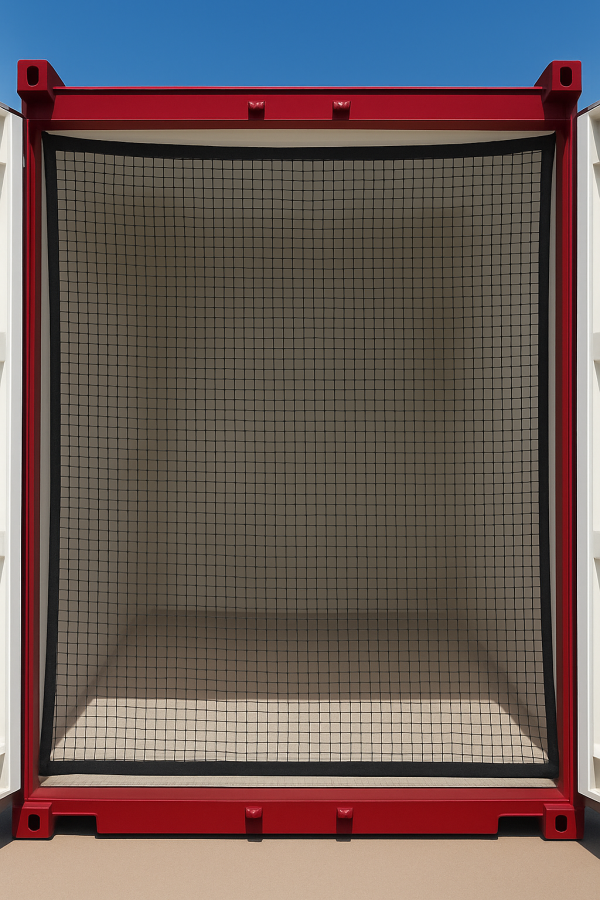
Cargo Net For Industrial Use Application-Container Door Net
Specification
- Material: High-strength Nylon (Knotless)
- Mesh size: 3*3cm
- Twine Diameter: 3mm
- Color: Customizable (commonly Green, Black, or White)
Advantages
-
Reliable Load Safety: Prevents cargo from falling out when the container door is opened.
The Role of Loss History and Experience Modification Rate (EMR)
Perhaps the single most important factor in the underwriting equation is your company’s loss history, often distilled into a figure known as the Experience Modification Rate, or EMR. The EMR is a numerical representation of your claims history compared to the average for businesses of similar size in your industry. A rating of 1.0 indicates that your claims history is average. A rate below 1.0—for example, 0.85—suggests that your history is better than average and can result in a direct discount on your premiums. By contrast, a rate above 1.0, such as 1.20, reflects a worse-than-average history and will lead to a surcharge.

To put this into perspective, imagine two trucking companies, Company A and Company B. Both operate in the same state, each has 20 trucks, and both haul general freight. The state’s rating bureau determines that the average company with this profile should expect $100,000 in claims over a three-year period. During that time, Company A, which invests in rigorous training and better equipment, incurs only $80,000 in claims. Company B, which cuts corners, incurs $130,000 in claims. Company A’s EMR would be approximately 0.80 ($80,000 / $100,000), earning a 20% discount on its base insurance premium. Company B’s EMR would be 1.30 ($130,000 / $100,000), resulting in a 30% surcharge. Across a fleet of 20 vehicles, differences like these can add up to tens or even hundreds of thousands of dollars each year. Every cargo spill, every minor damage claim, and every incident avoided feeds directly into this critical number. The path to a lower EMR is built on prevented incidents.
Proactive Safety Measures as a Negotiating Tool
Your insurance policy is not a fixed-price product; it is a negotiated contract. While factors such as your EMR establish a baseline, there is often room for discussion—especially when you can present clear evidence of risk mitigation that goes beyond industry minimums. This is where an investment in high-quality equipment becomes a strong and credible part of your story.
When your insurance broker approaches underwriters on your behalf, they are acting as your advocate. The goal is to equip them with the strongest case possible. Instead of simply saying, “We have a safety program,” you can present a detailed portfolio. That portfolio may include driver training logs, vehicle maintenance records, and, importantly, the specifications of your safety equipment. Documentation showing that you use certified, heavy-duty cargo nets with specific load ratings—rather than inexpensive, unrated alternatives or basic tarps—demonstrates commitment in a concrete way.

It shifts the conversation from general assurances to verifiable facts. You are not merely saying that your operation is safe; you are proving it through your purchasing decisions. An underwriter sees that and understands that your operation is actively managed to reduce the very risks they are being asked to insure. This documented, proactive approach can be the deciding factor that leads an underwriter to offer a more favorable rate or discretionary credit, based on the view that your actual risk is lower than your baseline statistics alone might suggest.
Way 1: Drastically Reducing Cargo-Related Accidents and Claims
The most direct and undeniable way high-quality cargo nets can lower your insurance premiums is by preventing the very incidents that lead to claims. An insurance claim is the financial result of an accident. Eliminate the cause—unsecured or poorly secured cargo—and you eliminate the consequence. It is a simple and direct relationship. Every time a properly installed, high-quality net keeps a load in place during hard braking, a sharp turn, or a minor collision, it may have prevented a claim. These “non-events” never appear on a report, but their cumulative effect on your loss history is substantial. A clean claims record is the strongest case you can make for lower insurance costs, and strong load securement is central to maintaining that record.
The Physics of Shifting Loads: A Preventable Catastrophe
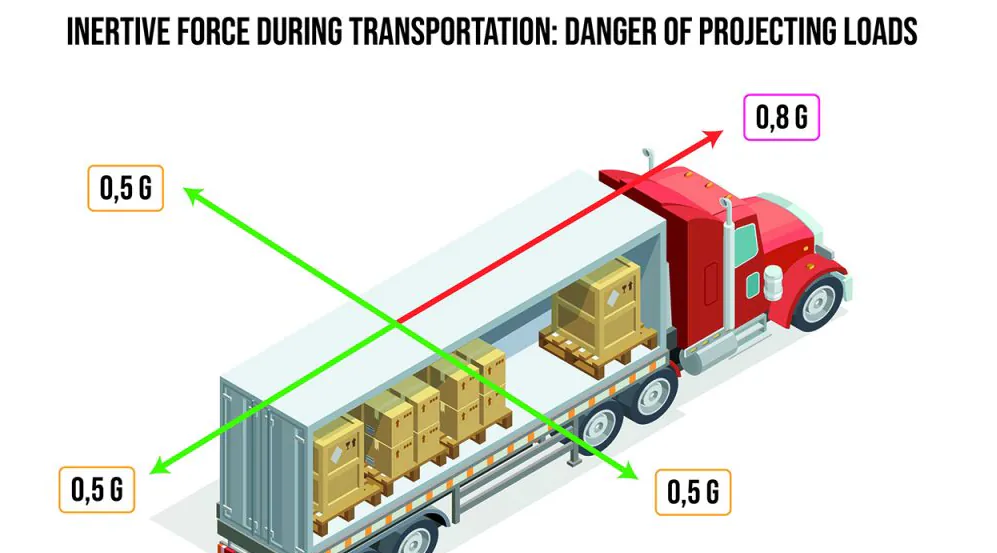
To understand the role of a cargo net, it helps to first understand the immense physical forces at work in a moving vehicle. Isaac Newton’s first law of motion—the law of inertia—states that an object in motion stays in motion at the same speed and in the same direction unless acted upon by an unbalanced force. Your cargo—whether boxes, equipment, or raw materials—has its own inertia, separate from the truck carrying it. When the truck accelerates, the cargo wants to remain where it is, pressing against the rear of the cargo area. When the truck brakes, the cargo wants to continue moving forward. During a turn, it wants to continue in a straight line, pressing against the side.
The U.S. Federal Motor Carrier Safety Administration (FMCSA) has quantified these forces. Its regulations require cargo securement systems to withstand a forward force of 0.8 g (80% of the cargo’s weight), and rearward and lateral forces of 0.5 g (50% of the cargo’s weight) (FMCSA, 2022). Consider a pallet of bricks weighing 4,000 pounds. During an emergency braking maneuver, that pallet will exert a forward force of 3,200 pounds. An inadequate restraint system will fail under that kind of load. A cheap tarp offers virtually no resistance. A few worn bungee cords will snap immediately. A high-quality cargo net, by contrast, is engineered for exactly this scenario. It is designed to absorb and distribute these dynamic forces across its full structure, containing the cargo and neutralizing the threat. The webbing, stitching, and hardware are all rated to handle these specific and predictable physical forces.
Statistical Reality: The Frequency of Unsecured Load Incidents
The problem of unsecured loads is not minor or occasional. It is a persistent and deadly hazard on roadways worldwide. According to a comprehensive study by the AAA Foundation for Traffic Safety, road debris resulting from improperly secured cargo was a factor in more than 200,000 crashes in the United States over a four-year period, leading to approximately 39,000 injuries and more than 500 deaths (AAA Foundation for Traffic Safety, 2016). These are not just numbers; each one reflects a serious failure in load securement.
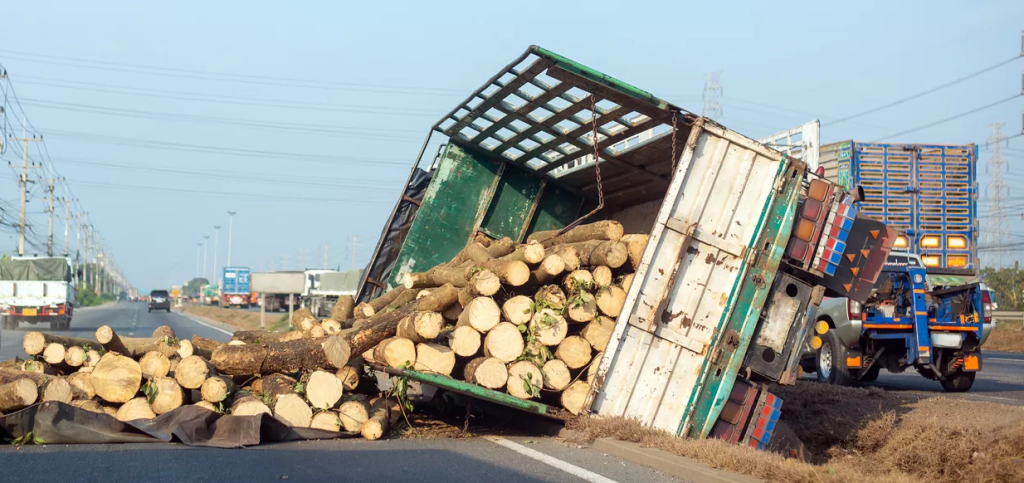
From an insurance standpoint, incidents like these are extremely costly. They can involve multi-vehicle pileups, damage to public infrastructure, and complex liability claims. A single loose item falling from a truck can cause a following vehicle to swerve, setting off a chain reaction. A full cargo spill can shut down a major highway for hours, leading to massive business interruption claims.

Insurers are well aware of these statistics and understand that any client transporting cargo is exposed to this risk. When you can show that you are using a system specifically designed to prevent your freight from becoming part of those numbers, you are directly addressing one of their primary concerns. You are moving your operation from the “at-risk” category into the “risk-mitigated” category.
High-Quality Nets vs. Basic Methods: A Comparative Analysis
Not all load securement methods are created equal. The equipment you choose has a direct effect on both safety and overall risk. A simple comparison makes the difference clear.
| Fonctionnalité | Low-Quality Tarp / Bungees | High-Quality Cargo Net |
|---|---|---|
| Primary Function | Concealment, minimal weather protection | Containment, restraint, and load stabilization |
| Force Resistance | Negligible; not rated for dynamic forces | Engineered and rated to withstand specific G-forces (e.g., 0.8g forward) |
| Load Conformity | Poor; leaves gaps and loose areas | Excellent; cinches down to conform to irregular shapes, preventing shifts |
| Durabilité | Prone to tearing, fraying, and degradation from UV light and weather | Constructed from industrial-grade, weather-resistant materials (e.g., polyester webbing) |
| Installation | Often inconsistent and relies on user improvisation | Designed for systematic, repeatable, and secure installation with integrated hardware |
| Conformité | May not meet legal requirements for many types of cargo | Designed to meet or exceed FMCSA, DOT, and other regulatory standards |
| Failure Mode | Catastrophic and sudden (e.g., tarp tears, bungee snaps) | Gradual and predictable; shows wear over time, allowing for replacement |
This table highlights a fundamental difference in approach. Tarps and bungee cords are, at best, surface-level solutions. They may satisfy a quick visual check, but they offer no meaningful resistance to the powerful physical forces involved in transportation. A high-quality cargo net, by contrast, is an engineered safety system. Its value lies not in concealing the cargo, but in controlling it. For an insurer, a fleet that relies on the former represents a high and unpredictable risk. A fleet that invests in the latter—such as custom netting solutions designed for specific applications—represents a managed, understood, and lower risk.
Case Study: The Financial Aftermath of a Single Cargo Spill
To make this more tangible, consider a hypothetical but realistic scenario. A flatbed truck is carrying a mixed load of construction equipment, secured with a patchwork of aging straps and a single low-grade tarp. On a highway exit ramp, the driver takes the turn slightly too fast. The lateral forces cause the load to shift. Several straps fail, and a large generator slides off the side of the truck, strikes a car in the adjacent lane, and then tumbles into the roadway.

The immediate financial consequences begin adding up at once.
- Liability Claim: The driver of the car that was struck is injured. The liability claim for medical bills, pain and suffering, and vehicle damage could easily reach $250,000 or more.
- Cargo Loss: The generator, valued at $30,000, is destroyed.
- Vehicle Damage: The flatbed truck itself is damaged as the load shifts and falls, requiring $5,000 in repairs.
- Cleanup and Recovery: A specialized crew is needed to remove the heavy equipment from the highway, costing $10,000.
- Fines: The driver and company are cited for failing to properly secure the load, resulting in $7,500 in fines and penalties.
The total direct cost of this single incident exceeds $300,000. That is the figure that hits the insurance policy. The outcome is a major claim on the company’s record, a guaranteed spike in its EMR, and a sharp increase in premiums for the next three to five years. The cost of a premium, custom-fitted cargo net designed for that exact load may have been only a few hundred to a thousand dollars. In this single instance, the return on that investment would have been enormous. This is the straightforward, unforgiving math that underwriters understand, and it is one of the clearest examples of how high-quality cargo nets can lower your insurance premiums.
Way 2: Ensuring and Exceeding Regulatory Compliance
In commercial transportation, compliance is not optional. A complex web of federal, state, and local regulations governs nearly every aspect of operations, with particular emphasis on safety. For an insurer, a client’s compliance record is a direct reflection of its professionalism and overall attitude toward risk. A history of violations suggests a careless, high-risk operation that is more likely to experience accidents and generate claims. By contrast, a clean record—especially one that demonstrates a commitment to exceeding minimum standards—projects the image of a well-managed, lower-risk partner. High-quality cargo nets play a meaningful role in this equation, serving as visible proof of a company’s commitment to safety and regulatory compliance.
Navigating the Maze of FMCSA and DOT Regulations
In the United States, the primary rules governing load securement come from the Federal Motor Carrier Safety Administration (FMCSA), a division of the Department of Transportation (DOT). These regulations are detailed in 49 CFR Parts 392 and 393. They are not suggestions; they are law, and they are comprehensive. The rules specify not only that cargo must be secured, but also how it must be secured. They define the minimum number of tie-downs required based on the length and weight of the cargo being transported, and they establish the performance requirements the entire securement system must meet (FMCSA, 2022).
For example, the rules require a securement system to withstand specific forces without failure, as discussed earlier (0.8 g forward, 0.5 g lateral/rearward). A generic, unrated tarp or a bundle of old bungee cords has no verifiable ability to meet these standards. A high-quality cargo net, on the other hand, is often manufactured and tested specifically to meet or exceed them. Its specifications will include a working load limit (WLL) that can be used to demonstrate compliance. When a DOT officer inspects a truck secured with a properly rated cargo net, the compliance review is relatively straightforward. The officer can see that an engineered system is in place. When that same officer inspects a truck secured with a patchwork of improvised restraints, it invites closer scrutiny and significantly increases the likelihood of a violation.
The True Cost of Non-Compliance: Fines, Penalties, and CSA Scores
The cost of failing to comply with cargo securement regulations goes far beyond a basic traffic citation. The consequences can be substantial and damaging on multiple fronts.
- Direct Fines: Fines for securement violations can range from hundreds to thousands of dollars per infraction. If multiple issues are found on a single truck, the total can climb quickly.
- Out-of-Service Orders: An officer can place a vehicle out of service (OOS) if the load is deemed unsafe. This means the truck cannot move until the violation is corrected. The cost of that downtime—a delayed delivery, a missed appointment, and a driver sitting idle—can exceed the fine itself.
- Impact on CSA Scores: This is arguably the most important long-term consequence. The FMCSA uses a safety measurement system called Compliance, Safety, Accountability (CSA) to track carrier performance based on roadside inspections and crash data. Securement violations are heavily weighted within the CSA system. A high (poor) CSA score can trigger targeted FMCSA interventions, including audits and investigations. More importantly, insurance companies use CSA scores as a major underwriting input. A poor CSA score is a clear warning sign to an underwriter, indicating a high-risk client. It will almost certainly lead to higher premiums and, in severe cases, may make it difficult to secure coverage at all.
Using high-quality cargo nets is a direct and proactive way to maintain a low, favorable CSA score. Every clean inspection in which your securement methods are found satisfactory becomes another positive data point reinforcing your company’s safety profile.
How Premium Nets Demonstrate a “Culture of Compliance” to Insurers
When you sit down with your insurance broker to review a renewal, the conversation is about more than numbers. It is about building a credible narrative of responsibility. An underwriter is trying to answer a simple question: “Is this company actively working to prevent losses?” Your equipment choices provide a clear answer.

Consider two scenarios. In the first, a fleet manager says, “We tell our drivers to strap everything down well.” In the second, the fleet manager presents a procurement policy requiring the use of certified, rated cargo nets for all open loads, along with specification sheets and maintenance logs showing when nets are inspected and replaced. It is obvious which company an underwriter will view more favorably.
The second company is not just complying; it is building a true culture of compliance. The investment in premium equipment shows that safety is not an afterthought or something left to driver discretion. It is a structured, top-down commitment. That is exactly what insurers want to see. It gives them confidence that your company’s risk is being professionally managed. That confidence can translate into tangible benefits, including access to preferred insurance carriers that may not quote higher-risk operations at all, as well as better pricing because the perceived risk is lower. In that context, the cargo net is no longer just a piece of equipment—it is evidence. It shows that your statements about safety are supported by actual financial investment and operational process.
Way 3: Protecting Your Assets and Minimizing Collateral Damage
A cargo-related incident is like a stone dropped into a pond—the effects spread far beyond the initial impact. The most obvious consequence is the loss of cargo and potential liability for damage to others. But in reality, the total cost of such an event is often much broader, including damage to your own assets, harm to your company’s reputation, and a chain of indirect financial losses. A high-quality cargo net functions as a protective barrier, safeguarding not only the cargo it contains, but also the vehicle carrying it, the brand it represents, and the continuity of your business. Understanding these wider effects reveals another important way high-quality cargo nets can lower your insurance premiums: by reducing the total scope and cost of potential claims.
Beyond the Cargo: Damage to Vehicles, Infrastructure, and Reputation
When a load shifts or falls, it rarely does so without causing additional harm. In the process, it can inflict significant damage on the very vehicle meant to transport it.

- Vehicle Damage: A heavy piece of equipment sliding across a flatbed can gouge the deck, damage headboards, or even compromise the structural integrity of the trailer. In a van or enclosed trailer, a shifting pallet can punch through interior walls or damage the doors. These are not minor repairs; they result in physical damage claims against your own commercial auto policy, increasing your loss history and contributing to a higher EMR. A secure cargo net keeps everything in place, preventing this kind of internal damage.
- Infrastructure Damage: Spilled cargo can damage road surfaces, guardrails, bridges, and signage. While the liability portion of your insurance may cover these costs, they still represent a major claim against your policy. A serious incident requiring repairs to public infrastructure can become extremely expensive.
- Reputation Damage: In the age of social media and real-time news, a truck shedding its load on a major roadway is more than a traffic disruption; it is a public relations problem. Images of your branded truck surrounded by debris and causing a major backup can be deeply damaging to your company’s reputation. Customers and prospects may interpret the incident as a sign of an unprofessional or unsafe operation and choose a competitor instead. While reputational harm is not covered by a standard insurance policy, it is still a very real business cost stemming from the same root cause. Insurers understand that companies with stronger reputations have more to lose and are often more motivated to operate safely, which makes them better risks.
The Indirect Costs of an Incident: Downtime, Lost Contracts, and Brand Erosion
The costs listed on an insurance claim form represent only part of the damage. For every dollar of direct, insured loss, there may be several dollars in indirect, uninsured losses. These are the hidden costs that quietly erode profitability.
| Direct Costs (Typically Insured) | Indirect Costs (Typically Uninsured) |
|---|---|
| Liability claims for bodily injury and property damage | Vehicle downtime during repairs and investigation |
| Cost to repair or replace your own damaged vehicle | Lost revenue from the out-of-service vehicle |
| Value of the lost or damaged cargo | Cost of renting a replacement vehicle |
| Environmental cleanup costs (e.g., for fluid spills) | Administrative time spent on accident reporting and claims management |
| Towing and recovery expenses | Negative impact on driver morale |
| Legal defense costs | Potential loss of a customer contract due to service failure |
| Fines and regulatory penalties | Increased oversight and scrutiny from regulatory bodies (e.g., FMCSA) |
| Total Direct Cost | Often 1x to 5x the total direct cost (or more) |
A high-quality cargo net is an investment in operational continuity. By preventing the incident in the first place, it helps your business avoid this full chain reaction of indirect costs. The vehicle stays on the road, the delivery arrives on time, administrative staff remain focused on productive work, and your company’s reputation remains intact. When an underwriter evaluates your business, they are not looking only at the possibility of direct claims. They are also judging the overall stability and professionalism of your operation.

A company with systems in place to avoid these kinds of disruptions is viewed as more stable, more reliable, and ultimately less risky. It is also less likely to fall into the cycle of cutting corners later in order to recover lost revenue—a cycle that often leads to more accidents.
A Table Comparing Direct vs. Indirect Costs of a Cargo Incident
The distinction between direct and indirect costs is so important to understanding risk that it deserves a closer side-by-side look. Returning to our spilled generator case study, the direct costs totaled roughly $302,500. Now consider the indirect costs that would almost certainly follow. The truck is out of service for a week during the investigation and repairs, resulting in $7,000 in lost revenue. The company rents a replacement truck for $1,500. The safety manager and administrative staff spend a combined 40 hours dealing with the aftermath, creating a soft labor cost of $2,000. The driver is shaken and takes two days off, affecting morale. Most damaging of all, the client whose generator was destroyed cancels its $200,000 annual contract because of the service failure. In this scenario, the indirect costs quickly exceed the direct insured loss. By preventing the incident, a cargo net saves the insurance company $302,500—but it saves your business far more. This broader view of risk management is exactly the kind of operational maturity that stands out to an insurer.
Way 4: Enhancing Employee Safety and Reducing Workers’ Compensation Claims
The discussion around insurance and cargo securement often focuses on commercial auto and liability policies. However, another major and expensive line of coverage is also directly affected by your equipment choices: workers’ compensation. This insurance covers medical costs and lost wages for employees injured on the job. Like commercial auto insurance, workers’ compensation premiums are directly influenced by your company’s claims history and risk profile, often through an EMR specific to this coverage. High-quality cargo nets help create a safer working environment for drivers and loading personnel in several ways, directly contributing to fewer injuries, a lower EMR, and reduced workers’ compensation premiums.
The Ergonomics of Load Securement: Preventing Strains and Injuries
Securing cargo can be physically demanding work. Throwing heavy chains, ratcheting down stiff binder straps, and wrestling with large, unwieldy tarps can all lead to musculoskeletal injuries. Strains, sprains, and back injuries are among the most common and costly workers’ compensation claims in the transportation industry. These injuries often result from repetitive movements, awkward postures, and the handling of heavy or cumbersome equipment.

Consider the process of tarping a load. A driver may need to climb onto the truck bed, maneuver a bulky, heavy tarp into position, and then repeatedly bend and stretch to secure it with dozens of bungee cords. The process is inefficient and ergonomically unsound. Now compare that with a modern, well-designed cargo net. Many nets are lighter than comparable chains or heavy tarps and are designed for easier handling and deployment. A net can often be spread over a load faster and with less physical strain. Integrated cinching mechanisms and strategically placed hardware can make tightening much quicker and less demanding than tensioning multiple separate straps one by one. By adopting a system that is inherently easier and safer to use, you are removing injury risk from the process itself.

Fewer injuries mean fewer workers’ compensation claims. Fewer claims mean a better EMR and lower premiums. A workers’ compensation underwriter will view a company more favorably when it can demonstrate that it has taken the ergonomic impact of its equipment seriously.
Reducing the Risk of Catastrophic Driver-Involved Accidents
The most severe type of workplace injury in trucking is, of course, a vehicle crash. As already established, unsecured cargo is a major cause of these accidents. When a load shifts, it can dramatically alter the vehicle’s center of gravity, leading to loss of control, rollover, or jackknifing. A load falling onto the highway can also cause the driver’s own vehicle to crash or create a hazard that triggers a multi-vehicle pileup. In any of these situations, the driver faces an extreme risk of serious injury or death.

A single severe injury or fatality claim can have a devastating long-term effect on a company’s workers’ compensation premiums. The direct medical and indemnity costs alone can reach into the millions of dollars. The impact on the company’s EMR would be severe. By using a high-quality cargo net to keep the load stable and contained under all conditions—including emergency maneuvers—you are directly protecting your driver. The net is not just securing the cargo; it is helping protect the driver’s life and well-being. From a workers’ compensation perspective, this is the highest form of loss prevention. Preventing even one severe crash through proper load securement can justify the cost of an entire fleet’s cargo nets many times over.
How a Safer Workplace Lowers Workers’ Comp Premiums
The financial logic here mirrors commercial auto insurance. Workers’ compensation insurers use your past claims experience to estimate future losses. They examine both the frequency of claims—how often employees are injured—and the severity of those claims—how serious the injuries are. A history of frequent back strains caused by handling heavy equipment, or a single catastrophic crash, will both result in a higher EMR and higher premiums.
By implementing safer operational procedures supported by better equipment, you can interrupt that pattern.
- Reduced Frequency: The improved ergonomics of using a cargo net instead of more cumbersome methods can lead to a measurable reduction in common strains and sprains.
- Reduced Severity: By preventing load shifts and the catastrophic crashes they can cause, you reduce the risk of the most severe and expensive injuries.
When it is time to renew your workers’ compensation policy, you can present these improvements to your insurer. You can show the updated procedures, the specifications of the ergonomic equipment you have purchased, and—over time—the corresponding improvement in your OSHA incident rates and claims history. This demonstrates a proactive approach to employee safety that underwriters are eager to reward. They understand that a safer workplace is a more stable and profitable business, and one that is far less likely to generate the large, unpredictable claims that undermine their own profitability. In this way, the investment in a cargo net delivers a double benefit, helping reduce both commercial auto insurance costs and workers’ compensation costs at the same time.
Way 5: Leveraging Certified Quality as Proof of Lower Risk
In insurance and risk management, claims and promises carry very little weight on their own. Proof is what matters. Simply stating that your company is committed to safety is not enough to meaningfully influence premiums. You need tangible, verifiable evidence to support that claim. The physical characteristics and certified specifications of your equipment provide that evidence. A high-quality cargo net is more than a tool; it is documentation in physical form. Its materials, construction, and load rating all reflect a level of safety and quality that goes beyond the minimum. Knowing how to explain these differences and present them effectively to your insurance provider is the final step in turning that investment into lower premiums.
The Significance of Material Science: Durability, Weather Resistance, and Load Ratings
What separates a high-quality cargo net from a cheap imitation? The answer lies in material science and engineering.
- Material Choice: Premium cargo nets are typically made from industrial-grade synthetic fibers, most often polyester. Polyester webbing is favored for its exceptional strength, low elongation (meaning it does not stretch excessively under load), and strong resistance to environmental exposure. Unlike natural fibers or lower-grade synthetics such as polypropylene, polyester performs well against abrasion, UV exposure, and moisture. A net that does not degrade in sunlight or weaken when wet provides dependable performance day after day. That consistency is exactly what underwriters want to see.
- Construction and Stitching: A net’s strength is not determined only by the webbing itself, but by how it is assembled. High-quality nets use robust stitching patterns, often with contrasting thread colors so wear or stitch damage is easy to spot during inspection. Seams are reinforced, and connection points are engineered to distribute stress evenly instead of concentrating it in one location. This level of construction detail allows the net to perform as a complete system.
- Working Load Limit (WLL): This is the most important specification of all. The Working Load Limit is the maximum load a piece of equipment is certified to handle under normal operating conditions. It is determined through rigorous manufacturer testing and typically includes a substantial safety factor (for example, the breaking strength may be three times the WLL). A cargo net with a clearly labeled WLL is a highly communicable asset. You can state with confidence that the net is rated to handle a specific number of pounds and match that rating to the cargo being transported. That turns load securement from guesswork into an engineering-based decision. Using a net without a WLL is like using a wrench of unknown size—it may work, or it may fail at the worst possible moment. Insurers will always prefer the certainty of a tested, rated system.
What “High-Quality” Really Means: Stitching, Hardware, and Design
Looking even more closely at the anatomy of a superior net, the details matter—because quality is either built into those details or it is not there at all.
- Hardware: The hooks, ratchets, and rings used with a cargo net are not incidental accessories; they are core parts of the safety system. On a high-quality net, this hardware is typically forged or heat-treated for maximum strength and rated with its own WLL. It is also coated for corrosion resistance so it does not seize, weaken, or rust when exposed to rain or road salt. By contrast, inexpensive nets often use stamped, unrated hardware that can bend, break, or corrode, creating a critical weak point in the system.
- Design: A well-designed net is more than a simple grid of straps. It includes thoughtful design features that improve both safety and usability. These may include smaller mesh openings to contain smaller items and reduce snagging, multiple anchor points for flexible attachment across different vehicles, and integrated cinching straps that allow the entire net to tighten like a web over the load. These features are not merely convenient; they directly improve the security and reliability of the hold. A net that conforms tightly to an irregular load is far more effective at preventing the small shifts that can eventually turn into larger problems. Investing in these des produits de filet durables et sur mesure demonstrates a real commitment to operational excellence.
Presenting Your Equipment Specifications to Your Insurance Broker
Your insurance broker is your ally in the effort to reduce premiums. Your role is to give them the strongest possible case to take to market. When renewal time comes, do not let the process run on autopilot. Schedule a meeting with your broker and come prepared.
Create a “Safety Dossier” for your company. This document should include:
- A summary of your formal safety policies and driver training programs.
- Your latest vehicle maintenance records.
- Your CSA score and a summary of your roadside inspection history.
- A dedicated section on your load securement program.
In that section, include the manufacturer specification sheets for the high-quality cargo nets you use. Highlight the material (for example, “100% industrial-grade polyester webbing”), construction details (“triple-stitched seams”), and, most importantly, the Working Load Limit. Explain that your company has a formal policy requiring the WLL of each net to be matched to the weight and type of cargo being transported.
Presenting this level of technical detail changes the nature of the discussion. You are no longer making a vague statement about being “safe.” You are presenting hard, quantifiable evidence of a lower-risk operation. You are showing the underwriter that you have invested in engineered solutions to reduce the specific risks they are being asked to cover.

This professional, data-driven approach signals a level of sophistication and discipline that sets your company apart from the average operator. It gives the underwriter a defensible, documentable reason to offer the best possible rate—bringing the full case for how high-quality cargo nets can lower your insurance premiums full circle.
Foire aux questions (FAQ)
Are high-quality cargo nets truly superior to a combination of straps and a tarp?
Yes, fundamentally they are. While straps can be effective at preventing large items from moving, they create pressure points and may leave smaller items or irregularly shaped loads unsecured. A tarp provides concealment and limited weather protection, but offers virtually no strength to restrain a shifting load. A high-quality net functions as a complete system, wrapping the entire load and distributing restraining forces across a broad surface area. Its mesh design helps contain both large and small items, reducing the chance of anything escaping.
How much money can a company realistically expect to save on insurance?
The savings typically do not come in the form of a fixed discount. Instead, they are realized through several mechanisms. The primary savings come from maintaining a low Experience Modification Rate (EMR) by avoiding claims, which can result in discounts of 20% or more compared with an average company. In addition, a strong and well-documented safety program—including the use of premium nets—can persuade underwriters to offer discretionary credits, potentially reducing costs by another 5% to 10%. For a mid-sized fleet, the combined savings can easily reach tens of thousands of dollars per year.
What specific features should I look for when purchasing a high-quality cargo net?
Look for a net made from industrial-grade polyester webbing because of its strength and resistance to UV exposure and weather. Make sure it has a clearly stated Working Load Limit (WLL) appropriate for your typical loads. Inspect the stitching—it should be robust and consistent, often with reinforced patterns at high-stress points. All hardware, including hooks and ratchets, should also be rated for strength and resistant to corrosion. Finally, choose a design that conforms well to the type of cargo you typically secure.
Will my insurance company give me an explicit discount just for using cargo nets?
While some insurers may offer equipment-specific discounts for certain safety technologies, such as dash cams, it is more common for the benefit of cargo nets to show up in your broader risk profile and claims history. In most cases, you will not see a line item that says “-5% for cargo nets.” Instead, the absence of cargo-related claims helps lower your EMR, and your broker can use your investment in premium nets as a negotiating point to support a better overall rate based on your demonstrated commitment to risk management.
How do I properly document the use of these nets for my insurer?
Keep your purchase records and the manufacturer specification sheets for all cargo nets. Create a formal written policy in your company’s safety manual specifying when and how the nets must be used. Include net usage in your pre-trip inspection checklists so drivers are required to verify both the condition of the net and its proper installation. Then present this collection of materials—the specifications, the policy, and the inspection records—to your insurance broker as a complete package.
Can using the wrong size or type of cargo net be a problem?
Absolutely. A net that is too large may not tighten properly, leaving the load vulnerable to shifting. A net with mesh openings that are too large may fail to contain smaller components of the load. Most critically, using a net with a Working Load Limit (WLL) below the weight of the cargo being secured is a serious safety failure and eliminates the intended benefit. It is essential to select a net that is correctly sized and properly rated for the specific application.
How often should cargo nets be inspected and replaced?
Nets should be inspected by the driver before every use as part of the standard pre-trip inspection. The driver should check for cuts, fraying, broken stitching, or damaged hardware. In addition, a more thorough inspection should be conducted periodically—such as quarterly—by a safety manager. Most manufacturers recommend replacing a net immediately if any significant damage is found. There is no fixed service life because longevity depends on usage and environmental exposure, but any net showing wear, UV discoloration, or physical damage should be removed from service.
Conclusion
Choosing to invest in high-quality cargo nets is not just another operating expense; it is a strategic move in the ongoing effort to manage and reduce risk. This analysis has shown that the returns on that investment are both direct and indirect, measurable and meaningful. By physically preventing the accidents that lead to claims, these nets directly protect a company’s loss history and Experience Modification Rate, which are among the primary drivers of insurance premiums.
It reflects a commitment not only to protecting cargo and vehicles, but also to safeguarding employees and the public. That documented commitment becomes a powerful tool in the hands of an insurance broker, making it possible to negotiate from a position of strength. For that reason, the cost of a superior securement system should be viewed differently. It is not a cost center, but a form of self-insurance—a proactive investment that pays dividends through lower premiums, greater operational stability, and a stronger reputation. The path to a better standing with insurers does not begin in the boardroom. It begins on the flatbed of a truck, with the simple, effective, and informed choice to use the right equipment for the job.
nger culture of safety—one that helps ensure every load arrives securely and without incident.

Read our most popular articles.
👉 Download our free product categories
👉 The Ultimate Guide to Choosing the Right Cargo Netting for Your Fleet
👉 A Practical 3-Step Guide: How to Calculate the Correct Cargo Net Size and Capacity for Your Load
👉 Securing the Load: A 5-Step Guide to Mastering DOT/FMCSA Cargo Regulations
👉 5 Expert-Identified Risks: The Hidden Costs of Using Low-Quality Cargo Netting